
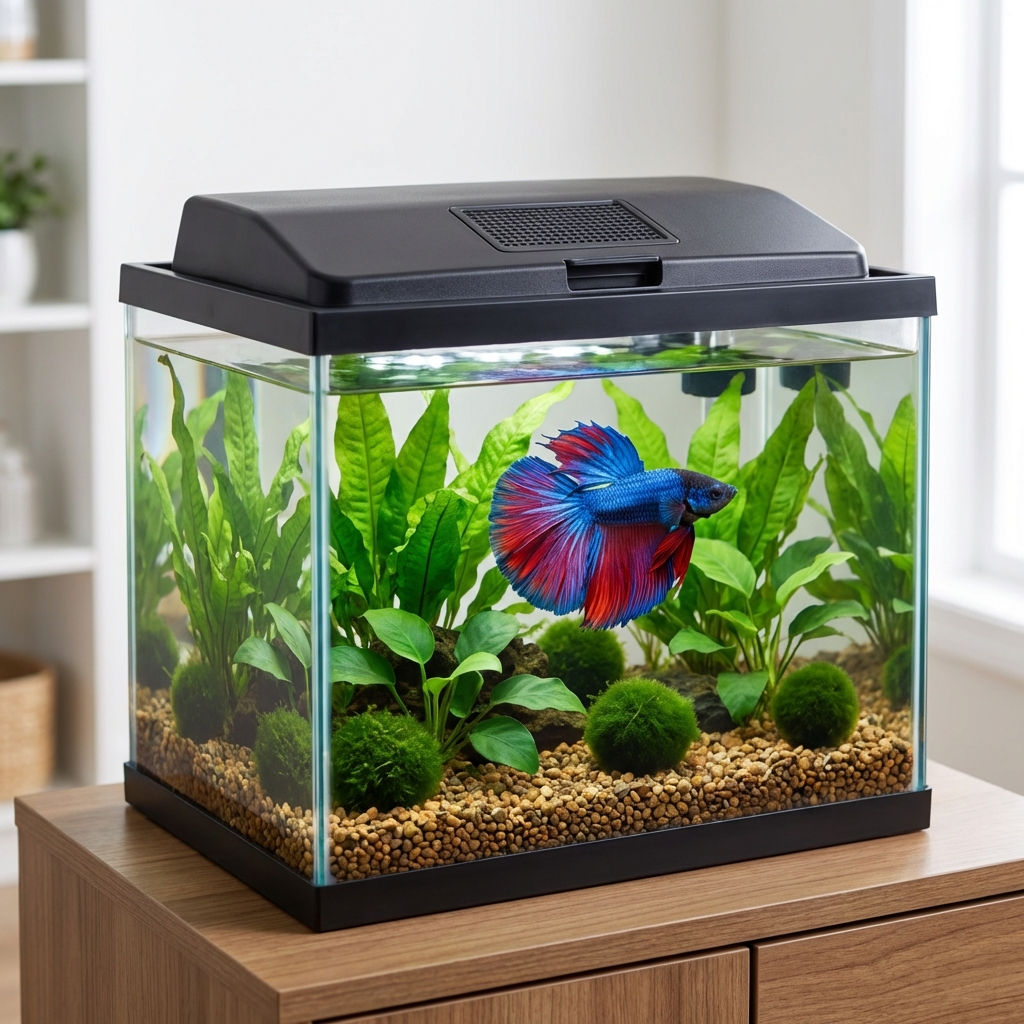
Help your betta thrive with a 5+ gallon, heated tank, gentle filtration, and strong water quality basics. Includes secure lid tips and safe aquarium placemen...
Article
•
Designer Mixes
What Causes Fin Rot in Betta Fish

Shari Shidate
Designer Mixes contributor
Fin rot is one of the more common fin issues betta parents run into, and thankfully, it is often very fixable. The tricky part is that it is rarely “one thing.” Fin rot is usually the end result of stress plus opportunistic microbes taking advantage of damaged fin tissue.
In this handbook, I’ll walk you through the real causes, how to tell fin rot from normal fin changes, what to do right away, and how to prevent it from coming back.
Fin rot, explained
Fin rot is a general term for the progressive breakdown of a fish’s fins. In bettas, it often starts as slightly ragged edges and can advance to shortened fins, darkened edges, holes, or tissue loss moving toward the body.
Most cases involve opportunistic bacteria (often cited in hobby literature as Aeromonas or Pseudomonas) that are commonly present in aquatic environments and take advantage when a fish is stressed or injured. True primary fungal infections are less common. What looks “fungal” (cottony or fuzzy patches) can also be bacterial, including conditions like columnaris, so it is best to focus on environment first and treat based on symptoms and progression.
Important: fin rot is not usually a single “germ” you catch like a cold. It is typically a sign the tank environment is stressing your betta and weakening their natural defenses.
Main causes
1) Poor water quality
This is the number one trigger. When ammonia or nitrite rises, or when nitrates and organics build up over time, it irritates skin and gills and increases stress. That makes it easier for bacteria to invade tiny tears in the fins.
- Ammonia: 0 ppm
- Nitrite: 0 ppm
- Nitrate: aim for under 20 ppm; lower is better
Many keepers see bettas tolerate higher nitrates without immediate drama, but chronically elevated levels can add stress and make fin issues more likely.
2) An uncycled or unstable tank
New tanks often have unstable biology. Without an established nitrogen cycle, waste converts to toxic ammonia and nitrite. Even if the water looks clear, rapid swings in parameters can stress bettas.
If fin rot shows up in a new setup, an incomplete cycle is often the hidden culprit. In uncycled tanks, think in terms of daily testing and frequent smaller water changes (often 10 to 30%) plus conditioner, rather than doing one big change and hoping it settles.
3) Physical fin damage
Fin rot commonly starts after fins get torn or abraded. Once a fin edge is damaged, bacteria have an easy entry point.
- Sharp plastic plants or decor
- Rough rocks or tight holes in ornaments
- Filter intake or strong current pulling fins
- Netting injuries during moves
4) Stress from temperature or environment
Bettas are tropical fish. When they are chilled or their temperature swings day to day, their immune system can take a hit.
- Temperature: aim for a stable 78 to 80°F
- Avoid drafty areas and direct sun that heats the tank unpredictably
- Provide hiding spots and gentle flow
5) Fin nipping or conflict
Even “peaceful” community fish can nip betta fins. Repeated nipping creates repeated wounds, which can spiral into fin rot.
Common fin nippers include some tetras and barbs (individual temperament varies). In many setups, snails and shrimp are usually safer companions than fast, nippy schooling fish, though every betta has their own opinions.
6) Overfeeding and dirty substrate
Uneaten food breaks down into waste, fueling bacteria and raising ammonia. Overfeeding can also contribute to constipation and stress, which can indirectly reduce resilience.
For most bettas, small meals once or twice a day are plenty. Remove uneaten food within a few minutes.
7) Maintenance gaps
Fin rot loves “set it and forget it” tanks, especially when that means no water changes for weeks and mulm building up in the gravel. Even a cycled aquarium needs consistent water changes and light gravel cleaning to keep organics from accumulating.
What it looks like
Common signs
- Ragged, uneven fin edges that worsen over days to weeks
- Fins appear shorter as tissue erodes
- Black, gray, or reddish edges (can be inflammation or necrosis)
- Small holes that expand
- Reduced activity, clamped fins, hiding more than usual (in moderate to severe cases)
How fast it can progress
In mild cases, changes can be slow. In worsening cases, you may notice the edge looks measurably worse within 48 to 72 hours. If you are seeing steady loss every couple of days, treat it as urgent.
Lookalikes
- Tail biting: bettas may bite their own fins due to stress, boredom, or strong current. Edges can look “cleaner” and damage may appear suddenly.
- Natural fin type: some bettas have naturally spiky or uneven fin rays (especially crowntails).
- New fin growth: healing fins can look clear, white, or translucent at the edges. That is usually a good sign.
- Fin tears: a single snag tear can happen without infection. If water quality is excellent, it often heals without medications.
If the fin edge looks worse every few days, assume fin rot or ongoing damage and act quickly. Early intervention is much easier on your betta.
What to do today
Step 1: Test the water
Before you treat, test. Water parameters will guide your next move.
- Use a reliable liquid test kit if possible
- Check ammonia, nitrite, nitrate, and pH
- Confirm temperature with a thermometer
Step 2: Fix the environment
Most mild fin rot improves once conditions improve.
- Do a partial water change (often 25 to 50%, depending on results)
- Match temperature and use dechlorinator
- Reduce strong filter flow (bettas prefer gentle current)
- Remove sharp decor and swap plastic plants for silk or live plants
Step 3: Keep the water very clean for 1 to 2 weeks
Clean water is “medicine” for fins. Consider more frequent small water changes while the fins stabilize, especially in smaller tanks.
If your tank is uncycled or you are seeing any ammonia or nitrite, plan on daily testing and water changes as needed to keep those at 0. Stability comes from consistency, not from a single large reset.
Step 4: Do not chase pH
Testing pH is useful, but the goal is stability. A steady, reasonable pH is generally safer than trying to “hit a number” with chemicals that cause swings.
Step 5: Consider quarantine if needed
If your betta is in a community tank, a simple hospital tank can reduce stress and prevent nipping while you treat.
How bad is it?
Mild
- Slight fraying, no rapid progression
- Betta is active and eating
Plan: Focus on clean, stable water, remove sharp items, reduce flow, and monitor photos every 2 to 3 days.
Moderate
- Noticeable tissue loss over a week, worsening edges, holes spreading
- Clamped fins or reduced activity
Plan: Step up water quality efforts, consider a hospital tank, and be ready to medicate if progression continues despite improved conditions.
Severe
- Rot approaching the body, heavy redness, dark necrotic edges
- Not eating, rapid decline, other systemic signs
Plan: Hospital tank plus targeted treatment. If you can access an aquatic veterinarian, this is the time. Severe cases can escalate quickly.
Medication
Not every torn fin needs medication. Unnecessary meds can stress fish, harm plants and invertebrates, and disrupt beneficial bacteria, especially in small tanks. If the fin edges are stable or improving and water is excellent, you can often let the fins regrow naturally.
Consider meds when
- Fin loss is actively progressing despite improved water quality
- You see worsening redness, dark necrotic edges, or the rot nearing the body
- Your betta is lethargic, not eating, or showing signs of systemic illness
General treatment options
- Antibacterial medications: often used for true bacterial fin rot. Use a product appropriate for gram-negative bacteria when indicated.
- “Fungus” symptoms: cottony growth can be fungal or bacterial (including columnaris). Treat based on the product’s label and the full symptom picture, not just appearance.
- Aquarium salt: sometimes used short-term in specific cases, but it is not ideal for all setups and can stress some fish and plants. Dose carefully and avoid long-term use unless guided by an experienced aquatic vet or fish professional.
Safety note: Always follow label directions, and remove chemical media like carbon (and similar resins such as Purigen) when instructed. Be aware that some OTC medications are not plant or invert safe, and some can impact biofiltration. If your betta has severe tissue loss near the body, swelling, pineconing, or rapid decline, contact an aquatic veterinarian if possible.
Prevent it from coming back
Build a betta-friendly setup
- Tank size: 5 gallons or larger is easier to keep stable
- Heater: keep temperature stable around 78 to 80°F
- Gentle filtration: sponge filters or baffled flow work well
- Safe decor: silk plants, smooth driftwood, live plants
Keep a simple maintenance rhythm
- Test water regularly, especially after changes or new additions
- Partial water changes weekly (often 20 to 30% in a cycled 5 to 10 gallon tank, adjusted based on nitrate and stocking)
- Light gravel vacuuming to remove waste pockets
- Rinse filter media in removed tank water, not tap water
Feed for health
A high-quality betta pellet as a staple plus occasional frozen foods (like brine shrimp or bloodworms in moderation) can support overall health. The goal is a well-fed betta without excess waste polluting the tank.
Reduce stress
- Limit aggressive tankmates and avoid known fin nippers
- Provide hiding spots and resting leaves near the surface
- Keep lighting on a consistent schedule
- Avoid frequent full tank cleanouts, which destabilize the cycle
Quick checklist
- Are ammonia and nitrite at 0 ppm?
- Are nitrates controlled with routine water changes?
- Is the tank cycled and stable?
- Is the temperature steady at 78 to 80°F?
- Is the filter flow gentle enough for a betta?
- Is there anything sharp in the tank?
- Any fin nipping from tankmates?
- Is the fin edge improving, stable, or getting worse every few days?
If you address the environment first, you will solve the root cause in the majority of cases. And once the tank is stable, bettas can regrow fins surprisingly well, one calm, clean-water day at a time.