Worried about dog eye boogers? Learn what’s normal vs concerning, how discharge color and behavior signal trouble, safe cleaning steps, and when to call yo...
Article
•
Designer Mixes
What Causes Eye Boogers in Dogs

Shari Shidate
Designer Mixes contributor
If you have ever looked at your dog’s sweet face and noticed crusty eye corners, you are definitely not alone. As a veterinary assistant here in Frisco, Texas, I hear this question all the time: “Are eye boogers normal, or is something wrong?”
The helpful answer is: some eye discharge can be normal, but changes in color, thickness, amount, or your dog’s comfort can signal irritation or illness. Let’s walk through the most common causes, what you can safely do at home, and when it is time to call your vet.
What are eye boogers?
Eye boogers are a mix of tears, mucus, skin oils, and tiny bits of dust or debris that collect in the inner corner of the eye. Most dogs produce some discharge, and it can dry into crust overnight.
What is usually normal
- Small amount of clear or light tan crust, especially after sleep
- No redness of the eye or eyelids
- No squinting, pawing at the face, or light sensitivity
- No odor and no thick, sticky buildup
What is not normal
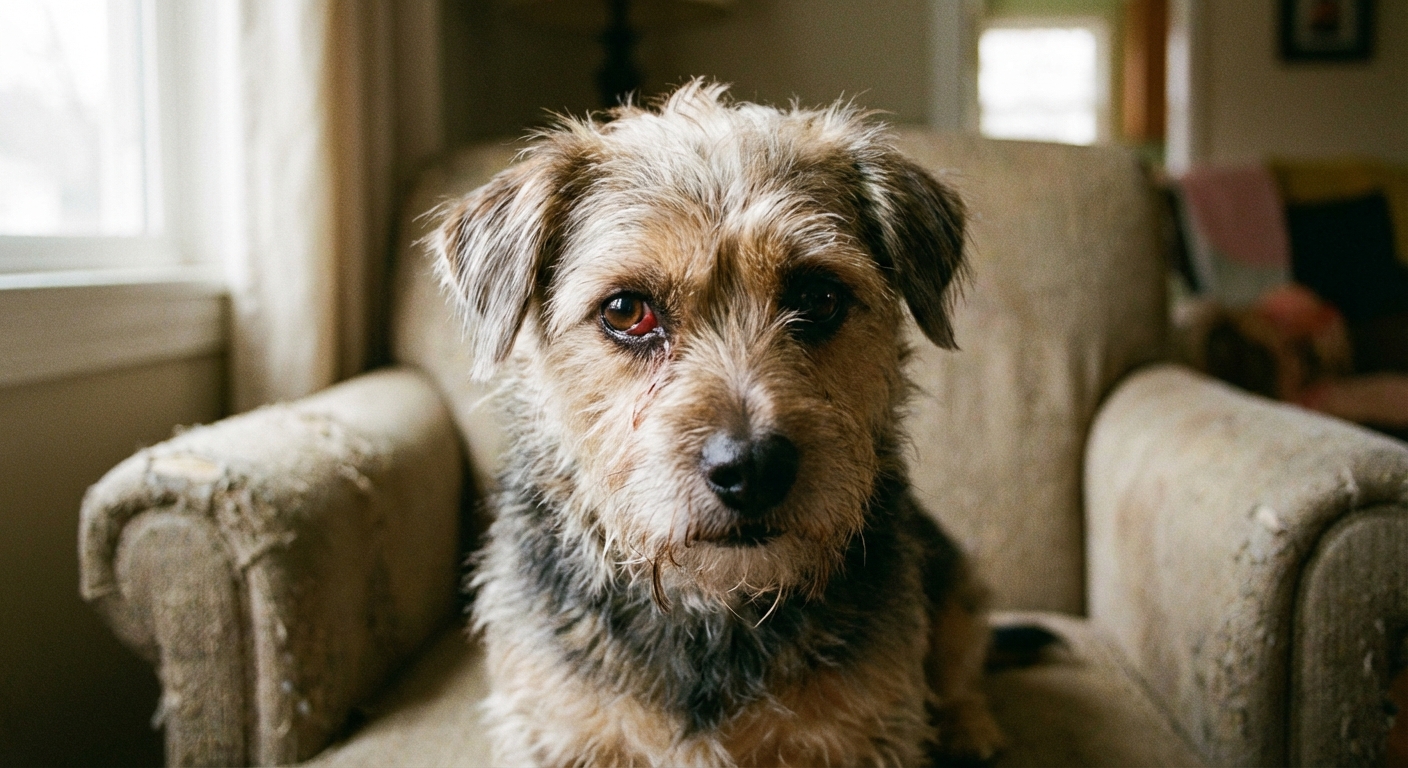
- Yellow or green discharge, or any unusual color that worries you
- Thick, sticky, or stringy mucus that returns quickly after wiping
- Redness, swelling, squinting, or obvious discomfort
- Cloudy eye, a blue haze, or changes in pupil size
- One eye only suddenly producing a lot of discharge
Common causes
Think of eye discharge as a clue. It helps us narrow down what the eye is reacting to. Some causes are mild, and some need treatment quickly.
1) Allergies
Allergies are one of the most common reasons I see mild, recurring discharge. Pollen, grass, mold, dust, and even household cleaners can irritate the eye surface.
Often seen with: watery eyes, mild redness, sneezing, licking paws, ear irritation.
2) Irritants and debris
Windy days, yard work, and riding with a head out the car window can blow dust, sand, or plant bits into the eye. Even a tiny piece of debris can cause tearing and mucus.
Often seen with: sudden tearing, blinking, squinting, one eye affected more than the other.
3) Dry eye (KCS)
Dry eye happens when a dog does not produce enough tears to protect the cornea. Without healthy tears, the eye gets inflamed and produces thick, sticky discharge. This can become a long-term condition if untreated.
Often seen with: ropey mucus, dull or dry-looking eye surface, frequent squinting, repeated infections.
4) Conjunctivitis (pink eye)
Conjunctivitis is inflammation of the tissues around the eye. It can be triggered by allergies, irritants, dry eye, or infection. The key is that conjunctivitis is usually a symptom, not the whole story. The best treatment depends on the underlying cause.
Often seen with: red or swollen conjunctiva, watery to thick discharge, rubbing the face.
5) Infection
Bacteria can take advantage of irritated eyes. Discharge may become yellow or green, and eyelids can look puffy or sticky. That said, a pus-like discharge can also show up with severe inflammation, dry eye, or a foreign body, so an exam matters.
Important: Not all eye discharge means bacteria, and using leftover eye meds can delay the correct treatment. Eye problems can worsen quickly.
6) Tear overflow and drainage issues
Tears normally drain through small ducts. When drainage is poor or the face shape causes tears to spill over (which is very common in small and flat-faced breeds), you can see wet staining and crusting. True tear duct blockage is possible, but overflow from anatomy is more common than an actual “blockage.”
Often seen with: chronic tear staining, damp fur under the eyes, mild crusting.
7) Eyelid or eyelash problems
Some dogs have eyelids that roll inward (entropion) or outward (ectropion), or extra lashes that rub the eye. Constant rubbing irritates the cornea, causing tearing and discharge.
Often seen with: chronic squinting, watery eyes, recurring discharge, facial rubbing.
8) Flat-faced breed anatomy
Flat-faced breeds like Pugs, Shih Tzus, Bulldogs, and Pekingese often have prominent eyes and facial folds that trap moisture and debris. Because the eyes can be more exposed (and sometimes do not get as much protective blink coverage), these dogs can have more discharge and tear staining, and they are also at higher risk for corneal injury.
Two other issues I like to mention here because they are common and very visible are cherry eye (a pink or red bulge at the inner corner of the eye from the third eyelid gland) and eyelid lumps or bumps. Both can cause irritation and discharge and should be checked by your vet.
9) Corneal scratch or ulcer
A corneal ulcer can start with something as simple as a poke from a plant or rough play. It is painful and can become serious fast.
Often seen with: squinting, tearing, holding the eye closed, pawing at the face, light sensitivity.
10) Serious eye disease
Conditions like glaucoma, uveitis, and certain lens problems can cause watery eyes, redness, and discomfort. These problems can be urgent or emergent, and vision can be lost, so do not wait if your dog seems painful or the eye looks abnormal.
Color guide
Color alone cannot diagnose the cause, but it can help you decide how quickly to get your dog seen.
- Clear and watery: often allergies, irritants, early irritation
- White or light gray mucus: irritation, dry eye, mild inflammation
- Yellow or green: can suggest infection or significant inflammation (including dry eye or a foreign body), and needs an exam
- Rusty brown tear staining: tear overflow, facial folds, chronic wetness, sometimes yeast or bacteria on the fur (not necessarily in the eye)
- Bloody or pink-tinged: trauma, severe inflammation, or a serious problem that needs prompt vet attention
Safe home care
If your dog seems comfortable and the discharge is mild, here are gentle steps that are usually safe.
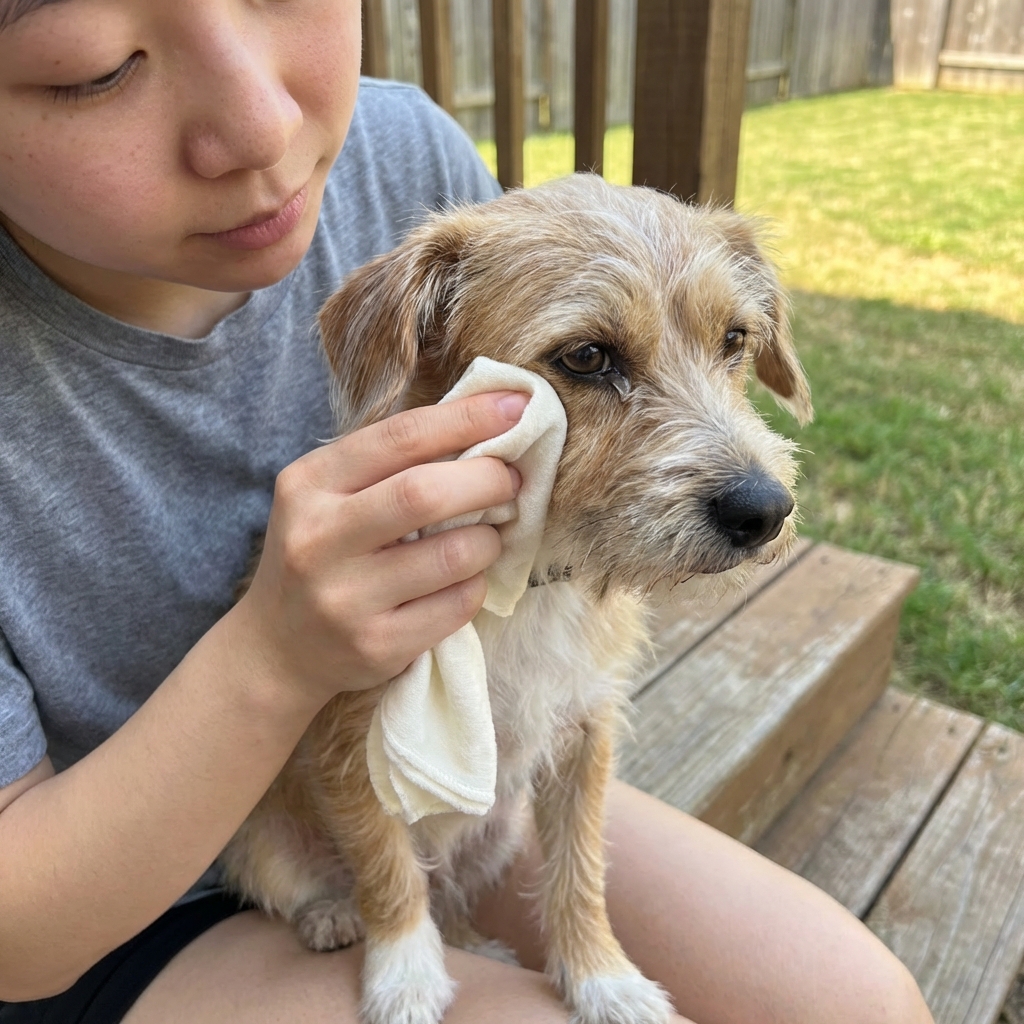
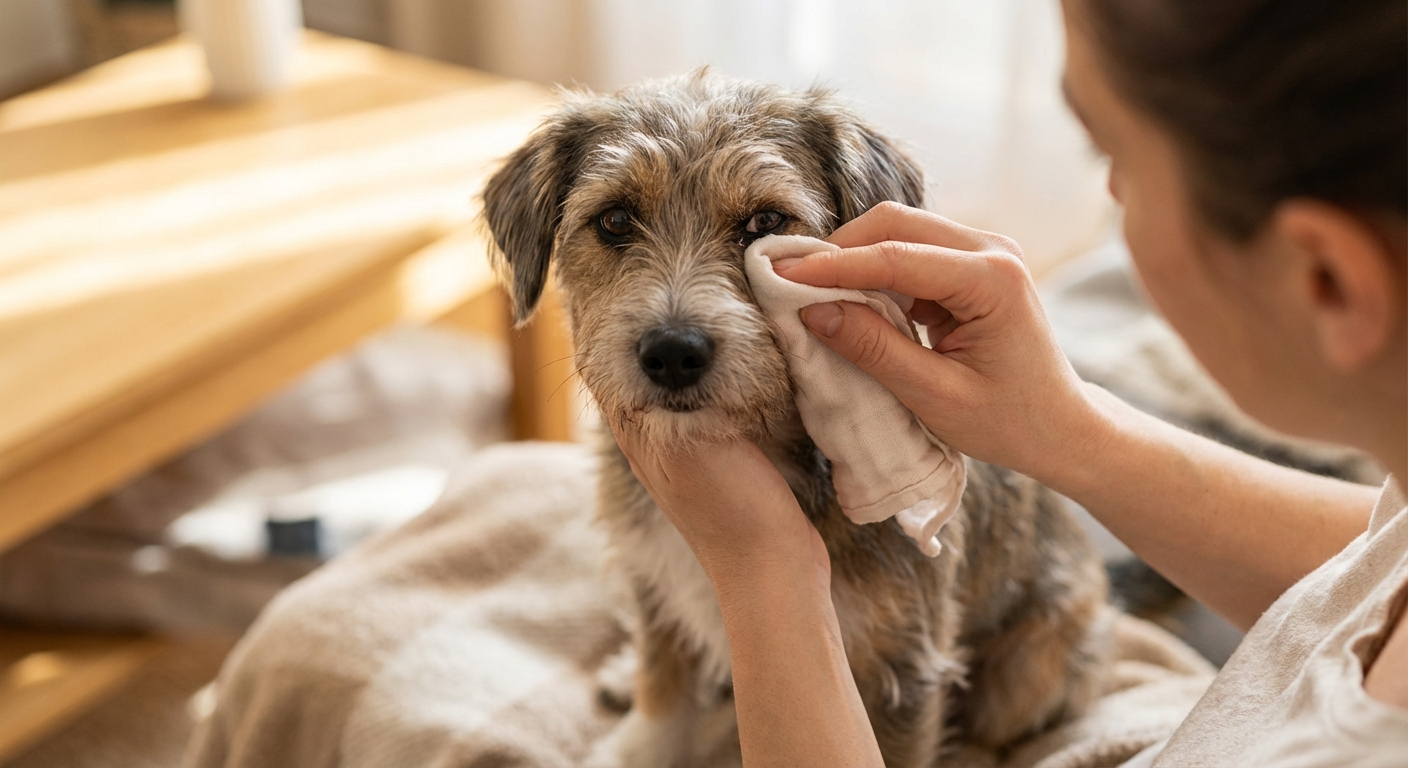
1) Clean the corners with a soft, damp cloth
- Use lukewarm water or plain sterile saline eyewash.
- Avoid contact lens solutions, especially ones with cleaners or additives.
- Wipe from the inner corner outward.
- Use a clean part of the cloth for each eye to avoid spreading infection.
2) Try a warm compress for stubborn crust
Hold a warm, damp cloth on the closed eye for 30 to 60 seconds to soften crust, then gently wipe away.
3) Reduce irritants
- Avoid smoke, strong fragrances, and harsh cleaning sprays.
- During high pollen days, wipe your dog’s face after walks.
- Consider keeping car windows up if your dog rides with their head near the window.
4) Keep facial hair and folds clean
For dogs with long face hair or wrinkles, regular hygiene helps prevent buildup that can irritate the eyes.
What to avoid
- Do not use human eye drops unless your veterinarian specifically recommends a product.
- Do not use leftover antibiotic ointments from a past issue.
- Do not use peroxide or alcohol near the eye.
- Do not try to pull out something stuck in the eye. If you see a foreign object, or your dog is squinting hard, seek urgent care.
- Avoid aggressive flushing at home if your dog is painful or you suspect an ulcer.
When to call the vet
Eye issues are one of those things where waiting can sometimes turn a small problem into a big one. I always tell pet parents: if your gut says your dog is in pain, trust that.
Call your vet within 24 hours if you notice
- Yellow or green discharge
- Redness or swelling
- Frequent blinking or squinting
- Discharge that returns quickly after cleaning
- One eye suddenly worse than the other
- A new lump on the eyelid, a raised third eyelid, or a “cherry eye” look
Call sooner if
- Your dog has a history of corneal ulcers or dry eye
- Your dog is a flat-faced breed (they can go from irritated to ulcerated quickly)
- Your dog recently had rough play, grooming near the eye, or ran through brush
Seek urgent care now if you notice
- Your dog is holding the eye closed or crying out
- A cloudy or blue-looking eye
- A visible scratch, puncture, or something stuck in the eye
- The eye looks enlarged, bulging, or very red
- Sudden vision changes, bumping into things, or extreme light sensitivity
At the clinic, your team may do a fluorescein stain to check for ulcers, a Schirmer tear test for dry eye, and sometimes measure eye pressure if glaucoma is a concern.
Prevention tips
- Daily quick wipe: especially for flat-faced or small breeds prone to tear overflow
- Grooming: keep hair trimmed away from eyes
- Nutrition and hydration: a well-balanced diet supports the immune system and healthy tissues
- Regular checkups: chronic discharge deserves a real diagnosis, not just repeated cleaning
- Protect the eyes: avoid thorny brush and consider a harness instead of a collar if your dog pulls hard
If you are seeing the same eye booger problem week after week, it is worth asking your veterinarian about dry eye, eyelid issues, and tear overflow. Once you treat the root cause, the daily crust often improves dramatically.
Quick FAQ
Why does my dog have eye boogers every morning?
A small amount of morning crust can be normal. If it is increasing, changing color, or paired with redness or squinting, consider allergies, dry eye, or irritation and check with your vet.
Are eye boogers contagious between dogs?
Allergies and irritants are not contagious. Some infectious causes can spread, but “pink eye” in dogs is often secondary to something else. If multiple pets in the home develop discharge, talk to your vet.
Do tear stains mean infection?
Not always. Tear staining is commonly from overflow and damp fur. However, damp skin can allow yeast or bacteria to grow on the fur, so keeping the area clean and dry matters.