Vet-informed guide to a short-term bland diet for dogs: chicken and rice 1:2 ratio, daily cup ranges by weight, how many meals to split into, and red flags t...
Article
•
Designer Mixes
What Causes Dogs to Have Diarrhea

Shari Shidate
Designer Mixes contributor
Diarrhea is one of the more common reasons families call their vet. Sometimes it is as simple as your dog sneaking table scraps. Other times it is your dog’s body waving a red flag that something bigger is going on. The good news is that many mild cases improve quickly with the right at-home support and smart monitoring.
As a veterinary assistant here in Frisco, Texas, I’ve seen how stressful this can feel, especially when you’ve got kids in the house and you’re trying to figure out what’s safe, what’s urgent, and what to do next. This article is for general education and does not replace veterinary advice for your specific dog.
What diarrhea means
Diarrhea is not a diagnosis by itself. It is a symptom. It happens when the intestines move things along too quickly, don’t absorb water well, or become inflamed. That’s why diarrhea can look a little different from dog to dog.
- Large-bowel diarrhea: frequent small stools, mucus, straining, urgency, and needing to go out often.
- Small-bowel diarrhea: larger volume stools, fewer trips (less urgency), and you may see weight loss, poor appetite, or dark, tarry stool (digested blood) in more serious cases.
Watery stool can happen with either type. The pattern (volume, urgency, frequency) is often more helpful than the “watery vs. soft” description.
Common causes at home
1) Dietary indiscretion
This is the number one cause I see. Dogs get into trash, greasy food, fatty leftovers, new treats, bones, or dropped snacks from kids.
- Clues: sudden onset, otherwise acting mostly normal, mild stomach gurgling, sometimes vomiting once.
- Why it happens: the gut reacts to fat, spice, bacteria, or simply a new ingredient.
2) Switching foods too fast
Even a high-quality food can cause diarrhea if introduced too quickly. The gut microbiome needs time to adjust.
- Clues: diarrhea begins within 1 to 3 days of a new food or new treats.
- Tip: transition slowly over 7 to 10 days whenever possible.
3) Parasites
Giardia, roundworms, hookworms, and whipworms can all cause diarrhea. Puppies are especially vulnerable, but adults can pick parasites up from parks, daycare, or wildlife droppings.
- Clues: soft stool that keeps coming back, mucus, foul smell, weight loss, or a greasy look to the stool. Giardia often causes very smelly stool. Scooting can happen sometimes, but it is also common with anal gland irritation.
- Family note: some parasites can affect people, especially young kids. Handwashing matters.
4) Stress
Yes, dogs get “stress stomach” too. Boarding, visitors, travel, storms, moving homes, and even changes in family schedule can trigger diarrhea.
- Clues: diarrhea starts during a stressful event, dog is otherwise bright and eating.
5) Food intolerance or allergy
Some dogs don’t tolerate certain proteins, dairy, or rich foods. True food allergies are less common than intolerance, but both can cause GI upset.
- Clues: recurring loose stool, gas, itching, ear infections, or licking paws along with GI issues.
6) Infection
Dogs can pick up contagious GI bugs, especially in group settings (daycare, dog parks, shelters). Sometimes bacteria like Salmonella or Campylobacter are involved, and viruses can also trigger diarrhea. Many acute diarrhea cases never get a specific “named” bug without testing.
- Clues: lethargy, fever, vomiting, poor appetite, watery diarrhea, sometimes blood.
- Family note: be extra careful cleaning up stool. Some infections can spread to humans.
7) Meds and supplements
Antibiotics, NSAIDs, dewormers, and even some supplements can upset the gut.
- Clues: diarrhea starts shortly after beginning a new medication.
- Action: call your vet before stopping any prescribed medication.
8) Swallowed objects
Foreign bodies (swallowed toys, socks, corn cobs, bones, chews) can irritate the gut or cause a blockage. Diarrhea can happen, but vomiting, appetite loss, and abdominal pain are common too.
- Clues: vomiting that repeats, refusing food, belly pain, straining without producing much, or a history of chewing and swallowing non-food items.
9) Chronic conditions
If diarrhea is ongoing or keeps returning, your vet may look for inflammatory bowel disease (IBD), pancreatitis, endocrine disease (like Addison’s), liver disease, or other chronic problems.
- Clues: diarrhea lasting more than a few days, weight loss, recurring vomiting, appetite changes, frequent flare-ups.
When to get help
Trust your instincts. If your dog seems “off,” it is always okay to call your vet or an emergency clinic.
Go now
- Repeated vomiting or cannot keep water down
- Lethargy, weakness, collapse or pale gums
- Signs of dehydration (dry gums, sunken eyes, tacky saliva)
- Severe abdominal pain (praying position, whining when picked up)
- Possible toxin exposure (chocolate, xylitol, grapes/raisins, medications, rodent poison)
- Possible foreign body (swallowed toy, bone, sock) especially with vomiting or belly pain
Call today
- Blood in stool (bright red or dark, tarry black)
- Very frequent diarrhea (for example, repeated episodes like hourly) or uncontrollable accidents
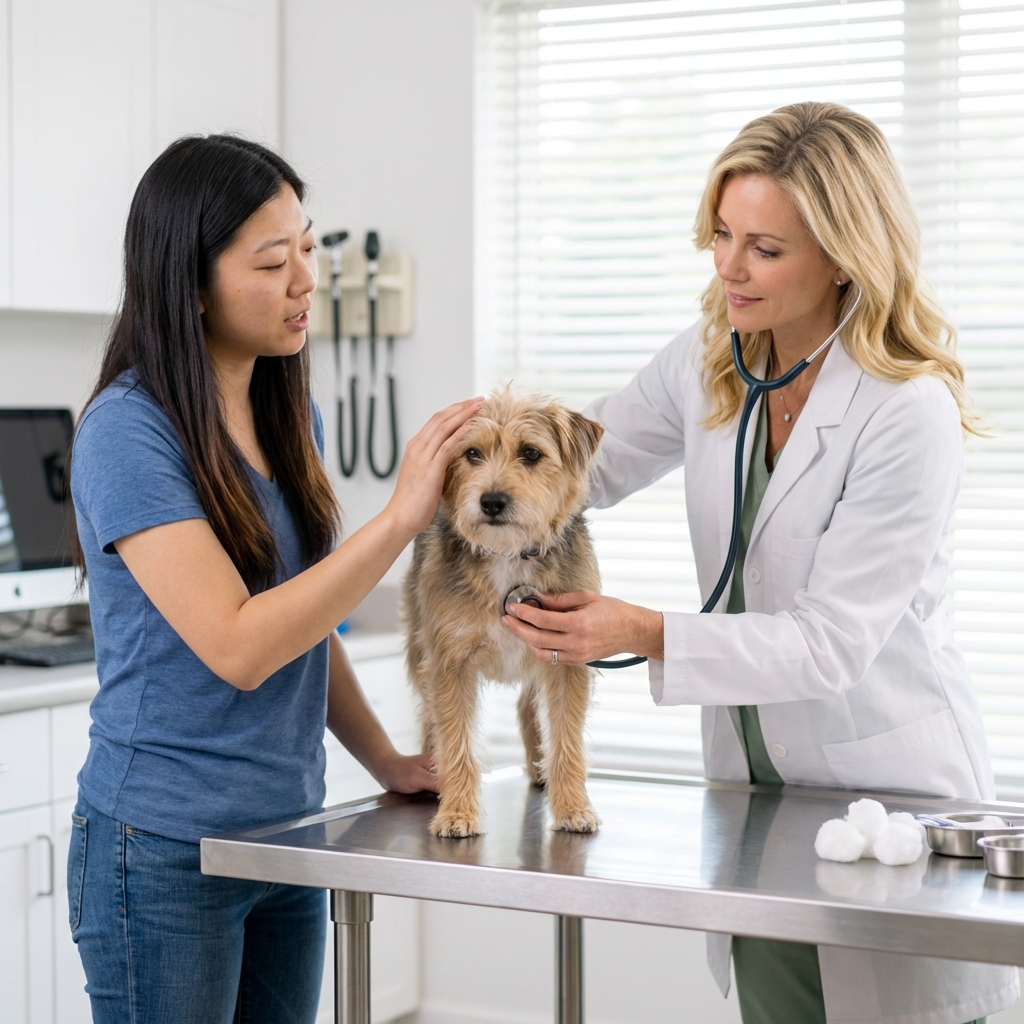
- Puppies, seniors, or dogs with chronic disease (they dehydrate faster)
- Diarrhea lasting more than 24 to 48 hours even if mild, or sooner if your dog is tiny, very young, or you are seeing any decline
First steps at home
If your dog is bright, drinking, and only has mild diarrhea, these steps are typically safe while you monitor closely. If you are unsure, call your vet first.
Step 1: Stop rich extras
For the next 24 to 48 hours, keep it simple. No chews, no scraps, no new foods, no fatty treats.
Step 2: Protect hydration
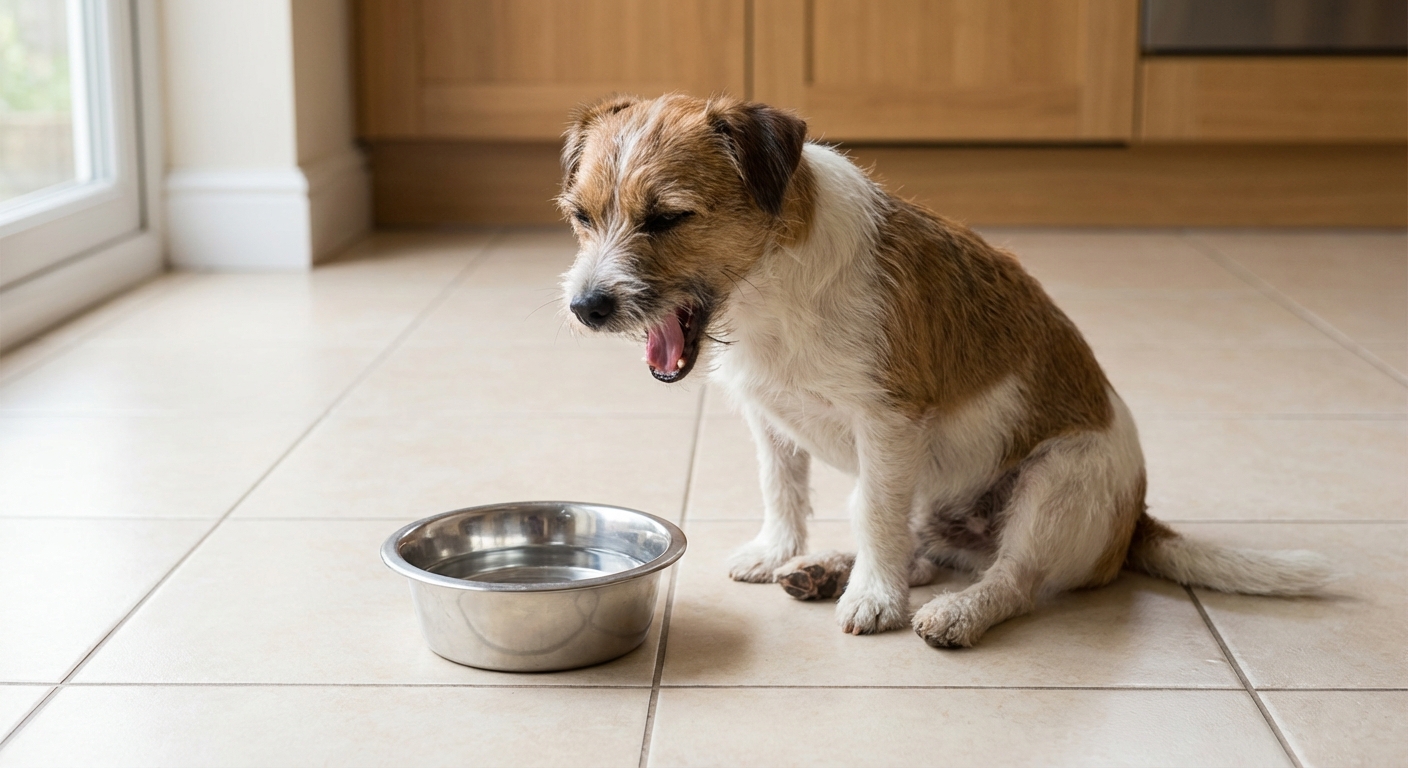
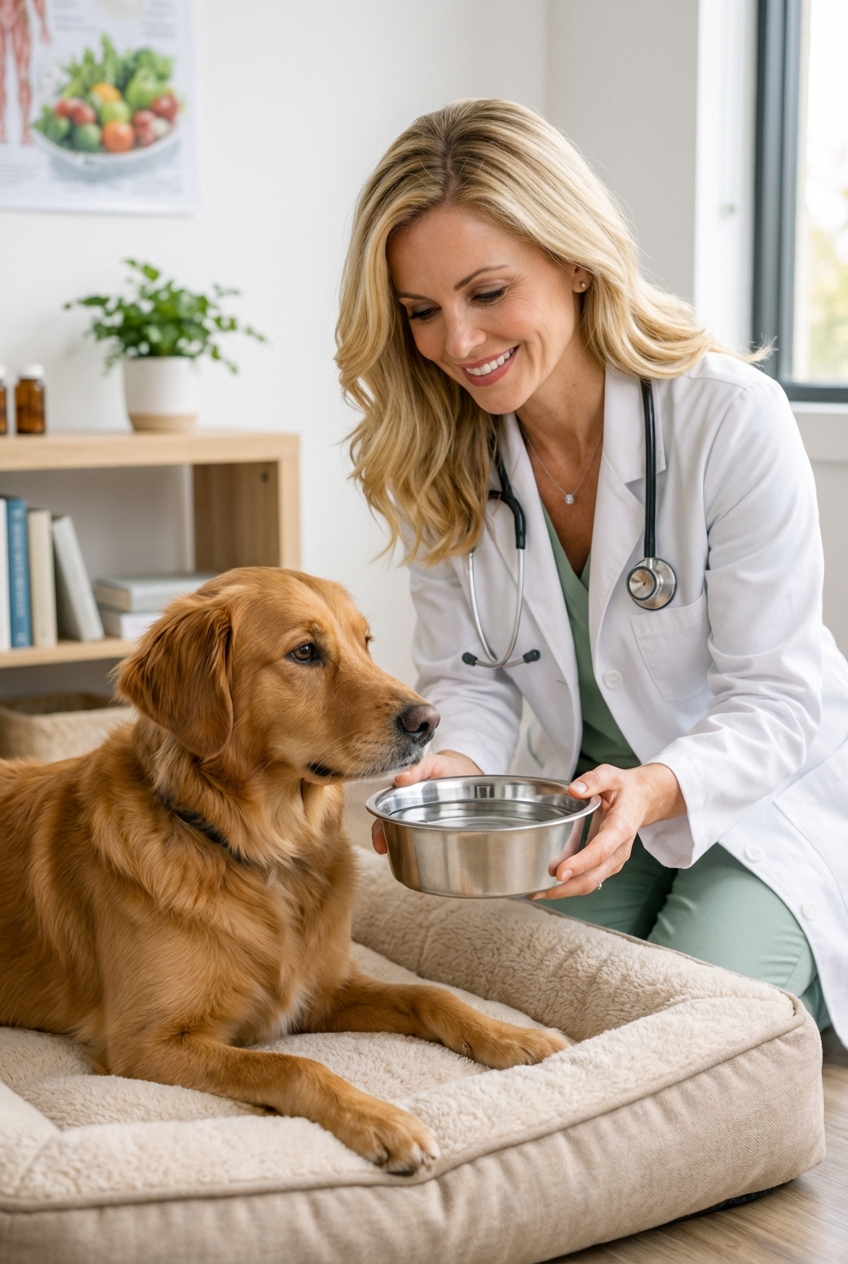
Water is the priority. Offer frequent chances to drink. If your dog is not drinking, is vomiting, or seems weak, that is a vet visit.
- For some dogs, adding a small amount of low-sodium broth to water can encourage drinking.
- Ice chips can help some nauseated dogs, but do not force them.
Step 3: Short bland diet
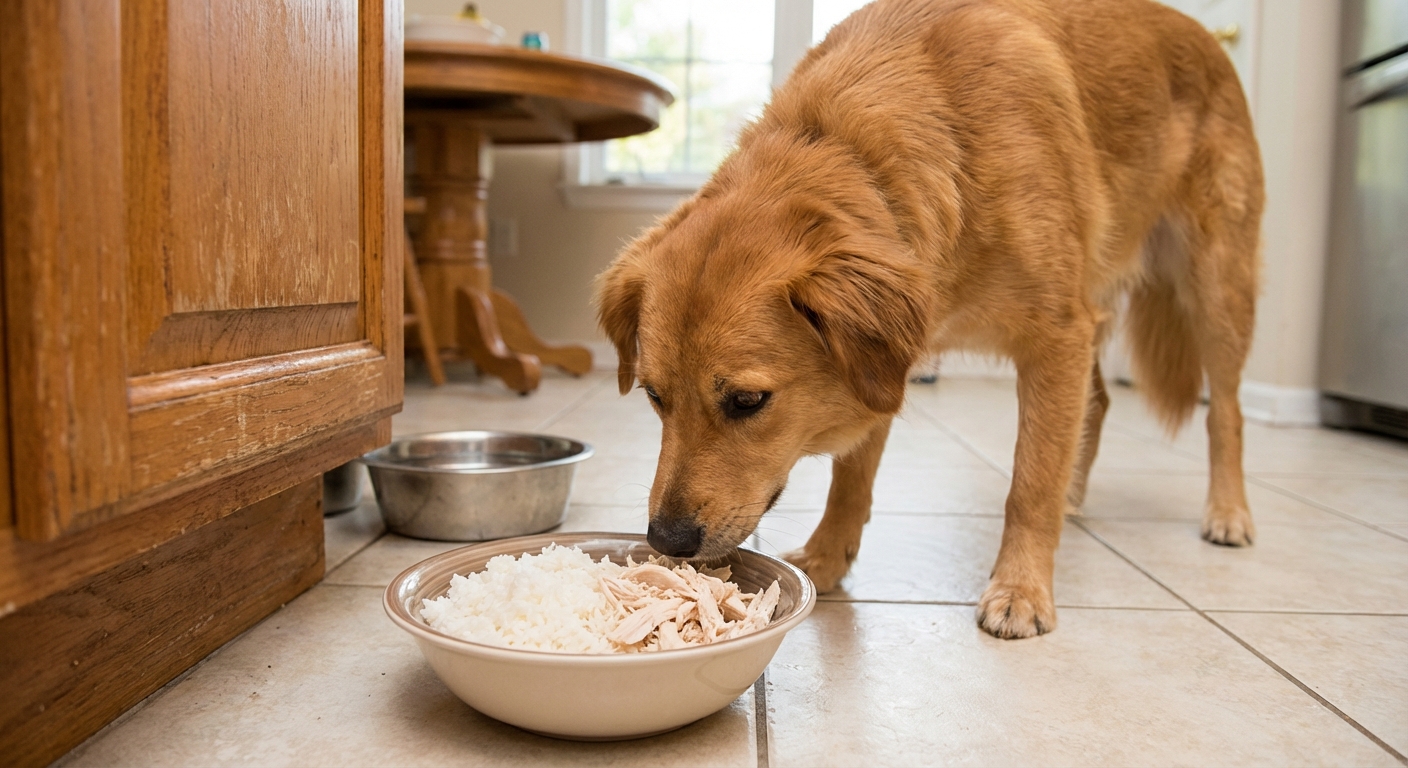
A bland diet can give the gut a break for a short window (often 2 to 3 days), then you can slowly transition back to normal food as stools firm up. Common vet-approved options include boiled skinless chicken breast with white rice, or lean ground turkey with white rice. Ask your vet about portions for your dog’s size.
Important: avoid seasoning, oils, butter, onion, and garlic in bland meals. Many families accidentally “make it tasty” and that can worsen diarrhea.
Step 4: Probiotic
Probiotics may support the gut microbiome. Choose a product made for dogs and follow label directions. If your dog is on antibiotics, a probiotic may help, but ask your veterinarian about product choice and timing.
Step 5: Light activity
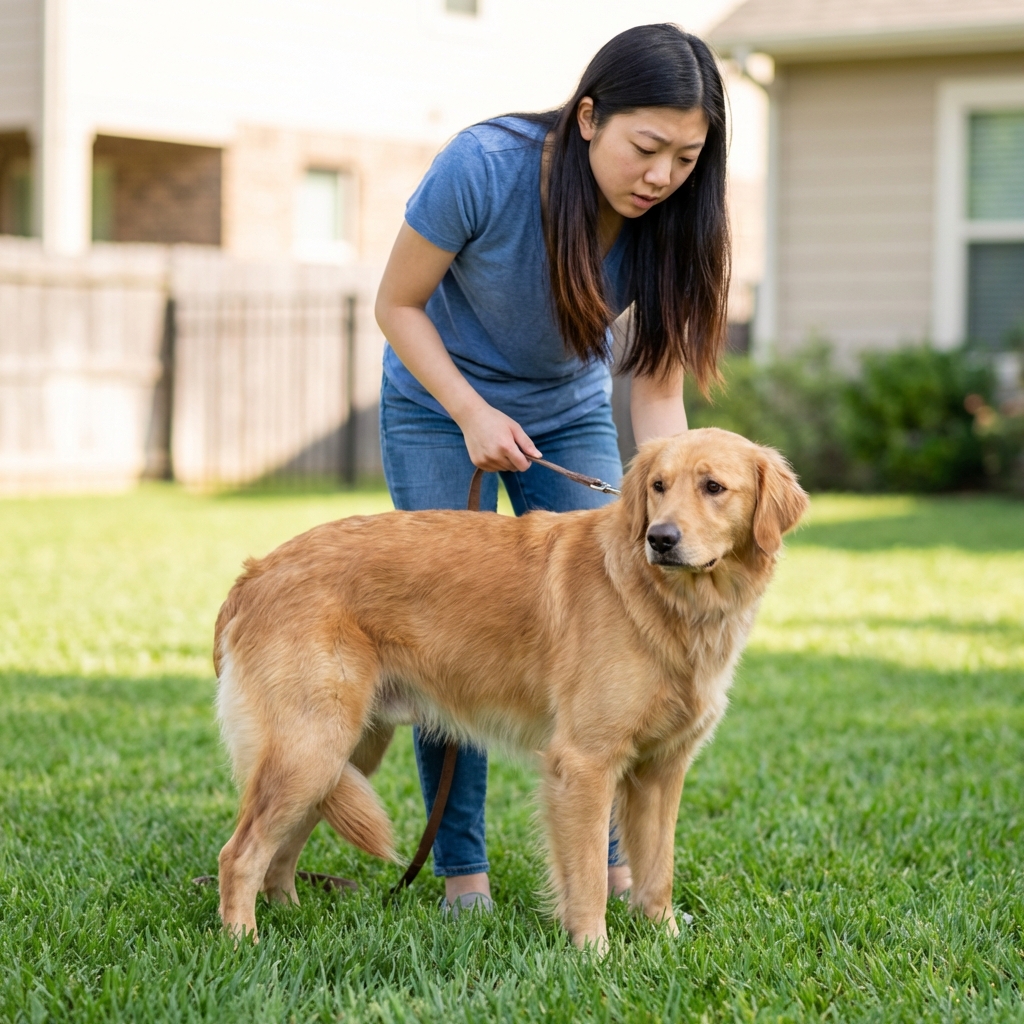
Skip intense exercise for a day or two, but keep normal potty breaks. Light activity and extra chances to go outside can reduce accidents when urgency is high.
What not to do
- Do not give human anti-diarrhea meds unless your veterinarian specifically instructs you to. Some are unsafe for dogs, and they can mask serious illness.
- Do not fast puppies without veterinary guidance. Small bodies can crash quickly.
- Do not keep a bland diet going long-term unless your vet directs it. It is meant as a short, supportive reset, not a complete long-term plan.
- Do not ignore recurring diarrhea that keeps returning. Chronic gut inflammation can worsen over time.
- Do not change foods repeatedly every time stool is loose. Too many switches can keep the gut unstable.
Hygiene tips
If diarrhea might be contagious (daycare exposure, new dog in the home, multiple pets with symptoms), treat cleanup like you would with a stomach bug in the house.
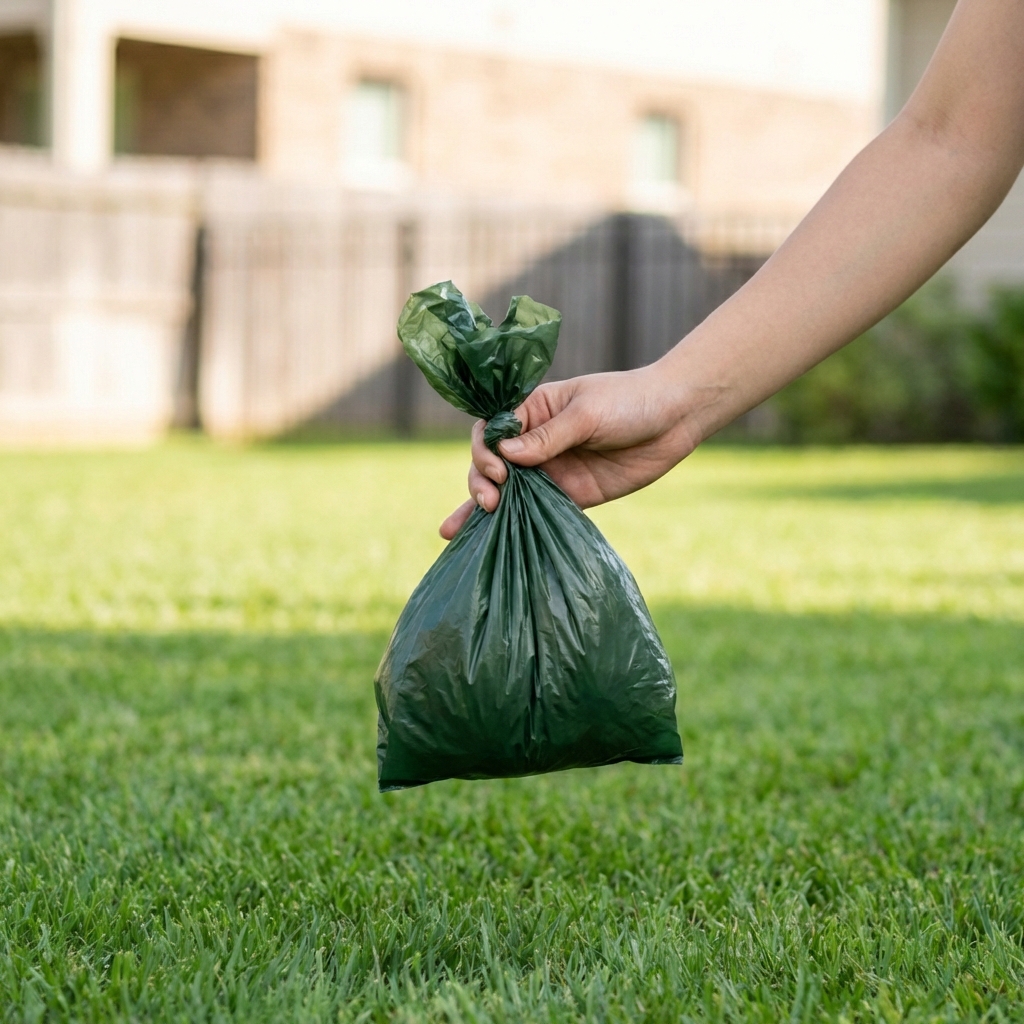
- Pick up stool right away and tie bags securely.
- Wash hands after handling your dog, cleaning accidents, or touching outdoor shoes.
- Keep kids away from stool and “sniff zones” in the yard.
- Clean hard surfaces with an appropriate disinfectant. Ask your vet what works best for suspected parasites like Giardia.
- Consider separating sick pets from other pets until stools are normal.
What to track
If you end up calling or visiting the vet, a few notes from home make things faster and more accurate.
- When it started and how many times per day
- Stool look: watery, pudding-soft, formed but soft, any mucus
- Any blood (bright red vs. dark, tarry)
- Vomiting, appetite changes, energy level
- Hydration clues: drinking normally, gum moisture (tacky or wet), peeing less than normal
- Diet history, including new treats, chews, bones, or table scraps
- Any known trash-raiding, toxin risk, or chewing and swallowing objects
- Exposure risks: daycare, dog park, boarding, new pets, wildlife
- Current medications and supplements
A photo of the stool can help, and if you can safely bring a fresh stool sample (your clinic can tell you how), that often speeds up parasite testing.
What your vet may do
Every clinic and case is a little different, but here are common next steps so you know what to expect:
- Fecal testing for parasites (and sometimes a Giardia-specific test)
- A deworming plan if parasites are suspected or confirmed
- Diet trial or prescription GI diet for recurring cases
- Probiotics or gut-support medications when appropriate
- Bloodwork if your dog is systemically ill, dehydrated, or symptoms keep returning
- Pancreatitis testing if there is vomiting, belly pain, or a history of fatty food exposure
- X-rays or ultrasound if a foreign body or other abdominal issue is a concern
Prevention for busy families
You do not need perfection. Small, consistent habits really do reduce tummy trouble.
- Kid-proof snacks: use lidded trash cans and keep backpacks and lunchboxes off the floor.
- Keep treat rules simple: one type of treat, small portions, and no surprise people food from the table.
- Transition food slowly: mix old and new food over 7 to 10 days.
- Stay current on fecal testing and parasite prevention: ask your vet what schedule fits your dog’s lifestyle.
- Be cautious at dog parks: avoid areas with lots of stool residue and don’t let your dog drink standing water.
- Choose chews wisely: overly rich chews are a common trigger. Introduce new chews in tiny trial amounts.
If your dog’s diarrhea is mild but keeps coming back, that’s a sign to dig deeper with your veterinarian. Repeating cycles are often about parasites, diet intolerance, pancreatitis risk, or chronic gut inflammation.
Quick checklist
- Go now if there is repeated vomiting, collapse, severe dehydration signs, toxin exposure, severe pain, or a possible swallowed object.
- Call today if there is blood, very frequent diarrhea, your dog is a puppy or senior, or it lasts more than 24 to 48 hours (sooner for tiny dogs or if anything worsens).
- Monitor 12 to 24 hours if it is mild, your dog is acting normal, and there are no red flags. If anything changes, call.
Your goal is simple: protect hydration, keep meals gentle, and get help quickly when the signs point to more than a minor stomach upset.