Help your dog feel better with gentle homemade meals for sensitive stomachs. Learn a 3-ingredient bland reset, easy recipes, transition steps, and what signs...
Article
•
Designer Mixes
What Causes Dog Gas

Shari Shidate
Designer Mixes contributor
Dog gas is one of those things that can be funny for about two seconds, and then you start wondering, Is this normal? As a veterinary assistant, I can tell you most gassiness is diet or habit related, and it often improves with a few simple changes. But sometimes frequent, foul-smelling gas is your dog’s way of telling you something deeper is going on in the gut.
This quick guide breaks down the most common causes of gas, what you can try at home, and when it’s time to loop in your veterinarian.

Quick signs gas is not normal
Every dog passes gas occasionally. What matters is the pattern. As a rough rule, if you’re noticing gas daily (or it’s suddenly happening multiple times a day), it is worth a closer look. Pay closer attention if you notice:
- Gas that is suddenly much more frequent
- Very strong odor that persists for days
- Soft stool, diarrhea, mucus, or blood
- Vomiting or repeated lip-licking and nausea
- Bloating, restlessness, or a painful-looking belly
- Weight loss, poor appetite, or a dull coat
If your dog has a swollen abdomen and is trying to vomit but can’t, that can be a sign of bloat (GDV), an emergency that is more common in deep-chested breeds. Don’t wait it out.
Most common causes of dog gas
1) Eating too fast and swallowing air
Dogs who inhale their meals also swallow extra air, which can show up as burping and gas. This is especially common in multi-dog households or in dogs who feel rushed at mealtime. It can also be more common in flat-faced (brachycephalic) breeds like Bulldogs, Pugs, and Boston Terriers.
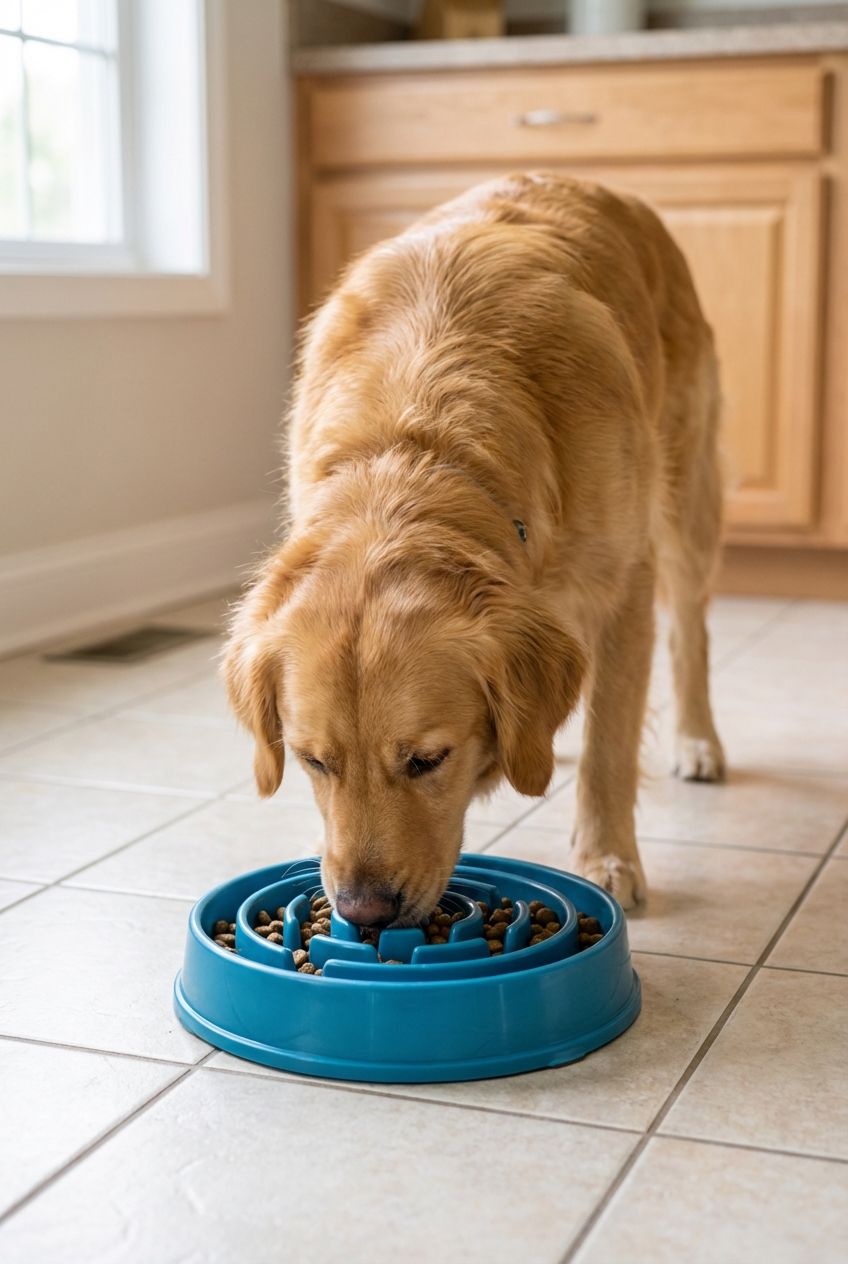
Try: a slow feeder bowl, puzzle feeder, spreading food on a snuffle mat, or feeding smaller meals more often.
2) Diet change or new treats
A sudden switch in kibble, canned food, toppers, chews, or training treats can shift gut bacteria and increase fermentation, meaning food is getting broken down in a way that makes extra gas.
Try: transition foods slowly over 7 to 14 days, and introduce new treats one at a time so you can identify the culprit.
3) Too many fermentable carbs and fibers
Some dogs get extra gassy with foods high in certain carbohydrates or fibers that ferment easily in the colon.
Common triggers include:
- Beans and legumes (including pea protein, chickpeas, lentils, and other pulse-heavy formulas)
- Higher amounts of certain added fibers (like inulin or chicory root)
This does not mean these ingredients are “bad,” just that your individual dog may not tolerate them well.
4) Food intolerance or food allergy
Food intolerance can be common and can cause gas, loose stool, and belly gurgling. True food allergy often also includes itching, ear infections, or licking paws.
Try: talk to your vet about a limited-ingredient diet trial or a veterinary hydrolyzed diet. The key is consistency for 8 to 12 weeks, without extra flavored treats or chews.
5) Too much fat or rich foods
High-fat meals can overwhelm digestion and increase gas. In sensitive dogs, fatty foods can also contribute to pancreatitis, which is painful and serious.
Try: avoid greasy scraps, choose a moderate-fat food, and keep treats small and simple.
6) Gut microbiome imbalance
After antibiotics, stress, boarding, parasites, or a diet change, the gut’s bacterial balance can shift. That can mean more fermentation, more gas, and inconsistent stool.
Try: ask your veterinarian about a canine probiotic they recommend (ideally one with canine-specific strains and solid quality control) and give it consistently for a few weeks while keeping the diet stable.
7) Parasites or infections
Giardia and intestinal worms can cause GI upset. Gas can happen, but more commonly you will see soft stool or diarrhea, mucus, and sometimes weight loss. This is especially common in puppies or dogs that visit dog parks, daycares, or drink from puddles.
Try: bring a fresh stool sample to your vet for testing. It is one of the fastest ways to rule out a treatable cause.
8) Chronic GI disease
When gas comes with chronic diarrhea, vomiting, weight loss, or reduced appetite, we start thinking about long-term GI conditions that need a tailored plan.
Try: schedule a veterinary exam. Your vet may recommend fecal tests, bloodwork, diet trials, and sometimes imaging.
9) People food and sneaky exposures
Dogs are opportunists. Common gas triggers include:
- Cheese, milk, and ice cream (many adult dogs have lower lactase, so lactose can ferment and cause gas)
- High-fiber veggies in large amounts (broccoli, cauliflower)
- Spicy or seasoned foods
- Trash, compost, or “counter surfing” leftovers
If gas started suddenly, think back 24 to 48 hours and consider what your dog could have gotten into.
Important: If you suspect your dog ate something toxic like xylitol (some sugar-free products), grapes or raisins, or onions or garlic, do not “wait and see.” Call your vet or pet poison control right away.
10) Diet quality and digestibility
Sometimes the stool looks totally normal, but the gas just will not quit. In those cases, it can help to look at overall diet quality and digestibility, including whether your dog does better on a different protein source or a more highly digestible formula.
Try: talk with your vet about a diet that is easier on the gut, and avoid making multiple food changes at once while you troubleshoot.
At-home fixes that can help
If your dog is otherwise acting normal and has no red-flag symptoms, these are reasonable first steps for mild gas:
- Slow down meals: slow feeder, smaller portions, or split into 2 to 3 meals daily
- Cut back on extras: reduce rich treats and table scraps for 1 to 2 weeks
- Keep diet consistent: avoid rotating foods rapidly while you troubleshoot
- Support digestion: ask your vet about a dog-specific probiotic. Digestive enzymes are usually for select cases and should be vet-guided.
- Skip DIY gas meds: products like simethicone or activated charcoal are not one-size-fits-all for dogs, so check with your vet before using them.
- Increase gentle activity: a couple of extra walks can help move gas through
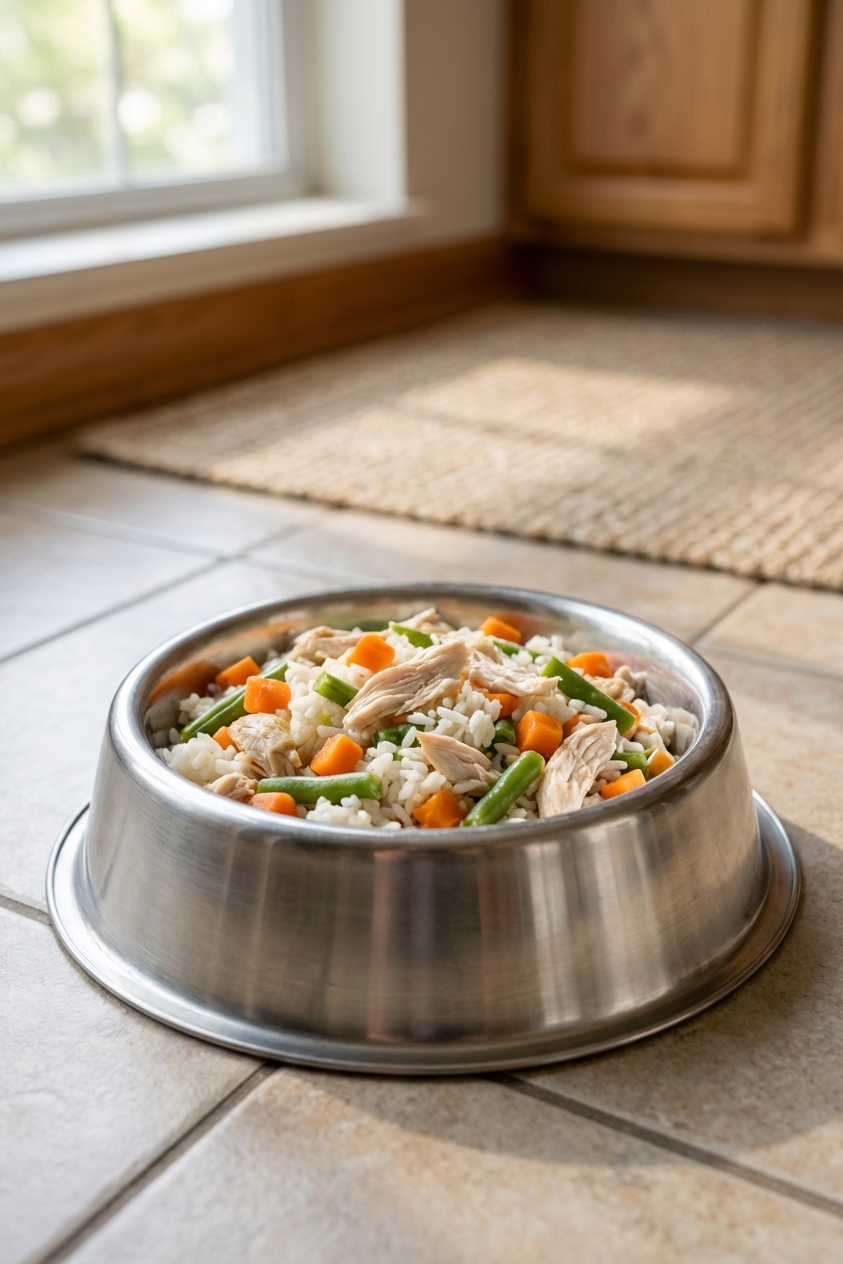
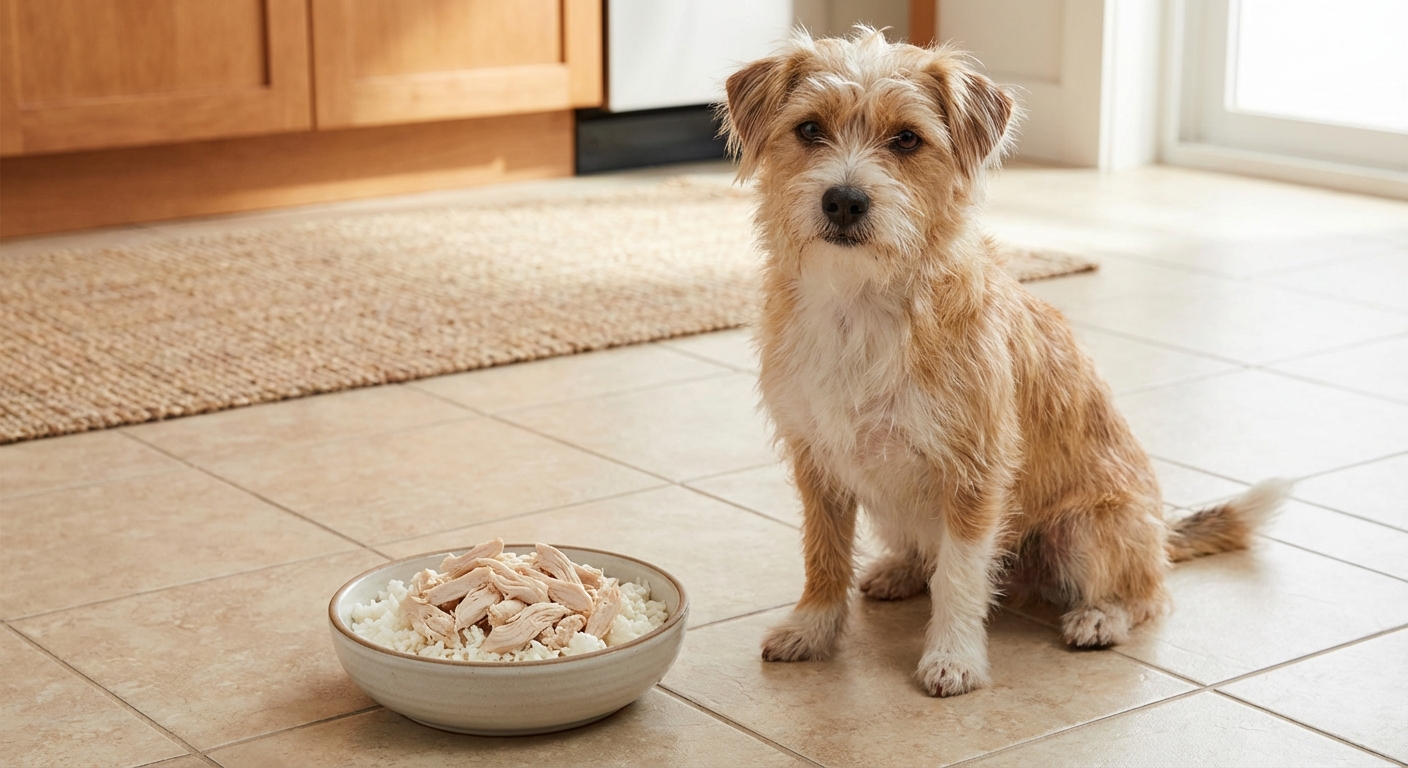
If you want to add simple fresh food, keep it boring and go slowly. Short-term only, a “bland diet” often includes small amounts of plain cooked chicken or turkey and plain white rice. Ask your vet first if your dog has other health issues, has had pancreatitis, or is on a prescription diet that should not be mixed.
When to call your vet
Please reach out to your veterinarian promptly if gas is paired with any of the following:
- Vomiting, lethargy, fever, or refusal to eat
- Diarrhea lasting more than 24 to 48 hours
- Blood in stool, black or tarry stool, or significant mucus
- Weight loss or increased thirst
- Abdominal distension, pacing, or signs of pain
In clinic, we can often narrow things down quickly with a history, diet review, stool testing, and a physical exam. The goal is not just less stinky air. It is a healthier, calmer gut.
Before your appointment
If you do need to see your vet, this list helps a lot:
- Exact food brand, formula, and how much you feed per day
- All treats, chews, supplements, and flavored medications
- How fast your dog eats
- Stool quality and frequency
- Any vomiting, itchiness, ear issues, or paw licking
- Recent boarding, dog park visits, new stressors, or antibiotics
Bring a fresh stool sample if your clinic requests it. It can speed up answers.