Cats purr for more than happiness—bonding, attention, stress relief, even pain. Learn how to read body language, spot red flags, and support your cat with ...
Article
•
Designer Mixes
What Cat Purring Really Means

Shari Shidate
Designer Mixes contributor
As a veterinary assistant here in Frisco, Texas, one of the most common things I hear is, “My cat purrs all the time. That means they’re happy, right?” Sometimes yes. Sometimes no. Purring is one of the most comforting sounds in the world, but it can also be a practical tool cats use to communicate, cope, and self-soothe.
This guide will help you read purring in context, so you can enjoy the sweet moments and also recognize when a “happy sound” might be a quiet cry for help.
What purring is (science)
Purring is a rhythmic vibration cats produce while breathing in and out. The exact mechanics are still being studied, but it is generally thought to involve coordinated activity of the larynx (voice box), vocal folds, and breathing muscles (including the diaphragm), driven by a neural rhythm generator.
As for frequency, studies have measured most cat purrs in a low range commonly cited around 25 to 150 Hz. Those low vibrations are part of why purring feels so soothing to us and, likely, to cats too.
Not all cats purr the same way. Domestic cats and many small wildcats can purr. Big cats like lions and tigers do not purr in the same continuous way; their throat anatomy is adapted for roaring instead, so their “purr-like” sounds are different and not sustained like a house cat’s.
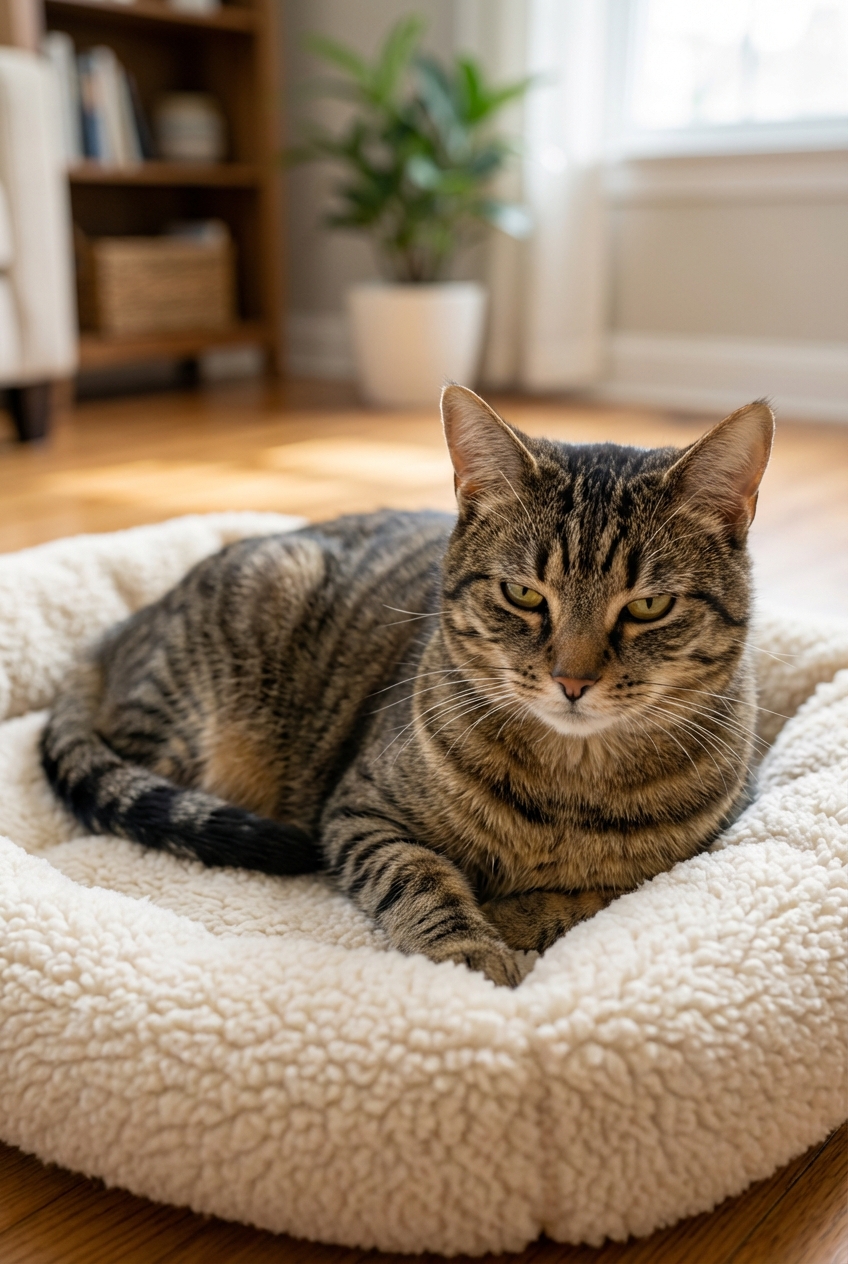
The most common reason: contentment
Yes, many cats purr when they feel safe and comfortable. You might notice it when:
- They are curled up in a warm spot.
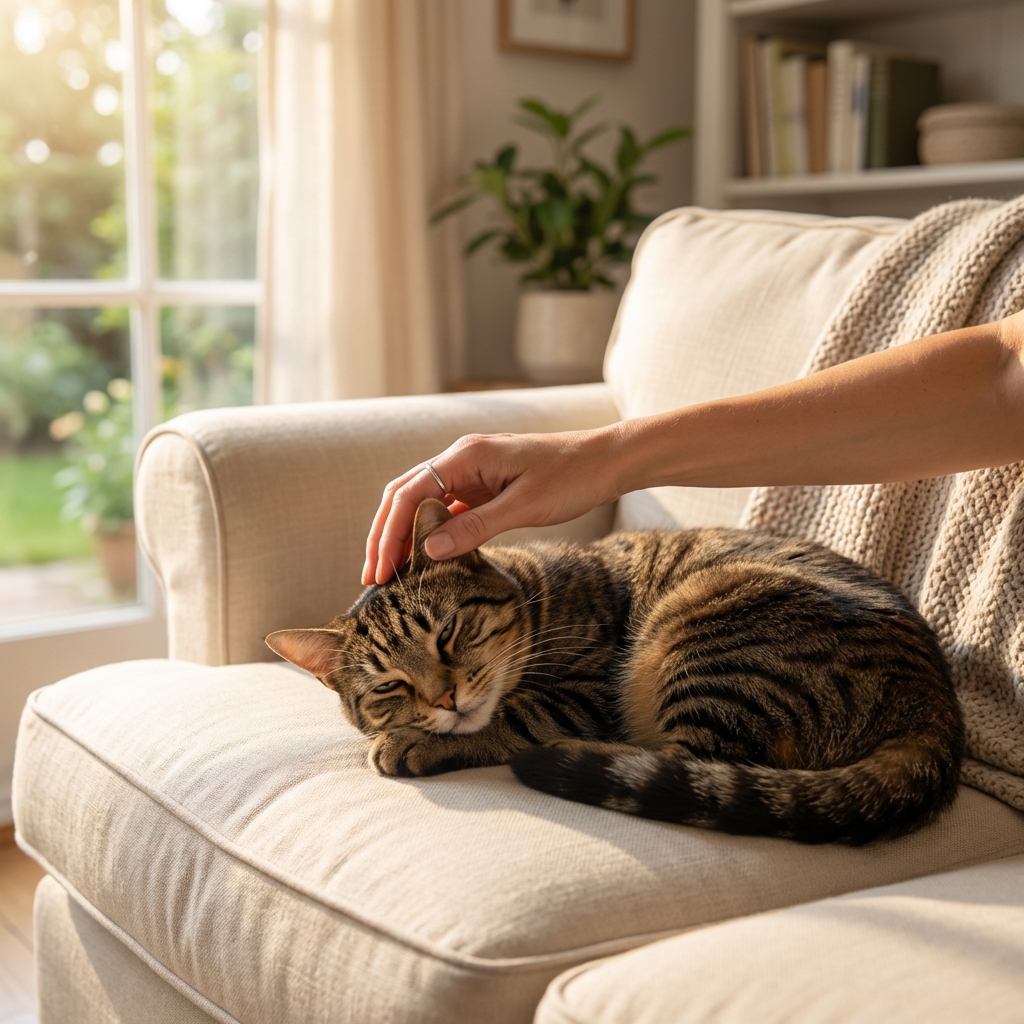
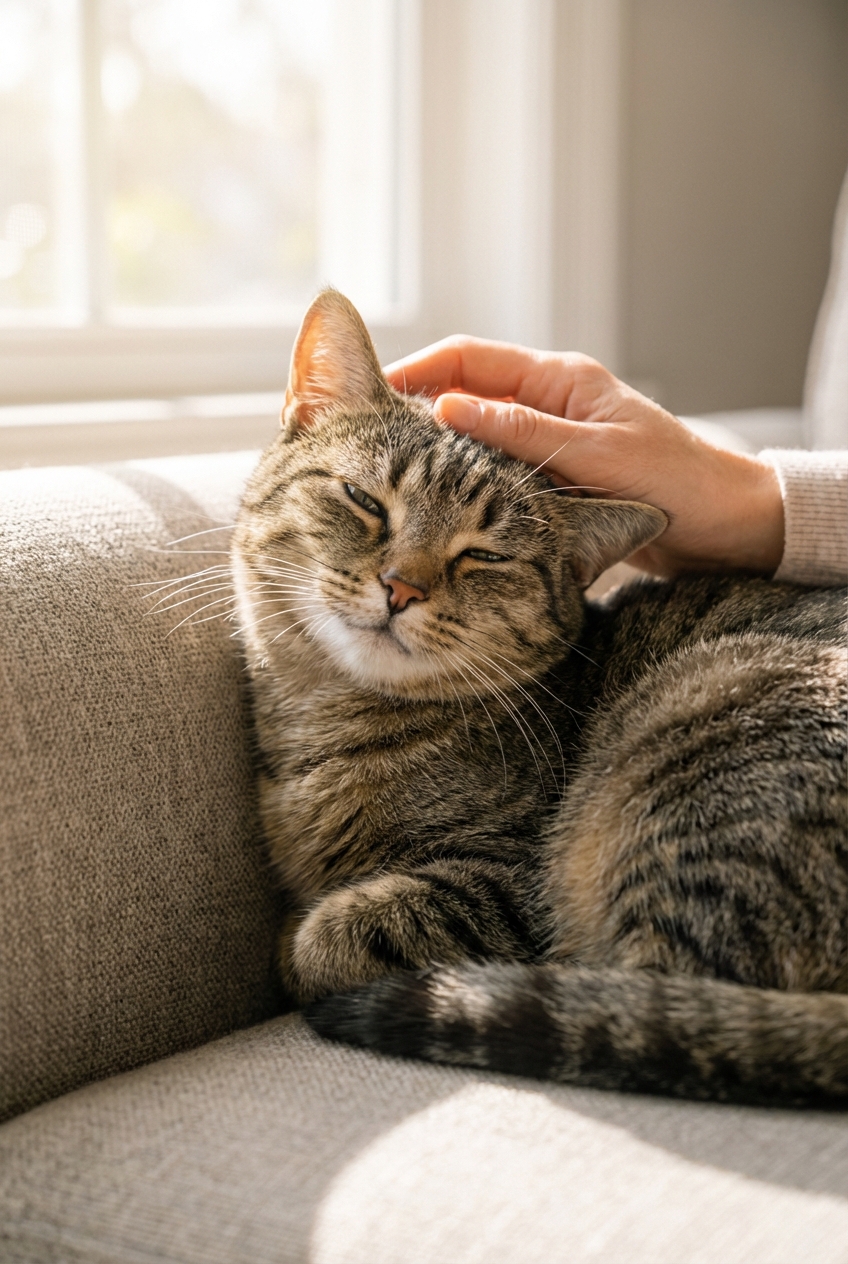
- You are petting them in their preferred areas (often cheeks, chin, and around the base of the ears).
- They are kneading a blanket or your lap.
- They are greeting you at the door and weaving around your legs.
What to look for: soft eyes, relaxed whiskers, loose body posture, slow blinking, tail resting calmly, and gentle kneading. When these signs match the sound, you are very likely seeing a happy cat.
But purring can also mean stress, pain, or illness
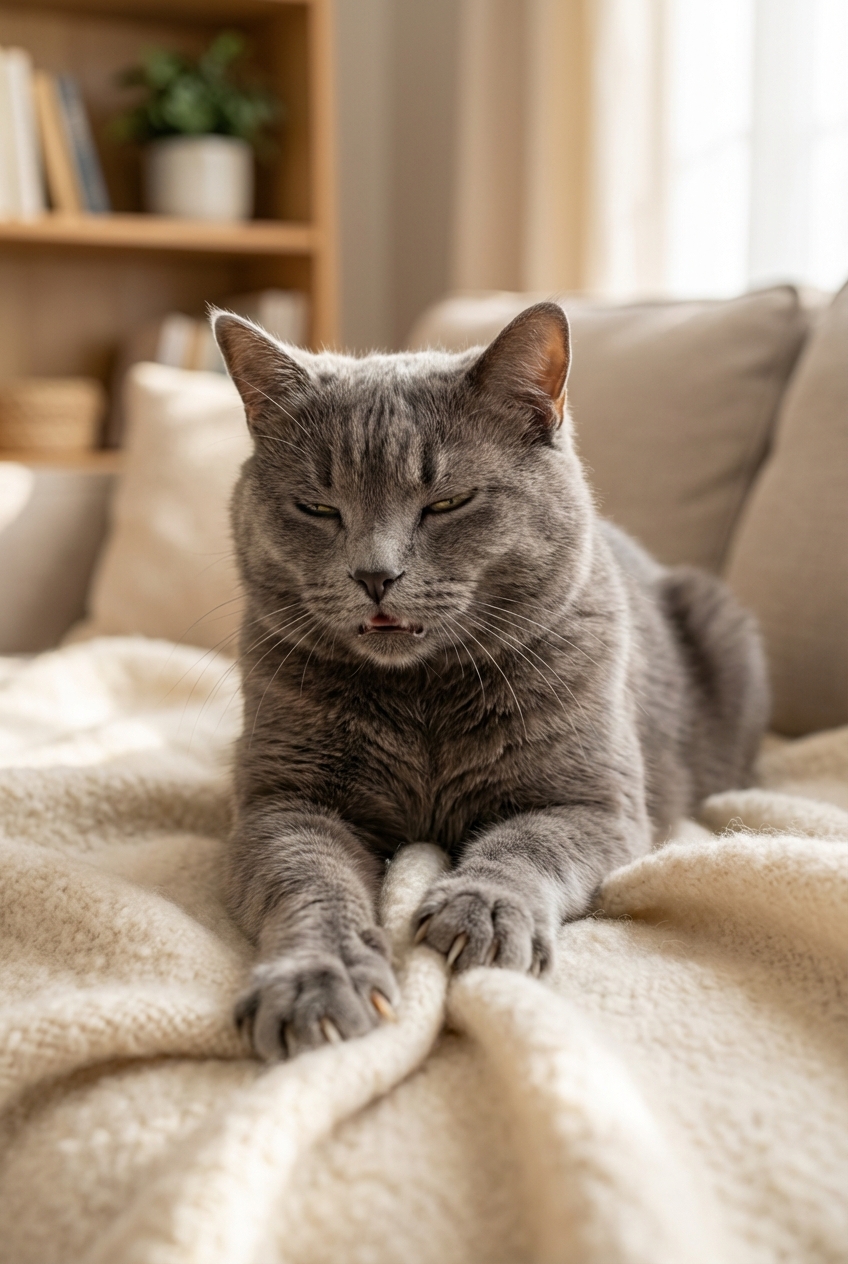
This is the part many loving cat parents do not expect. Cats can purr when they are anxious, injured, or not feeling well. In the clinic, I have seen cats purr during exams when they are clearly frightened or uncomfortable.
Think of purring as a communication tool and a coping strategy. It may help the cat calm themselves, seek comfort, or signal a need. It is also worth saying plainly: purring by itself is not a diagnosis. It is most helpful when you look for a pattern or a cluster of other signs.
Clues purring may not mean “I’m fine”
- Hiding more than usual while purring (under beds, in closets).
- Low posture, tense body, ears turned sideways or back.
- Growling, hissing, biting, or swatting mixed in with purring.
- Petting overload (purring at first, then sudden tail flicking, skin twitching, or a quick nip).
- Not eating or eating less for more than 24 hours.
- Changes in litter box habits (straining, frequent trips, peeing outside the box, constipation, diarrhea).
- New limp, stiffness, or reluctance to jump.
- Fast or labored breathing, open-mouth breathing, or belly effort while breathing.
If purring is paired with any of the signs above, treat it as information, not reassurance. It is usually best to check in with your veterinarian early.
The “healing purr” idea
You may have heard that purring is healing. There is a reasonable theory behind this: low-frequency vibration (often discussed in the 25 to 50 Hz range) has been studied in other settings, including vibration therapy research, for potential effects on bone and soft tissue.
Here is the evidence-based way to hold this idea: purring may be helpful for cats as a self-soothing behavior, but the research does not prove that a cat’s purr can heal injuries or replace treatment. A cat can purr and still be sick, in pain, or in need of urgent care.
Different purrs, different meanings
Cat vocalizations are nuanced. Many people can hear the difference between a deep, steady “relaxation” purr and a higher, more insistent purr that sounds demanding. Context matters, but a few patterns are common.
Solicitation purring (the “feed me” purr)
Some cats combine purring with a more urgent, meow-like element. This is often used to get your attention, especially around meal times.
Greeting purring
Some cats purr when they see a favorite human. This is often paired with tail-up posture, friendly rubbing, and relaxed movement.
Fear purring
A frightened cat may purr while crouched, still, or trying to escape. This can happen at the veterinarian or during stressful household events.
Kittens and mother cats
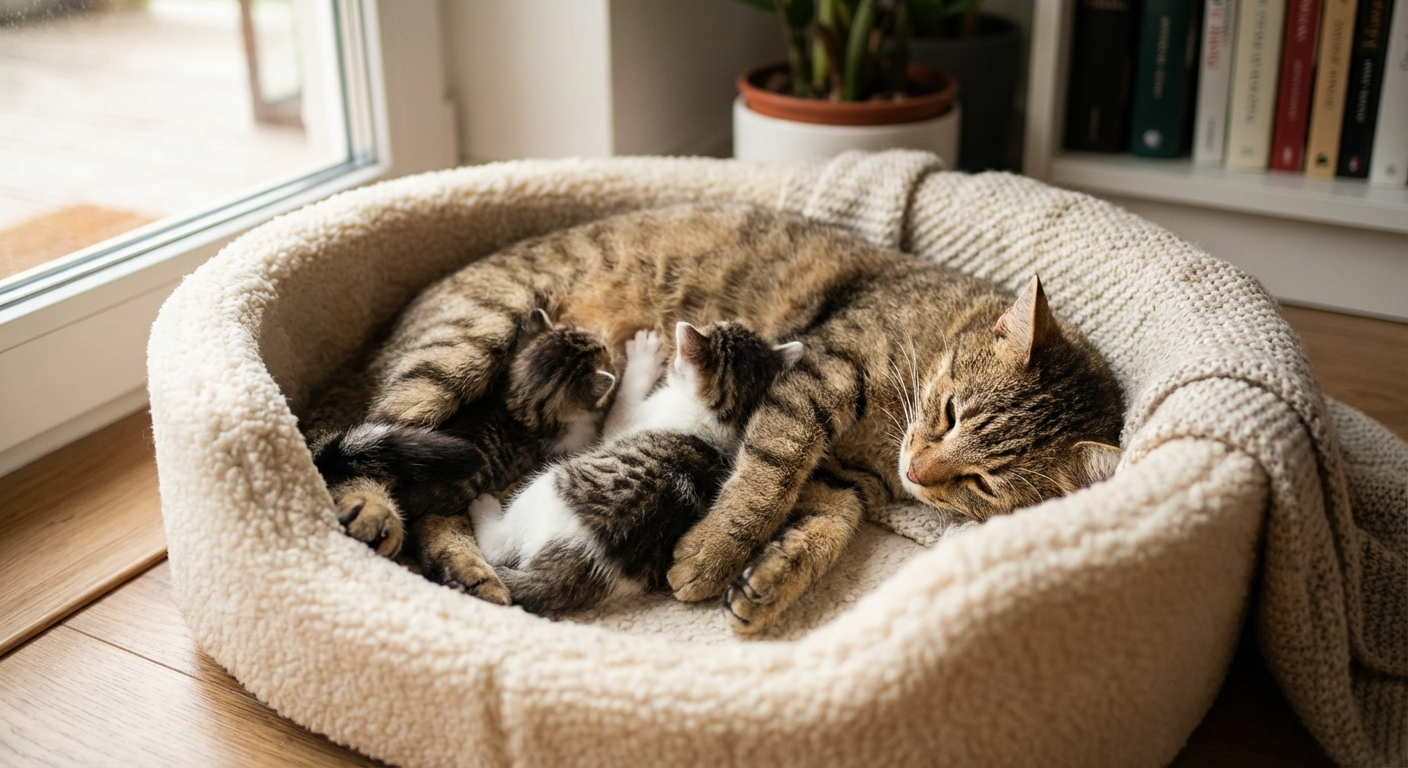
Kittens can purr very early in life, sometimes within the first couple of days. It helps mom and kittens stay connected. Nursing kittens may purr, and mother cats often purr back. In many litters, it is a “we’re together, we’re okay” signal.
How to read purring (checklist)
If your cat is purring and you are unsure what it means, do a quick whole-cat check.
- Body language: relaxed or tense?
- Appetite: normal, reduced, or not eating?
- Water intake: normal, increased, or decreased?
- Litter box: normal urine and stool, or straining and changes?
- Energy: normal play and movement, or hiding and sleeping more?
- Pain signs: flinching when touched, reluctance to jump, limping, guarding the belly, growling when handled?
- Breathing: calm and quiet, or faster than normal at rest?
If everything looks normal, purring is likely contentment or social bonding. If you spot changes, especially appetite, breathing, or litter box issues, take it seriously.
When to call the vet
Please contact your veterinarian promptly if purring is happening alongside any of the following:
- Straining to urinate, crying in the litter box, or producing only small drops of urine (this can be an emergency, especially in male cats).
- Not eating for 24 hours (or less in kittens or cats with medical conditions). Cats can be at risk for hepatic lipidosis (fatty liver disease) when they go too long without food, especially if they are overweight.
- Sudden hiding plus reduced interaction.
- Vomiting repeatedly or vomiting with lethargy.
- Labored breathing, open-mouth breathing, or belly effort while breathing.
- Fast breathing at rest that stays high (as a practical guideline, consistently over about 40 breaths per minute at rest is worth a same-day call).
- Obvious pain such as limping, hunched posture, or growling when touched.
If you are on the fence, call and describe what you are seeing. A quick conversation can help you decide whether it is a same-day visit or safe to monitor.
How to support a purring cat at home
If your cat is purring and seems relaxed, you can lean into that comfort and make it even better.
For comfort and bonding
- Pet in preferred areas and stop if you see tail flicking, skin twitching, or ears rotating back.
- Offer a warm, quiet resting spot.
- Keep routines consistent, especially feeding times.
If you suspect stress
- Create a “safe room” with litter box, water, food, and hiding options.
- Use gentle play to release nervous energy, then offer a small meal.
- Consider veterinarian-approved pheromone diffusers if your home has stress triggers.
Practical tip: If your cat is purring but acting “off,” take a short video on your phone. At the clinic, those videos can be incredibly helpful for your veterinarian.
Bottom line
Purring is not a single emotion. It can mean comfort, connection, anticipation, stress, or pain. When you read it alongside appetite, litter box habits, energy level, breathing, and body language, you get a much clearer picture of your cat’s health.
Trust your instincts. If something feels different, it is worth investigating. Your cat cannot tell you what hurts, but they are always communicating.