A vet assistant’s quick list of cat-safe human foods, with simple serving rules, portion guides, “maybe” foods, and a clear avoid list for common toxins.
Article
•
Designer Mixes
What Can My Cat Eat?

Shari Shidate
Designer Mixes contributor
If you have ever stood in your kitchen with a hopeful cat staring up at you, you are not alone. As a veterinary assistant here in Frisco, Texas, I hear this question all the time: “What can my cat eat?” The good news is that cats can enjoy a variety of wholesome foods. The not-so-good news is that a few common human foods can be truly dangerous.
This guide gives you a vet-informed overview of safe foods, foods to avoid, and simple feeding tips to support your cat’s long-term health.
The big picture: obligate carnivores
Cats are not small dogs. They are obligate carnivores, which means their bodies are built to thrive on animal-based protein and fat. While some cats can tolerate small amounts of certain plant foods, those foods should be extras, not the foundation.
- Most calories should come from a complete and balanced cat food (commercial or properly formulated homemade).
- Treats and “people food” should stay small, ideally under 10% of daily calories.
- Sudden diet changes can cause vomiting or diarrhea, so go slow when introducing anything new.
Safe foods many cats can eat
Every cat is an individual. Start with tiny portions and watch for vomiting, diarrhea, itchiness, or changes in appetite. If your cat has kidney disease, urinary issues, diabetes, pancreatitis, food allergies, or is on a prescription diet, check with your veterinarian first.
Cooked, plain proteins
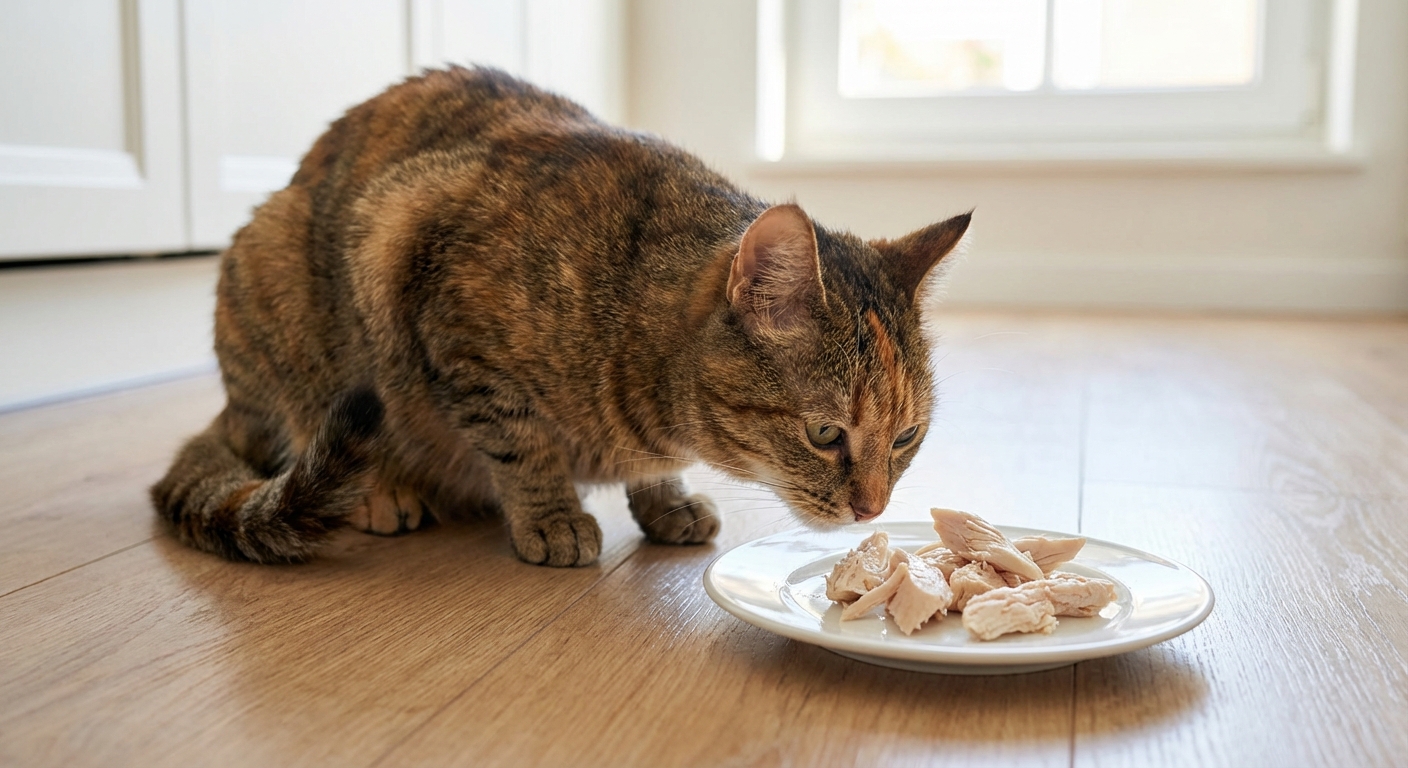
These are closest to what your cat’s body is designed to eat. Offer them plain, with no onion, garlic, heavy seasoning, butter, or sauces.
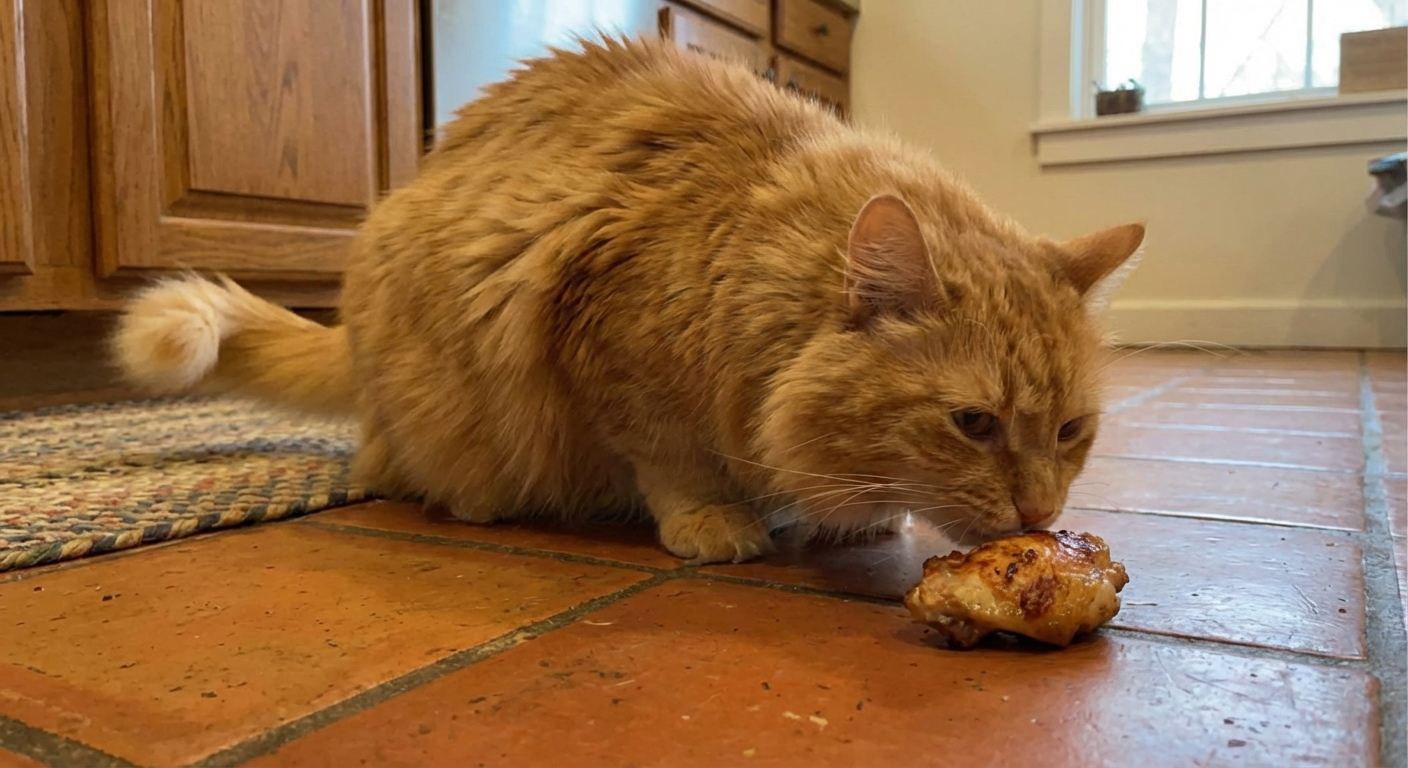
- Chicken or turkey (cooked, boneless, skinless is easiest)
- Lean beef (cooked, unseasoned)
- Salmon (cooked; offer occasionally due to calorie density and potential sensitivities)
- Sardines (in water, no added salt, as an occasional treat)
Portion tip: for most cats, start with a pea-sized bite. A common “treat portion” is about 1 to 2 teaspoons total, depending on your cat’s size and daily calories.
Eggs
Fully cooked eggs can be a great high-protein treat. Avoid raw egg due to food safety concerns and the risk of biotin interference with large, consistent raw feeding.
Some fruits and vegetables
Cats do not need produce, but a nibble of something safe is usually fine if it agrees with their stomach.
- Pumpkin (plain, cooked, not pie filling) may help some cats with mild constipation or loose stool. Start with about 1/2 teaspoon and adjust slowly if your vet agrees.
- Steamed carrots or green beans (soft texture, tiny amounts)
- Blueberries (one or two, if your cat is interested)
- Apple (tiny pieces, no seeds, no core)
Plain grains and starches
If your cat begs for what you are eating, these are generally safer choices than greasy or salty snacks.
- Plain cooked rice
- Plain oatmeal
- Plain cooked sweet potato (tiny amount, no seasoning)
Foods that are toxic or risky
Some foods cause immediate poisoning, while others create long-term health problems. When in doubt, keep it out of reach.
Never feed these
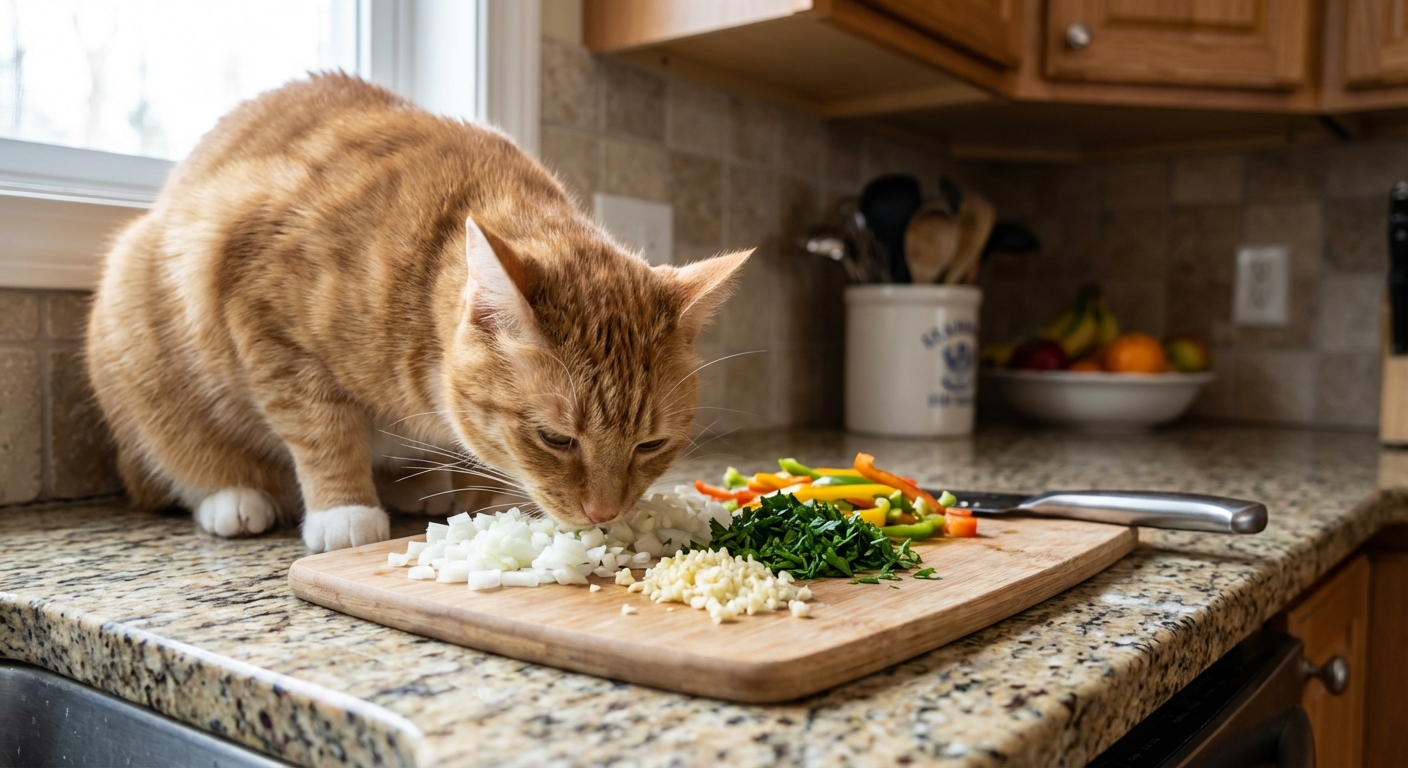
- Onions, garlic, chives, leeks (including powders): can damage red blood cells and lead to anemia
- Grapes and raisins: can cause kidney injury in some pets, cats included, though reported cases are rarer than in dogs
- Chocolate, coffee, tea, energy drinks: stimulant and methylxanthine toxicity
- Alcohol: even small amounts can be dangerous
- Raw dough with yeast: can expand in the stomach and produce alcohol
High-risk items
- Xylitol (found in some sugar-free gums, candies, and baked goods): deadly to dogs; in cats, toxicity is less established, but it should still be avoided as a precaution. If your cat eats it, contact your vet or a pet poison hotline.
- Cooked bones: can splinter and cause choking or intestinal injury
- Raw fish fed regularly: can contribute to thiamine (vitamin B1) deficiency in certain diets (thiaminase) and may cause gastrointestinal upset. Cooked fish is safer.
- Milk and dairy: many adult cats are lactose intolerant, leading to diarrhea
- Fatty foods (bacon, sausage, fried foods): can trigger pancreatitis and weight gain
- Salty foods (chips, deli meats): can increase thirst and may be risky for cats with heart, kidney, or blood pressure concerns
How to build a treat plan
If you want to share food in a way that supports health, here is a simple approach I recommend to many clients.
1) Start with balanced cat food
Your cat’s main diet should meet AAFCO (or equivalent) standards for their life stage. This is where they should get essential nutrients like taurine, arachidonic acid, vitamin A in the correct form, and the right mineral balance.
2) Pick one safe add-on
Start with a piece about the size of a pea (or about 1/4 teaspoon). If your cat does well for 24 to 48 hours, you can offer a little more next time.
3) Keep treats under 10%
This is one of the easiest ways to reduce obesity risk. In the U.S., excess weight is incredibly common in cats and it can contribute to arthritis, diabetes, and urinary issues.
4) Watch the litter box
Food reactions often show up as soft stool, constipation, vomiting, gas, or decreased appetite. If anything looks off, stop the new food and check in with your veterinarian.
Special situations
Kittens
Kittens need higher calories and very specific nutrient ratios for growth. Keep “people food” minimal. Focus on a quality kitten formula and ask your vet before adding extras.
Senior cats
Older cats may have dental disease, kidney changes, or reduced appetite. Soft, high-moisture foods are often easier. Avoid high-phosphorus treats if kidney disease is a concern.
Urinary and kidney concerns
Hydration matters. For many cats, adding moisture through wet food or vet-approved broths can help. Choose broths that are onion and garlic free and low sodium. Avoid salty foods and do not change a prescription urinary diet without your veterinarian’s guidance.
Quick reference
- Cooked chicken: Yes (plain)
- Tuna: Sometimes (small amounts; not daily). It should not replace a complete diet, and frequent feeding may raise mercury concerns.
- Egg: Yes (fully cooked)
- Pumpkin: Yes (plain)
- Cheese: Sometimes (tiny; many cats get diarrhea)
- Bread: Sometimes (tiny; not beneficial)
- Onion/garlic: No
- Grapes/raisins: No
- Chocolate: No
- Cooked bones: No
When to call your vet
If your cat eats a known toxic food or shows symptoms after eating something new, do not wait it out. Prompt help matters with many toxins.
- Repeated vomiting or diarrhea
- Drooling, pawing at the mouth, or trouble swallowing
- Weakness, wobbliness, tremors, or collapse
- Sudden loss of appetite lasting more than 24 hours
- Signs of pain, hiding, or unusual vocalizing
If you suspect poisoning, contact your veterinarian right away. You can also contact a pet poison hotline for guidance while you arrange care.
Your cat does not need a complicated menu. Start with a balanced diet, keep treats simple, and choose foods you can clearly identify and prepare safely.
Helpful resources
- AAFCO (pet food nutrient profiles and labeling guidance)
- ASPCA Animal Poison Control
- Pet Poison Helpline