Vet-informed guide to a short-term bland diet for dogs: chicken and rice 1:2 ratio, daily cup ranges by weight, how many meals to split into, and red flags t...
Article
•
Designer Mixes
What Can I Give My Dog for Diarrhea?

Shari Shidate
Designer Mixes contributor
Diarrhea in dogs is one of those problems that can look scary fast, especially when you are dealing with a family schedule, kids in the house, and a pup who cannot seem to settle. The good news is that most mild diarrhea is short-lived and responds well to simple, safe at-home care.
The key is knowing what is normal, what you can do today, and when it is time to call your veterinarian.
First: Is it an emergency?
As a veterinary assistant, I always tell families to start with a quick safety check. Use these two buckets to guide you.
Go to an ER now
- Diarrhea with large amounts of blood or black, tarry stool
- Repeated vomiting, or your dog cannot keep water down
- Severe lethargy, collapse, pale gums, or obvious pain
- A swollen belly, unproductive retching, or restlessness (possible bloat in deep-chested dogs)
- Dehydration signs: sticky gums, sunken eyes, weakness
- Possible toxin exposure (xylitol, grapes or raisins, chocolate, rodent bait, human medications)
- Sudden, explosive watery diarrhea with blood, or a very unwell dog (this can worsen quickly and needs prompt care)
Call your vet today
- Puppies, seniors, pregnant dogs, or dogs with chronic illness (diabetes, kidney disease, Addison’s, cancer)
- Diarrhea that is worsening, very frequent, or not improving with home care
- Diarrhea lasting more than 24 hours in small dogs or puppies
- Diarrhea lasting more than 48 hours in otherwise healthy adult dogs
If none of those apply, and your dog is still bright, alert, and drinking, you can often start with gentle, family-friendly home care while monitoring closely.
Common causes at home
Diarrhea is a symptom, not a diagnosis. These are some of the most common reasons dogs get it:
- Dietary indiscretion: trash snacks, table food, fatty leftovers, new treats
- Sudden diet change: switching food too quickly
- Stress: travel, guests, schedule changes
- Parasites: giardia, roundworms, hookworms (more common in puppies and dog parks, but adults can get them too)
- Food sensitivity: certain proteins, rich chews, dairy
- Infections: viral or bacterial causes
Because the cause is not always obvious, the safest at-home plan focuses on hydration, resting the gut, and simple foods.
What to give right now
1) Water first
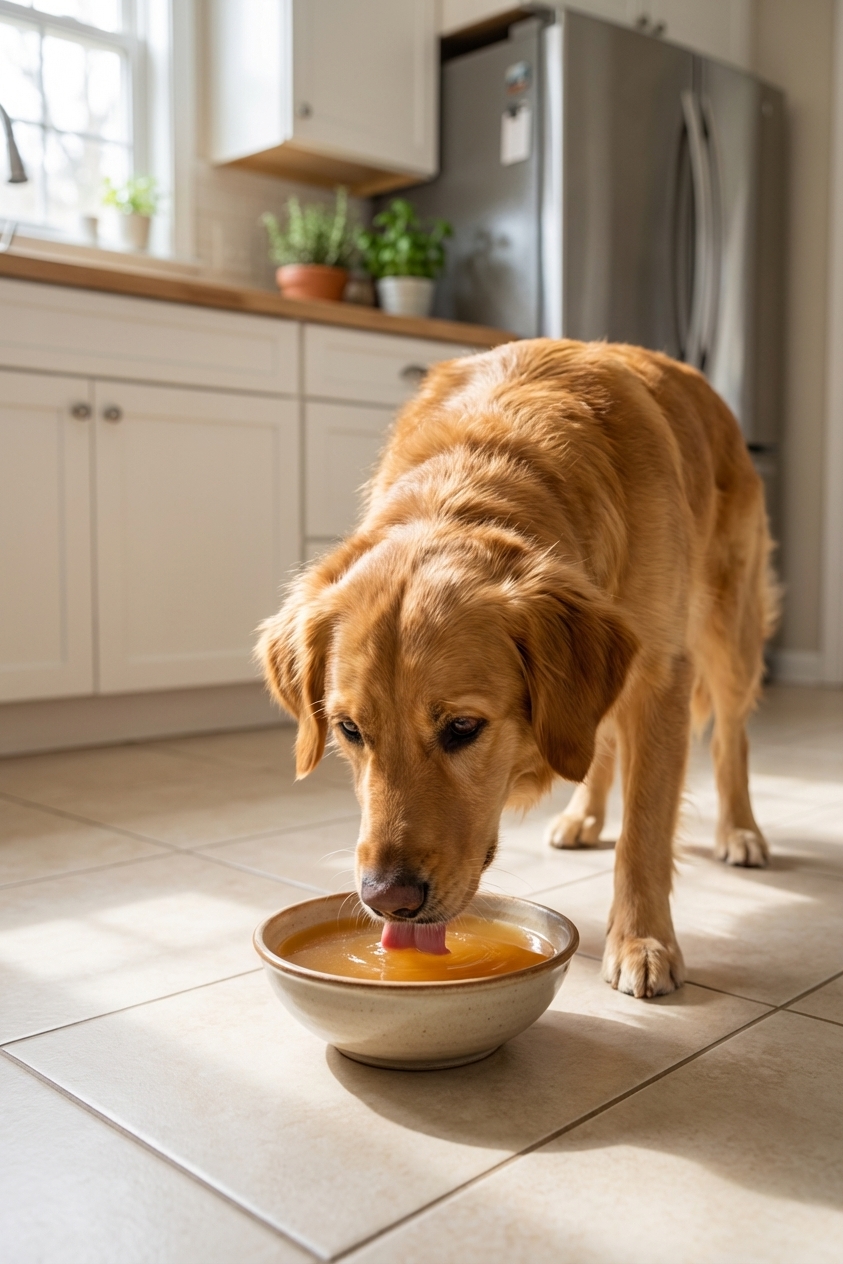
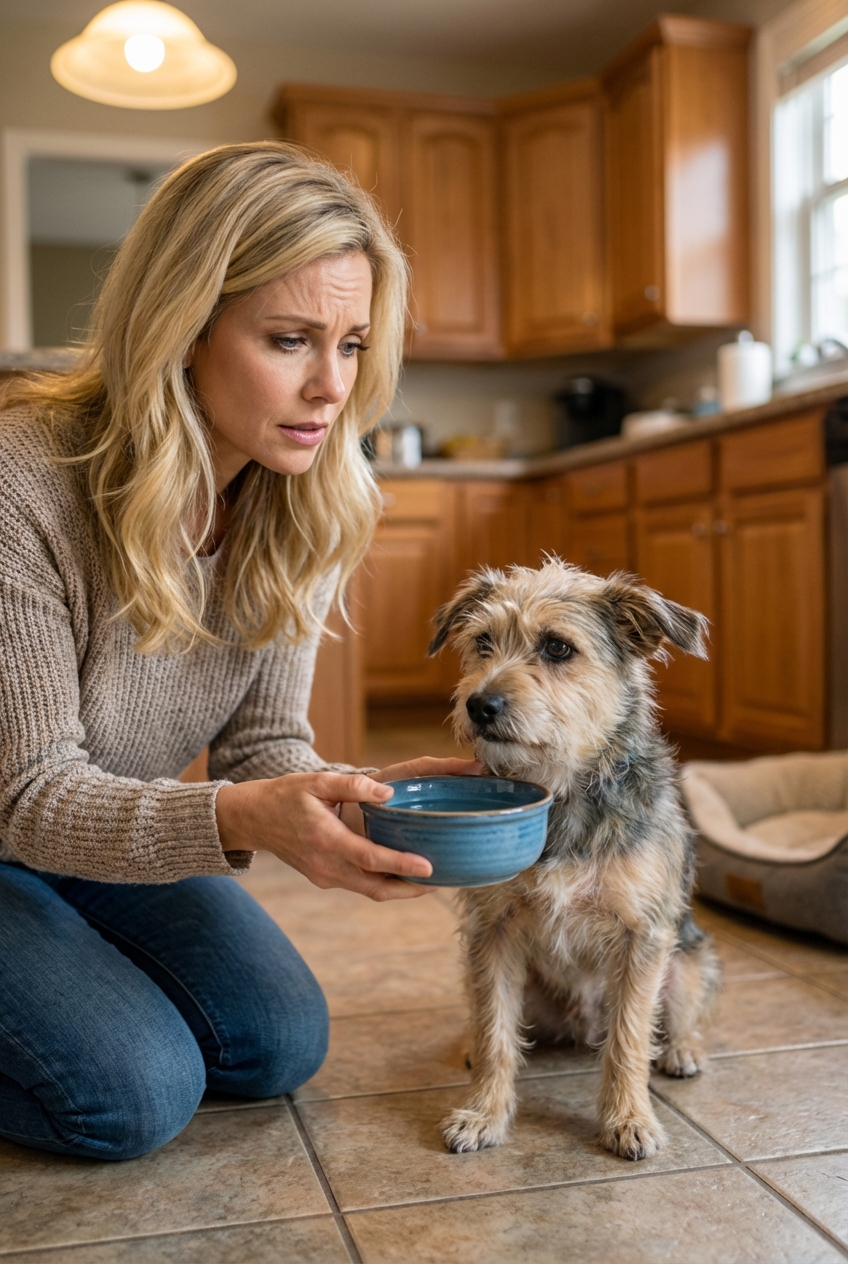
Diarrhea can dehydrate dogs quickly. Make sure fresh water is always available. If your dog seems hesitant to drink, you can try:
- Offering water in a clean, wide bowl
- Adding a splash of low-sodium chicken broth (no onion or garlic powder)
- Offering small amounts more frequently
Hydration note: In some cases, your vet may recommend a pet-safe oral rehydration solution. Avoid using sports drinks unless your veterinarian specifically directs you, since the sugar and electrolyte balance is not ideal for many dogs.
Tip for families: Put a towel or washable mat near the water station to catch drips and reduce slips for kids and dogs.
2) A bland diet
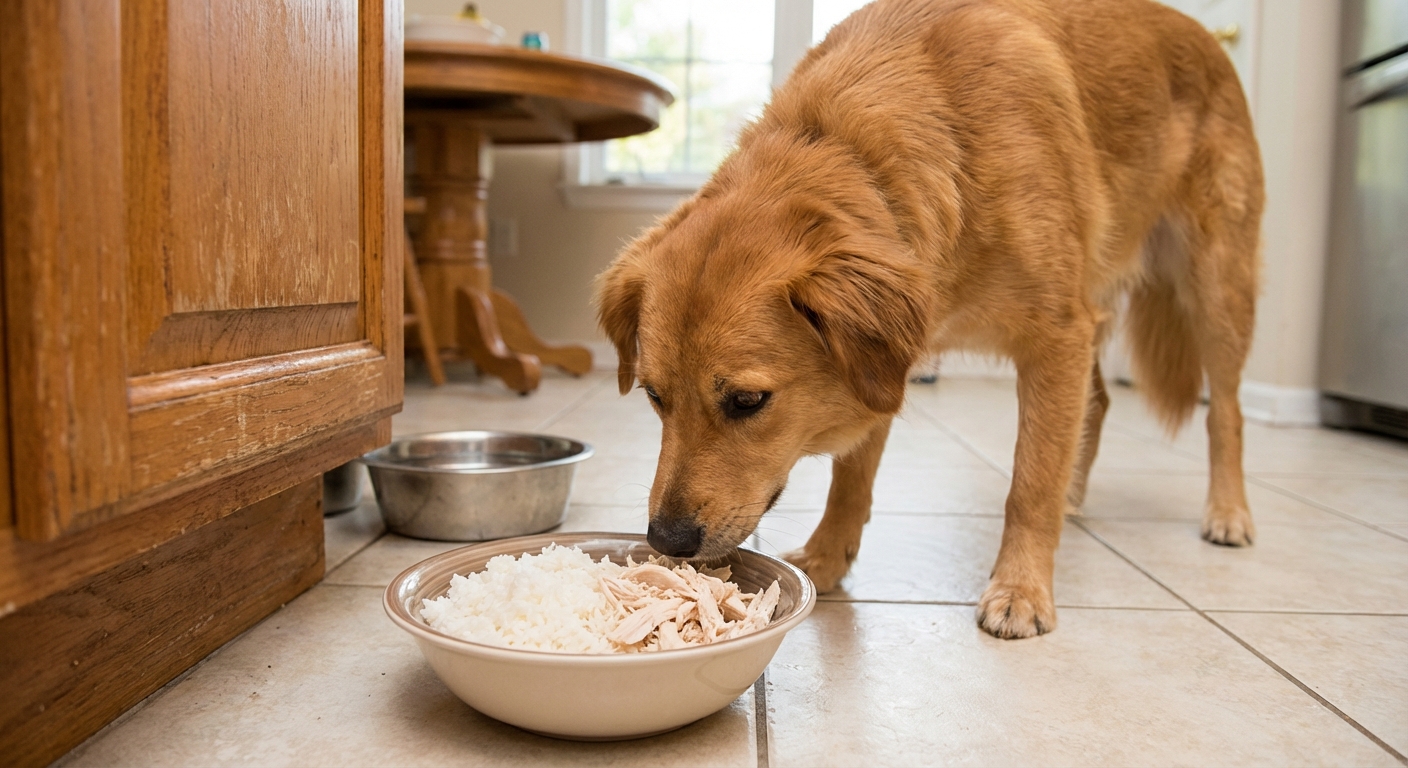
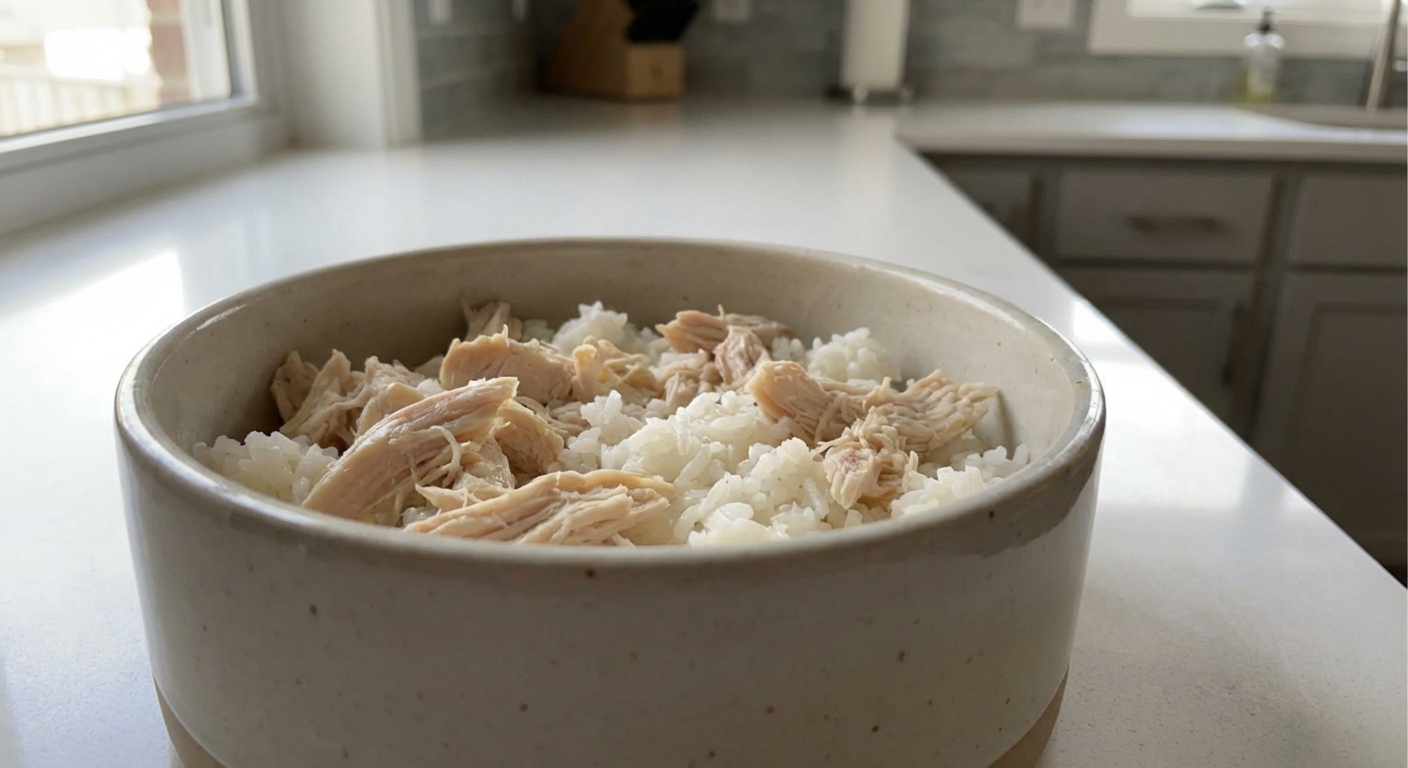
For many dogs, a short bland diet helps stools firm up. Common options include:
- Boiled, skinless chicken breast and plain white rice
- Lean ground turkey (fully cooked, drained) and white rice
- Boiled white fish (like cod) and rice
Feed small portions, 3 to 4 times per day, for 1 to 3 days.
- How much: Aim for about one quarter to one third of your dog’s usual daily food amount on day one, split into those smaller meals, then increase gradually if stools are improving.
- Important: Chicken and rice is not a balanced long-term diet. Use it short term only unless your veterinarian gives you a complete recipe plan.
If your dog improves, transition back to regular food over several days by mixing increasing amounts of the normal diet in.
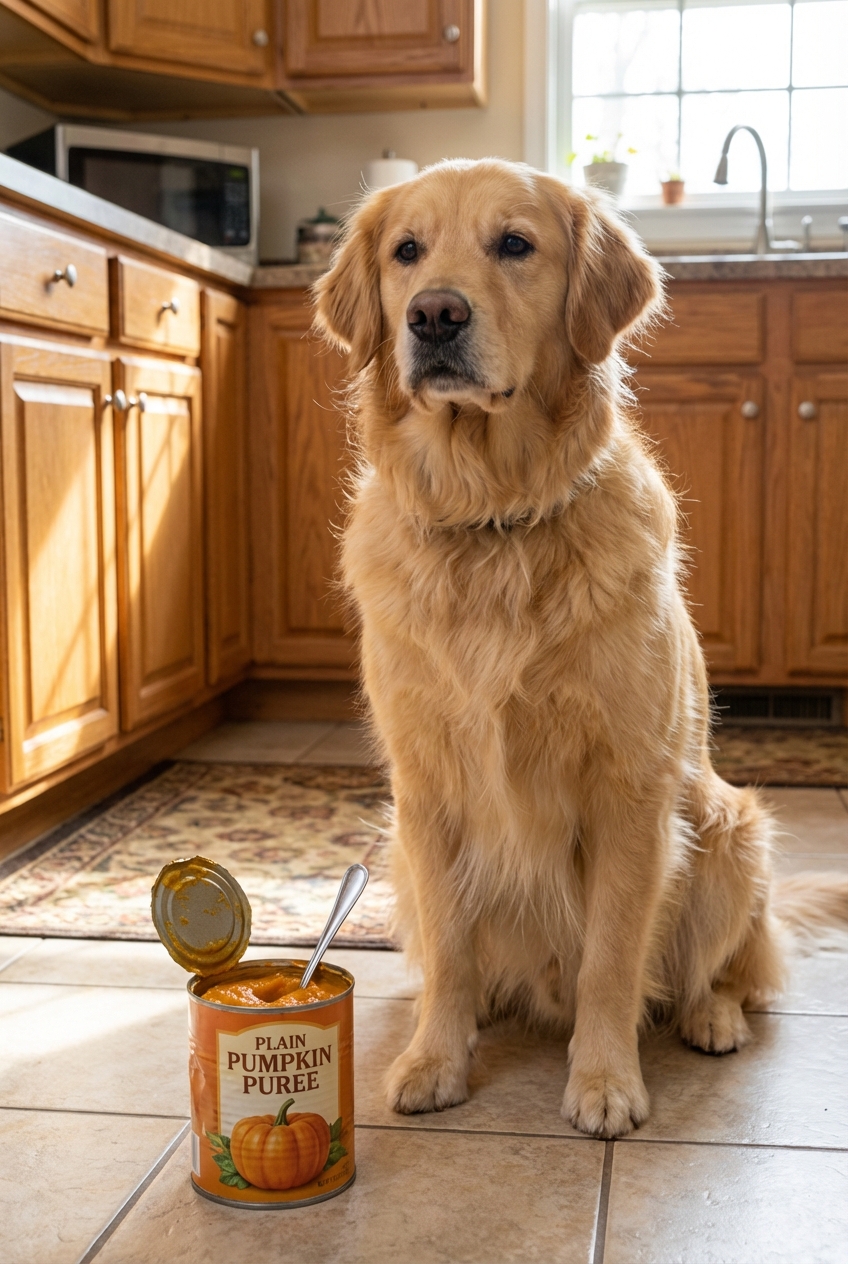
3) Plain canned pumpkin
Plain pumpkin (not pumpkin pie filling) can help because it contains soluble fiber that may firm up stool.
- Small dogs: 1 to 2 teaspoons
- Medium dogs: 1 to 2 tablespoons
- Large dogs: 2 to 4 tablespoons
Start at the low end. Too much fiber can cause gas or even worsen diarrhea in some dogs.
Kid-safe reminder: Pumpkin is usually safe, but keep the can out of reach. Dogs can eat a surprising amount if it hits the floor.
4) Probiotics for dogs
Veterinary-formulated probiotics can support the gut microbiome during digestive upset. Look for products specifically labeled for dogs, and follow the package directions. If you already have a probiotic your veterinarian recommended in the past, this is often a good time to use it.
5) Pause treats and rich chews
This is an easy win. Put bully sticks, rawhides, rich training treats, table scraps, and fatty add-ons on hold until stools are normal for a couple of days.
Should I fast my dog?
Fasting used to be a common recommendation, but it is not right for every dog. Many adult dogs do fine with a short break from food. Puppies and small dogs can get low blood sugar quickly, and dogs with medical conditions may not tolerate fasting.
If your dog is an otherwise healthy adult and your veterinarian has said fasting is okay in the past, you can consider a short pause and then start a bland diet. If you are unsure, skip fasting and offer small bland meals instead.
OTC meds: be careful
This is where I want you to be extra cautious. Some human medications can be dangerous to dogs, and dosing depends heavily on weight, health history, and what is causing the diarrhea.
Pepto-Bismol and Imodium?
These are sometimes used in dogs, but they are not appropriate for every situation.
- Imodium (loperamide): can cause serious side effects in some dogs, including breeds at risk for the MDR1 gene mutation (often herding breeds like Collies and Australian Shepherds). It can also be risky if infection, toxins, or intestinal blockage are possible.
- Pepto-Bismol: contains salicylates and may be unsafe if your dog has bleeding concerns, is on NSAIDs or steroids, has certain medical conditions, or if black stool would make it hard to tell whether there is bleeding. (It can also darken stool on its own.)
Best evidence-based advice: Call your vet before giving any anti-diarrheal medication. If your dog needs meds, your clinic may recommend a safer, dog-specific option.
Never give these unless your vet directs you
- Human pain relievers (ibuprofen, naproxen, aspirin)
- Cold and flu meds
- Leftover antibiotics
When should it improve?
With mild diarrhea from diet change or a mild stomach upset, you often see improvement within 24 hours after starting a bland diet and removing treats. Stools may not be perfect right away, but you should see a clear trend toward fewer episodes and better formed stool.
If your dog is not improving, has repeated diarrhea overnight, or seems uncomfortable, call your veterinarian. Parasites, pancreatitis, hemorrhagic diarrhea syndrome, and other issues may need testing and prescription treatment.
Poop check
I know it is not glamorous, but stool details help your vet help you. Keep an eye on:
- Frequency: Is it every hour or a few times a day?
- Volume: Large volume can suggest small bowel diarrhea. Very frequent small amounts, straining, and urgency can suggest large bowel diarrhea (colitis).
- Mucus: A jelly-like coating can occur with colitis
- Blood: Bright red streaks vs black tarry stool matters
- Foreign material: grass, toys, string
If possible, take a quick photo for your vet.
Stool sample tip: If your clinic asks for a sample, bring a fresh one when you can (ideally within a few hours). If you have to wait, seal it in a bag or container and refrigerate it until your appointment. Parasite testing is common, even in adult dogs.
Prevention tips
- Transition food slowly: mix old and new over 7 to 10 days
- Limit rich extras: keep treats simple and consistent
- Use safe chews: avoid super fatty or mystery-ingredient chews
- Parasite prevention: keep your dog on vet-recommended prevention and do fecal checks as advised
- Trash management: secure bins and supervise kids during snack time so dropped food does not become a “dog buffet”
When in doubt, call
You never have to feel silly calling about diarrhea. A quick phone conversation can help you decide whether to watch and wait, bring in a stool sample, or come in for an exam. If you tell your clinic your dog’s weight, age, symptoms, how long it has been happening, and what your dog might have eaten, you will get clearer guidance faster.
Family-friendly bottom line: For mild diarrhea, focus on hydration, a bland diet, and pausing treats. If you see blood, vomiting, weakness, dehydration, or symptoms that last beyond a day or two, it is time to involve your veterinarian.