Add dog-safe veggies the right way with simple portion guidelines by dog size, gentle cooking and chopping tips, and a clear list of vegetables to avoid.
Article
•
Designer Mixes
What Can I Feed My Chickens

Shari Shidate
Designer Mixes contributor
One of the most common questions I hear from new chicken keepers is, “What can I feed my chickens besides bagged feed?” I love that question because it shows you care. The goal is simple: keep your flock healthy, laying well (if they are layers), and safe from common food mistakes.
As a veterinary assistant in Frisco, Texas, I always come back to the same principle: a balanced base diet first, then smart add-ons. Chickens are curious, enthusiastic eaters, but not everything in the kitchen is chicken-friendly.
The foundation: daily feed
If you want calm digestion, steady growth, and reliable egg production, start with a complete commercial feed made for chickens. That means a formulated ration (pellets, crumbles, or mash) designed to keep protein, calcium, vitamins, and trace minerals in the right range.
- Chicks: Chick starter (typically higher protein) from hatch to about 6 to 8 weeks.
- Growing pullets: Grower or developer feed from about 6 to 8 weeks until laying age (often 16 to 20 weeks, depending on breed).
- Laying hens: Layer feed once they are actively laying.
- Mixed flocks: Use an all-flock feed and offer calcium separately (more on that below).
Why this matters: Treats and scraps are fun, but they are not nutritionally complete. Overdoing extras is one of the fastest ways to end up with thin-shelled eggs, poor feathering, or weight issues.
One small tip: If your birds pick through pellets and leave dusty “fines,” try a different format (like pellets instead of crumbles), and keep feed dry and fresh. Picky eating is often a feed freshness or texture issue.
Healthy extras that usually work
Think of kitchen extras as a supplement, not the main meal. In general, keep treats to 10 percent or less of what they eat in a day. If your flock free-ranges all day, they are already finding “extras,” so you may want to offer even less.
Vegetables
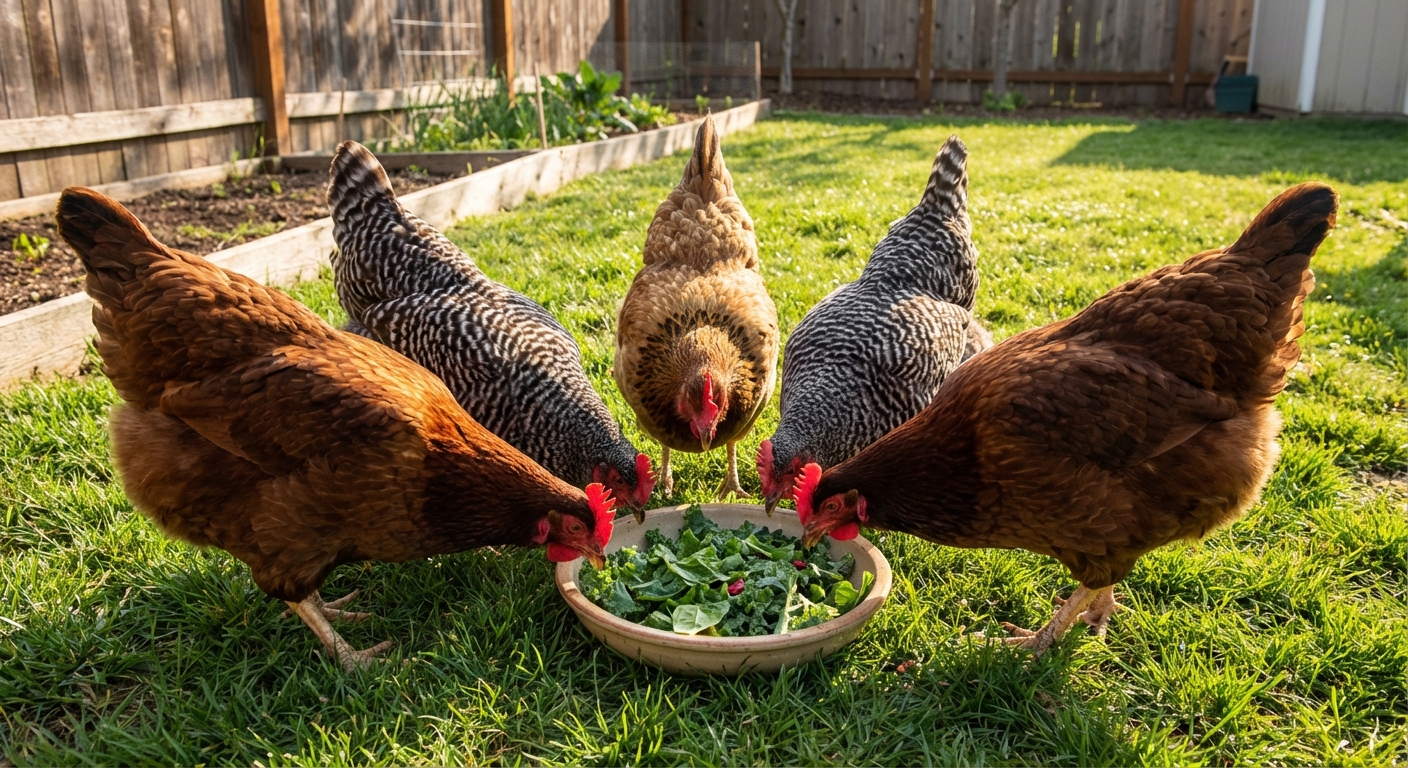
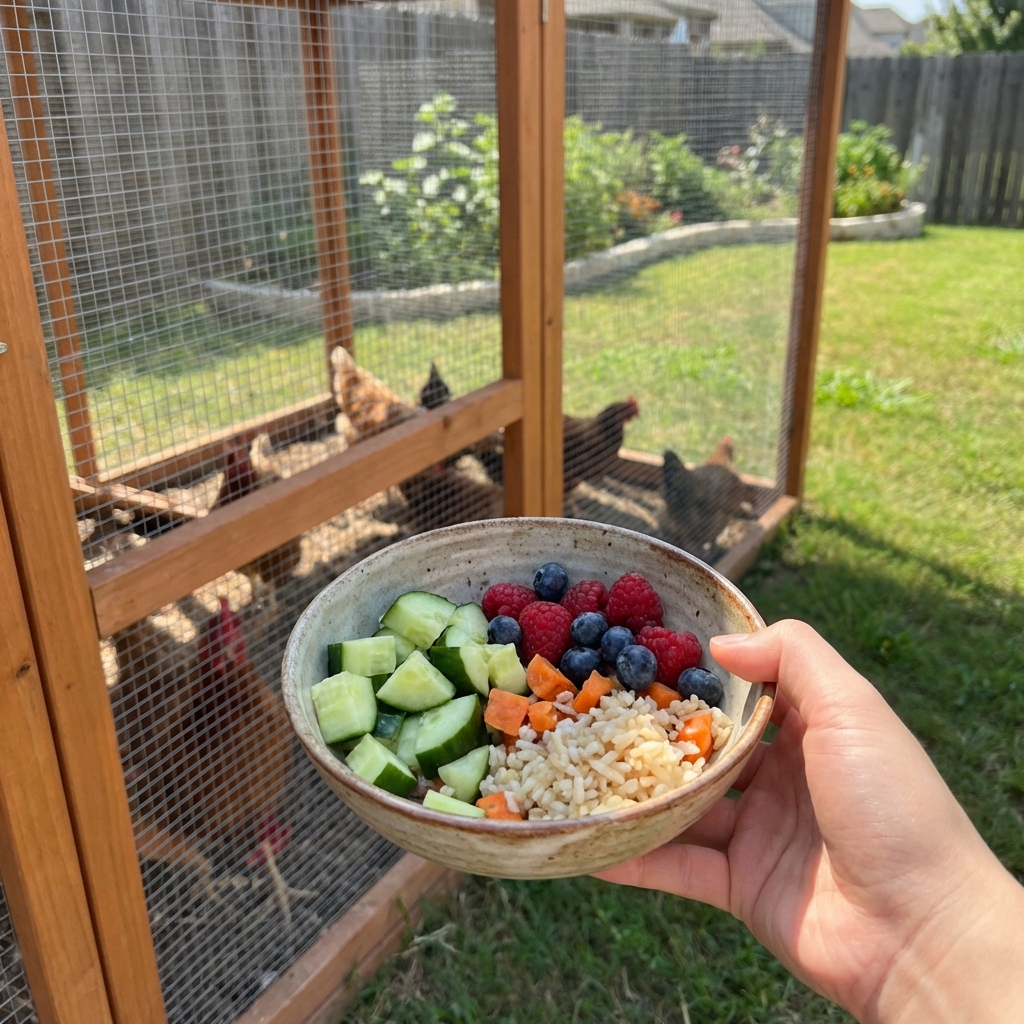
Veggies add enrichment and nutrients. Chop them so birds can eat comfortably, and remove anything that starts to spoil.
- Leafy greens: romaine, kale, collards, mustard greens
- Crucifers: broccoli, cauliflower, cabbage (fine, but can lead to looser droppings and extra mess if you overdo it)
- Crunchy options: cucumbers, bell peppers, zucchini
- Cooked starchy veg: sweet potato, pumpkin, winter squash
Fruits
Fruit is a treat because of sugar, but it is great for hydration and interest.
- Berries, melons, grapes cut in half
- Apples (remove the core and seeds when you can, and do not make seeds a habit)
- Banana in small amounts
- Citrus: generally safe, but some birds do not care for it
Protein boosters
Protein helps during molting, growth, and recovery. Keep portions reasonable to avoid unbalancing the diet.
- Scrambled or hard-boiled eggs (yes, it is fine; avoid salty seasonings)
- Plain cooked chicken or fish in small amounts
- Mealworms or black soldier fly larvae as a treat
- Plain, unsalted yogurt in tiny amounts for enrichment (some birds do not tolerate dairy well)
Grains and carbs
These are best as occasional extras, especially in cold weather.
- Cooked oats, cooked rice, cooked pasta (plain)
- Whole corn or scratch grains sparingly
- Bread: not toxic, but low nutrition, so keep it occasional and small
About spicy peppers
Good news: chickens do not feel “heat” the way we do. Spicy peppers are generally safe, although the seeds and skins can still cause a bit of digestive upset in some birds if they eat a lot at once. Offer as a treat, not a staple.
Foods to avoid
Chickens can eat a surprising variety of foods, but a few items are common troublemakers. When in doubt, skip it.
- Avocado (especially skin and pit): contains persin, which can be toxic to birds.
- Raw dry beans: contain lectins; only offer beans that are fully cooked.
- Chocolate, candy, and heavily sugary foods: not appropriate for poultry and can cause illness.
- Alcohol: avoid completely.
- Actively fermenting, spoiled, or boozy foods: skip these. Note: mild fermentation itself is not automatically “bad” (fermented feed is a common practice), but you do not want anything that is alcoholic, questionable, moldy, or off.
- Caffeine: coffee grounds, tea leaves, energy drinks.
- Moldy or spoiled food: a big risk for toxins and digestive upset.
- Excessively salty foods: chips, salted nuts, processed meats, salty pickles or brines.
- Greasy, fried foods: can trigger diarrhea and attract pests.
- Onion and garlic in large or frequent amounts: small traces are usually not a crisis, but heavy use may contribute to anemia and may affect egg flavor.
- Fruit pits and large amounts of apple seeds: remove them when possible.
- Green potatoes, potato sprouts, and green potato peels: can contain solanine.
- Rhubarb leaves: not chicken-safe.
- Cooked bones: can splinter. (Most chickens are not offered bones anyway, but it is a common scraps question.)
If your flock gets into a risky food, watch closely for lethargy, weakness, breathing changes, repeated watery droppings, or loss of appetite, and contact an avian vet if symptoms show up.
Water, calcium, grit
These three basics quietly make or break flock health.
Fresh water
Clean water is non-negotiable. Dehydration can reduce laying, stress the body, and worsen heat-related problems. In Texas summers, check water multiple times daily and keep it shaded.
Calcium for layers
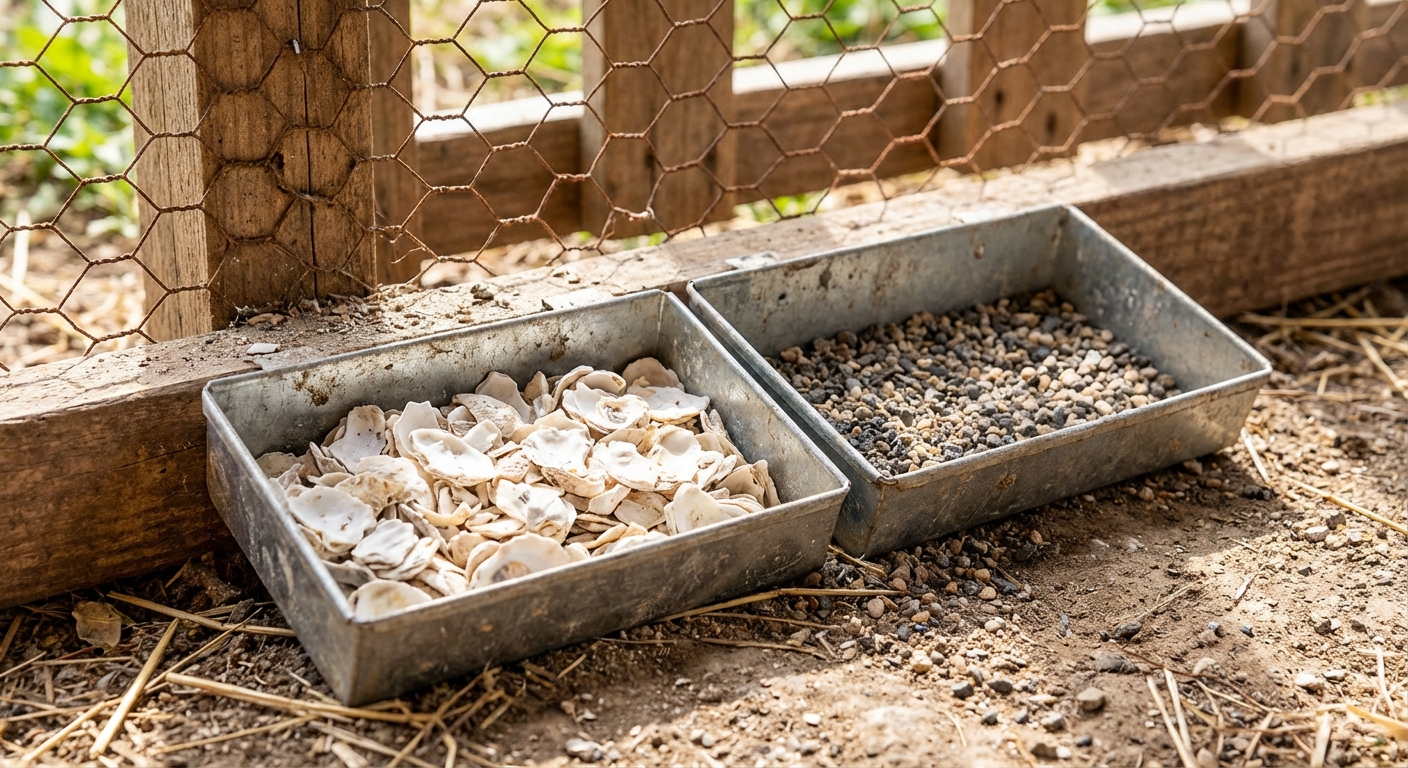
Hens need extra calcium to build strong eggshells. The safest method is to provide oyster shell in a separate dish so only the birds who need it will take it.
Grit for digestion
If your chickens eat anything besides formulated feed (grass, weeds, bugs, scraps), they need insoluble grit to grind food in the gizzard. Birds with outdoor access often find small stones on their own, but confined flocks usually need grit offered free-choice. For chicks, use chick-sized grit.
How to feed scraps safely
Scraps can be a wonderful enrichment tool, but the way you offer them matters.
- Keep it clean: place scraps in a shallow pan or hanging treat holder, not directly in mud or bedding.
- Small portions: if it is not eaten in 20 to 30 minutes, remove it.
- Do not leave scraps overnight: it attracts rodents and can pull wild birds into your run.
- Chop and spread: reduces bullying and helps timid birds get their share.
- Watch the treat creep: if your birds ignore their balanced feed, you are offering too many extras.
- Seasoning check: avoid foods with lots of salt, heavy sauces, or greasy drippings.
Common goals
For better eggs
- Layer feed as the base
- Free-choice oyster shell
- Occasional greens and protein treats
During molt
- Prioritize protein: larvae, mealworms, cooked eggs
- Reduce sugary treats
- Minimize stress and keep water abundant
In hot weather
- Cool water, shade, and airflow first
- Hydrating treats: watermelon, cucumber
- Avoid heavy scratch grains during the hottest part of the day
Quick checklist
Before you toss something into the run, pause and ask:
- Is it fresh, not moldy or spoiled?
- Is it low-salt and not greasy?
- Is it free of pits, lots of seeds, bones, or packaging?
- Is it a small portion, not replacing their balanced feed?
- Do they have access to water and (if needed) grit?
If you can answer “yes” across the board, you are usually in a safe zone.
Feeding chickens well is not about fancy ingredients. It is about consistency: a complete feed, clean water, and smart treats that support their bodies instead of stressing them.