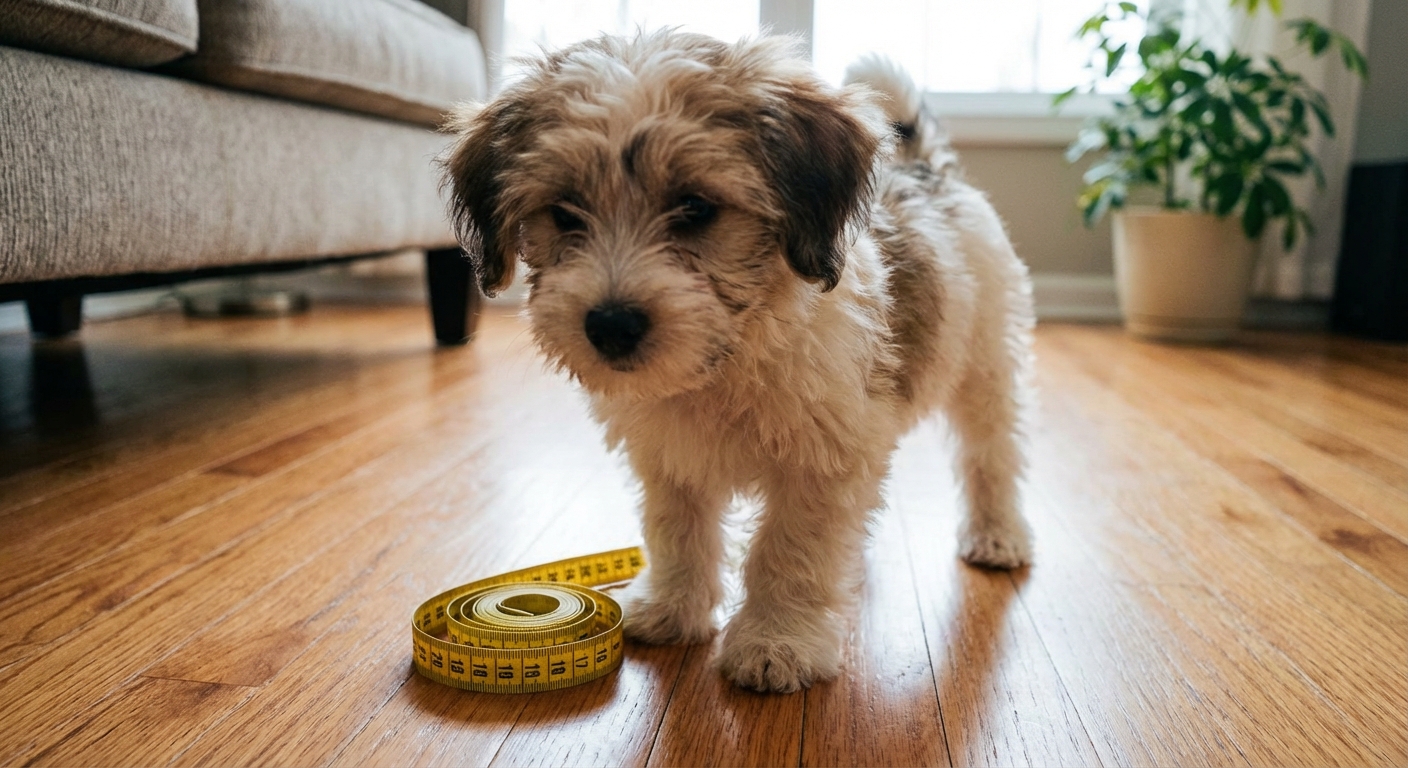
Find out when puppies stop growing based on breed size, from toy to giant. Learn height vs. weight changes, growth spurts, adult size estimates, and tips for...
Article
•
Designer Mixes
What Age Do Puppies Stop Growing?

Shari Shidate
Designer Mixes contributor
If you have a puppy at home, you have probably asked this at least once while staring at a too-short collar or a suddenly snug harness: What age does a puppy stop growing?
As a veterinary assistant here in Frisco, Texas, I can tell you the honest answer is: it depends. Growth is influenced by breed, adult size, genetics, nutrition, spay and neuter timing, and overall health. The good news is that you can learn the usual timelines and a few simple ways to track your puppy’s progress so you can support healthy development without overfeeding or overexercising.
Quick note: This article is general education and not a substitute for veterinary care. If you are worried about your puppy’s growth or gait, your veterinarian is the best place to start.
Typical puppy growth timelines
Many puppies reach their adult height before they reach their adult weight. Think of it like this: they usually get taller first, then they fill out. These ranges are what many veterinary teams use as a general guide, but individual variation is normal even within the same breed.
- Toy and small dogs (often under 20 pounds as adults): usually stop growing around 8 to 10 months, sometimes as early as 6 to 8 months. Examples: Chihuahua, Yorkshire Terrier, Miniature Dachshund.
- Medium dogs (often 20 to 50 pounds as adults): usually stop growing around 10 to 12 months. Examples: Beagle, Border Collie, Cocker Spaniel.
- Large dogs (often 50 to 90 pounds as adults): usually stop growing around 12 to 18 months. Examples: Labrador Retriever, German Shepherd, Boxer.
- Giant dogs (often 90 pounds and up as adults): may continue growing until 18 to 24 months. Examples: Great Dane, Mastiff, Saint Bernard.
Designer mixes can vary widely. A Goldendoodle, Labradoodle, Bernedoodle, or Pomsky may follow the growth curve of the larger parent, the smaller parent, or land in between.
Why size matters: growth plates
Puppies grow because their bones have soft areas called growth plates (physes). These plates gradually harden and close as your puppy matures. Once a growth plate closes, that bone will not get longer.
In general, the bigger the dog, the longer those growth plates stay open. That is why giant breeds can look lanky for so long. Their skeleton is still developing even after they look “almost grown.”
Your veterinarian can sometimes estimate growth plate closure on an X-ray, which can be helpful if you are discussing certain orthopedic concerns or planning higher-impact activities.
Height vs. filling out
Height
Most puppies reach close to adult height earlier than you expect, especially small and medium dogs. Large and giant breeds may continue to gain height for many months, although it can be gradual near the end.
Weight and muscle
After height slows down, your puppy often continues to gain weight, muscle, and chest width. This “filling out” phase can last several months and is especially noticeable in athletic breeds and larger mixes.
Coat and body shape
Many puppies also go through coat changes and body-shape changes as they mature. Some mixes develop a thicker adult coat later, and some get a deeper chest as they build muscle.
How to tell if your puppy is still growing
Here are practical, vet-recommended ways to track growth at home without guessing.
1) Weigh weekly (or every two weeks)
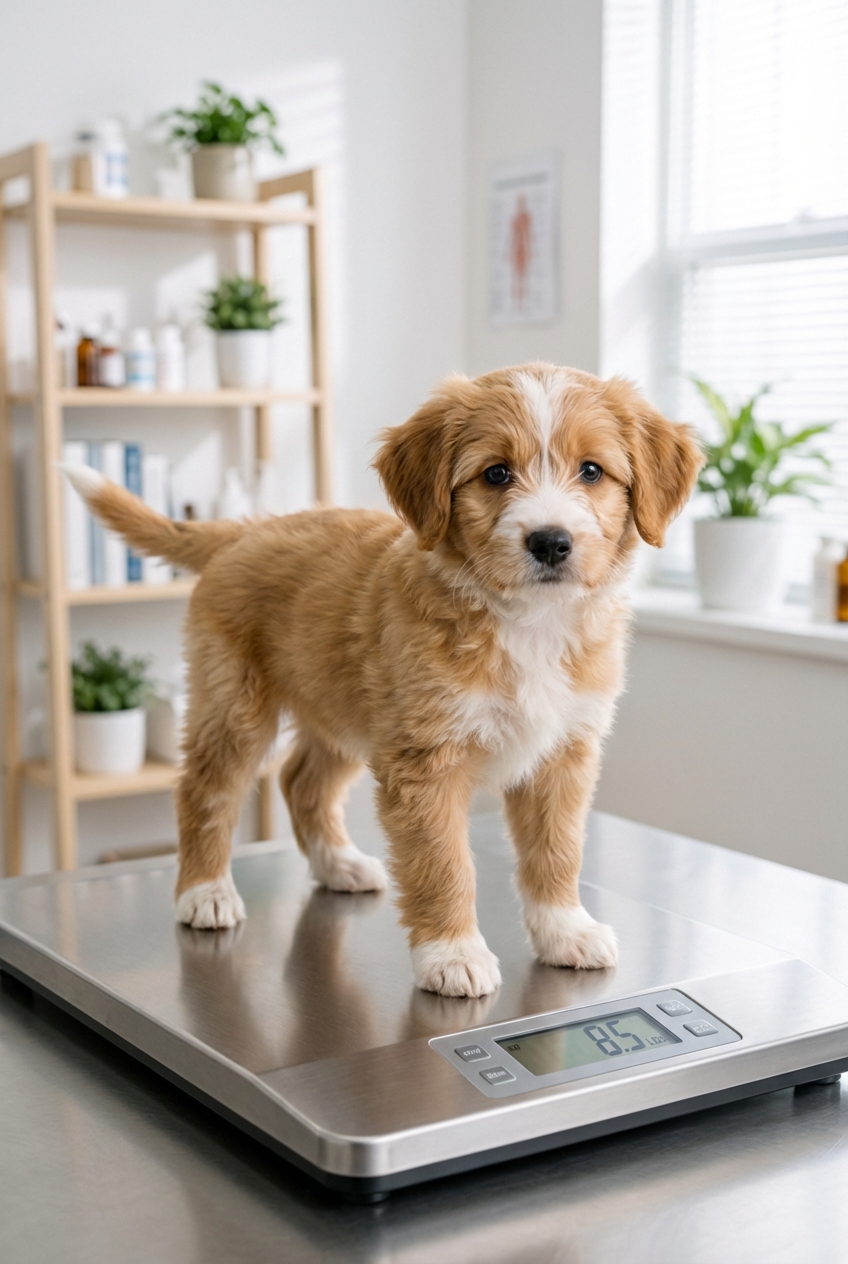
Use a baby scale for small pups, or weigh yourself holding your puppy and subtract your weight. Keep a simple note in your phone. A steady trend matters more than any single number.
2) Check body condition, not just pounds
A healthy puppy should have a visible waist from above and you should be able to feel ribs under a thin layer of fat. If you cannot feel ribs easily, weight gain may be outpacing healthy development.
3) Watch the “gear test”
When collars, harnesses, and coats need frequent resizing, that is a very real sign your puppy is still growing. Even when sizing seems stable, check fit routinely for safety. If sizing stays consistent for a couple of months, you may be nearing adult size.
4) Ask your vet about a growth chart
For many purebred dogs there are established growth patterns. For mixes, your veterinarian can still interpret trends and compare them to expected adult size based on breed traits and overall frame.
Nutrition tips for healthy growth
Nutrition is one of the biggest controllable factors in healthy development. Too little nutrition can delay normal growth, and excess calories and rapid weight gain can increase the risk of developmental orthopedic disease, especially in large-breed puppies. Mineral balance also matters, particularly calcium and phosphorus.
Choose the right food
- Look for “complete and balanced for growth” on the label, and ideally a statement showing it meets AAFCO (US) or FEDIAF (Europe) nutritional standards for growth.
- Large-breed puppy formulas are designed to support slower, steadier growth and more appropriate calcium and phosphorus levels for bone development.
- Do not add calcium supplements unless your veterinarian specifically tells you to. Excess calcium can be harmful for growing large-breed dogs.
Aim for steady, lean growth
It is normal for puppies to be lean. A slightly lean puppy is typically healthier than a chubby puppy, particularly for joints and long-term mobility.
Be careful with treats
Keep treats to about 10% or less of daily calories. Use simple options like small pieces of cooked lean meat or puppy training treats, and reduce meal portions if treats increase.
If you are considering fresh or homemade food, please talk with your veterinarian or a board-certified veterinary nutritionist to ensure the diet is complete and balanced for growth. Puppies have specific requirements that are different from adult dogs.
Exercise and joint care
Puppies need movement for healthy muscles, coordination, and confidence, but their joints and growth plates also need protection.
Good daily exercise options
- Short, age-appropriate walks
- Gentle play on grass or carpeted surfaces
- Training games that build focus and body awareness
Use caution with high-impact activities
- Repetitive jumping on and off furniture
- Long runs with adult dogs
- Intense stair climbing, especially for larger breeds
Rule of thumb: for large and giant breeds, save repetitive high-impact exercise (like distance running or frequent jumping) for after your veterinarian confirms your dog is close to skeletal maturity.
If your puppy is limping, bunny-hopping, reluctant to rise, or suddenly avoiding stairs, it is time to check in with your veterinarian.
Spay and neuter timing
Spaying and neutering can influence growth because sex hormones play a role in growth plate closure. In some dogs, especially larger breeds, earlier spay or neuter may be associated with growth plates staying open a bit longer, which can slightly change limb length and may influence orthopedic risk.
This topic is nuanced and evidence can be mixed, with differences by breed, sex, and individual health. There is no single perfect timeline for every dog. The best choice depends on breed, expected adult size, lifestyle, and health history. This is a great conversation to have during puppy wellness visits so you can weigh benefits and risks for your individual pup.
Frequently asked questions
When do puppies stop teething and does that relate to growth?
Most puppies finish teething around 6 months (sometimes up to about 7 months). That is an important milestone, but it does not mean overall growth is complete, especially for medium, large, and giant breeds.
My puppy is a designer mix. How can I estimate adult size?
Look at parent sizes if you know them, your puppy’s current weight and age, paw and bone structure, and your veterinarian’s input. Mixed genetics can make estimates imperfect, but trends over time are very helpful.
Is it normal for my puppy to have growth spurts?
Yes. Many puppies grow in spurts and may look awkward for a while. Appetite can fluctuate, too. As long as your puppy stays bright, active, and maintains a healthy body condition, spurts are typically normal.
When growth looks abnormal
Some changes are worth a closer look because they can point to nutrition issues, parasites, developmental orthopedic problems, or other health concerns:
- Very rapid weight gain with a round body shape and no waist
- Persistent thinness or poor weight gain despite a good appetite
- Pot-bellied appearance, especially with diarrhea or a dull coat
- Uneven limb growth, bowed legs, or a suddenly “off” gait
- On-and-off lameness during growth spurts
When to call your veterinarian
Please reach out to your vet if you notice any of the following:
- Limping, stiffness, or pain when touched
- Swollen joints
- Significant fatigue or reluctance to play
- Sudden change in appetite lasting more than a day or two
- Vomiting, diarrhea, or poor weight gain
- Rapid weight gain with loss of waist definition
Healthy development is not a race. The goal is a strong, lean puppy who grows steadily and comfortably into an active adult dog.
Bottom line
Most puppies stop growing somewhere between 8 and 24 months, depending mainly on adult size. Small dogs finish earlier, giant dogs take the longest, and many pups keep filling out after their height slows.
If you want the best support for your puppy’s long-term health, focus on three basics: steady growth, balanced nutrition, and joint-friendly exercise. And if you ever feel unsure, your veterinary team can help you interpret weight trends and body condition so you can make adjustments early.