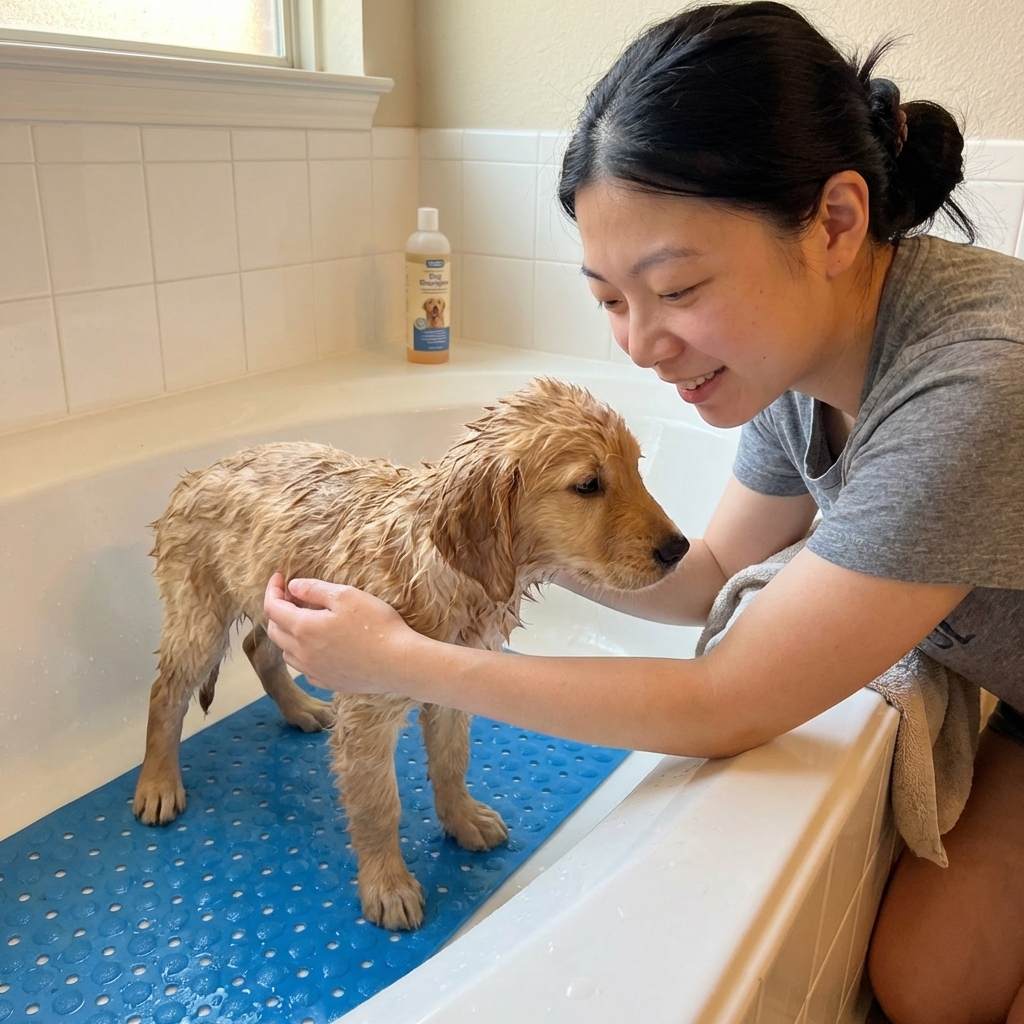
Make puppy bath time calm and safe with age-by-age bathing guidance, how often to wash, step-by-step washing tips, shampoo advice, and common mistakes to avoid.
Article
•
Designer Mixes
What Age Can You Give a Puppy a Bath?

Shari Shidate
Designer Mixes contributor
As a veterinary assistant in Frisco, Texas, I get this question all the time: what age can you give a puppy a bath? For many puppies, around 8 weeks old is a reasonable first “true bath” milestone, but the safest answer depends on your puppy’s health, size, temperature control, vaccines, coat type, and how dirty they really are.
The good news is that you do not have to wait for your puppy to be grown to keep them clean. You just need the right method for their age and a gentle, step-by-step plan that keeps them warm, calm, and protected from skin irritation.
Quick age answer
- 0 to 4 weeks: Avoid full baths. Use a warm damp cloth only. Neonatal and orphaned puppies can chill quickly, so follow your veterinarian’s guidance.
- 4 to 8 weeks: Only bathe if truly needed. Keep it short and keep them very warm. Tiny and toy-breed puppies may need extra caution.
- 8 weeks and up: Many puppies can be bathed at home with a gentle puppy shampoo and proper drying.
- After vaccines: Bathing at home is fine, but avoid high-risk public grooming areas until your vet says your puppy is fully protected.
If your puppy is cold, lethargic, has diarrhea, vomiting, a cough, open sores, or a heavy flea problem, it is best to call your veterinarian before bathing. Some situations need a different plan than a standard bath.
Why age matters
Puppies are still learning how to regulate their body temperature. A bath that feels “just warm” to us can still chill a young puppy, especially if they are small, thin-coated, or stressed. Their skin is also more delicate, which means harsh products or frequent baths can trigger dryness and itching.
That is why the safest approach is to use the least intense cleaning method that solves the problem, especially in the first few weeks.
Before 8 weeks: safe cleaning
Option 1: Warm washcloth spot-clean
If your puppy has milk, urine, poop, or mud on them, start here first. It is often all you need.
- Use a soft cloth dampened with warm water.
- Wipe the dirty area gently.
- Dry immediately with a towel.
- Keep your puppy in a warm room afterward.
Option 2: Puppy wipes
Choose unscented wipes made for pets. Avoid wipes with alcohol or heavy fragrance. Wipes are great for paws, belly, and rear end between baths.
Option 3: Mini rinse for one area
If a washcloth is not enough, you can rinse only the dirty area in a sink using warm water, then towel dry right away.
8 weeks and up: home bath steps
Many puppies can handle a gentle bath at 8 weeks, as long as you keep it calm and warm. Set yourself up for success before you bring your puppy into the water.
Step 1: Gather supplies
- Puppy-safe shampoo (tear-free is helpful, but still avoid eyes)
- 2 towels (one for drying, one for the floor)
- Non-slip mat for the tub or sink
- Brush or comb appropriate for your puppy’s coat
- Cotton balls (optional). Place loosely at the ear opening only, do not insert into the ear canal, and remove immediately after the bath.
- Treats
Product note: Skip human shampoo (including baby shampoo), strongly fragranced products, and medicated shampoos unless your veterinarian recommends them. Adult dog shampoos can be too harsh for some puppies.
Step 2: Brush before the bath
Brushing first removes loose hair and prevents mats from tightening when wet. For doodle mixes and longer coats, this step is especially important.
Step 3: Keep it warm and shallow
Use warm water, not hot. A good rule is “baby bath warm.” Fill the sink or tub with only a few inches of water so your puppy can stand comfortably, and never leave your puppy unattended.
Step 4: Wet the body slowly
Start at the shoulders and back. Many puppies dislike water on the head, so save the face for last. For the face, use a damp cloth and avoid spraying water toward the eyes, nose, or mouth.
Step 5: Lather gently, then rinse very well
Use a small amount of shampoo. More product does not equal a cleaner puppy. Rinse until the water runs clear and the coat feels free of residue. Leftover shampoo is a common cause of post-bath itchiness.
Step 6: Dry right away
- Towel dry thoroughly.
- If you use a blow dryer, use low heat and keep it moving.
- Stop if your puppy seems stressed, and towel dry more instead.
Step 7: Reward and keep them warm
Offer treats and calm praise. Then keep your puppy indoors until completely dry.
Bath schedule by age
8 to 12 weeks
- Bathe only when needed, often every 3 to 6 weeks at most.
- Use wipes and brushing for in-between cleanup.
3 to 6 months
- Many puppies do well with every 4 to 6 weeks, depending on lifestyle and coat.
- This is a great time to practice calm handling for future grooming.
6 to 12 months
- Frequency depends heavily on coat type and activity level.
- Doodle mixes and long-coated breeds may need more frequent bathing and blow-drying combined with brushing to prevent mats.
- Short-coated breeds often need baths less often unless they get into something messy.
Practical note: Over-bathing can dry out skin by stripping protective oils. Under-bathing, especially in dense coats, can trap debris and contribute to odor and skin irritation. The goal is a balanced routine plus regular brushing.
Special situations
If your puppy has fleas
Call your vet for the safest flea plan for your puppy’s exact age and weight. Many flea products are age-restricted. If your veterinarian recommends a bath for immediate relief, a gentle puppy bath plus a flea comb can help temporarily, but you still need the right treatment plan and often environmental cleanup to fully control fleas.
If your puppy rolled in something smelly
Start with a rinse and a small amount of puppy shampoo. Avoid home remedies like heavy essential oils. Some essential oils can be irritating or toxic to pets.
If your puppy has dry, flaky, or itchy skin
Use fewer baths, rinse extra well, and ask your veterinarian whether a medicated shampoo is needed. Skin issues can be caused by parasites, infection, allergies, or diet, so it is worth investigating.
If your puppy is unvaccinated
You can still bathe at home. Just avoid high-traffic grooming locations and dog wash stations where contagious viruses can linger on surfaces.
Common bath mistakes
- Using human shampoo: Use a puppy-specific shampoo. Human products (even baby shampoo) can disrupt skin pH and cause irritation.
- Getting water in the ears: Keep water out of the ear canals and dry the outer ear gently. If you notice head shaking or odor afterward, call your vet.
- Rushing the rinse: Rinse longer than you think you need to.
- Bathing too often: Use brushing and spot cleaning between baths.
- Skipping brushing in curly coats: Brushing is not optional for many mixes, especially doodles.
When to call your vet
Please reach out to your veterinarian if you notice any of the following after a bath:
- Hives, facial swelling, or intense itching
- Redness that spreads or looks painful
- Persistent head shaking, ear odor, or discharge
- Repeated coughing or breathing changes (rare, but important)
- Lethargy or shivering that does not resolve with warming
Your puppy’s comfort and safety come first, and a quick call can save a lot of stress.
Takeaway
Many puppies can have their first true bath at about 8 weeks old, but younger puppies can still be kept clean with spot cleaning, wipes, and short, warm rinses when needed. Keep baths gentle, keep your puppy warm, rinse thoroughly, and make it a positive experience. A calm bath routine now sets the stage for a lifetime of easier grooming.