Hot spots can appear overnight. Learn the causes, signs, safe at-home cleaning and drying steps, common mistakes to avoid, and when your dog needs urgent vet...
Article
•
Designer Mixes
Wellness Hotspots on Dogs Explained

Shari Shidate
Designer Mixes contributor
As a veterinary assistant here in Frisco, Texas, I hear the phrase “wellness hotspot” used in a few different ways. Most often, people mean a recurring trouble spot on a dog’s body that flares when something is off, like allergies, parasites, anxiety, pain, or chronic inflammation. It can be a helpful way to describe patterns you are noticing.
Just know that “wellness hotspot” is not a standard veterinary term. In a clinic, the term hot spot usually refers to a specific skin lesion called acute moist dermatitis, and other “hotspot areas” often turn out to be things like ear infections, allergic dermatitis, or anal gland irritation.
The good news is that many hot spots improve quickly when you address the true cause, especially when you stop licking early. More severe, deep, or recurring cases may need prescription medication and a longer-term plan. The key is knowing what you are looking at, what you can safely do at home, and when it is time to see your vet.

What “wellness hotspot” usually means
On pet wellness blogs and social media, “wellness hotspot” is commonly used to describe one of these:
- Skin hot spots: localized, inflamed, sometimes moist skin lesions (often called acute moist dermatitis).
- Problem zones: recurring areas of irritation, licking, odor, or discomfort, like paws, ears, armpits, or tail base.
- Pain points: areas where your dog shows tenderness or changes behavior when touched, such as hips, lower back, or neck.
In clinic language, we usually stop using the umbrella term and get specific: “hot spot,” “otitis” (ear infection), “allergic dermatitis,” “anal gland irritation,” “interdigital cyst,” and so on. Specific labels matter because they guide the right treatment.
Common locations and what they can signal
Paws (especially between toes)
If your dog is licking or chewing feet, that is a classic trouble spot. Common triggers include environmental allergies, contact irritants (grass chemicals, ice melt), yeast overgrowth, or a foreign body like a foxtail.
- Look for: red staining on fur, an odor often described as “corn chip,” moist skin between toes, swelling, limping.
- Helpful at home: wipe paws after walks, keep fur trimmed between pads, ask your vet about a safe antifungal or chlorhexidine rinse if yeast is suspected.
Ears
Warm, itchy ears that smell “off” are a common problem zone for allergies and infections. Many dogs with recurring ear issues have an underlying allergy (food or environmental), plus secondary yeast or bacteria.
- Look for: head shaking, scratching, dark debris, redness, odor.
- Important: do not put random drops in the ear if the eardrum could be damaged. Your vet can check quickly and choose the right medication.
Armpits, groin, belly
These areas have thin skin and trap moisture. Allergies, friction, and yeast commonly show up here.
- Look for: pink to red skin, small bumps, greasy coat, itchiness after being outside.
Tail base and lower back
This is a very common flea hot spot area. Even a few bites can trigger a big reaction in flea-allergic dogs.
- Look for: intense itching near the tail, scabs, hair loss, flea dirt (black specks that smear reddish-brown when wet).
- Best prevention: consistent, veterinarian-recommended flea control for all pets in the home.
Cheeks and chin
Chin irritation can be acne, allergy-related itching, or irritation from bowls or saliva. Some dogs do better with stainless steel bowls cleaned daily.
What a true hot spot looks like
Quick note before we zoom in: the sections above describe common recurring problem areas. A true hot spot is a specific type of fast-developing skin lesion.
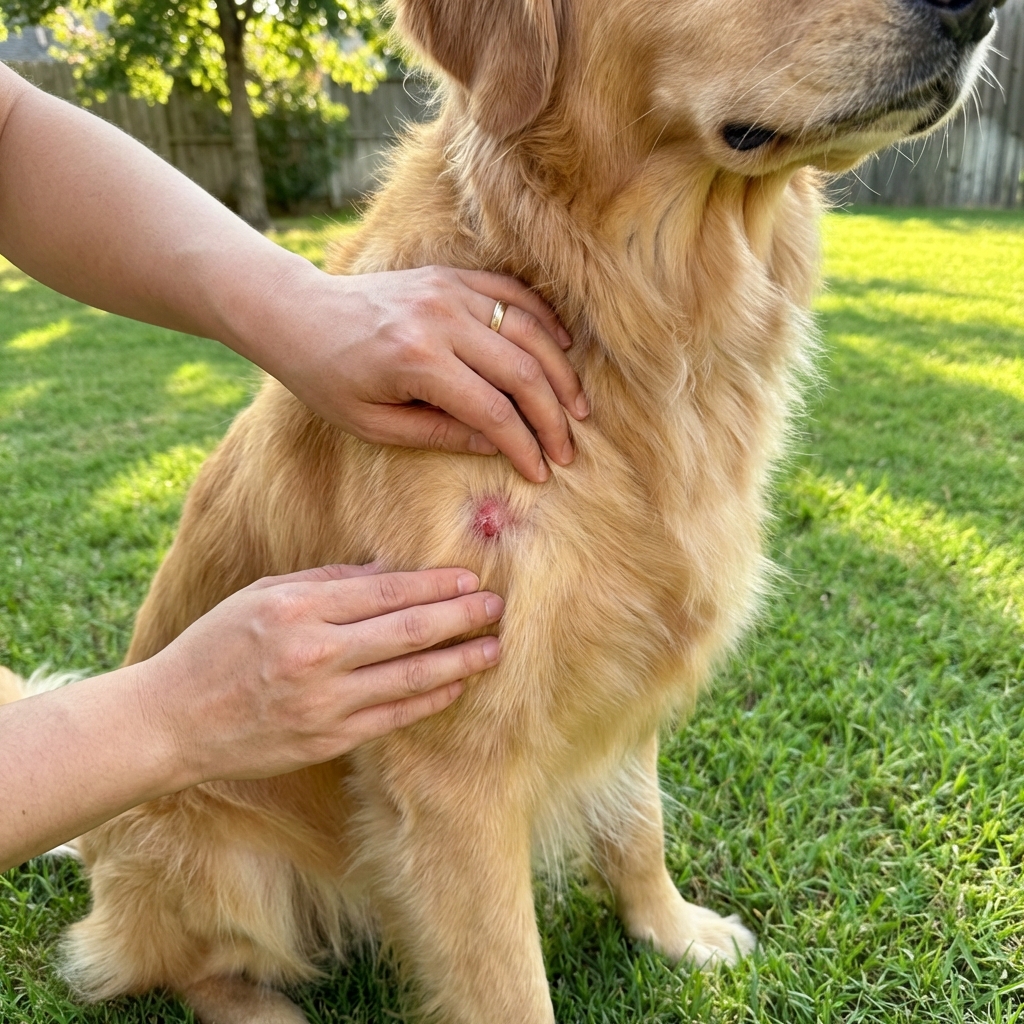
A classic hot spot tends to be:
- Sudden, often developing overnight
- Red and angry-looking
- Moist or oozing, sometimes with matted fur
- Very itchy or painful
Hot spots commonly start with itching (allergies, flea bite, ear infection), then progress when the dog licks, chews, or scratches the same area repeatedly. Moisture plus bacteria (and sometimes yeast) can create a fast-moving skin infection.
Important: other problems can mimic a hot spot, including bite wounds, abscesses, ringworm, mange, anal gland infections, and less commonly autoimmune disease or tumors. If you are unsure, it is safer to have your vet take a look.
Why hot spots happen (root causes)
Hot spots are usually a symptom. Here are the most common “why” behind them:
- Allergies (environmental or food) causing chronic itch and skin barrier disruption
- Parasites (fleas are the big one, but mites can also contribute)
- Ear infections leading to face scratching and neck lesions
- Moisture trapped in the coat (swimming, rainy weather, thick undercoat)
- Pain or anxiety leading to repetitive licking (some dogs self-soothe by licking)
- Underlying skin infection (bacterial or yeast), sometimes tied to hormones or immune issues
If the same hot spots keep coming back, it is worth investigating the bigger picture with your veterinarian. Recurrent hot spots are often “allergy plus secondary infection” until proven otherwise.
What you can do at home (safe first steps)
If the area is small and your dog is otherwise acting normal, these steps can help while you arrange vet guidance:
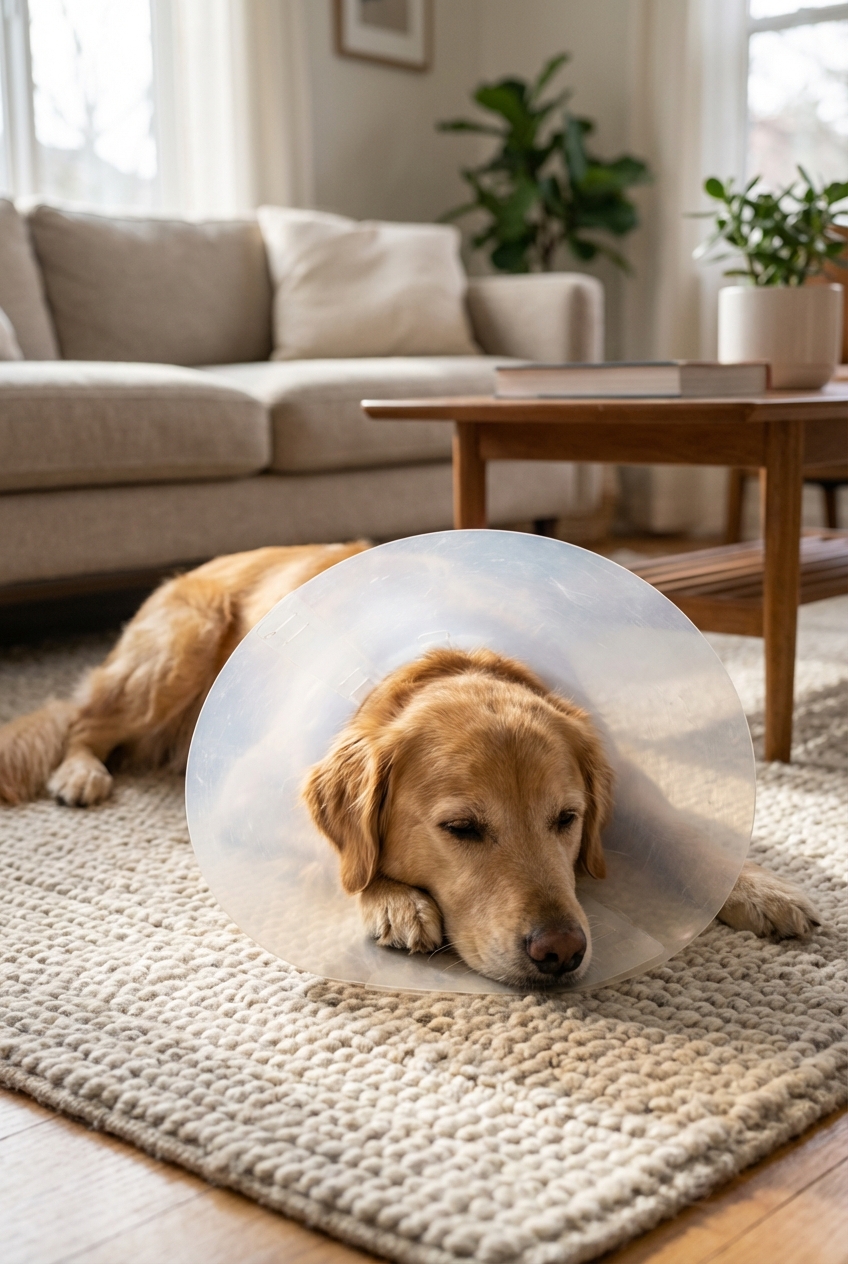
- Prevent licking: an e-collar is often the fastest way to stop the cycle.
- Clip fur if you can do so safely: letting air reach the skin helps, but avoid scissors close to skin because hot spots can be uneven and painful.
- Clean gently: use a pet-labeled, vet-approved antiseptic rinse or wipes (chlorhexidine products are commonly recommended). Pat dry. Avoid getting products into the eyes, mouth, or ear canal unless your veterinarian directs you.
- Keep it dry: moisture feeds the problem.
- Track patterns: note recent diet changes, new treats, grooming products, swimming, seasonal pollen spikes, or missed flea prevention.
Avoid: hydrogen peroxide, alcohol, essential oils, or human steroid creams unless your veterinarian specifically approves them for your dog. These can delay healing or cause toxicity, especially if your dog licks the area.
Also avoid giving human pain medications like ibuprofen or naproxen. They can be dangerous for dogs. If your dog seems painful or miserable, call your veterinary team for safe options.
When to call the vet
Hot spots can look minor and still need prescription help. Reach out promptly if you notice:
- Rapid spreading, heavy oozing, or a strong odor
- Significant pain, lethargy, fever, or loss of appetite
- Hot spot near the eyes, genitals, or deep skin folds
- Ear symptoms along with the skin issue
- Worsening or no improvement within 24 to 48 hours
- Recurring hot spots (more than once or twice)
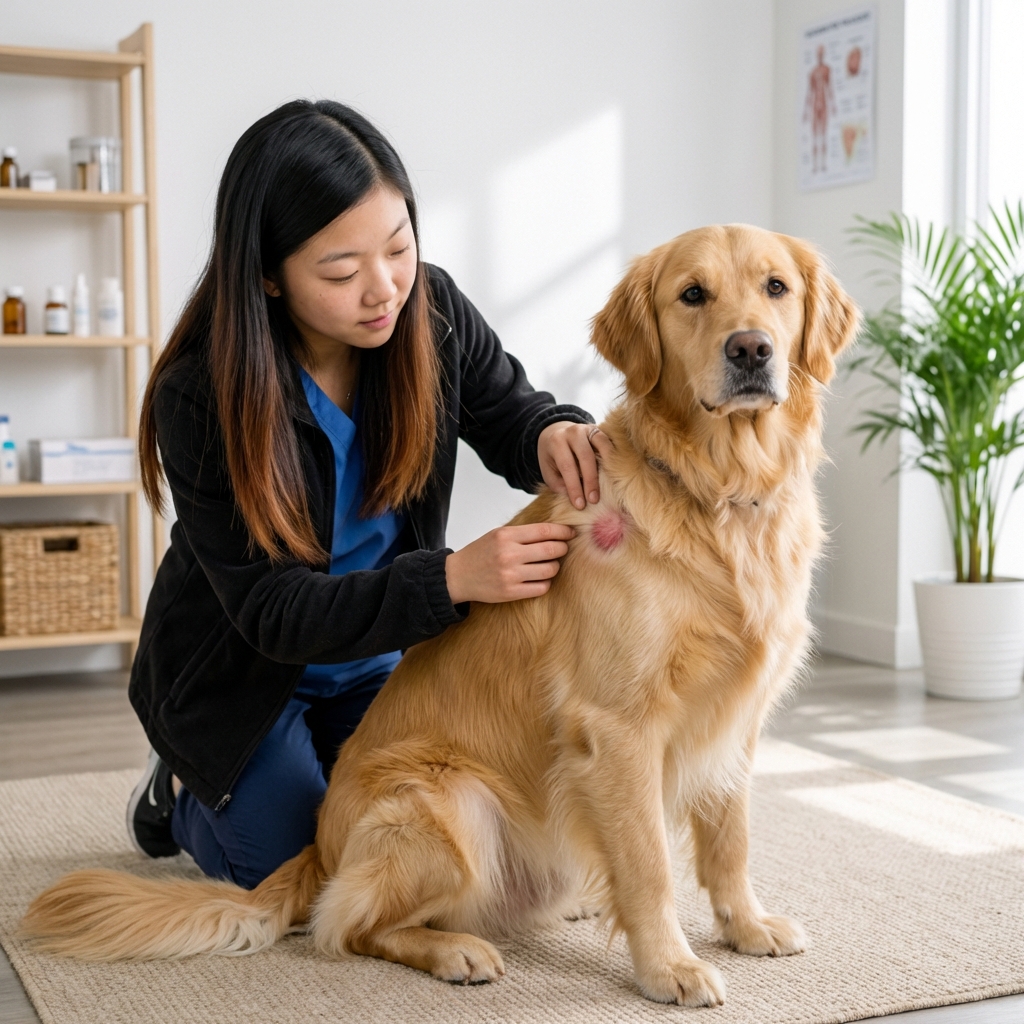
In many cases, your vet may recommend cytology (a quick microscope check) to see whether bacteria, yeast, or inflammation is the main driver. That is how we choose the right treatment, instead of guessing.
If you are wondering what a visit may include, it is often some combination of: clipping and cleaning the lesion, cytology, a topical antibiotic or antifungal, anti-itch medication, pain relief when needed, and tighter flea control. And yes, usually a cone.
Turning hot spots into true wellness
1) Stay consistent with parasite prevention
Even if you rarely see fleas, prevention is still important because one bite can trigger weeks of itching in sensitive dogs.
2) Support the skin barrier with nutrition
Skin is a nutrient-hungry organ. Dogs generally do best with a complete and balanced diet, plus targeted support when appropriate. Many itchy dogs benefit from vet-approved omega-3 fatty acids (EPA and DHA). If you are interested in fresh food or homemade toppers, start slowly and keep the overall diet balanced.
3) Reduce moisture traps
Dry your dog well after swims and baths, especially around ears, armpits, and skin folds. For doodle mixes and double-coated breeds, regular grooming can be a game changer.
4) Stick to a long-term allergy plan
For dogs with seasonal or year-round itch, a long-term plan might include medicated baths, allergy medications, immunotherapy, or a veterinary elimination diet trial. The goal is fewer flare-ups and fewer antibiotics over time.
If your dog’s “wellness hotspot” keeps lighting up in the same place, your dog is not being stubborn. Their body is asking for a better long-term plan.
Frequently asked questions
Are hot spots contagious?
The hot spot itself is not typically contagious, but the underlying cause might be. For example, fleas can spread between pets, and some mites can be contagious. Your vet can help identify the source.
Can stress cause hot spots?
Stress can contribute, especially in dogs that lick as a self-soothing behavior. But I always recommend ruling out itch, pain, infection, and parasites first. Often, it is a combination.
How long do hot spots take to heal?
With proper treatment and licking prevention, many improve noticeably within a few days. Full healing may take 1 to 2 weeks depending on size, infection, and how quickly licking stops.
Takeaway
A “wellness hotspot” is often your dog’s early warning system. When you learn the common locations and what they can point to, you can respond faster and more calmly. If you are ever unsure, a quick vet visit can save your dog a lot of discomfort and can prevent a small issue from turning into a bigger one.