Step-by-step guidance if your dog ate chicken bones: cooked vs. raw risks, what to do immediately, what to avoid, ER red flags, monitoring timeline, and vet ...
Article
•
Designer Mixes
Wellness: Dogs Eating Chicken Bones

Shari Shidate
Designer Mixes contributor
As a veterinary assistant here in Frisco, Texas, I hear this panic phrase all the time: “My dog ate a chicken bone. What do I do?” Take a breath. Many dogs do fine, but chicken bones can absolutely cause problems, especially when they are cooked. Risk varies a lot based on how much was eaten, the size of the pieces, and how your dog is acting right now. This guide will help you understand the real risks, what to watch for, and the safest next steps.
If you are ever unsure, call your veterinarian or an emergency clinic. It is always better to ask early than to wait for symptoms.
Why chicken bones are risky
Chicken bones are different from many larger, denser bones because they can splinter. Those sharp pieces can injure the mouth, throat, esophagus, stomach, or intestines (the GI tract). The risk depends on the type of bone, how it was prepared, and your dog’s size and chewing style.
Cooked vs. raw
- Cooked chicken bones (baked, grilled, fried, rotisserie, smoked, boiled) are the biggest concern. Cooking makes bones more brittle and more likely to splinter.
- Raw chicken bones are often less brittle than cooked bones, but they are not safe. Raw bones can still splinter or break into sharp pieces, and they can cause choking, obstruction, tooth fractures, and GI injury. Raw poultry also carries bacterial risk.
Common problems vets see
- Choking or gagging if a piece gets stuck.
- Mouth injuries like bleeding gums or a bone wedged across the roof of the mouth.
- Esophageal injury which can be serious and painful.
- GI upset such as vomiting, diarrhea, or abdominal pain.
- Constipation or “bone stool” that is dry, crumbly, and hard to pass.
- Intestinal blockage or perforation, which is a true emergency.
First steps
The right response depends on what your dog ate and how they look right now. Use these steps as a calm checklist.
1) Do not induce vomiting without veterinary direction
Inducing vomiting can cause more damage if sharp bone fragments come back up. Hydrogen peroxide is also frequently misused and can irritate the stomach and cause complications. Call a veterinarian first.
2) Check breathing and behavior
If your dog is coughing, gagging, pawing at the mouth, drooling heavily, wheezing, or seems unable to settle, seek urgent care.
If your dog looks like they cannot breathe, is collapsing, or gums are turning pale or blue, treat it as an emergency and go now. If you can, call the ER on the way so they can meet you at the door.
3) Look for obvious mouth issues if it is safe
If your dog will calmly allow it, you can gently lift the lips and look for bleeding or a bone stuck between teeth. Do not put your fingers deep in the mouth, and do not try to pull out a lodged bone if there is resistance or your dog is painful. You can get bitten, and the bone can splinter or shift.
4) Call your veterinarian with specifics
These details help your clinic triage you quickly:
- Your dog’s weight and breed mix
- Whether the bone was cooked or raw
- What was eaten (wing, drumstick, rib, etc.) and rough size
- How long ago it happened
- Any symptoms (vomiting, lethargy, painful belly, straining to poop)
What not to do
- Do not “wait it out” if your dog is choking or struggling to breathe.
- Do not give over-the-counter pain meds (like ibuprofen, naproxen, or acetaminophen). These can be dangerous for dogs.
- Do not give laxatives, oils, or home remedies unless your veterinarian specifically tells you to.
- Do not try to force food or water if your dog is repeatedly vomiting or having trouble swallowing.
When to go to the emergency vet
Please seek urgent veterinary care if you notice any of the following after bone ingestion:
- Repeated vomiting or vomiting with blood
- Unproductive retching or repeated attempts to vomit with little coming up
- Refusal to eat or sudden lethargy
- Abdominal pain (hunched posture, whining, guarding the belly)
- Difficulty swallowing, repeated gulping, or drooling more than normal
- Black, tarry stool or blood in the stool
- Straining to poop with little or no output
- Distended or swollen abdomen
- Any sign your dog may be choking or having trouble breathing
Sharp bone fragments and obstructions can progress quickly. If your gut says something is off, trust that instinct and get seen.
Dogs who are higher risk
I recommend calling sooner (even if symptoms seem mild) if your dog is very small, brachycephalic (short-nosed), a senior, has a history of GI disease, or has had prior abdominal surgery.
What your vet may recommend
Veterinary teams do not treat every chicken bone incident the same way. Treatment depends on symptoms, what was eaten, and what imaging shows.
Possible next steps
- Physical exam and oral exam to look for lodged fragments.
- X-rays to check for obstruction or concerning fragments. Many bones show up on X-rays, but small pieces can be missed depending on size, location, and timing.
- Other imaging (like ultrasound or contrast studies) in select cases when the picture is not clear.
- Supportive care (anti-nausea medication, pain relief) if mild upset is present.
- Endoscopy to retrieve bone pieces from the esophagus or stomach in certain cases.
- Surgery if there is a blockage, perforation, or severe injury.
If your dog is acting totally normal, your veterinarian may recommend careful monitoring at home with clear instructions on what to watch for and when to recheck.
Home monitoring
If your veterinarian advises home monitoring, you are essentially watching for two categories: pain and movement through the GI tract.
Keep a simple log
- Appetite: normal, reduced, or refusing food
- Energy: playful vs. withdrawn
- Stool: normal vs. hard, crumbly, black, or bloody
- Vomiting: none, once, repeated
- Comfort: normal posture vs. hunched, restless, trembling
How long symptoms can take
Some issues appear immediately (choking, mouth injury). Others can show up within hours to a few days as fragments move through the GI tract. Constipation or a partial blockage can sometimes appear later, especially if larger pieces were swallowed.
Do not try to “cushion” it without guidance
Sometimes people hear advice like “give bread” or “feed a big meal to cushion it.” In reality, this can backfire depending on fragment size and whether an obstruction is forming. In some situations, a clinic may recommend a specific diet approach or fiber plan, but it should be only under veterinary guidance.
Prevention
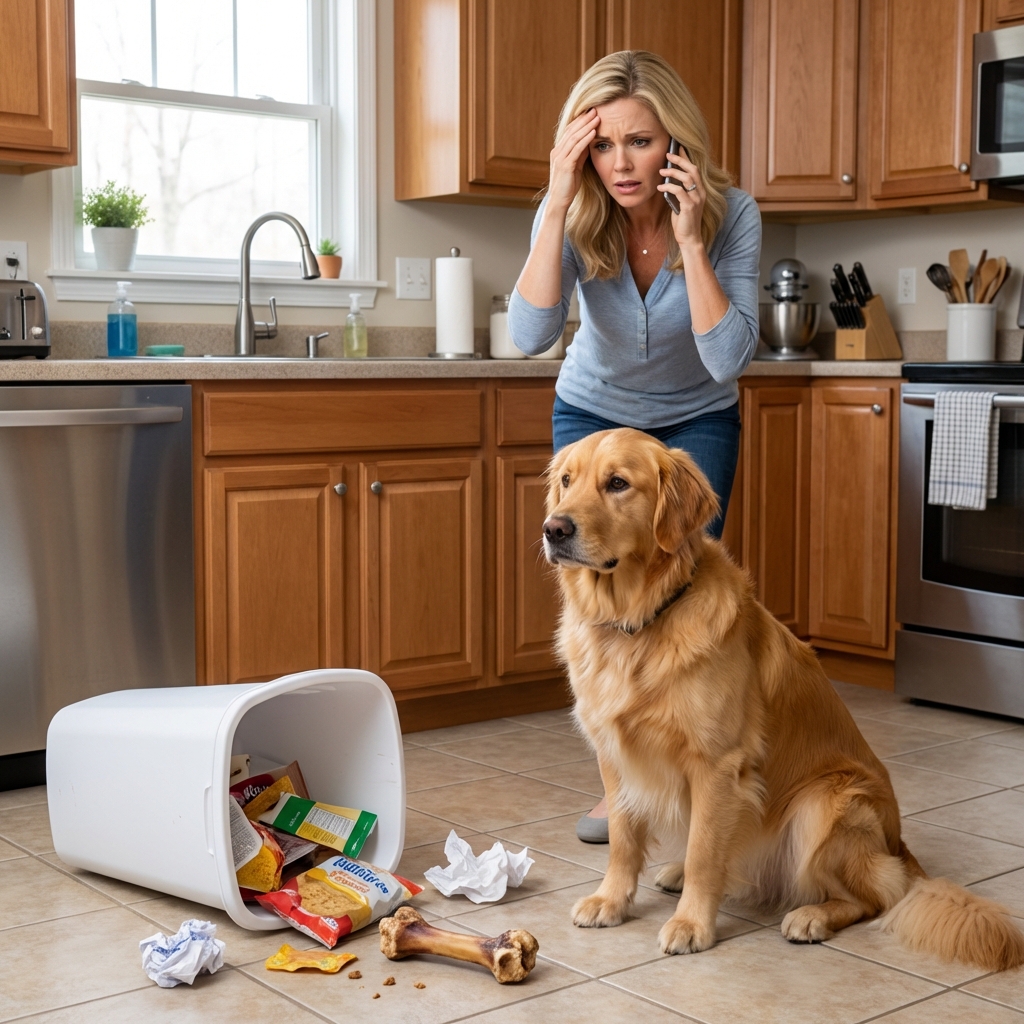
Chicken bones are one of those hazards that happen fast: a dropped wing, a trash can raid, or a quick snatch off the counter. The best prevention is a few small habits.
Kitchen and trash upgrades
- Use a lidded, locking trash can or keep trash behind a closed door.
- Put bones into a sealed bag before throwing away, especially after parties.
- Do a quick floor sweep after meals, including under the table and couch areas.
Train “Leave it” and “Drop it”
These cues are wellness tools, not just obedience tricks. Practice with safe items and reward generously. The goal is that your dog thinks, “Dropping this gets me something better.”
Offer safer chew options
Not every chew is right for every dog, but in general, choose products that are appropriately sized and designed to reduce splintering risk. If you are unsure what is safest for your dog’s chewing style, ask your veterinary team.
Chicken bones and nutrition
Many families ask about bones because they are exploring “natural” feeding. I appreciate that intention. Wellness is about choosing options that support digestion, teeth, and long-term health without introducing preventable emergencies.
If you want to improve your dog’s diet, you can do it safely by adding whole, human-grade foods gradually, focusing on balanced meals, and working with your veterinarian if your dog has any medical conditions. You do not need chicken bones to build a healthier bowl.
Quick FAQ
My dog swallowed a chicken wing whole. Is that worse?
Swallowing pieces whole can increase choking and obstruction risk. Call your veterinarian with your dog’s size and the approximate size of what was swallowed.
How long until symptoms show?
Some issues appear immediately (choking, mouth injury). Others may show up within hours to a few days. If you see vomiting, pain, lethargy, trouble swallowing, or straining to poop at any point, get your dog checked.
Should I check the stool for bone fragments?
Yes, if your veterinarian recommends monitoring, it can be helpful to note stool consistency and any visible fragments. Wear gloves and wash hands thoroughly.
Final takeaways
- Cooked chicken bones are the highest risk because they splinter easily.
- Raw chicken bones are not a safe alternative and can still cause serious injury.
- Do not induce vomiting unless a veterinarian tells you to.
- Know the red flags: vomiting, pain, drooling, trouble swallowing, blood, straining to poop, lethargy, distended abdomen.
- Prevention is mostly trash control, counter habits, and “Leave it” training.
Your dog is not “bad” for grabbing a bone. They are just being a dog. The goal now is to respond calmly, watch wisely, and get veterinary help early when it is needed.