Is your cat scratching and shaking their head? Learn the signs of ear mites, how vets diagnose them, the most effective treatments, and safe home care to pre...
Article
•
Designer Mixes
Wellness Cure for Ear Mites in Cats

Shari Shidate
Designer Mixes contributor
Ear mites are one of those frustrating cat problems that can look like “just a dirty ear” at first, then suddenly you are dealing with nonstop scratching, head shaking, and that classic dark, crumbly debris that looks a bit like coffee grounds. As a veterinary assistant here in Frisco, Texas, I have seen how quickly ear mites can make a cat miserable. The good news is that ear mites are very treatable, and you can absolutely support recovery with smart wellness steps at home.
What matters most is this: a true “cure” for ear mites requires the right parasite medication. Natural and wellness care can be a wonderful support, but it should not replace proven treatment, especially because mites are contagious and can cause secondary infections.
What ear mites are
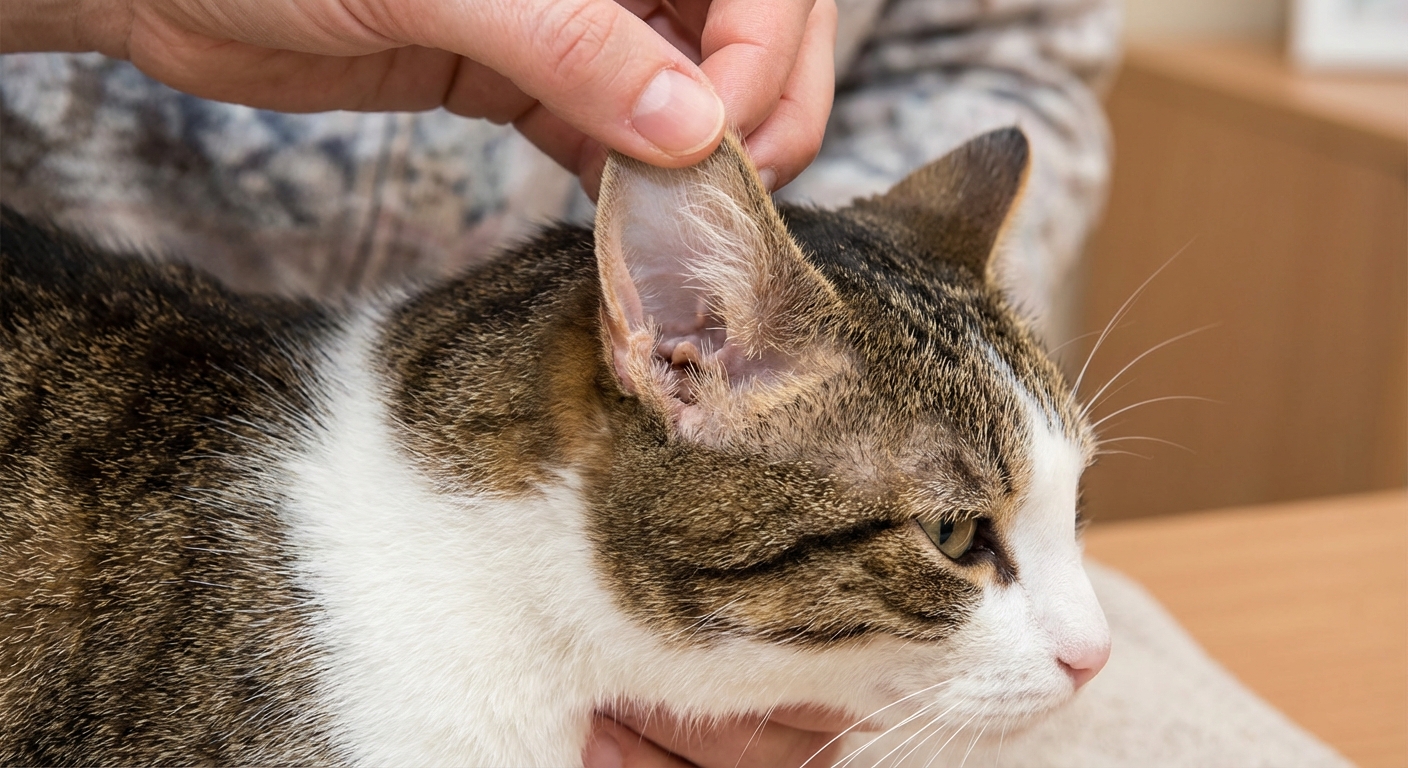
Ear mites (most commonly Otodectes cynotis) are tiny parasites that live on the surface of the ear canal skin. They feed on epidermal debris and tissue fluids. That irritation triggers inflammation, itching, and sometimes a strong odor.
Ear mites are most common in kittens, outdoor cats, recently rescued cats, and multi-pet homes. They spread through direct contact, and they can move between cats and dogs. People are not a typical host, but in rare cases humans may develop temporary, itchy bumps after close exposure. In general, transmission is still primarily pet to pet.
Common signs
- Head shaking and intense scratching at the ears
- Dark brown or black debris that can look like coffee grounds
- Redness or scabs around the ears from scratching
- Hair loss near the ears
- Ear sensitivity or crying when touched
- Bad smell, which can also suggest infection
Important note: Not every “dirty ear” is ear mites. Yeast infections, bacterial infections, allergies, ear polyps, and foreign material can all look similar. Getting the right diagnosis helps you choose the right cure.
Vet treatment is the cure
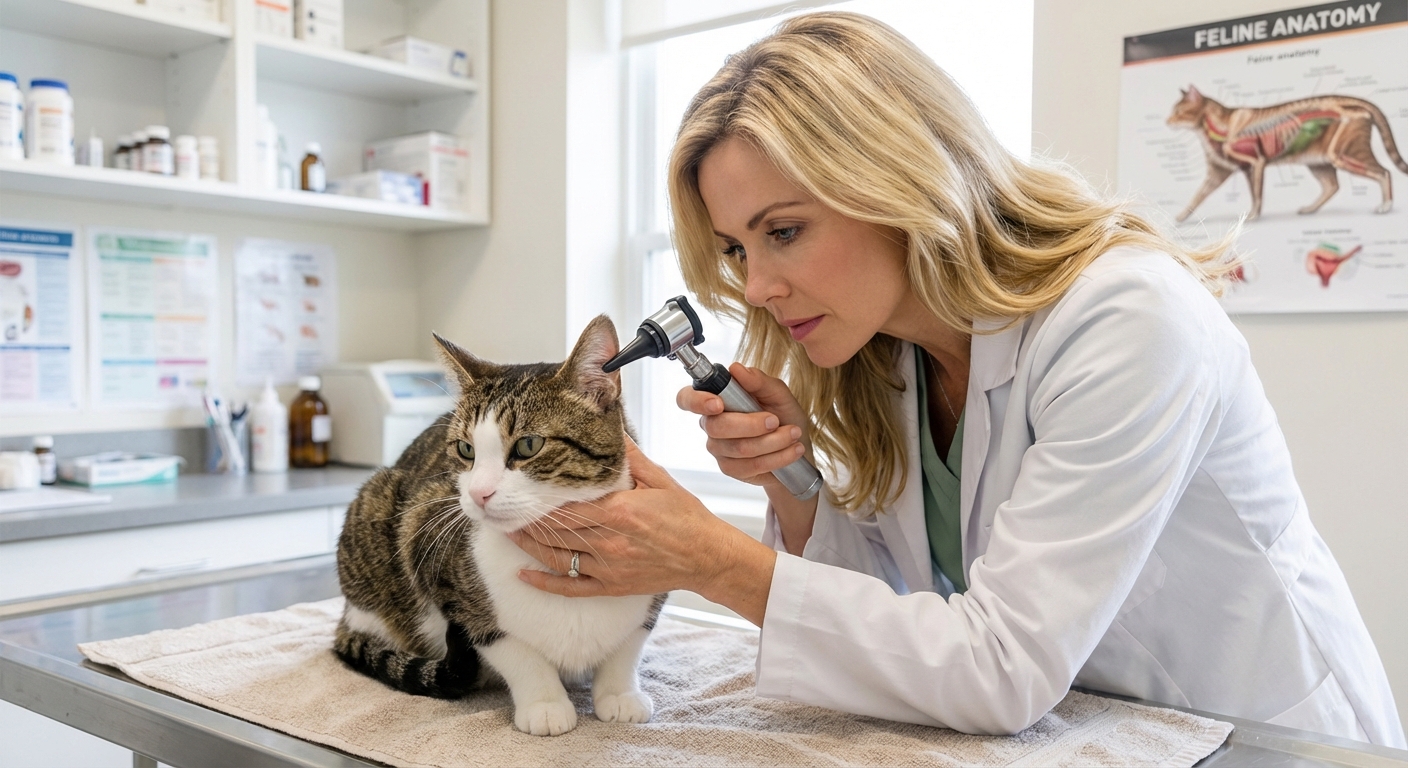
If you want a true cure, you need a medication that kills mites and interrupts their life cycle. In most clinics, diagnosis is quick: your vet looks in the ear with an otoscope, and may check a sample under a microscope.
Common options your vet may use
- Prescription topical parasiticides applied in or on the ear
- Spot-on treatments placed on the skin at the back of the neck that treat mites and often fleas too
- Oral or injectable options in certain cases
Your veterinarian will pick the best option based on your cat’s age, weight, overall health, and whether there is a secondary infection.
Timing tip: Many cats start acting more comfortable within days, but the debris and inflammation can take 1 to 3 weeks (sometimes longer) to fully settle. Some treatments are given once and repeated later, or dosed monthly. Follow your vet’s exact schedule, even if your cat seems better.
Why not guess with OTC drops
Some over-the-counter products can be irritating, and if the eardrum is not intact (which may occur with severe ear disease or trauma), the wrong product can cause pain and complications. If your cat is scratching hard, tilting the head, or seems off-balance, it is especially important to get checked.
Also, because people searching for “wellness cures” often run into DIY recipes: avoid essential oils or “natural” ear drops unless your veterinarian specifically approves them for your cat’s ears. Cats can be very sensitive to certain ingredients, and the ear canal is delicate.
Wellness support
Once the diagnosis is confirmed and your cat is on an effective mite-killing medication, wellness care can make the healing process smoother and more comfortable. Think of these as supportive steps that reduce irritation, protect the skin barrier, and prevent reinfestation.
1) Gentle ear cleaning
If your veterinarian recommends cleaning, use a cat-safe ear cleanser and follow instructions exactly. Cleaning helps remove debris so medication can contact the skin better.
- Use only products made for pet ears.
- Do not use hydrogen peroxide or alcohol. They can sting and inflame tissue.
- Never use cotton swabs down the ear canal. This can pack debris deeper and cause injury.
Tip: Warm the cleanser bottle in your hands first. Cold liquid in the ear can make cats panic.
2) Comfort care
Inflamed ears are tender. Keep nails trimmed, consider a soft e-collar if your cat is self-traumatizing, and provide calm, low-stress recovery time. Stress can impact immune function and slow healing for some cats.
3) Nutrition support
Nutrition will not kill mites, but it can help your cat’s skin recover. A complete and balanced diet with quality protein supports tissue repair. Your vet may suggest omega-3 fatty acids (like fish oil) for inflammation support, but do not start supplements without guidance since dosing matters for cats.
4) Treat other pets if advised
If you have multiple pets, your vet may recommend treating all of them, even the ones not showing signs. This is one of the most common reasons “ear mites keep coming back.”
5) Know when you need extra meds
Ear mites can open the door to secondary yeast or bacterial infections. If your cat has a strong odor, significant pain, swelling, or persistent discharge, your vet may add ear medication such as an antibiotic, antifungal, and anti-inflammatory to fully resolve the problem.
Home steps
Ear mites live primarily on the animal, but they can survive briefly off-host. In most homes, that is measured in days, not weeks. Good hygiene supports successful treatment, especially in multi-pet households, but the main focus should still be treating the pets.
- Wash bedding in hot water weekly during treatment.
- Vacuum floors, rugs, and cat trees frequently.
- Clean brushes, carriers, and favorite nap spots.
- If your cat goes outdoors, keep them indoors during treatment if possible.

Fun facts
- They are extremely common in kittens. Many rescues treat routinely because it is so widespread.
- The “coffee grounds” look is not the mites themselves. It is wax, skin debris, and mite waste.
- Mites can affect dogs too. If your dog is suddenly itchy around the ears and you have a cat with mites, mention it to your vet.
- Not all itchy ears are mites. Allergies and yeast are frequent imposters, and they need different treatment.
When to call the vet
Ear mites are treatable, but complications can become painful quickly. Contact your veterinarian promptly if you notice any of the following:
- Head tilt, stumbling, or balance changes
- Swelling of the ear flap (possible hematoma)
- Bloody discharge, pus, or strong foul odor
- Your cat cries when the ear is touched
- Symptoms worsen after starting treatment
- No meaningful improvement within 7 to 10 days, or no improvement by the timeline your vet gave you
- Recurring episodes of itchy ears
These signs can suggest a secondary bacterial or yeast infection, a possible eardrum problem, or a different underlying issue that needs targeted care.
Medication tips
If you have ever tried to treat a cat’s ears, you know it can turn into a tiny rodeo. These tips can help protect your bond and your hands.
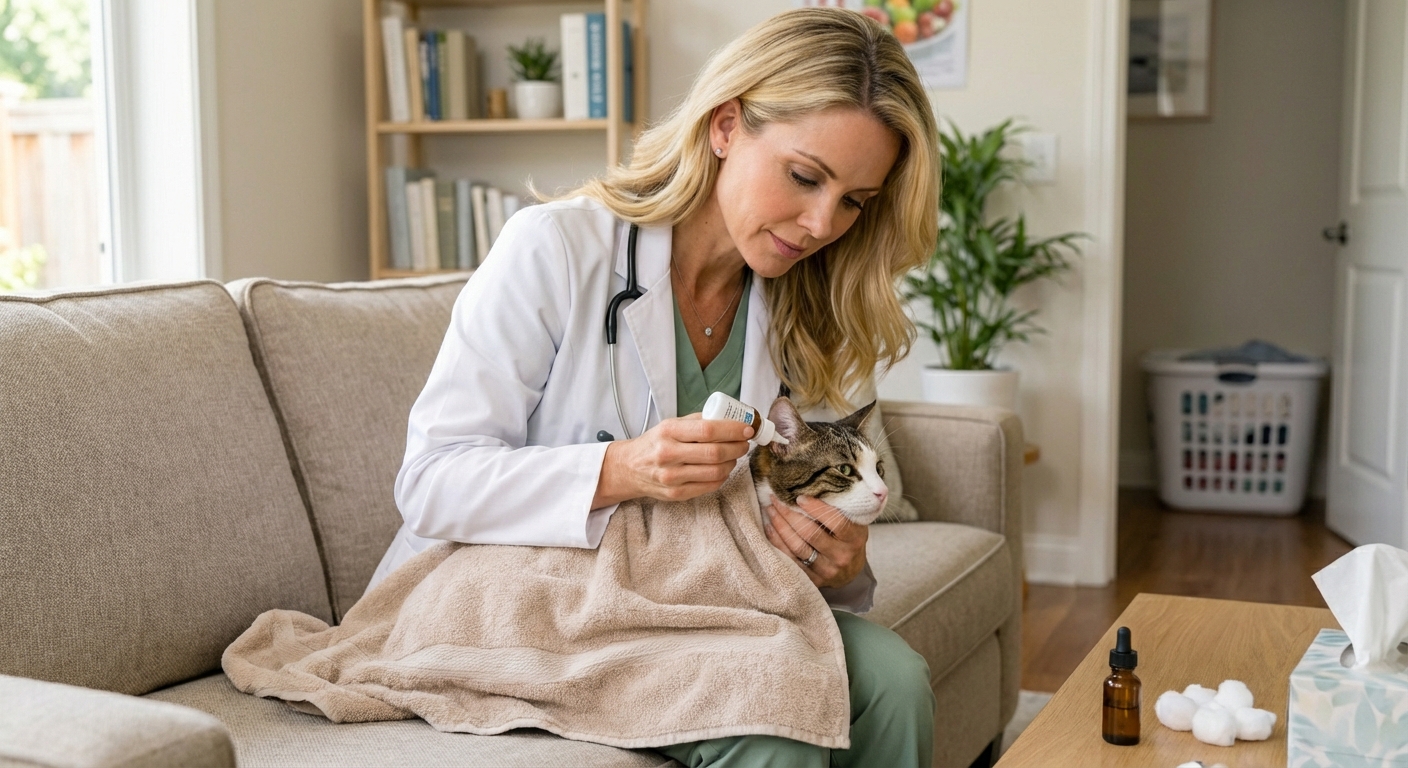
- Wrap and cuddle: Use a towel to gently burrito your cat, leaving the head out.
- Go for calm, not force: A quiet bathroom or small room reduces escape routes and stress.
- Reward immediately: A favorite treat or a lickable cat treat right after builds cooperation.
- Teamwork helps: One person holds, one treats, when possible.
Bottom line
If you are looking for a wellness cure for ear mites in cats, the most evidence-based path is simple: confirm the diagnosis, use a vet-recommended anti-parasite treatment to eliminate the mites, and support healing with gentle ear care, great nutrition, and a clean home environment.
You do not have to do everything perfectly on day one. Start with the big wins: proper medication, treating all pets if needed, and safe cleaning. Your cat’s ears can feel better fast, and the relief is noticeable once those mites are gone.