
Trim your cat’s nails at home with calm, vet-approved techniques. Learn nail anatomy, the best clippers, how far to cut, low-stress handling, and what to d...
Article
•
Designer Mixes
Wellness Clip Cat Nails Advice You Need

Shari Shidate
Designer Mixes contributor
Keeping your cat’s nails trimmed is one of those small wellness habits that can make daily life calmer for everyone. Shorter nails mean fewer painful scratches, less snagging on carpet and blankets, and less risk of a nail overgrowing and curling into the paw pad. And the best part? With the right tools and a gentle routine, most cats can learn to tolerate nail trims surprisingly well.
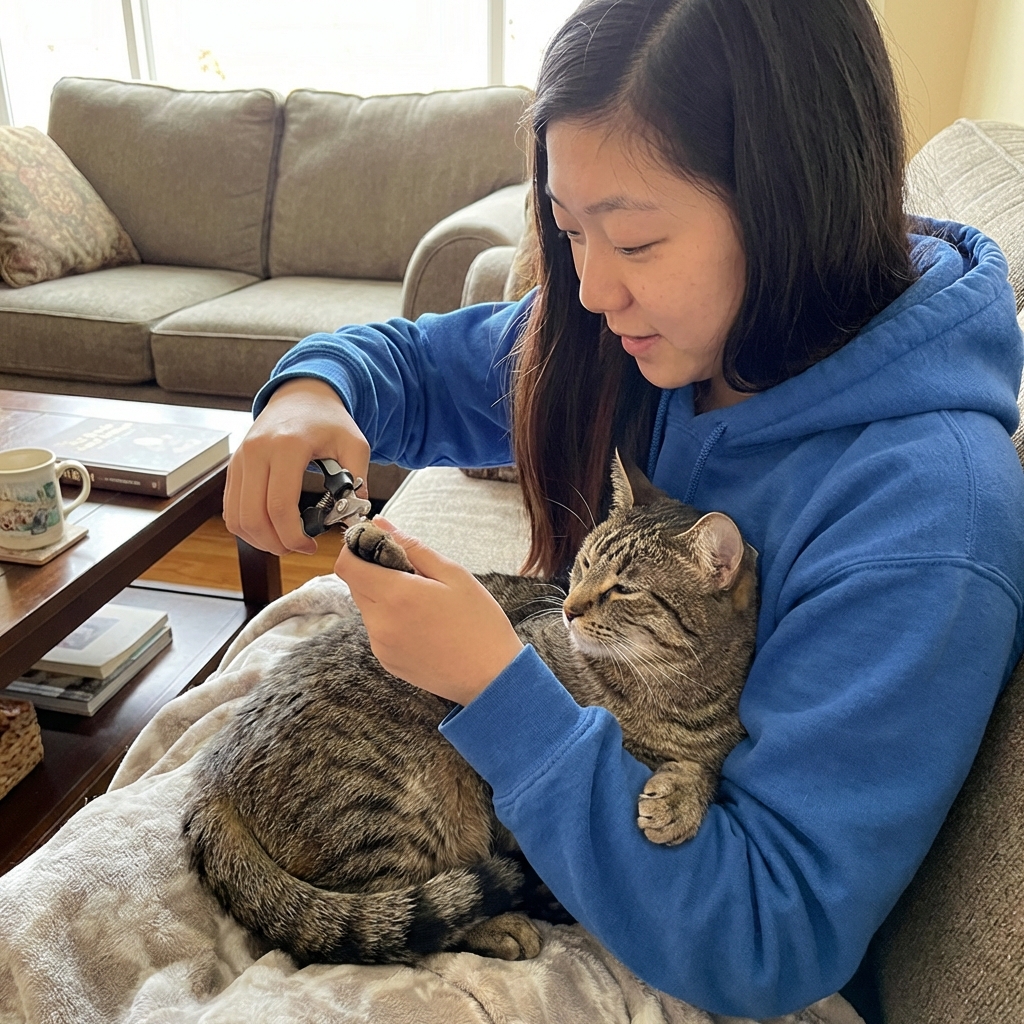
Why nail trimming is a wellness habit
From a veterinary assistant perspective, nails are not just about protecting your furniture. Nail care helps support comfort, mobility, and paw health.
- Prevents painful overgrowth: Indoor cats in particular may not wear nails down enough naturally.
- Reduces breakage and splits: Long nails can catch, tear, and bleed.
- Helps senior cats: Older cats may groom less and move less, so nails can thicken and overgrow faster.
- Supports safe handling: Short nails make it easier to medicate, brush, or help your cat into a carrier when needed.
Important note: scratching is normal and healthy cat behavior. Trimming nails does not remove that instinct. It simply makes scratches less damaging.
Choose the right “wellness clip” tools
There are a few safe, common options. The best one is the one you can use calmly and consistently.
Cat nail clipper types
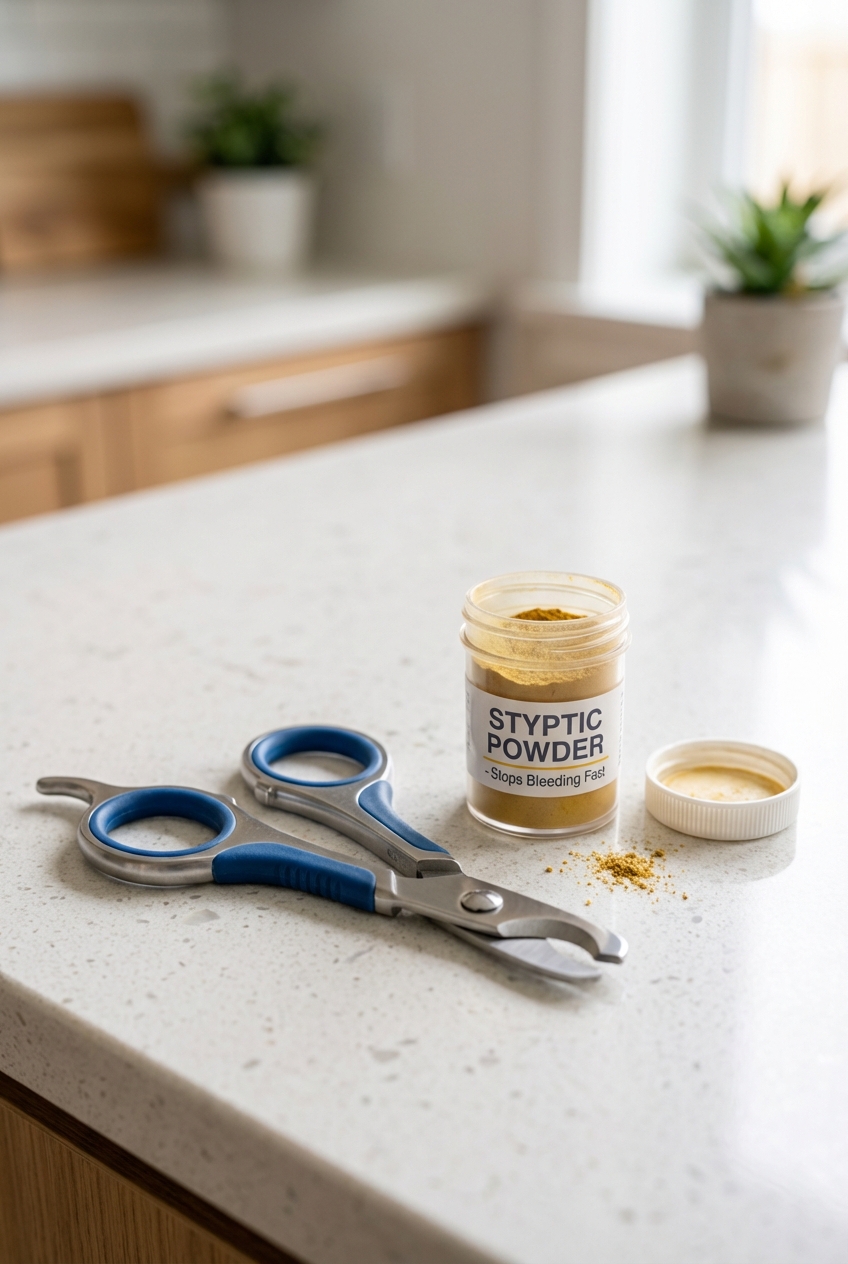
- Scissor-style cat clippers: Great control and visibility. Many owners find these easiest.
- Guillotine-style clippers: Can work well but sometimes feel awkward on tiny cat nails.
- Human nail clippers: Often not ideal. Depending on the size and sharpness, they can crush the nail rather than slice cleanly. If you do use them, choose a small, sharp pair that fits the curve of your cat’s nail and trims cleanly without cracking.
Also keep these nearby:
- Styptic powder (or a styptic pencil) in case you trim too short
- A bright light so you can see the quick better
- High-value treats or a lickable treat for after each paw
- A soft towel for gentle wrapping if your cat gets wiggly
Know the nail anatomy
Inside each nail is the quick, a sensitive area with blood vessels and nerves. If you cut into the quick, it hurts and can bleed.
- Clear or light nails: The quick is usually visible as a pink area. Trim just the sharp, translucent tip.
- Dark nails: The quick is harder to see. Take multiple tiny snips and check the cut surface after each one. Stop if you start to see a darker center, a gray or pink oval, or the cut surface looks moist or shiny.
If you are unsure, trimming less is always safer. You can repeat in a week.
How to clip cat nails
Set yourself up for success with a calm environment and a short session. Most cats do better with frequent micro-trims than one long “big trim.”
Step 1: Pick a good moment
Aim for after a meal or play session when your cat is naturally relaxed. Avoid trimming when your cat is already overstimulated or hiding.
Step 2: Get comfortable positioning
Try one of these:
- Lap trim: Cat facing away from you, supported against your body.
- Side cuddle: Cat lying on their side next to you on a couch.
- Tabletop trim: On a non-slip mat, especially helpful for larger cats.

Step 3: Extend the nail
Hold the paw gently and press the pad with your thumb while supporting the top of the toe with your index finger. The nail should extend so you can see what you are doing.
Step 4: Clip only the tip
Clip at a slight angle, removing just the sharp hook. For many cats, that is about a millimeter or two, but it varies with nail length and quick position. Small trims done regularly add up.
What you should see: A normal trim removes the needle-like point. The nail end should look blunt and smooth, not flattened or cracked.
Step 5: Praise and reward
Offer a treat after each paw, or even after each nail at first. You are teaching your cat that nail trims predict good things.
Wellness mindset tip: your goal is not “perfect nails today.” Your goal is a calm routine your cat can tolerate for life.
How often should you trim?
Most indoor cats do well with a trim every 2 to 4 weeks, but there is a lot of individual variation. Some cats, especially seniors, polydactyl cats, and cats with fast-growing nails, may do best with weekly micro-trims.
- Kittens: Often need more frequent trims because nails are needle-sharp.
- Senior cats: May need trims more often if nails thicken or curl.
- Polydactyl cats: Extra toes can mean extra nails to monitor, sometimes in tricky positions.
If you hear nails clicking on hard floors, that is often a sign they are getting long.
Do not forget the dewclaws
Most cats have a front dewclaw (a “thumb” nail) on the inside of each front leg. Because dewclaws do not always contact scratching surfaces, they are commonly missed and can overgrow, especially in indoor and senior cats.
Add dewclaws to your quick weekly check, even if you are only trimming a few nails at a time.
Common mistakes
Trying to do all nails at once
If your cat gets stressed, do just one paw, or even two nails, then stop. Consistency beats intensity.
Holding too tightly
Firm restraint can increase fear and struggling. Use steady, gentle support and keep sessions short.
Forcing it when your cat is struggling
If your cat is thrashing, vocalizing, or trying to bite, stop. Forcing a trim can lead to injuries (to you and your cat) and can make future trims harder. If you use a second person, keep it low-stress and brief, and pause the moment your cat escalates.
Skipping scratching posts
Clipping is not a replacement for scratching. Provide sturdy scratching surfaces (vertical and horizontal) to support natural behavior and healthy nails.
Using dull clippers
Dull blades can crush the nail and cause splitting. Replace or sharpen clippers when they start to feel less clean.
If you cut the quick
It happens, even to careful pet parents. Here is how to handle it safely:
- Stay calm: Your cat will react to your stress.
- Apply styptic powder: Press a small amount to the nail tip for 10 to 20 seconds.
- Use gentle pressure: A clean gauze pad can help.
- Pause the session: Stop trimming and let your cat reset.
If bleeding does not stop within a few minutes, or your cat is limping afterward, contact your veterinarian.
When to ask a pro
There is no shame in outsourcing nail trims. In fact, it can be the kindest choice for some cats.
Consider a vet clinic or groomer if:
- Your cat becomes aggressive or highly fearful
- You suspect an ingrown nail or a nail embedded in the pad
- Your cat has arthritis and resists paw handling due to pain
- You notice swelling, discharge, a bad odor, or a sudden limp
Many clinics offer quick nail trim appointments, and some will show you how to do it at home with confidence.
Extra support options
For some households, trimming plus good scratching surfaces is enough. If you need additional scratch management, consider:
- More scratching choices: A tall, sturdy vertical post plus a horizontal scratcher often makes a big difference.
- Nail caps: These can reduce scratch damage for some cats, but they need correct sizing and safe application. If you are new to them, ask a vet clinic or experienced groomer to help.
A gentle plan for cats who hate trims
If you have a sensitive cat, start with desensitization and go slow. This approach is evidence-based and used widely in fear-free handling.
- Day 1 to 3: Touch a paw briefly, treat, stop.
- Day 4 to 7: Hold a paw for 2 seconds, treat, stop.
- Next: Extend one nail, treat, stop.
- Next: Clip one nail only, big reward, done.
Over time, many cats accept trims because they learn the routine is predictable, gentle, and ends quickly.
Quick safety note: If your cat has a known bleeding disorder, is on blood-thinning medication, or you have any concerns about unusual bleeding or bruising, check with your veterinarian before doing nail trims at home.