
A complete Belgian Malinois guide covering temperament, working vs show lines, daily exercise and enrichment, training priorities, grooming, health risks, an...
Article
•
Designer Mixes
Weimaraner Energy, Exercise, and Health

Shari Shidate
Designer Mixes contributor
The Weimaraner is famous for that sleek silver-gray coat and soulful stare, but the trait that shapes daily life the most is energy. This is an athletic, people-focused sporting and pointing breed that often needs around 2 or more hours of daily activity (exercise plus training and enrichment) to feel settled at home. Some individuals, especially from field lines or in adolescence, may need more. Others may need a bit less as they mature, but they still tend to be active dogs.
If you love hiking, running, training, and having a dog as your constant shadow, a Weimaraner can be an amazing partner. If you want a dog who is content with a couple of short walks and a quiet afternoon alone, this breed can struggle, and so can you.

Temperament at a glance
Weimaraners were developed to work closely with humans. That history shows up in their modern personality: they are intelligent, sensitive, and intensely attached to their people.
- High-drive and athletic: They often look for a job to do, and they will invent one if you do not provide it.
- Very social: Many Weims want to be near their person most of the time.
- Smart and fast learners: Great for training, but it also means they pick up bad habits quickly if boundaries are unclear.
- Can be vocal or destructive when bored: Chewing, counter-surfing, digging, and barking are common boredom outlets.
Exercise needs: plan for a lot
Most adult Weimaraners do best with a mix of hard physical activity and structured brain work. A casual stroll around the block usually does not make a meaningful dent in their energy.
What “enough exercise” often looks like
- 60 to 90 minutes of aerobic activity (running, hiking, vigorous fetch, structured play) split into two sessions
- 30 to 60 minutes of training, scent work, puzzle feeding, or skill-building games
- Multiple short potty walks for routine and decompression
Great activities for Weimaraners
- Jogging or canicross (once fully grown and cleared by your veterinarian)
- Hiking, especially on varied terrain
- Retrieving games with rules (sit, wait, release, bring to hand)
- Scent work and “find it” games using treats or a favorite toy
- Agility foundations, rally, or obedience
- Swimming, if your dog enjoys water and you practice safety
Ask your vet: For puppies, protect growing joints. Use shorter training and play sessions, avoid repetitive high-impact jumping, and increase exercise gradually. If you are unsure what is appropriate for your pup’s age, your veterinarian can help you set safe limits.
Mental stimulation: the missing piece
Weimaraners are not just physically active, they are mentally busy. When their brain is under-stimulated, you often see “problem behaviors” that are actually unmet needs.
Easy daily enrichment ideas
- Feed meals from a puzzle toy or scatter kibble in the yard for sniffing
- Teach one new skill each week (place, heel, touch, spin, retrieve)
- Rotate toys so everything feels “new” again
- Practice calmness: reward relaxing on a mat for a few minutes at a time
- Use short training bursts (3 to 5 minutes) several times a day
A tired Weimaraner is not just one that ran. It is one that ran, sniffed, learned, and then practiced settling.
Training essentials
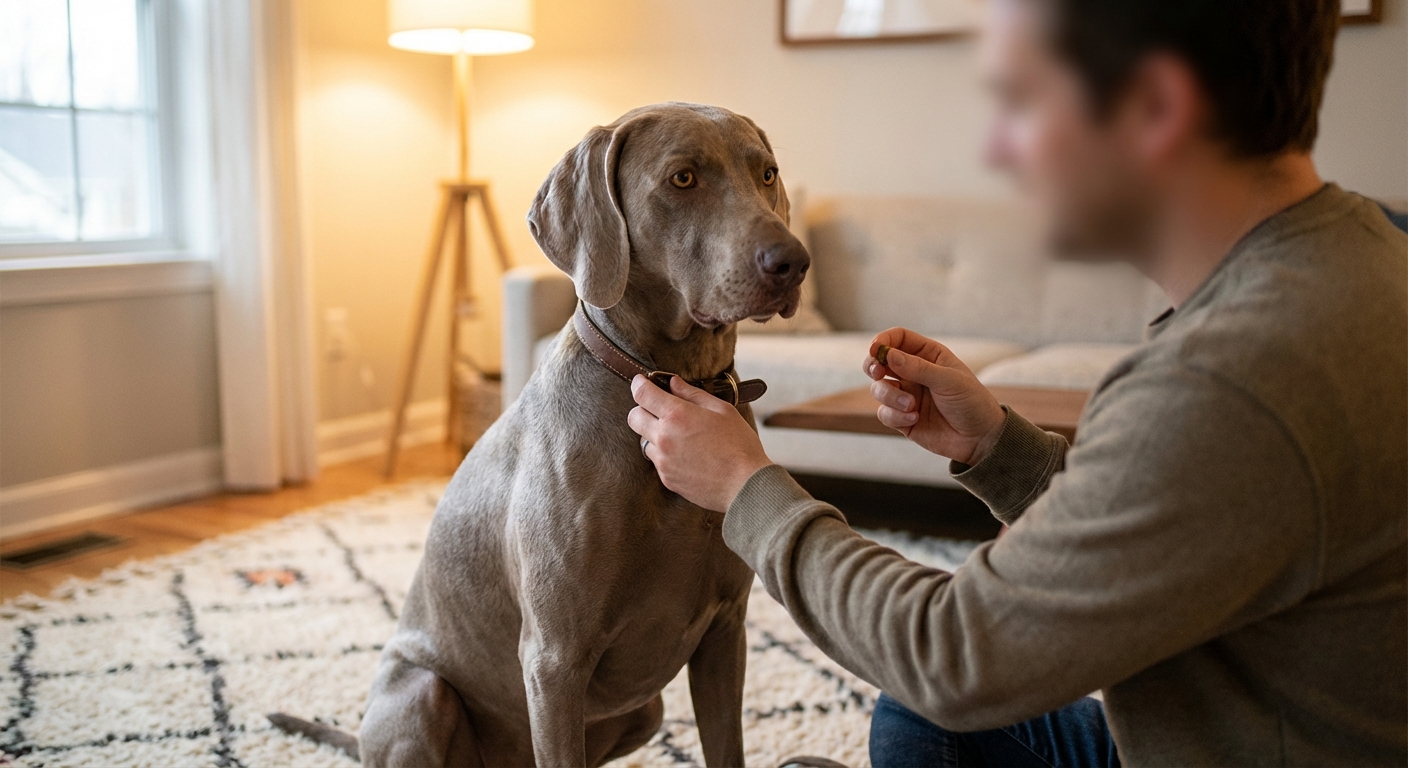
With a Weimaraner, training is not optional, it is quality of life. The goal is not just obedience, it is building impulse control and an “off switch” so your dog can relax in the house.
Focus skills that pay off fast
- Recall: Prey drive can be strong. Start early, practice often, and use long lines in open spaces until reliability is proven.
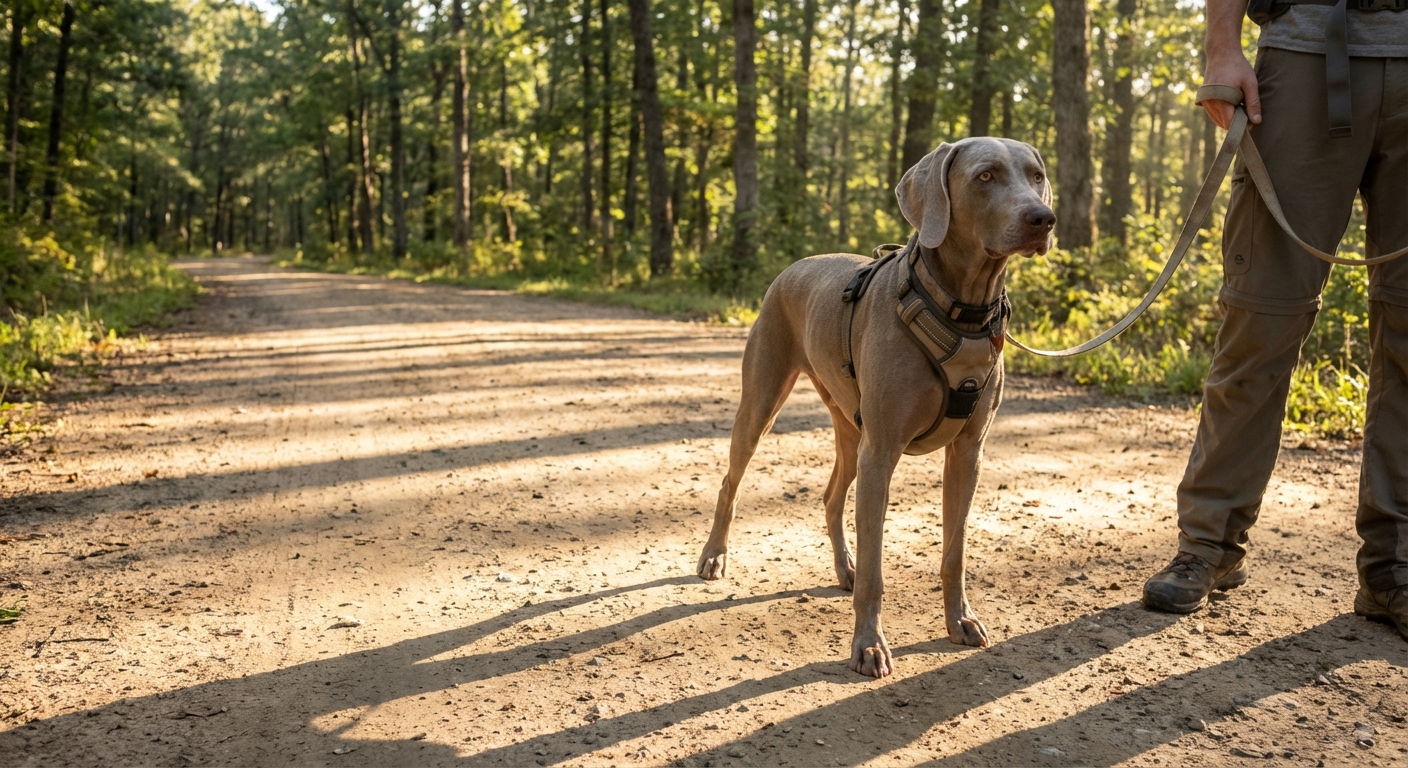
- Leash manners: Teach loose-leash walking and check-ins. A strong, excited Weim can be a lot of dog on a leash.
- Place and settle: Mat work helps prevent pacing and demand behaviors.
- Crate and alone-time skills: Even if you do not plan to crate forever, it is a helpful life skill for travel, recovery, and safe downtime.
The “teenage” phase
Many owners feel the intensity spike during adolescence, often around 6 to 18 months (sometimes longer). You may see selective hearing, impulse issues, and big feelings. Keep routines steady, increase enrichment, and lean on management tools like long lines, food puzzles, and structured training sessions.
Separation anxiety and Velcro tendencies
Weimaraners are known for sticking close. That closeness is part of their charm, but it also raises the risk for separation anxiety or isolation distress, especially if a dog is under-exercised or never taught how to be alone.
Common signs your Weimaraner is struggling alone
- Howling, barking, or panic behavior after you leave
- Destructive chewing at doors, windows, or crates
- House soiling despite being house-trained
- Drooling, pacing, or escape attempts
Prevention and support tips
- Practice alone time early: Very short departures that slowly increase
- Separate “together time” from “constant contact”: Encourage relaxing on a bed across the room
- Use enrichment strategically: Stuffed food toys given only during alone time can create a positive pattern
- Consider a dog walker or daycare: Especially during adolescence, when energy peaks
- Talk to your vet if anxiety is intense: Behavior plans plus medication can be truly life-changing for some dogs
If your Weimaraner panics when left alone, it is not stubbornness. It is distress. A qualified positive-reinforcement trainer or a veterinary behaviorist can help you build a plan that is humane and effective.
Coat and grooming
The Weimaraner’s short coat is relatively low-maintenance, but it does shed and it benefits from routine skin care. Their look is distinctive: a smooth coat, amber or blue-gray eyes, and an athletic silhouette.
Simple grooming routine
- Brush weekly with a rubber curry brush or grooming mitt to lift loose hair
- Bathe as needed, often every 4 to 8 weeks depending on activity level
- Check ears weekly, especially after swimming or baths
- Nail trims every 2 to 4 weeks, since active dogs still often need regular trims
- Dental care with brushing plus vet-recommended chews or additives

Common health concerns
No breed is guaranteed to have or avoid specific health conditions, but Weimaraners do have a few concerns that responsible owners should understand ahead of time. Partnering with a reputable breeder and keeping up with preventive veterinary care makes a real difference.
Bloat (GDV)
Gastric dilatation-volvulus (GDV), commonly called bloat, is an emergency where the stomach fills with gas and can twist. Deep-chested breeds like Weimaraners are at higher risk.
- Symptoms can include: unproductive retching, sudden abdominal distension, restlessness, drooling, weakness, and rapid breathing
- What to do: treat as an emergency and go to an ER vet immediately
- Risk reduction: no routine strategy can guarantee prevention. Many vets recommend practical steps like avoiding hard exercise right around meals and discussing feeding routines for your dog. For high-risk dogs, ask your vet about a preventive gastropexy.
Hip dysplasia
Hip dysplasia is a developmental condition where the hip joint does not fit together perfectly. It can contribute to arthritis and mobility pain over time.
- Clues to watch for: stiffness after rest, bunny-hopping gait, reluctance to jump or climb stairs, decreased endurance
- Prevention support: maintain a lean body condition, use appropriate exercise for age, and ask breeders about orthopedic screening (such as OFA or PennHIP)
- Management: can include weight control, physical therapy, joint supplements, pain control, and sometimes surgery
Thyroid disease (hypothyroidism)
Hypothyroidism is commonly discussed in the breed. It can contribute to low energy, weight gain, skin and coat changes, recurrent ear or skin issues, and heat-seeking behavior. Signs can be subtle and overlap with other problems.
- If you notice: unexplained weight gain, chronic ear or skin trouble, dull coat, or persistent fatigue, ask your veterinarian whether thyroid testing makes sense.
- Breeder note: responsible breeders often include thyroid screening as part of their health testing plan.
HOD (hypertrophic osteodystrophy)
Hypertrophic osteodystrophy (HOD) is a painful developmental bone condition seen in some fast-growing, large-breed puppies, including Weimaraners. It can cause fever, lethargy, and significant limb pain or limping.
- When it shows up: typically in puppies during growth spurts
- What to do: if your puppy has sudden lameness, fever, or seems painful, contact your veterinarian promptly
- Support: management may include pain control, rest, and nutrition guidance tailored to growth
Evidence-based takeaway: the best “health plan” is a combination of genetics, good nutrition, lean weight, appropriate exercise, and preventive vet care. No single supplement can replace those basics.
Who this breed is best for
Weimaraners are wonderful dogs in the right home, and overwhelming in the wrong one. They tend to thrive with experienced, active owners who enjoy training and have a realistic plan for daily exercise and companionship.
A Weimaraner may be a great match if you:
- Exercise most days and want a dog to join you
- Enjoy training and can be consistent with boundaries
- Are home often, or can arrange reliable mid-day breaks
- Want an affectionate, people-oriented dog
- Can manage prey drive thoughtfully, especially outdoors
You may want to choose a different breed if you:
- Work long hours away from home without support
- Prefer a low-energy dog
- Do not want to invest significant time in training and enrichment
- Are not prepared for a teenage phase that can be intense
- Have cats, rabbits, or other small pets and do not want to actively manage hunting instincts (some Weims live peacefully with cats, especially when raised together, but it is not a guaranteed “safe with small animals” breed)
Daily routine example
If you are trying to picture life with a Weimaraner, here is a sample schedule many owners find sustainable:
- Morning: 45-minute brisk walk or run, then breakfast in a puzzle feeder
- Mid-day: dog walker visit or backyard sniff session plus a short training game
- Evening: 45 to 60 minutes of hiking, structured fetch, or training class
- Night: 10 minutes of calm training (settle on mat), then chew time and sleep
The goal is not perfection. The goal is meeting needs consistently so your Weimaraner can be their best self.
Quick safety checklist
- Keep your Weimaraner lean to protect joints and overall health
- Teach a reliable recall and practice it, because prey drive can be strong
- Use secure fencing, because boredom plus speed is a common escape story
- Know the nearest emergency vet and bloat warning signs
- Schedule routine wellness care and ask your veterinarian about breed-specific screening
If you are ready for a smart, athletic, deeply loyal companion, the Weimaraner can be an unforgettable dog. Just go in with open eyes and an active plan, because this breed does not do “low effort” very well.