
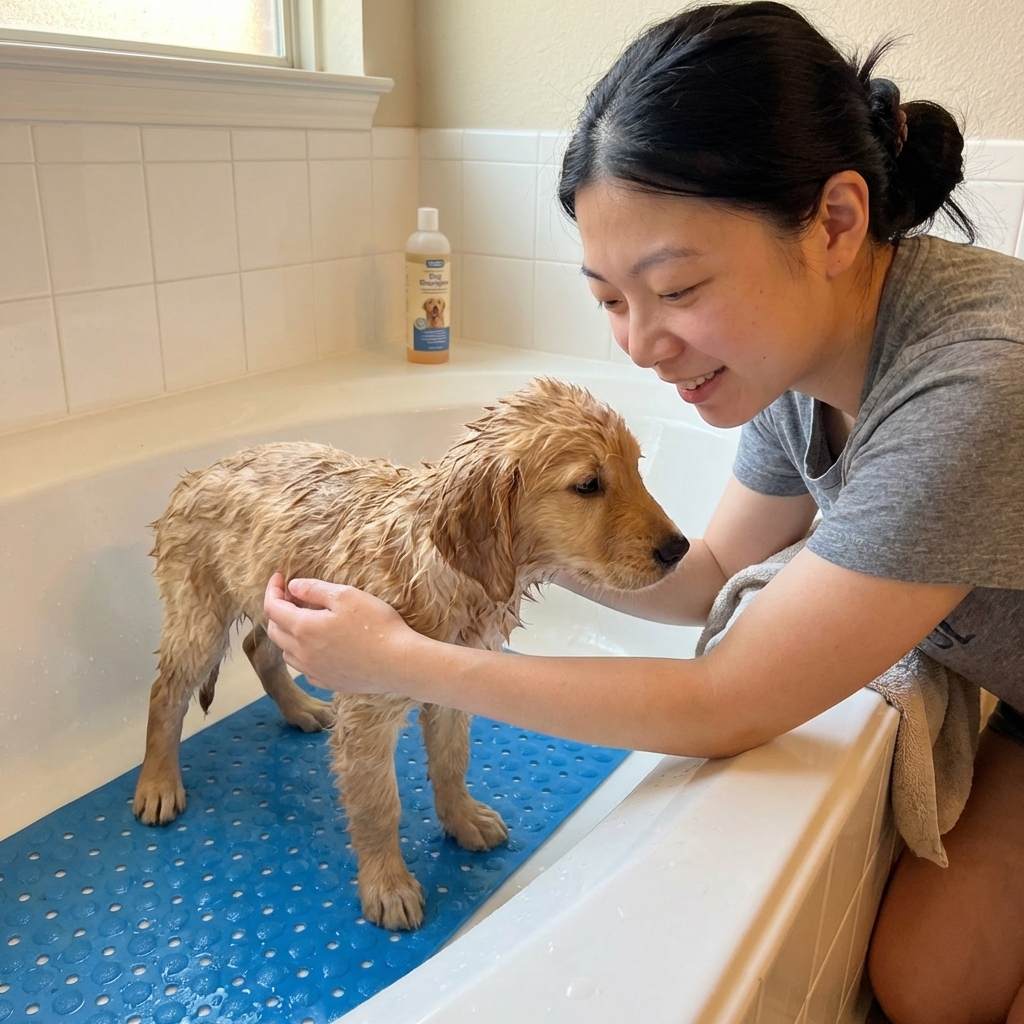
Make puppy bath time calm and safe. Get the best setup, puppy-safe shampoo tips, step-by-step washing and rinsing, drying guidance, and training tricks for b...
Article
•
Designer Mixes
Washing a Puppy: Essential Guide for All Ages

Shari Shidate
Designer Mixes contributor
Bathing a puppy sounds simple until you are holding a wiggly, soapy little body that suddenly decides the tub is lava. The good news is that with a gentle setup, the right products, and realistic expectations, you can make bath time safe, low-stress, and even enjoyable for both of you.
In clinic, we remind families: the goal is clean skin and coat without stripping natural oils or scaring your puppy. Many puppies do not need frequent full baths, but they do need smart, age-appropriate washing when life gets messy.
How often should you wash a puppy?
Many puppies do well with a full bath about every 3 to 6 weeks, or as needed for dirt, odor, or allergens. That said, bathing frequency varies a lot by coat type, activity level, and skin health. Some pups need less often, and some may need more frequent bathing under veterinary guidance (for example, with medicated shampoos).
Over-bathing can dry the skin and worsen itching or flaking, especially in puppies prone to dry skin or with certain coat types that mat or hold moisture.
Better than a full bath: For small messes, try a “partial wash” (paws, belly, rear) or a damp washcloth wipe-down.
- After mud or puddles: Rinse paws and belly with lukewarm water, then towel dry.
- After a smelly roll: Use a full bath with a gentle dog shampoo, then thoroughly dry.
- If fleas are suspected: Talk to your vet before bathing. Most flea issues are best handled with a proven, age and weight-appropriate veterinary preventive, not repeated baths.
Before the bath: quick safety checklist
A calm bath starts before the water turns on. Set yourself up so you are not searching for towels with a dripping puppy in your arms.
Supplies to gather
- Gentle dog or puppy shampoo (fragrance-light is best)
- 2 to 3 towels (one for the floor, one for drying, one extra)
- Non-slip mat for tub or sink
- Cotton balls (optional, see ear note below)
- Brush or comb appropriate for your puppy’s coat
- High-value treats to reward calm behavior
- Blow dryer with a cool or low-heat setting (optional but helpful)
Water and temperature
Use lukewarm water. If it feels comfortable on your inner wrist, it is usually a good temperature for your puppy. Avoid hot water, which can dry skin and make the experience unpleasant.
Where to bathe
- Young puppies or tiny mixes: a sink often feels safer than a big tub. Keep one hand on your puppy whenever possible.
- Medium to large puppies: bathtub or walk-in shower with a non-slip mat.
- Outdoor baths: only in warm weather and only if you can fully dry afterward.
Always supervise: Never leave your puppy unattended in a sink, tub, or on an elevated surface, even for a second.
Step-by-step: how to wash a puppy
Keep your first few baths short and positive. You are teaching a life skill, not trying to achieve show-dog perfection in one day.
- Brush first. Remove tangles and loose hair before water hits the coat. Mats tighten when wet.
- Wet the body slowly. Start at the shoulders and work back. Many puppies dislike water on the head at first.
- Apply shampoo and lather gently. Use your fingertips, not nails. Focus on the neck, chest, underarms, belly, paws, and rear.
- Avoid eyes, nose, and ear canals. For the face, use a damp cloth instead of direct spray.
- Rinse longer than you think. Leftover shampoo residue is a common cause of itchiness.
- Towel dry immediately. Press and blot, do not vigorously rub, especially on curly coats.
- Dry thoroughly. Air-drying can be okay when your home is warm and your puppy has a thin coat. Skip air-drying if it is chilly, your puppy has a thick coat, or they tend to stay damp. If you use a dryer, stick with cool or low heat, keep it moving, check the air with your hand, and keep the noise as low as you can (a diffuser can help).
- Reward and end on a win. Treat, praise, then a calm activity like a chew or cuddle.
Tip: If your puppy gets anxious, aim for “one calm minute” rather than forcing a full bath. You can finish later. Confidence builds in small steps.
Age-by-age bathing guidance
Under 8 weeks
If your puppy is very young, a full bath is usually unnecessary unless there is an urgent mess. When possible, use a warm damp cloth to spot-clean and keep your puppy warm.
- Keep washing sessions very short.
- Prioritize warmth and drying.
- Ask your veterinarian if you are dealing with diarrhea messes, parasites, or skin irritation.
8 to 12 weeks
This is a great time to introduce the bath routine gently. Many puppies in this age range are still finishing vaccines, so avoid high-traffic dog wash stations until your vet says it is safe.
- Practice standing in the tub with treats even when you are not bathing.
- Use a gentle dog shampoo and rinse thoroughly.
- Keep the experience calm and predictable.
3 to 6 months
Your puppy may be more active and more likely to find mud, sticky stuff, and mystery smells. Baths can become more regular, but you still want to protect the skin barrier.
- Brush more often if the adult coat is starting to come in.
- Introduce blow drying slowly to reduce future grooming stress.
- Watch for signs of dry skin if baths become frequent.
6 months and older
Once the adult coat is established, bathing needs depend a lot on coat type and lifestyle.
- Curly coats (Poodle mixes): brushing and drying are key to prevent matting.
- Double coats (Husky-type mixes): less frequent baths, more brushing, and avoid shaving unless your groomer or veterinarian recommends it for a specific reason. Shaving can affect coat regrowth and temperature regulation.
- Short coats: baths are often only needed monthly or when dirty.
Choosing the right shampoo
Your puppy’s skin is more sensitive than an adult dog’s, and human shampoo is often too harsh. Products made for dogs are formulated for canine skin and coat, and they are less likely to disrupt the skin barrier.
What to look for
- Made for dogs (or labeled for puppies or sensitive skin)
- Gentle cleansers (often described as soap-free)
- Fragrance-light if your puppy is itchy or sensitive
What to avoid
- Human shampoo (different pH and detergents can be irritating or drying)
- Essential oils unless specifically formulated for pets and cleared by your vet. Some can be toxic, even when diluted.
- “Tearless” marketing claims that are not veterinary-formulated. Play it safe and keep all shampoos out of the eyes.
- Medicated shampoos unless your veterinarian directed you to use them (and told you how often and how long to leave them on).
- Harsh flea shampoos for routine use (ask your vet first)
If your puppy has persistent itching, dandruff, recurrent ear infections, or an odor that returns quickly, talk with your veterinarian. Skin problems are often related to allergies, yeast or bacteria overgrowth, parasites, or diet, and shampoo alone will not solve the root cause.
Face, ears, and paws
Washing the face
Use a damp washcloth and wipe gently from the inside corner of the eyes outward. Avoid getting soap near the eyes.
Cleaning ears safely
Do not pour water into ear canals. Routine ear cleaning is not necessary for every dog, and it should be done only with a vet-recommended ear cleaner if your puppy needs it.
About cotton balls: Some people place a loose cotton ball at the ear opening to reduce splashes. If you do, never push cotton into the ear canal, remove it immediately after the bath, and skip this step entirely if your puppy has a history of ear infections or sensitive ears (trapped moisture can make problems worse).
Signs you should book a visit include head shaking, ear scratching, redness, swelling, or a yeasty smell.
Paw washing
Paws pick up pollen, lawn chemicals, and sidewalk grime. A quick rinse or wipe after walks can reduce licking and irritation.
Common bathing mistakes
- Bathing too often: Try spot cleaning between baths to protect skin oils.
- Not rinsing enough: Residue can cause itching and dull coat.
- Using hot water: Stick with lukewarm.
- Skipping brushing: Mats worsen with water and can lead to painful skin issues.
- Letting your puppy stay damp: Moisture trapped in thick coats can contribute to hot spots and odor.
- Forcing it: Short, positive exposures build cooperation faster than wrestling.
When to call your vet
Bathing is normal. These signs are not, and they are worth a quick call to your veterinary team:
- Hives, facial swelling, or sudden intense itching after shampoo
- Open sores, scabs, or oozing spots
- Hair loss in patches
- Persistent bad odor even after a bath
- Frequent ear infections or a strong yeasty smell
- Fleas, flea dirt, or tapeworm segments
If your puppy has vomiting, diarrhea, lethargy, or seems painful during bathing or drying, it is always safest to get professional guidance.
Parasite safety note: Use only flea and tick products approved for your puppy’s age and weight. If you have cats in the home, be extra careful with any dog parasite products and always read labels, since some ingredients can be dangerous to cats.
A simple routine for easier baths
Consistency is everything. If you do these mini-steps weekly, full baths become far less dramatic:
- Stand in the tub or sink for 10 seconds, treat, done.
- Turn on the water briefly at a distance, treat, done.
- Touch paws, ears, and tail gently, treat, done.
- Do a quick brush session, then a calm chew afterward.
Your puppy is learning that handling is safe and predictable, and that is one of the best gifts you can give them for grooming and veterinary visits later in life.
Bottom line: A clean puppy is wonderful, but a calm puppy is the real win. Go slowly, stay gentle, and keep it positive.