
Vizsla Velcro Dog: Exercise, Training, and Alone Time

Vizslas are famous for being Velcro dogs, meaning they want to be with you, touching you, and following you from room to room. As a veterinary assistant here in Frisco, Texas, I can tell you this is one of the most misunderstood parts of Vizsla ownership. It’s sweet, yes. It’s also a real behavioral need that affects exercise, training, and how well they handle alone time.
This page is for people who want the honest version of life with a Vizsla: not just “high energy,” but high partnership. The happiest Vizslas are the ones who get enough movement, enough brain work, and enough thoughtful independence training to cope when you can’t be home.
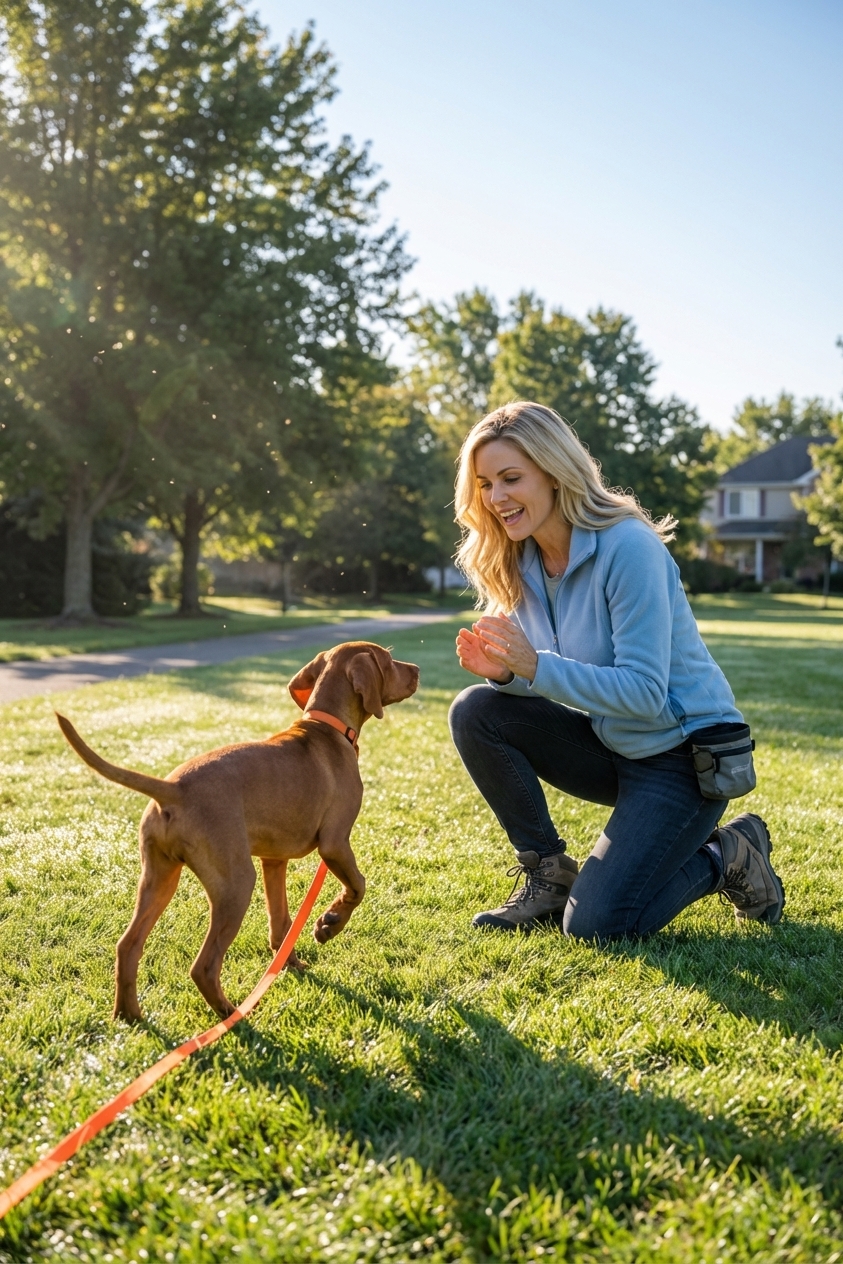
Why Vizslas cling
Vizslas were developed as close-working sporting dogs. In the field, staying connected to their handler was a safety feature and a performance advantage. In a modern home, that same instinct can look like:
- Shadowing you constantly, including bathroom supervision.
- Contact resting, like leaning, draping across your lap, or pressing against your legs.
- Stress when separated, especially if independence wasn’t taught early.
Many Vizslas are also emotionally sensitive. They often respond best to calm routines, gentle handling, and reward-based training. Harsh corrections can create fallout: shutdown behavior, avoidance, and can worsen fear and anxiety (including sound sensitivity) in some dogs.
The real daily workload
Most Vizslas do best with a daily plan that includes aerobic exercise, skill practice, and decompression. A single stroll around the block usually doesn’t touch their needs, especially in adolescence.
What “enough exercise” can look like
- 60 to 120 minutes of purposeful activity most days for many healthy adults, ideally split into two sessions.
- At least one session that elevates heart rate: running with you, structured fetch, hiking, swimming, or a safe off-leash run in a fenced area.
- 10 to 20 minutes of training or brain work daily (short sessions count).
Safety qualifier: this varies a lot by the individual dog, age, fitness, heat tolerance, and medical history. In North Texas summers, plan around heat and humidity (early mornings, shaded routes, frequent water breaks). If your dog has any history of limping, breathing issues, or overheating, ask your vet what’s appropriate.
Best activities for Vizslas
- Sniff-focused walks: lowers arousal and gives the brain a job.
- Retrieving games: taps into natural drive, but needs rules to prevent obsession and over-arousal.
- Canicross or jogging: great for fit adult dogs, but build gradually.
- Nose work: surprisingly tiring, excellent for rainy days.
- Agility or rally: partnership sports that match the Velcro temperament.
Puppy note: for growing dogs, avoid repetitive high-impact exercise (like forced runs on pavement, endless high jumps, or long-distance jogging). Many vets recommend waiting until growth plates are more mature (often somewhere around 12 to 18 months, depending on the dog) before sustained running, so check with your veterinarian for your puppy’s body and timeline.

Off-leash reliability
Vizslas are often biddable and people-focused, but they’re also sporting dogs with prey drive. That means “he loves me” isn’t the same as “he’ll recall off a rabbit.” Off-leash freedom should be earned with training, not assumed.
Build a recall that holds up
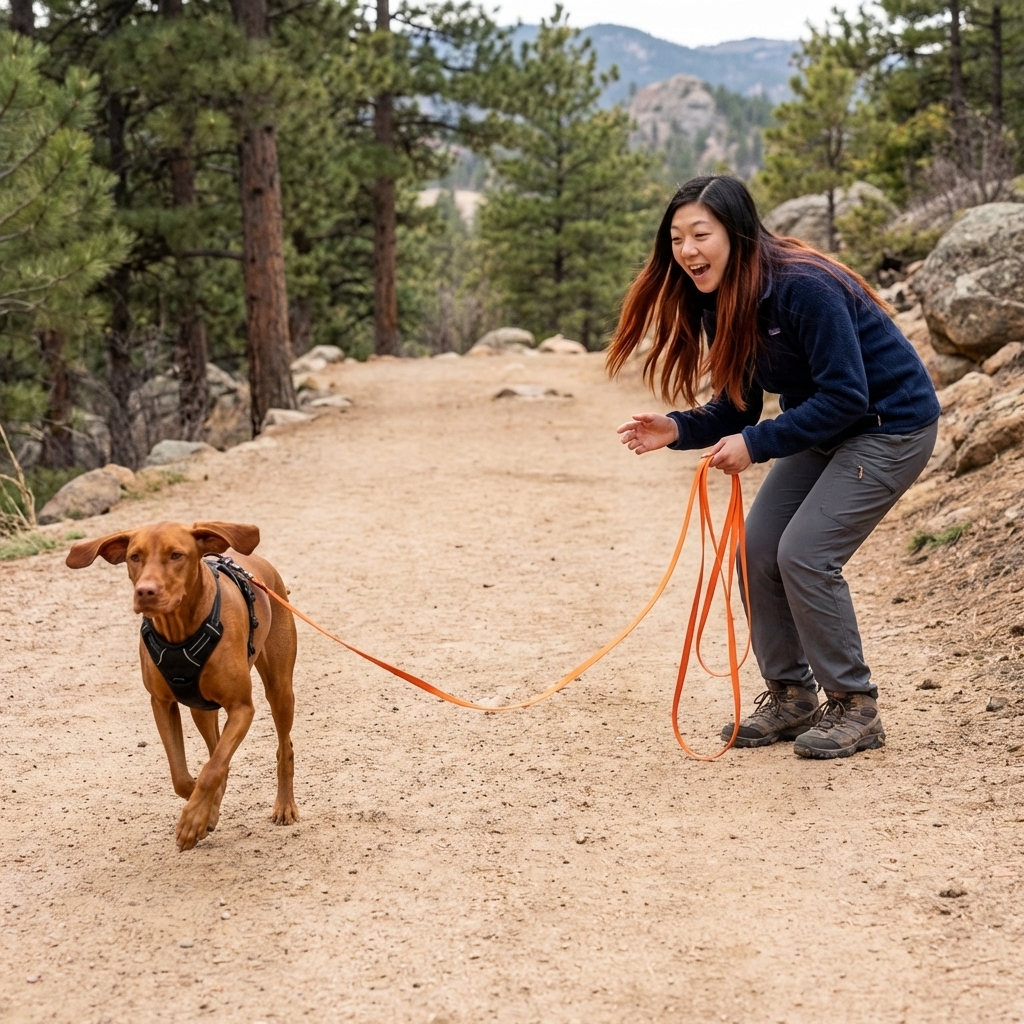
- Start with a long line (15 to 30 feet) in low-distraction spaces.
- Pay well: high-value food, a favorite toy, or permission to run again.
- Practice emergency recall: a special cue that always predicts a jackpot reward.
- Train “check-ins”: reward your Vizsla for choosing to look at you without being called.
- Don’t poison your recall: avoid calling your dog only to end fun or do something unpleasant.
One of the easiest ways to keep recall strong is to call your dog, reward, then release them back to sniff or run sometimes. If “come” always means “leash on, fun over,” it’ll get slower over time.
Safety reality check
If you live near traffic, wildlife, or open unfenced areas, it’s completely responsible to use a long line indefinitely. A long line isn’t a failure. For many families, it’s the tool that prevents tragedies.
Noise sensitivity
Many Vizslas are sensitive to sudden sounds. Some cope fine, and others develop noise phobias that can look like panting, pacing, hiding, trembling, escape attempts, or refusing to go outside. This isn’t stubbornness. It’s stress physiology.
What helps most
- Create a safe station: a covered crate or interior closet with a comfy bed.
- Sound management: white noise, fans, or sound masking during storms (helpful support, not a cure by itself).
- Body calming tools: some dogs benefit from snug shirts or wraps.
- Counterconditioning: pair low-level sound recordings with treats, gradually increasing intensity.
- Talk to your veterinarian early: for true panic, a structured plan and medication can be life-changing and humane.
Important: never force a fearful dog toward the scary sound source. That usually makes fear deeper and harder to treat. For severe cases, a referral to a board-certified veterinary behaviorist (DACVB) or a trainer working under veterinary guidance is ideal.
Separation stress
Vizslas can be prone to separation-related distress if alone time isn’t taught gently and progressively. To be fair, any dog can develop separation-related problems, but the Velcro temperament can make it show up sooner and louder in this breed. Signs can include:
- Vocalizing (barking, whining, howling) shortly after you leave.
- Destructive chewing near exits or windows.
- Accidents indoors despite being house-trained.
- Drooling, pacing, or attempts to escape crates or rooms.
It’s also common for owners to accidentally reinforce panic patterns by making departures and reunions very emotionally intense. The goal isn’t to be cold. The goal is to make alone time feel normal and predictable.
Alone-time training that works
- Start when you’re home: practice brief separations behind a baby gate, then return before distress escalates.
- Use a predictable “settle ritual”: water, potty, then a long-lasting chew or food puzzle.
- Build duration slowly: seconds to minutes to longer, not sudden jumps.
- Practice calm departures: neutral body language, no dramatic goodbyes.
- Reward calm: return and quietly reinforce relaxed behavior, not frantic greetings.
Crate tip
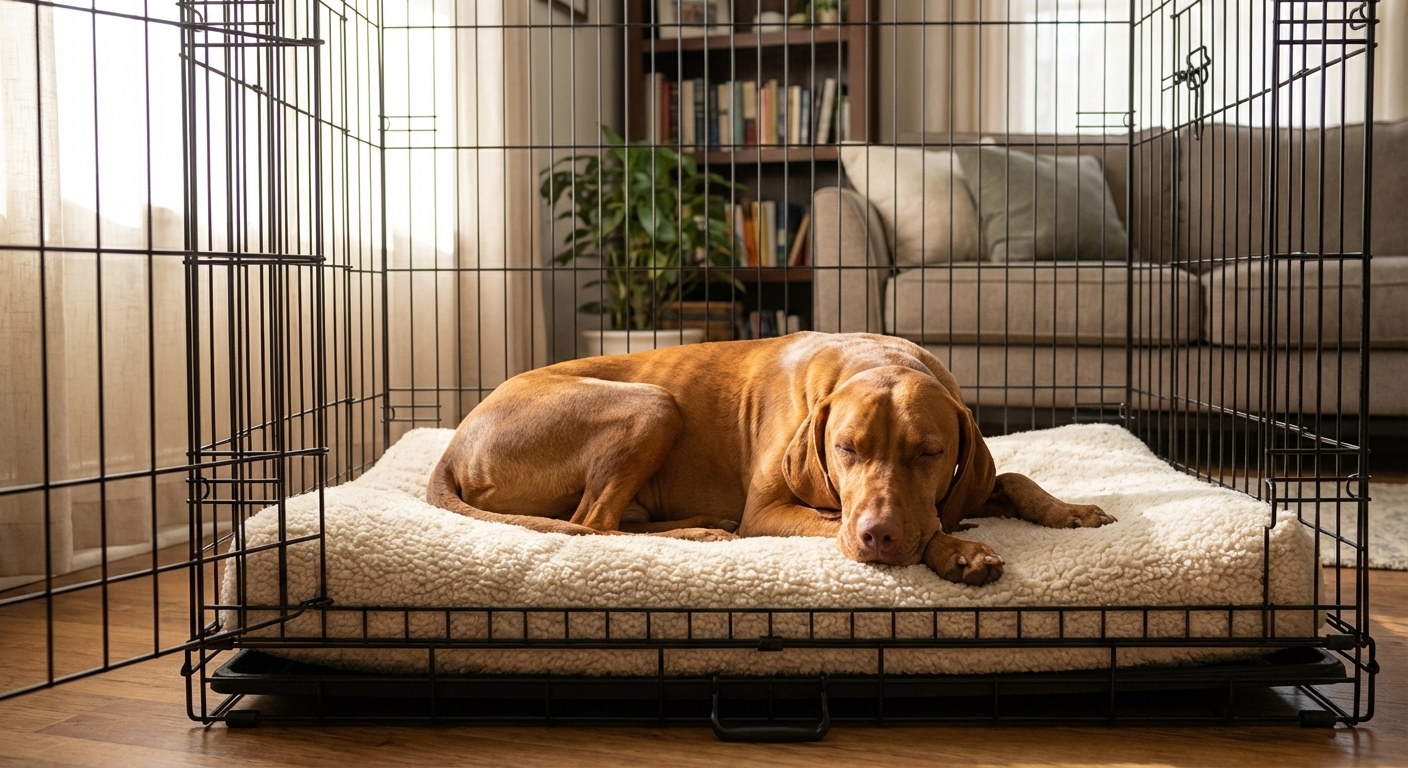
Crates can be wonderful, but only if the dog feels safe in them. If your Vizsla is clawing, screaming, or injuring teeth trying to get out, stop and get professional help. Some dogs do better with a larger puppy-proofed room or a secure pen setup.
Puppy vs adult
A Vizsla puppy is adorable. A Vizsla teenager can feel like a tornado with feelings. The good news is that many Vizslas mature into wonderful adult dogs when their early needs are met.
Common phases
- 8 to 16 weeks: bonding is intense, bitey play is normal, and alone-time practice should begin in tiny doses.
- 4 to 10 months: energy climbs, impulse control is still developing, and training consistency matters.
- 10 to 24 months: adolescence and early adulthood, often the peak of “I can do everything” confidence and distraction outdoors.
- 2 to 4 years: many Vizslas become more settleable, especially with steady routines.
If you want a calmer household, don’t just “exercise more.” Pair exercise with settle training so your dog learns how to turn off.
Teach an off switch
High-energy dogs can accidentally be trained to stay revved up all day. Vizslas benefit from learning that relaxation is part of the job.
Easy daily practices
- Mat training: reward your dog for lying on a bed or mat while life happens.
- Capturing calm: quietly drop a treat when your dog chooses to relax.
- Scatter feeding: toss kibble or treats in grass to encourage sniffing and decompression.
- Chew time: safe long-lasting chews after exercise to help them downshift.
Clinical aside from the clinic floor: if your Vizsla struggles to settle and also has chronic itchiness, stomach upset, or ear infections, talk to your veterinarian. Discomfort and anxiety can feed each other.
Health and management notes
Behavior and health overlap more than most people expect. A few practical Vizsla-specific realities to keep in mind:
- Heat caution: athletic dogs will push past their limits. In hot weather, reduce intensity and prioritize sniffing, swimming, and shaded routes.
- Orthopedic development: too much impact too early can set the stage for injuries. Build conditioning gradually and keep puppies on age-appropriate exercise.
- Enrichment versus over-arousal: not all “exercise” helps. Hours of frantic fetch can create a fitter, more wired dog. Mix in sniffing, skill work, and calm recovery time.
Social needs and play
Many Vizslas love other dogs and do great with structured play, hiking buddies, and some daycare setups. Others get overstimulated in busy dog parks or all-day daycare. Watch your dog’s body language and recovery time. If they come home more frantic instead of pleasantly tired, it may be too much, too chaotic, or just the wrong environment.
Common mistakes
- Too much high-arousal fetch and not enough decompression or calm skills.
- Off-leash too soon before recall is proofed around wildlife and distractions.
- Inconsistent alone-time practice, then long absences that overwhelm the dog.
- Correcting fear (storms, strangers, noises) instead of treating it like an emotion to work through.
Is a Vizsla right for you?
Vizslas thrive with people who want a true sidekick and have time for daily movement, training, and companionship. They can be a tough match if you work long hours away from home without support or if you want a dog that’s naturally independent.
A Vizsla may fit if you:
- Enjoy daily outdoor activity and want a training partner.
- Can commit to alone-time training, not just hope it works out.
- Prefer reward-based methods and gentle consistency.
Think carefully if you:
- Are gone most of the day with no dog walker, daycare, or family help.
- Want an “easy off-leash” dog without structured recall training.
- Live in a noise-heavy environment and can’t plan for sound sensitivity.
When you meet a Vizsla’s needs, you usually get a calm, affectionate athlete at home. When you miss those needs, you often see the symptoms: chewing, barking, pacing, and distress during separations.
When to get help
If your Vizsla is showing intense separation distress, self-injury, or panic, it’s time to bring in your veterinary team and a qualified behavior professional. Evidence-based help often includes a combination of behavior modification, management, and sometimes medication.
- Contact your veterinarian to rule out pain or medical triggers and discuss anxiety support.
- Look for credentialed help such as a board-certified veterinary behaviorist (DACVB) or a certified trainer who specializes in separation anxiety.
- Don’t wait until it’s unbearable. Early support is faster, kinder, and usually more successful.
Quick daily plan
If you want a simple structure to start with, here’s a realistic outline many Vizsla households do well with:
- Morning: sniff walk plus 5 minutes of recall practice and a food puzzle.
- Midday: short training session or a dog walker visit, then a chew for calm.
- Evening: aerobic session (run, fetch with rules, hike) plus a settle routine on a mat.
- Alone-time reps: 1 to 3 tiny practices per day, building slowly.
Consistency beats intensity. A Vizsla doesn’t need you to be perfect. They need you to be steady.