Hot spots can appear overnight. Learn the causes, signs, safe at-home cleaning and drying steps, common mistakes to avoid, and when your dog needs urgent vet...
Article
•
Designer Mixes
Veterinarian-Approved Home Remedies for Hot Spots on Dogs

Shari Shidate
Designer Mixes contributor
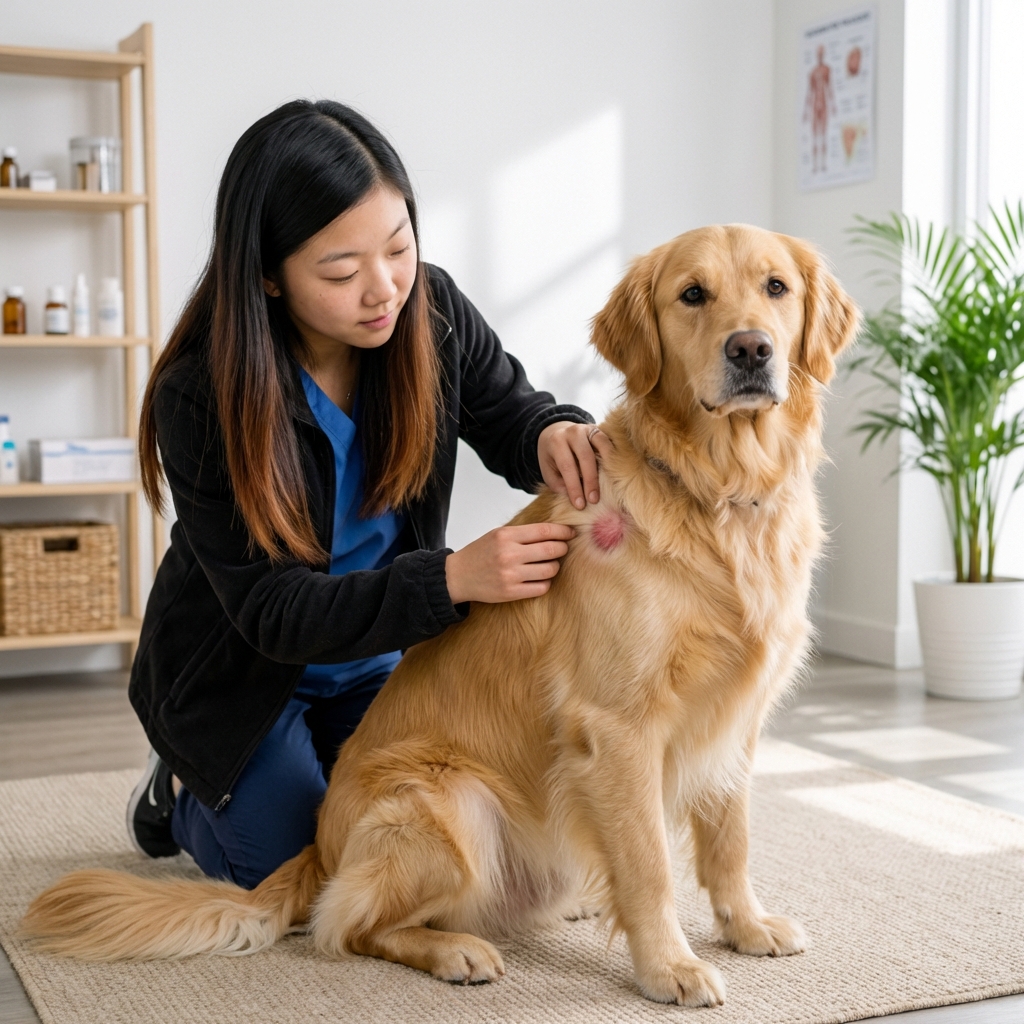
Hot spots can look like they pop up overnight. One minute your dog is fine, and the next they are licking, chewing, and scratching a patch of skin until it becomes red, wet, and angry-looking. As a veterinary assistant, I can tell you I see this all the time in clinic, and it is something you should take seriously because hot spots can spread fast.
The good news is that many mild hot spots can be managed at home with veterinarian-guided steps, as long as you know what to do and when to stop and call your vet.
What hot spots are (and why they spread)
A “hot spot” is an everyday name for acute moist dermatitis, also often called pyotraumatic dermatitis. It usually starts with an itch or irritation, then your dog licks or chews, which breaks the skin barrier. Moisture and bacteria get trapped in the coat, inflammation ramps up, and the sore grows.
Hot spots are often triggered by:
- Allergies (environmental or food related)
- Flea bites or other insect bites
- Moisture from swimming, bathing, or trapped humidity under thick fur
- Ear infections (itchy ears leading to scratching around the head and neck)
- Skin infections or underlying dermatitis
- Hot weather plus heavy coats
One important fact every owner should know: hot spots are not just “surface irritation.” They can become infected, painful, and oozy, and some dogs will keep self-traumatizing the area until it becomes a much larger wound.
When home care is not enough
Home care is best for small, early hot spots when your dog is otherwise acting normal. Please skip DIY and call your veterinarian promptly if you notice any of the following:
- The hot spot is larger than a couple of inches, spreading, or multiplying
- Thick yellow or green discharge, strong odor, or heavy crusting
- Significant swelling, bleeding, or the skin looks black or ulcerated
- Your dog seems very painful, lethargic, or has a fever
- The hot spot is near the eyes, genitals, or deep in a skin fold
- Your dog has recurrent hot spots (you need to address the root cause)
- No improvement within 24 to 48 hours of careful home care
Also call your vet if your dog is on immune-suppressing medications, has known endocrine disease (like Cushing’s), or if you are managing chronic allergies. Those pets can worsen faster.
Medication safety note: Do not give human pain relievers (ibuprofen, naproxen, acetaminophen, aspirin) unless your veterinarian specifically instructs you. These can be dangerous for dogs.
At-home care steps (in order)
1) Stop licking and chewing
This is the number one “home remedy,” because nothing works if your dog keeps re-injuring the skin.
- Use an E-collar (cone) or a well-fitted recovery collar.
- If the location allows, a clean t-shirt can act as a barrier, but avoid trapping moisture against the sore.
If your dog cannot tolerate an E-collar, call your veterinarian. Some dogs need prescription itch and pain control so healing can begin.
2) Clip the hair (if it is safe)
Airflow helps healing. Fur holds moisture and bacteria. If your dog will safely allow it, carefully clip the hair around the lesion to expose the skin.
- Use electric clippers if available. Scissors can accidentally cut delicate, inflamed skin.
- Clip wider than you think you need, often 1 to 2 inches beyond the red area, because the surrounding coat stays damp.
If your dog is wiggly, painful, or the area is large, let your vet do this. In clinics, we often clip and clean thoroughly, sometimes with mild sedation if needed for comfort and safety.
3) Clean, then dry well
Cleaning removes surface bacteria, saliva, and debris. Drying matters just as much, because hot spots thrive in moisture.
Good cleanser options
- Veterinary chlorhexidine solution or wipes: many over-the-counter pet sprays and wipes are commonly around 2%, but concentrations vary. Use as directed on the label or by your veterinarian.
- Diluted povidone-iodine (Betadine): it should look like weak iced tea, not dark brown. Too strong can irritate.
- Saline: gentle and safe when the skin is very sensitive, though it is not as antimicrobial as chlorhexidine.
How to do it:
- Soak a gauze pad or soft cloth, then clean the area gently.
- Do not scrub hard. You want to clean without tearing fragile skin.
- Pat dry with clean gauze or a soft towel.
- If your dog tolerates it, use a cool blow-dry on low from a safe distance to fully dry the coat and skin.
Avoid hydrogen peroxide and rubbing alcohol. They can damage tissue and slow healing.
Avoid eyes, lips, and the ear canal: Do not get chlorhexidine or iodine in your dog’s eyes, and do not put these products down inside the ear canal unless your vet tells you to.
4) Use a light topical
After cleaning and drying, you can apply a thin layer of an appropriate topical product. The goal is to calm inflammation and reduce bacterial overgrowth without sealing in moisture.
Commonly recommended options
- Chlorhexidine spray or an antiseptic hot spot spray made for dogs
- Veterinary antimicrobial and anti-itch products labeled for hot spots
- Hypochlorous acid spray for pets, which can be gentle and supportive for irritated skin
Apply a small amount and let it dry. If you use creams or thick ointments, be cautious. Heavy layers can trap moisture, especially under thick fur. If you are unsure which product is right, a quick call to your vet is worth it.
Important: Do not use human medicated creams (especially those with lidocaine, benzocaine, or high-dose steroids) unless your veterinarian explicitly approves it for your dog. Dogs lick, and ingestion can be a real problem.
Also skip bandages unless your vet directs it: Wrapping can trap moisture and make hot spots worse.
5) Cool compresses
A cool compress can reduce heat, inflammation, and itch.
- Use a clean washcloth dampened with cool water.
- Hold on the area for 5 to 10 minutes.
- Repeat 2 to 3 times daily, then dry the area afterward.
This is especially helpful in the first 24 hours when things feel very hot and inflamed.
6) Grooming while it heals
- Avoid swimming and postpone full baths until the area is clearly improving.
- If you must bathe, use a gentle veterinary shampoo and dry completely, especially under the collar, in armpits, and around the hips.
- Keep your dog’s nails trimmed. Long nails can worsen skin trauma from scratching.
Popular home remedies (what to skip)
Apple cider vinegar
Some owners reach for apple cider vinegar because it is popular online. The issue is that it can sting on open, raw skin and may increase irritation and licking. If the skin is broken or moist, I recommend skipping it and using veterinary antiseptics instead.
Coconut oil
Coconut oil is soothing for some dry skin issues, but hot spots are typically wet and inflamed, and sometimes infected. Oils can trap moisture and encourage licking because dogs like the taste. I do not consider coconut oil a first-choice option for hot spots.
Aloe vera
Purified aloe gel can be soothing for mild irritation, but many products contain alcohols, fragrances, or additives. Also, aloe products that include latex or whole-leaf components can cause more stomach upset if licked. If you use it, choose a pet-formulated product (purified gel, no latex or whole-leaf extract), apply a very thin layer, and prevent licking.
Oatmeal
Oatmeal baths can help itchy, allergy-prone dogs. For an active hot spot, focus on targeted cleaning and drying. If your dog has widespread itch plus a small hot spot, a gentle oatmeal bath may help overall comfort, but you still need to fully dry the hot spot area afterward.
How often to treat
For a small hot spot caught early, this routine is reasonable:
- 2 to 3 times daily: Clean gently, pat dry, apply a light topical made for pets.
- All day: Prevent licking with an E-collar or recovery collar.
- Daily: Check size, redness, moisture level, and odor.
You should see the area look less wet and less angry within 24 to 48 hours. Many uncomplicated hot spots show clear improvement in 2 to 3 days. Full healing and hair regrowth can take 1 to 2 weeks, sometimes longer depending on the cause and how much self-trauma happened.
When it might be something else
Hot spots can resemble other skin problems like ringworm, mites (mange), yeast overgrowth, or deeper infections. If the lesion is very circular and scaly, if multiple pets have similar spots, or if any people in the home develop new suspicious rashes, call your veterinarian for guidance.
Preventing hot spots
Hot spots have a cause. If you only treat the skin and ignore the trigger, you will likely see them again.
Fleas and parasites
- Use a veterinarian-recommended flea prevention consistently.
- If one pet has fleas, treat all pets in the home as directed by your vet.
Allergies and recurring itch
- Ask your vet about allergy testing, diet trials, or itch control options.
- Wipe paws and bellies after outdoor time during high pollen seasons.
Moisture management
- Dry thoroughly after swimming and bathing.
- Pay extra attention to thick-coated breeds and doodle mixes where hair can mat and trap moisture.
Grooming and matting
- Brush regularly to prevent mats that pull on the skin and hold dampness.
- Keep the coat at a manageable length in warm months, especially if your dog is prone to skin issues.
What your vet may do
If a hot spot is infected, large, or very painful, your veterinarian may recommend:
- Prescription anti-itch medication to stop the licking cycle
- Pain relief if the area is tender
- Topical prescription antibiotics or steroid combinations for inflamed skin
- Oral antibiotics if the infection is deeper, widespread, or not responding to topical care
- Diagnostic steps like skin cytology to check for bacteria or yeast and guide treatment
Not every hot spot needs oral antibiotics. When they are needed, they can be the fastest, kindest way to get comfort back and prevent a bigger infection.
Bottom line
Hot spots are common, painful, and often preventable. The best at-home approach is not a trendy ingredient. It is a calm, consistent routine: stop licking, clip for airflow, clean gently, dry thoroughly, and use a pet-safe antiseptic topical. Then watch closely for improvement.
If you are ever unsure, trust your gut and call your veterinarian. Early treatment is simpler, cheaper, and much more comfortable for your dog.