A practical, week-by-week newborn kitten care guide for pet owners—set up a safe warm nest, bottle-feed KMR correctly, stimulate pottying, track weight dai...
Article
•
Designer Mixes
Veterinarian-Approved Care for 4-Week-Old Kitten Behavior

Shari Shidate
Designer Mixes contributor
At 4 weeks old, a kitten is in a huge transition phase. They are starting to explore, play, and interact more, but they are still learning the basics of feeling safe, using the litter box, and figuring out how to be a cat. The good news is that most “naughty” behavior at this age is really normal development. With a few veterinarian-approved care steps, you can guide your kitten gently and confidently.
What behavior should look like
Every kitten develops at their own pace, but most 4-week-old kittens share a few common behaviors:
- Wobbly walking that improves daily with short bursts of play and exploration.
- More social curiosity like following you, mewing for attention, and sniffing everything.
- Short play sessions with tiny pounces and paw batting, followed by long naps.
- Early litter habits, often with accidents as they learn.
- Still needs warmth and a predictable routine to feel secure.
If your kitten seems consistently weak, cannot stand, refuses all food, or has trouble breathing, that is not normal “baby kitten behavior.” That is an urgent vet visit.
Why behavior feels intense
At 4 weeks, kittens are in the middle of a key socialization window that is often described as roughly 2 to 7 weeks (sometimes extending a bit longer). Their brains are developing rapidly, and they learn through repetition. That is why you might see big feelings and big reactions in a tiny body: sudden fear, clinginess, or dramatic vocalizing.
It helps to remember this rule: a 4-week-old kitten is still a baby. They are not being stubborn. They are practicing.
Feeding and behavior
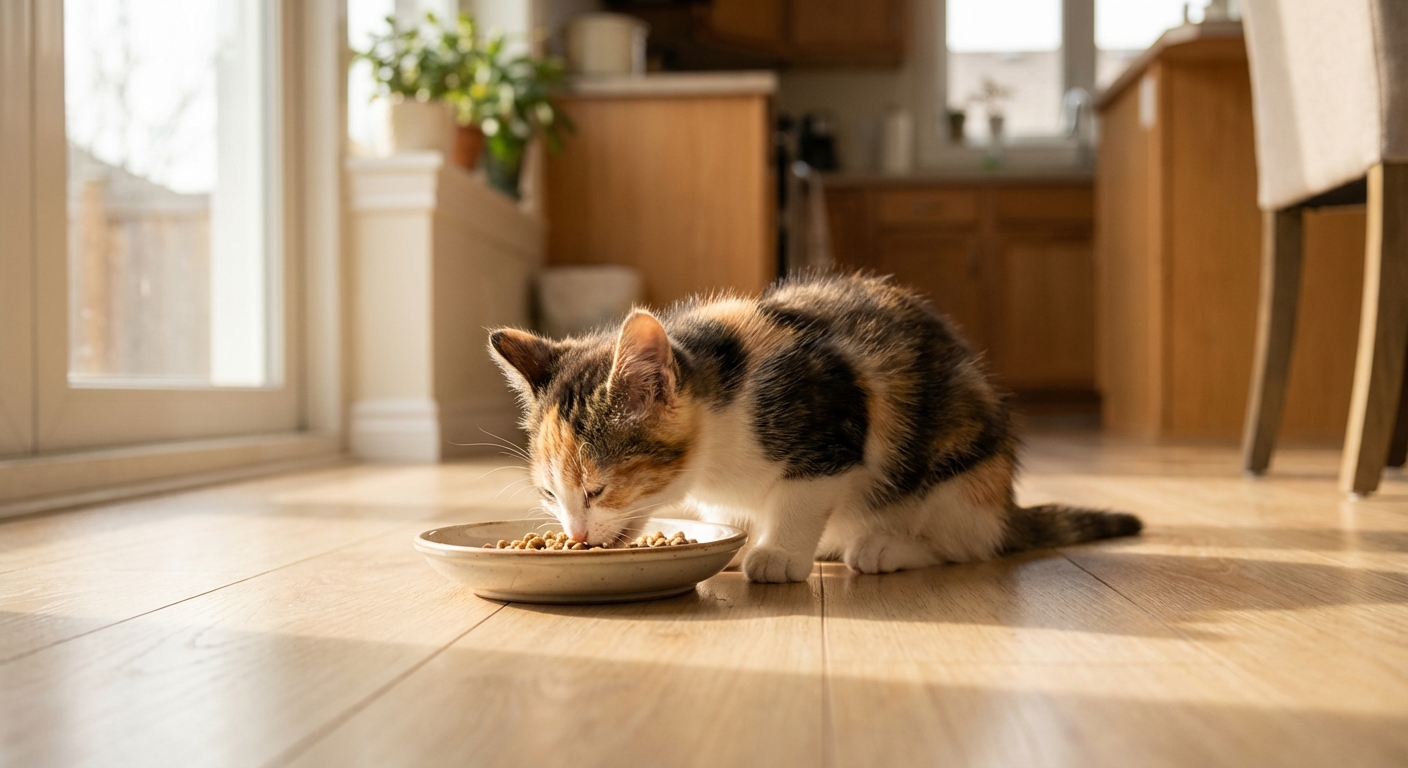
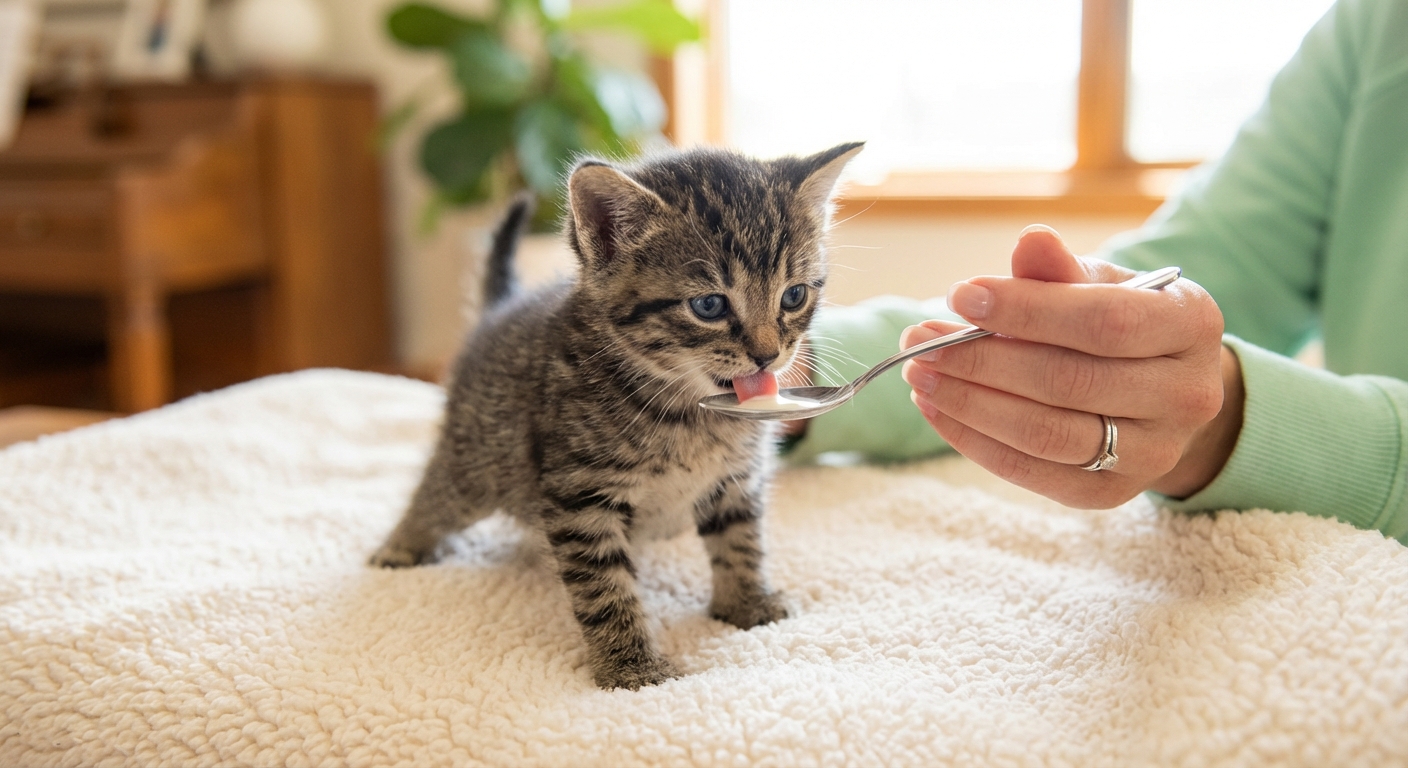
Hunger, low blood sugar, and dehydration can cause crying, restlessness, and weak or “off” behavior in young kittens. At 4 weeks old, feeding is often still a mix of formula (bottle or slurry) and the very beginning of weaning. Readiness varies a lot, and abrupt weaning can be risky, especially for smaller kittens or bottle babies.
Veterinarian-aligned feeding basics
- Use kitten milk replacer, not cow’s milk. Cow’s milk may cause diarrhea in many kittens.
- Offer small meals frequently. Many 4-week-old kittens still do best with multiple feedings spread through day and evening.
- Wean gradually. If your kitten is lapping well, you can offer a formula-and-wet-food slurry. If they struggle, go slower and keep formula as the main nutrition.
- Expect mess while weaning. Stepping in food and getting it on the face is normal, and it improves with time.
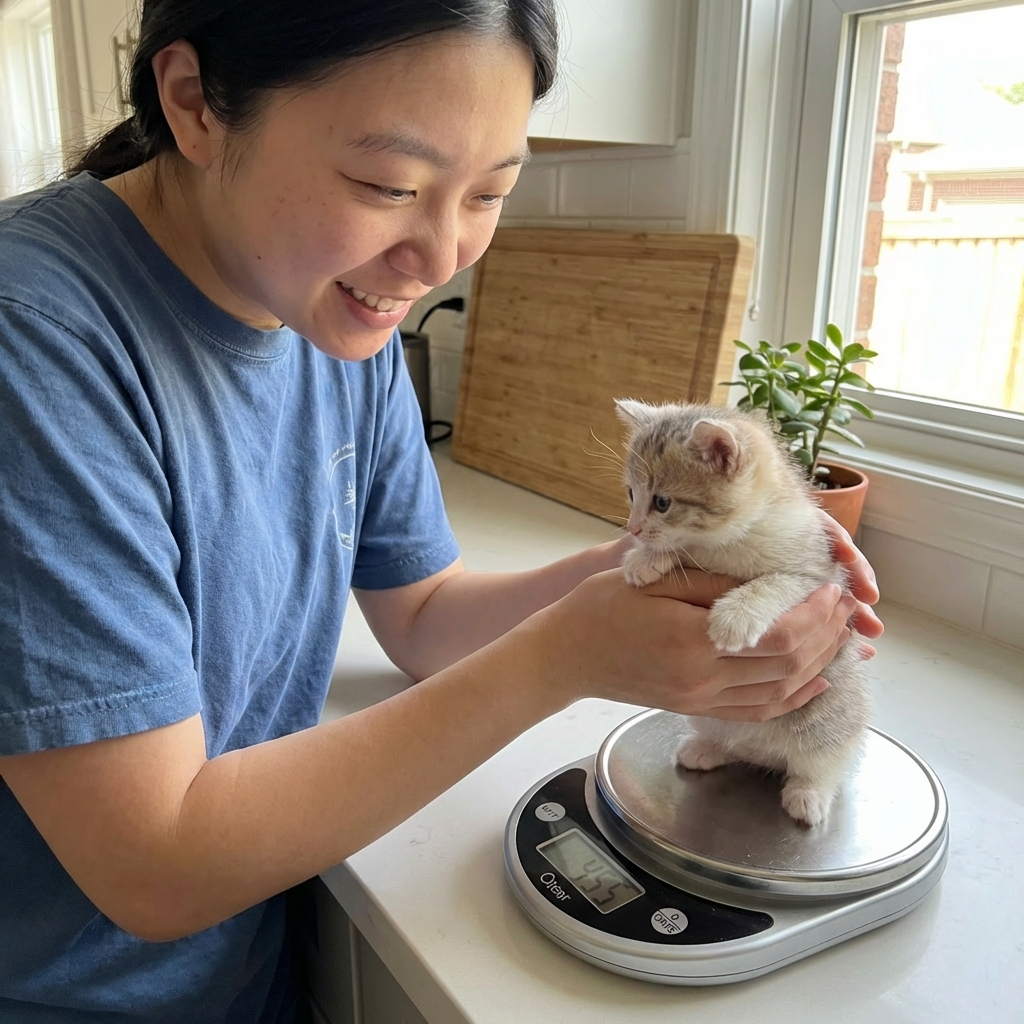
- Weigh daily if possible. Steady weight gain is one of the best signs you are on track.
If your kitten has diarrhea, is bloated, vomits repeatedly, or is not gaining weight, contact your veterinarian promptly. In young kittens, problems can become serious quickly.
Water and hydration
You can offer a shallow dish of fresh water at this age, especially as weaning begins, but remember that formula is still the primary source of nutrition for many 4-week-old kittens. Some kittens will only take a few laps of water at first and that is normal.
If you are worried about dehydration, contact your veterinarian. Signs can include lethargy, tacky gums, sunken eyes, and other changes that need a hands-on assessment in very young kittens.
Sleep, crying, and nights
Four-week-old kittens sleep a lot, but they also wake up and call for comfort. If your kitten cries at night, it usually means one of three things: they are hungry, cold, or lonely.
Comfort steps vets commonly recommend
- Warmth: Provide a pet-safe heating pad on the lowest setting under half the bedding, or a wrapped warm water bottle. Use thick towel layers and avoid direct skin contact to reduce burn risk. Make sure the kitten can move away if they get too warm.
- Cozy nest: Use a small box or carrier with soft blankets to reduce drafts.
- Soothing sound: A quiet ticking clock near the bed can mimic a heartbeat for some kittens.
- Predictable routine: Feed, potty, play gently, then settle them in the same way each night.
Avoid letting a 4-week-old kitten roam unsupervised at night. They can get chilled, stuck, or injured easily.
Litter training at 4 weeks
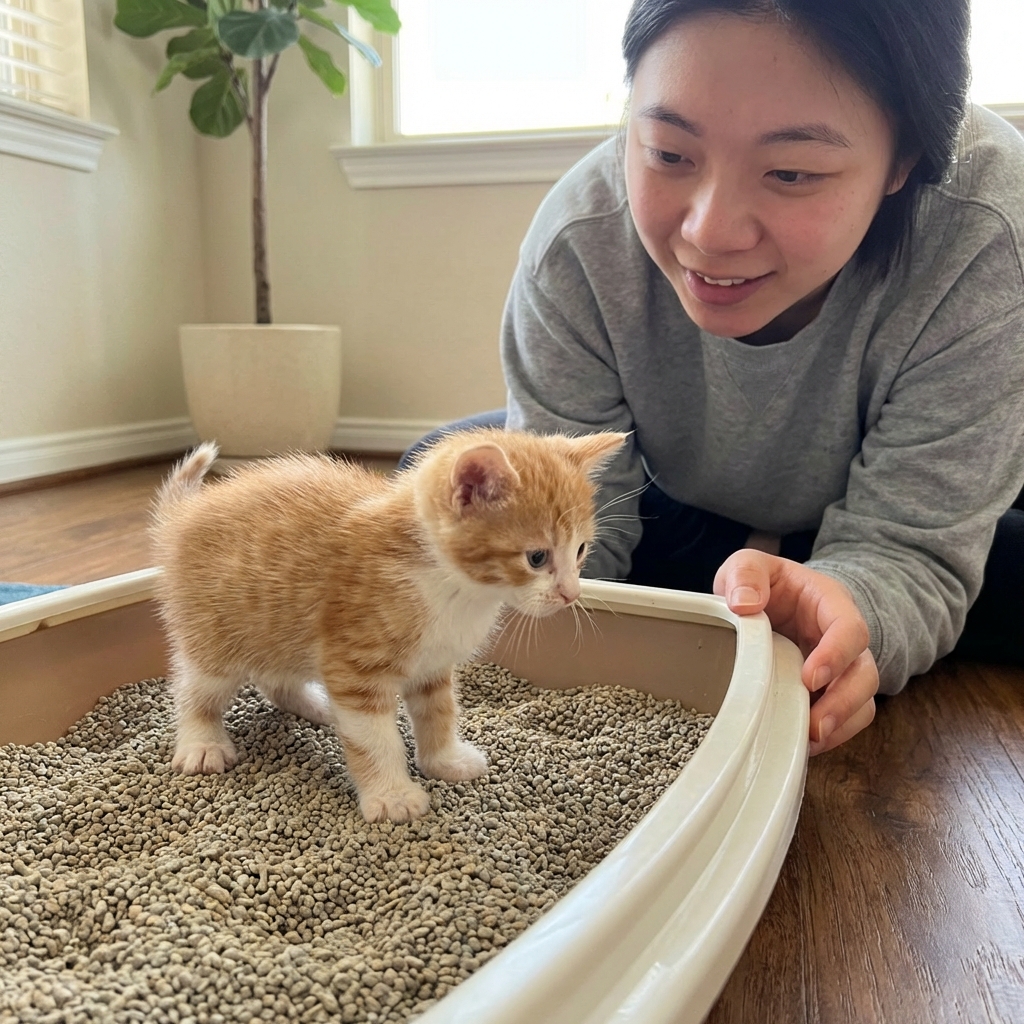
Many kittens can start using a litter box around this age, but their coordination is still developing. Expect accidents. It does not mean they are “not getting it.”
Set the box up for success
- Use a shallow box with low sides so they can climb in and out easily.
- Choose non-clumping litter for very young kittens, because they may taste or eat litter during exploration.
- Place the box close to their sleeping area, but not right next to food and water.
- Put them in the box after meals and naps, then praise calmly.
If your kitten strains, cries in the box, has blood in stool, or is not urinating, that is a veterinary issue, not a training issue.
Do they need stimulation?
Many 4-week-old kittens start to pee and poop on their own, especially if they are eating well and moving around confidently. But some still need help, particularly orphaned kittens or kittens who were bottle-fed early.
- After meals, if your kitten does not eliminate on their own, use a warm, damp cotton ball or soft cloth to gently rub the genital and anal area until they go.
- Watch for constipation: straining, crying, hard stools, or no stool for more than a day can become a problem fast in tiny kittens.
If your kitten cannot urinate, seems painful, or goes more than a day without stool along with reduced appetite or lethargy, contact your veterinarian promptly.
Play, biting, and scratching
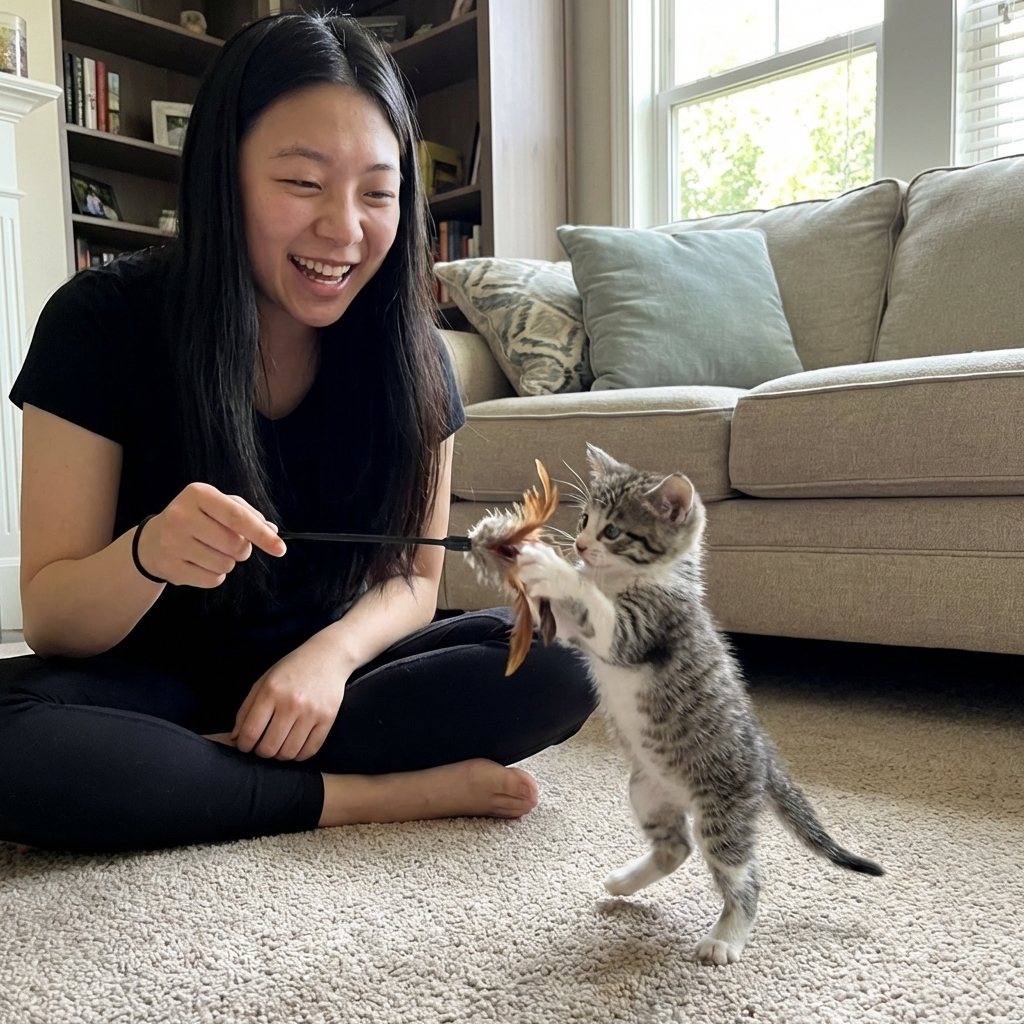
At 4 weeks, play is how kittens learn boundaries. That includes practicing hunting behaviors like biting, bunny-kicking, and grabbing. Your job is not to stop play, but to redirect it onto appropriate items.
How to prevent rough play habits
- Do not use your hands as toys. Even if it seems cute now, it becomes a problem later.
- Offer a small toy instead like a soft wand toy, a crinkle ball, or a plush mouse.
- Keep sessions short. Young kittens tire quickly and can get overstimulated.
- End with calm. After play, offer a small meal or comfort cuddle to help them settle.
If your kitten bites you, gently pause interaction and redirect to a toy. Avoid yelling or physical punishment. Fear-based handling can create long-term behavior issues.
Single kittens and separation
If your 4-week-old kitten is separated from their mom or littermates, you may see extra crying, clinginess, and harder biting during play. Littermates teach bite inhibition naturally, so single kittens often need more gentle redirection and more frequent, short play sessions.
When appropriate and safe, ask your veterinarian or local rescue about age-matched companionship or structured foster support. Not every situation allows it, but it can help many kittens.
Socialization
This is the age to build trust. Gentle, positive exposure now can reduce future fear, hiding, and defensive aggression.
Simple socialization checklist
- Handle gently every day: brief touches to paws, ears, mouth area, and tail with a treat or comforting voice.
- Introduce normal household sounds at low volume: TV, dishwasher, distant vacuum, then slowly increase as tolerated.
- Meet safe people one at a time. Calm voices, slow movements, and short sessions are best.
- Safe exploration in a kitten-proofed room for short periods.
If your kitten freezes, trembles, hisses, or tries to escape, scale back. Progress is about tiny wins, not overwhelming them with too much too soon.
Health issues that mimic behavior
Veterinary teams often encourage pet parents to watch for medical causes when behavior seems sudden or extreme. At 4 weeks old, these concerns matter:
- Fleas and anemia: Heavy fleas can make kittens weak, pale, and restless. Ask your vet about kitten-safe flea control. Never use dog flea products on cats.
- Parasites: Roundworms and other intestinal parasites are common in kittens and can cause pot belly, diarrhea, and poor growth.
- Upper respiratory infection: Sneezing, eye discharge, congestion, low appetite.
- Dehydration: Lethargy, tacky gums, sunken eyes, and other signs that require prompt veterinary guidance in young kittens.
If you see pale gums, trouble breathing, severe diarrhea, repeated vomiting, or the kitten is limp or cold, seek veterinary care immediately.
Kitten-proofing
A safe environment prevents scary experiences, and fewer scary experiences leads to a calmer kitten. At 4 weeks, think “toddler-proofing,” but smaller.
- Block access to stairs, gaps behind appliances, recliners, and rocking chairs.
- Keep cords, hair ties, string, and small swallowable items out of reach.
- Use a small, contained space at first, like a playpen or a single kitten-proofed room.
- Offer one soft bed, one litter box, one food station, one water station, and 2 to 3 small toys.

A simple daily routine
If you want behavior to improve quickly, build predictability. Here is a gentle routine many veterinarians and shelters use as a starting point:
- Wake: warm check, quick cuddle, potty in litter box
- Eat: formula or weaning meal
- Potty again: place in box and praise
- Play: 5 to 10 minutes of gentle toy play
- Sleep: warm, quiet, safe nest
Repeat this cycle throughout the day. Over time, your kitten will start to anticipate what happens next, and that alone reduces crying and anxious behavior.
Preventive care timing
Your veterinarian will tailor timing to your kitten’s weight, health status, and risk factors, but these are common reference points:
- Deworming: often begins around 2 to 3 weeks of age and repeats every couple of weeks for a period of time.
- Core vaccines: commonly start around 6 to 8 weeks of age, then continue in a series.
- Flea and parasite prevention: depends heavily on weight and product safety, so get vet guidance before treating.
If you adopted a kitten with no medical history, schedule a vet visit soon so you can get a safe plan in place.
When to call the vet
Trust your instincts. Young kittens can go downhill quickly, so it is always okay to ask your veterinarian “Is this normal?” Call promptly if you notice:
- Not eating, or eating much less than usual
- Weight loss or no weight gain
- Diarrhea lasting more than a day, or any diarrhea with weakness
- Repeated vomiting
- Lethargy, collapse, or weakness
- Pale gums or heavy flea dirt
- Labored breathing, open-mouth breathing, or severe congestion
- Eye swelling, thick discharge, or eyes stuck shut
- Not peeing, straining to pee, or signs of pain
Your vet can also guide you on deworming schedules, vaccination timing, and safe parasite prevention based on your kitten’s exact weight and risk factors.