Wondering if your cat truly loves you? Learn 15 reliable affection signs, what people misread about purring and belly displays, and vet-backed ways to build ...
Article
•
Designer Mixes
Vet-Informed Signs Your Cat Loves You

Shari Shidate
Designer Mixes contributor
Cats are subtle communicators. As a veterinary assistant here in Frisco, Texas, I hear this worry all the time: “My cat doesn’t act like a dog, so how do I know she actually loves me?” The good news is that feline affection is real, and there are clear, behavior-based indicators that your cat trusts you and feels safe with you.
Below are vet-informed, behavior-based signs that your cat is bonded to you in the cat way. I will also share a few “love look-alikes” that can actually signal stress, plus practical ways to strengthen your bond without forcing cuddles.
How clinics think about “love”
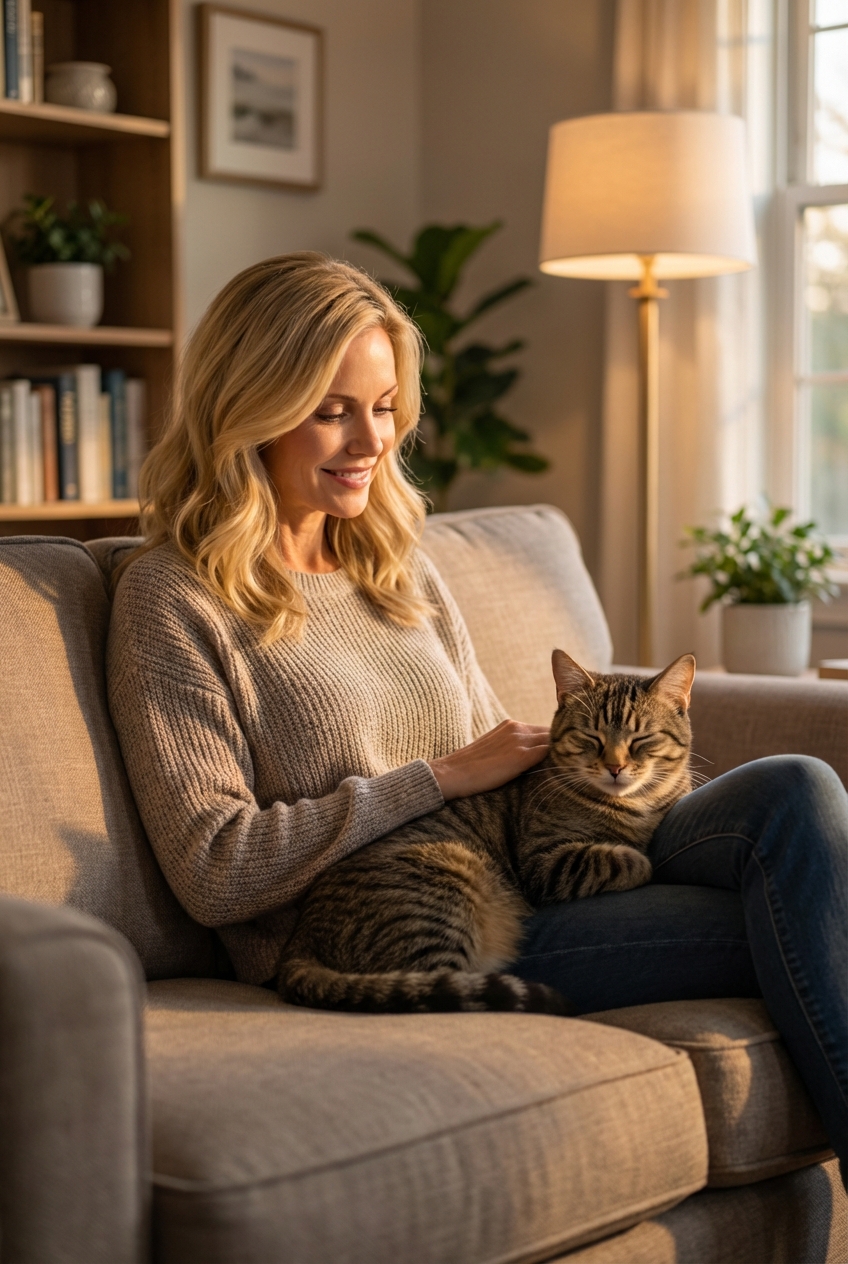
In veterinary behavior terms, we cannot measure love the way we measure a blood value. What we can observe is a pattern of behaviors associated with social bonding, safety, and positive anticipation. A cat who is bonded to you is typically showing some combination of:
- Affiliative behaviors (friendly social contact like head bunts and grooming)
- Proximity seeking (choosing to be near you when she does not have to)
- Relaxed body language (soft eyes, neutral ears, loose posture)
- Positive routines (happy greetings, calm attention, play invitations)
One important note: cats are individuals. Some cats are physically affectionate, and others are devoted from a respectful distance. Both can be true love.
Share Your Experience
12 vet-informed signs your cat loves you
1) Slow blinking at you
Slow blinking is one of the clearest “I trust you” signals in cat language. In a relaxed setting, your cat may look at you and slowly close her eyes, then open them again. That is essentially a friendly, non-threatening message.
Try this: Return a slow blink from a few feet away. If she repeats it or stays relaxed, you are speaking her language.
2) Head bunting and cheek rubbing
When your cat presses her head into you, rubs her cheeks on your hand, or drags her face along your leg, she is depositing facial pheromones. These are scent markers that help cats define what feels safe and familiar.
What it means: You are part of her trusted inner circle.
3) Choosing to be near you
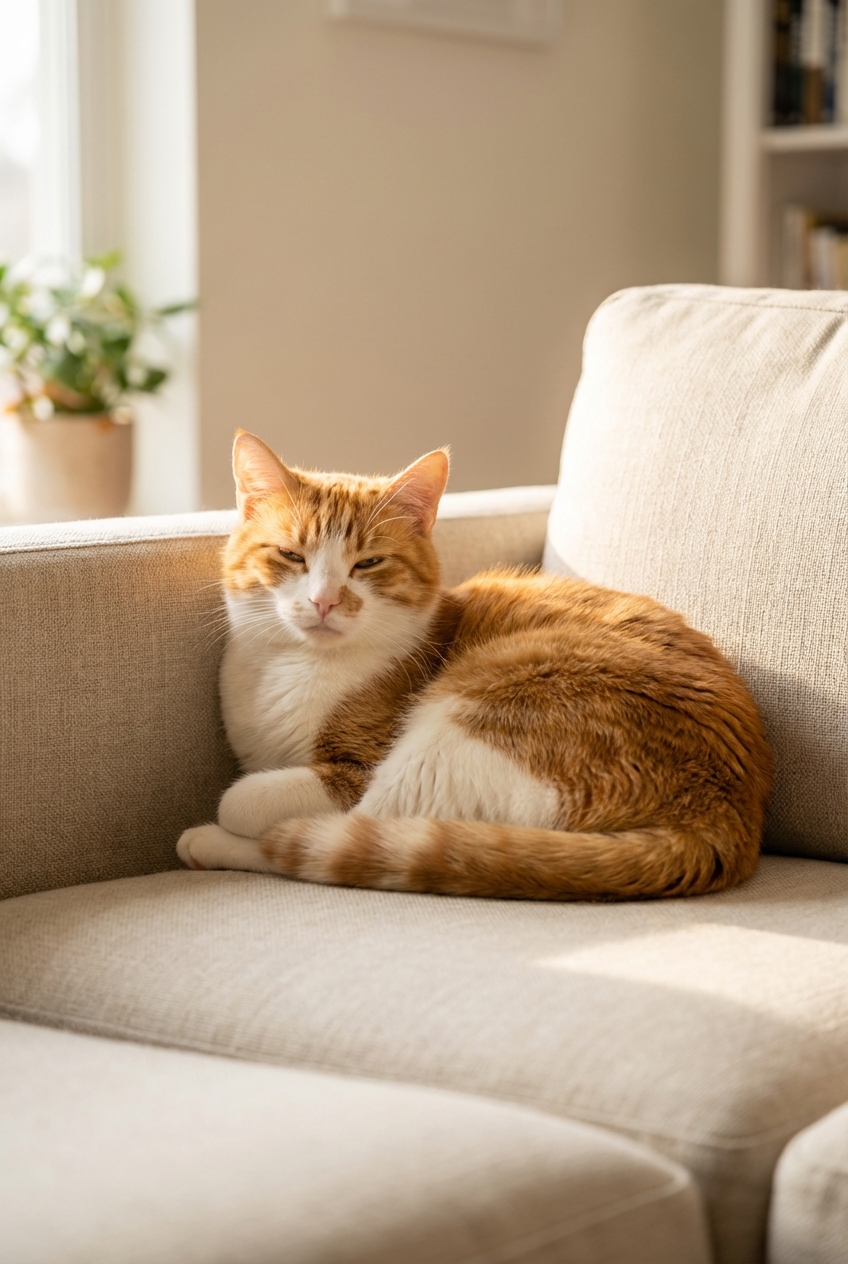
A major affection sign is simply where your cat spends her time. If she chooses the same room as you, sits at the end of the couch, or “supervises” your chores, that proximity can be meaningful.
Look for: A cat who follows you calmly from room to room, then settles.
Helpful nuance: If she only shows up right before meals and disappears afterward, it may be more food-motivated than bond-motivated. Many bonded cats do both, but the “throughout the day” closeness is especially telling.
4) Purring, especially with relaxed posture
Purring often means contentment, especially when paired with soft eyes, a loose body, and a comfortable position like loafing or stretching out.
Important nuance: Cats can also purr when anxious or in pain, so context matters. If purring is paired with hiding, a tense body, decreased appetite, limping, or unusual behavior, check in with your veterinarian.
5) Kneading on you or near you
Kneading (making biscuits) is a comfort behavior that starts in kittenhood. Many adult cats knead when they feel safe and soothed.
If it hurts: Place a soft blanket between you and those enthusiastic paws, and keep nail trims regular.
6) Showing you her belly (without demanding a belly rub)
A cat rolling over and exposing her belly is often a sign of trust. It does not always mean “please rub my stomach.” For many cats, belly-touch is overstimulating and can trigger a grab-and-kick response.
Safer affection move: Offer cheek scratches or head rubs instead.
7) Grooming you or gentle nibbling
Licking your hand, your hair, or gentle nibbling can be allogrooming, a social grooming behavior seen among bonded cats. It is often a calm, affectionate routine.
When to pause: If nibbling escalates to painful biting, end interaction kindly and redirect to a toy.
8) Greeting you when you come home
Some cats meet you at the door, vocalize, or weave around your legs when you return. That greeting is a combination of social bonding and positive anticipation.
Pro tip: Reward greetings with a consistent, low-key ritual: a few pets, a play session, or a small treat.
9) Tail language: upright tail with a soft curve
A tail held up like a flag, often with a little hook at the tip, is a friendly social signal. You will commonly see this during happy greetings or when your cat approaches you confidently.

10) Bringing you “gifts”
Toys on your pillow, a sock dragged into the living room, or, unfortunately, prey items can happen for a few reasons. Depending on the cat, it may be social sharing, attention-seeking, instinct, or learned reinforcement (for example, a cat who gets a big reaction). Whatever the motivation, it often shows your cat is engaged with you and her environment.
What to do: If your cat goes outside, consider a safer indoor lifestyle or supervised outdoor time (catio or harness). This protects wildlife and reduces your cat’s risk of injury or disease.
11) Sleeping near you (or on you)
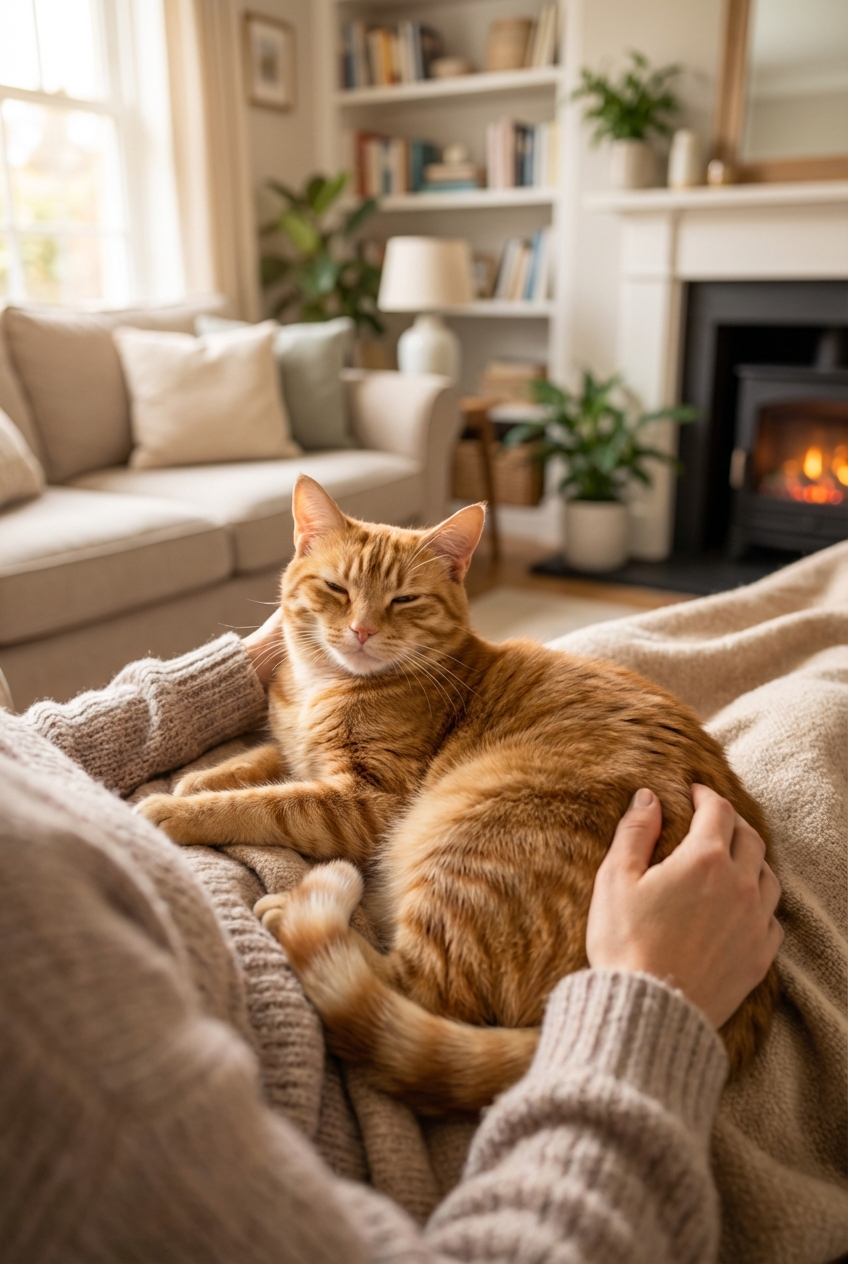
Sleep is a vulnerable state. A cat who snoozes beside you, at your feet, or on your lap is making a clear statement: “I feel safe here.”
Even better: If your cat chooses to sleep near you regularly, that consistent pattern is a strong bond signal.
12) Play invitations and shared routines
Love is not only cuddles. Cats bond through shared activities. If your cat brings a toy, does a little “play hop,” or waits for you at the usual playtime spot, she is seeking positive interaction.
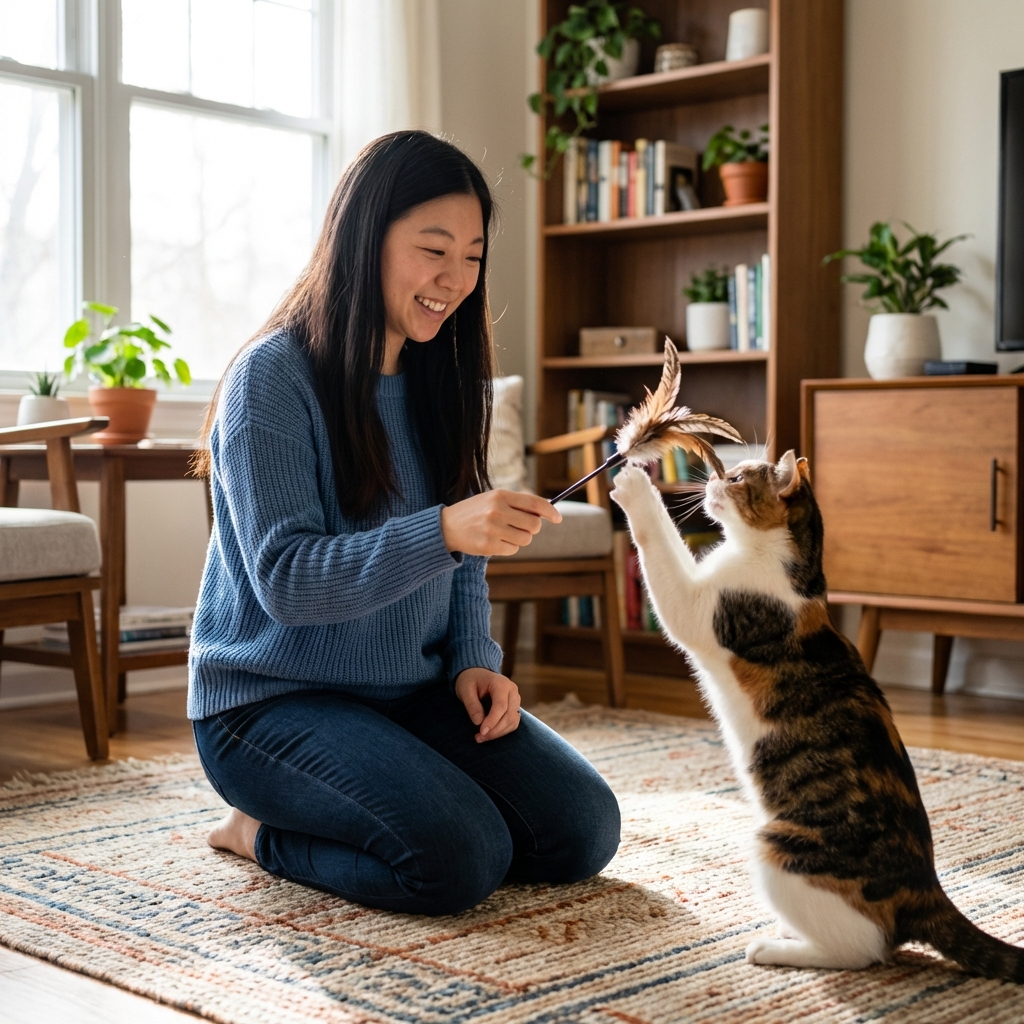
Try this: Two short play sessions daily (5 to 10 minutes) with a wand toy often helps deepen your relationship and reduce stress behaviors. Some cats need longer or more frequent sessions, especially young cats and high-energy breeds.
Affection or stress?
Some behaviors can be confusing because they show up in both affection and anxiety. Here are a few quick distinctions I share with pet parents in the clinic.
- Purring: Usually happy when your cat is relaxed and eating normally. Concerning if paired with hiding, limping, poor appetite, a tense crouch, or a “not herself” look.
- Following you: Sweet and social when calm. Potentially anxious if paired with constant vocalizing, clinginess, or inability to settle.
- Rolling over: Often trust. Not always an invitation to touch the belly.
- Rubbing and weaving: Affectionate and scent marking. Be careful around stairs, because enthusiastic weaving can cause falls.
- Big pupils and a twitchy tail: Can mean high arousal. Sometimes that is playful excitement. Sometimes it is stress.
- Flattened ears, tucked tail, or sudden over-grooming: More likely to be fear or discomfort than affection.
When to call your vet: Any sudden behavior change, new aggression, litter box changes, hiding, decreased appetite, weight loss, or unusual vocalization deserves a medical check. Pain and illness frequently show up as “behavior problems” first.
Help your cat show affection
You cannot force trust, but you can make affection easier for your cat.
Keep life predictable
- Feed and play on a routine.
- Provide vertical space (cat trees, shelves) and hiding options.
- Keep litter boxes clean and easy to access.
Pet the way cats prefer
Many cats enjoy gentle contact around the cheeks, chin, and base of the ears. Full-body petting can be too much for some.
Watch for overstimulation signs: skin twitching, tail thumping, sudden head turn, ears rotating back, dilated pupils, or walking away.
Use food and play to bond
- Food puzzles give your cat a healthy outlet and reduce boredom.
- Interactive play helps shy cats build confidence without pressure.
- Treat training (simple cues like “touch” or “sit”) creates positive communication.
Set guests and kids up for success
Cats tend to bond fastest when their boundaries are respected. For children and visitors, I recommend a simple rule: let the cat approach first. Offer one finger at her nose level, then aim pets at the cheeks or chin if she leans in.
Quick checklist
- Slow blinks
- Head bunts and cheek rubs
- Chooses to sit near you
- Relaxed purring
- Kneading
- Shows belly as a trust signal
- Grooms you
- Greets you at the door
- Upright tail with a soft curve
- Brings toys or objects
- Sleeps near you
- Invites play and routines
If your cat is giving you even two or three of these signals consistently, you are very likely a trusted, loved person in her world.
Frequently asked questions
Do cats bond to one person more than others?
They can. Cats often prefer the person who respects their boundaries, provides consistent care, and interacts in a calm, predictable way.
My cat is not cuddly. Can she still love me?
Absolutely. Some cats show love by sitting nearby, slow blinking, or following you quietly. Look for consistent closeness and relaxed body language, not lap time.
Is licking always affection?
Usually it is social grooming, but excessive licking of people or objects can also be stress-related. If it becomes intense or compulsive, talk to your veterinarian.
Notes
This article reflects common feline-friendly handling and behavior principles used in many clinics, including guidance aligned with ISFM feline-friendly practices.