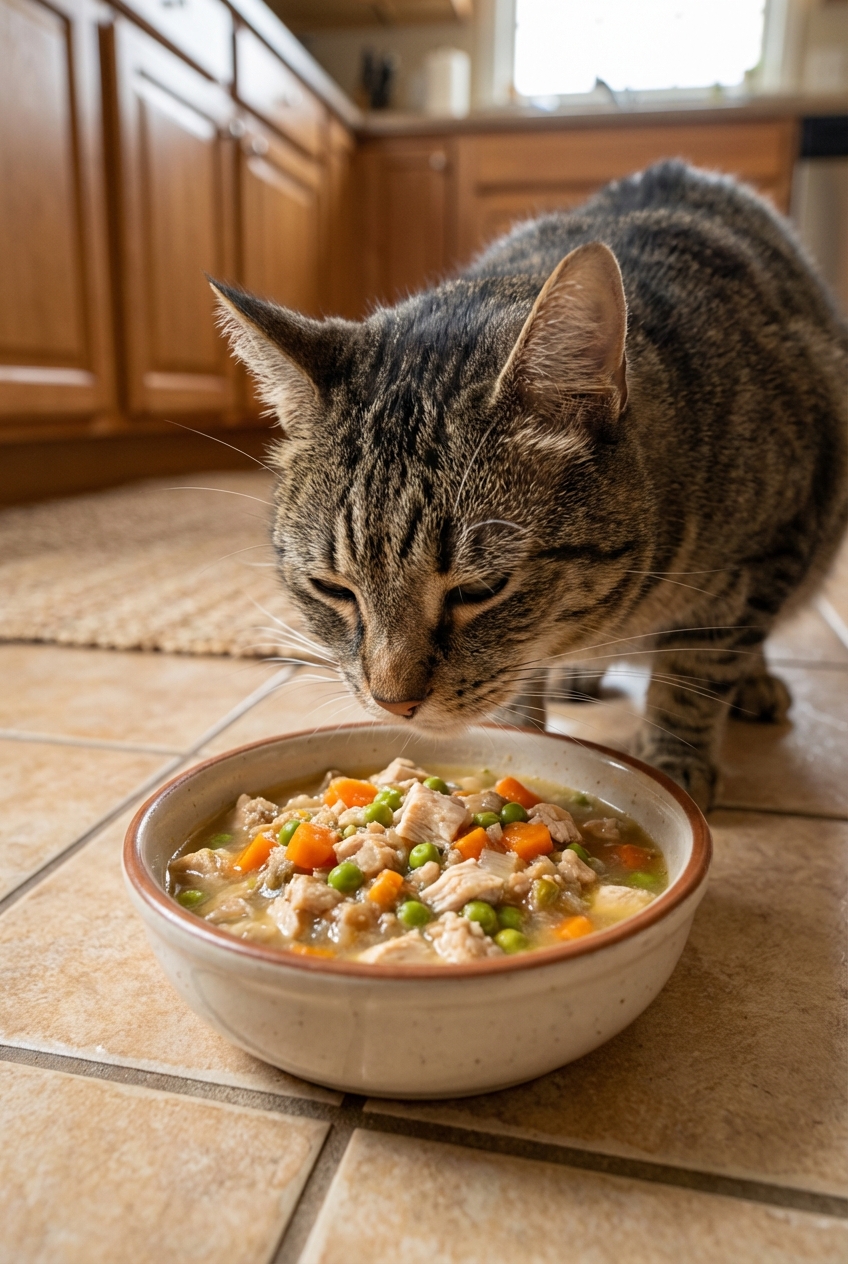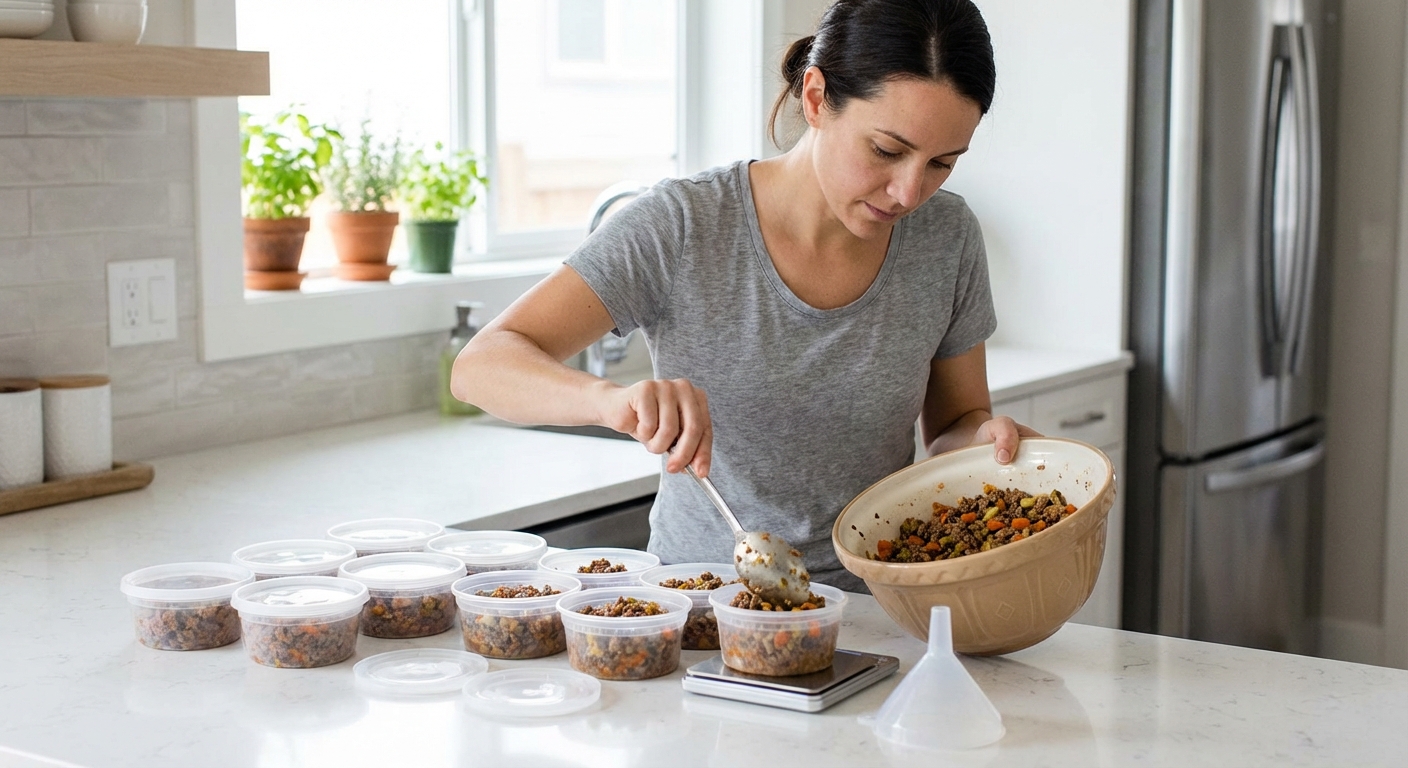
Make homemade cat food realistic with freezer meal prep. Learn how to pick a complete feline recipe, batch cook, portion by weight, freeze flat, label, thaw ...
Article
•
Designer Mixes
Vet-Informed Homemade Cat Food Weekly Feeding Schedule

Shari Shidate
Designer Mixes contributor
If you have ever flipped over a bag of cat food and felt confused by the ingredient list, you are not alone. As a veterinary assistant in Frisco, Texas, I hear the same question all the time: “Can I make homemade cat food that is truly complete and safe?”
Yes, you can. But with cats, it has to be done thoughtfully. Cats are obligate carnivores, meaning they thrive on animal-based nutrition, and they have specific nutrient requirements that are easy to miss if you just “cook some chicken and call it a day.”
This guide walks you through a vet-informed approach to homemade cat food, plus a realistic weekly feeding schedule framework you can repeat and rotate. You will also learn what to avoid, how to transition safely, and when to ask for help.
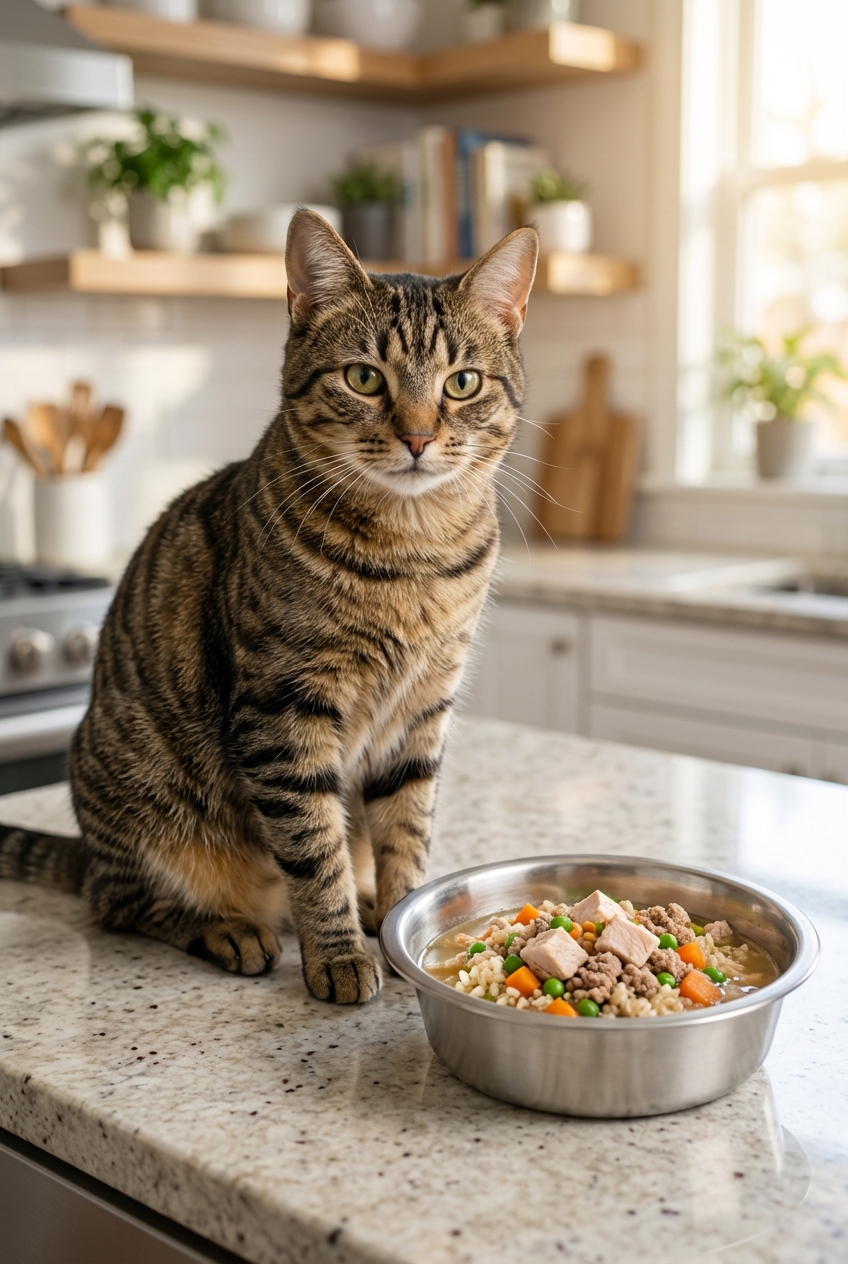
First, a quick safety note
Homemade diets can be wonderful for many cats, especially picky eaters or cats who need carefully controlled ingredients. But a homemade diet that is not properly balanced can lead to serious deficiencies over time, including heart disease, bone problems, and vision issues.
Before you start, I recommend you do one of these:
- Ask your veterinarian if your cat has any medical issues that require a therapeutic formulation and close guidance (kidney disease, urinary crystals, pancreatitis, diabetes, IBD, food allergies, and hyperthyroidism all change the plan).
- Use a veterinary-formulated recipe or work with a board-certified veterinary nutritionist (look for “DACVN” in the U.S.).
- Use a complete feline supplement designed to balance home-cooked recipes (more on that below), and follow it exactly.
If your cat is a kitten, pregnant, nursing, or has a chronic condition, get professional guidance first. Their margins for error are smaller.
Where to find reputable recipes
When I say “veterinary-formulated,” I mean recipes designed by veterinary nutrition professionals and intended to meet established nutrient targets (AAFCO or NRC) when prepared exactly as directed.
Good places to start:
- ACVN directory (American College of Veterinary Internal Medicine): Find a board-certified veterinary nutritionist (DACVN).
- Balance IT: A veterinary tool that pairs recipes with a matching supplement.
- PetDiets: Offers veterinary nutrition services and formulated recipes.
Even with great resources, it is still smart to run your final plan by your primary veterinarian, especially if your cat has any history of urinary, kidney, or GI issues.
What “vet-informed” means
For a homemade cat plan to be nutritionally sound, it should be:
- Complete and balanced to AAFCO or NRC nutrient profiles (not just “high protein”).
- Built around animal protein with appropriate fat and minimal carbohydrate.
- Correctly supplemented (cats have needs you cannot reliably meet with whole foods alone).
- Portioned to maintain a healthy weight, because overfeeding is easy with palatable homemade meals.
Key nutrients cats must have
- Taurine: Essential for heart health, vision, and reproduction. Taurine can be lost during certain prep methods, especially if meat is boiled and the cooking liquid is discarded, or if food is stored too long. Many recipes require taurine supplementation for safety.
- Arachidonic acid: A fatty acid cats must get from animal sources.
- Vitamin A (preformed): Cats cannot convert beta-carotene efficiently like we do.
- Calcium and phosphorus balance: Muscle meat alone is high in phosphorus and low in calcium. Long-term imbalance can harm bones and may worsen kidney workload.
- B vitamins: Especially thiamine. Deficiency risk is higher with unbalanced diets and with fish-heavy patterns, especially raw fish due to thiaminase.
- Iodine, zinc, copper, selenium: Trace minerals matter more than most people realize.
Bottom line: A “meat-only” homemade diet is not complete. A balanced homemade diet is more like a recipe plus a reliable supplement strategy.
Cooked, raw, or hybrid
Most veterinarians are most comfortable with cooked homemade diets because cooking reduces bacterial and parasite risks. Raw feeding is popular in some circles, but it carries real food safety concerns for both cats and humans, especially in households with kids, seniors, or anyone immunocompromised.
If you want the best of both worlds, many cat parents do a hybrid plan:
- One balanced cooked recipe as the “base” diet
- One or two complete commercial wet foods as backups for busy days
The simplest way to balance
If you are not working directly with a veterinary nutritionist, the most practical path is to:
- Choose a veterinary-formulated recipe (not a random blog recipe).
- Use a feline-specific balancing supplement exactly as directed.
- Measure ingredients by weight with a kitchen scale for consistency.
About supplements
Many homemade recipes rely on a “complete” supplement powder that provides the vitamins, minerals, and taurine needed to meet nutrient targets when combined with specified meats and sometimes added oils. This is often easier and safer than trying to DIY individual supplements.
Important: Do not swap ingredients freely unless the recipe is designed for substitutions. Changing one protein, organ amount, oil, or calcium source can throw off the nutrient balance.
Calcium basics
Calcium is one of the biggest “hidden” problems in homemade cat food. Muscle meat is not enough on its own, and guessing here can create long-term harm.
- Common calcium sources in vetted recipes include eggshell powder, calcium carbonate, or a supplement blend that already contains calcium.
- Bone meal varies a lot in quality and mineral content. Only use it if your recipe specifically calls for a tested brand and an exact amount.
- Never use cooked bones. They can splinter and cause dangerous injuries.
Follow your specific recipe and supplement instructions exactly. This is not a “pinch of this” situation.
Portioning: how much to feed
Calorie needs vary with age, activity, and whether your cat is spayed or neutered. Two helpful ways to think about it:
- Quick starting range: Many adult indoor cats need roughly 20 to 30 calories per pound of ideal body weight per day. Most inactive, neutered indoor cats do best closer to the lower end (around 20 cal per pound), while very active cats may need more.
- Vet math option: RER (resting energy requirement) is often estimated as 70 × (body weight in kg)^0.75. Daily needs (DER) are then adjusted with a multiplier based on life stage and activity. Your vet can help pick the right target.
Many cats do well on 2 meals, while others prefer 3 to 4 smaller meals. More frequent meals can help some cats with begging, vomiting, or sensitive stomachs, but it is not mandatory for every cat.
A practical approach: ask your vet for your cat’s ideal weight and daily calorie goal, then weigh your cat every 2 to 4 weeks. Adjust portions gradually if weight changes.
Tip from the clinic: If your cat is gaining weight on homemade food, it is usually portion size and added fat that does it, not “too much protein.”
Weekly feeding schedule
This schedule is designed to be realistic. You will cook in batches, keep portions consistent, and rotate proteins over time for variety. Because every balanced recipe is a little different, think of this as a structure you plug your vet-formulated recipe into.
Pick your base recipe
Pick one complete and balanced cooked recipe you will use for at least 2 weeks before changing. Consistency helps you spot tummy trouble early.
Batch-cook day (Day 0)
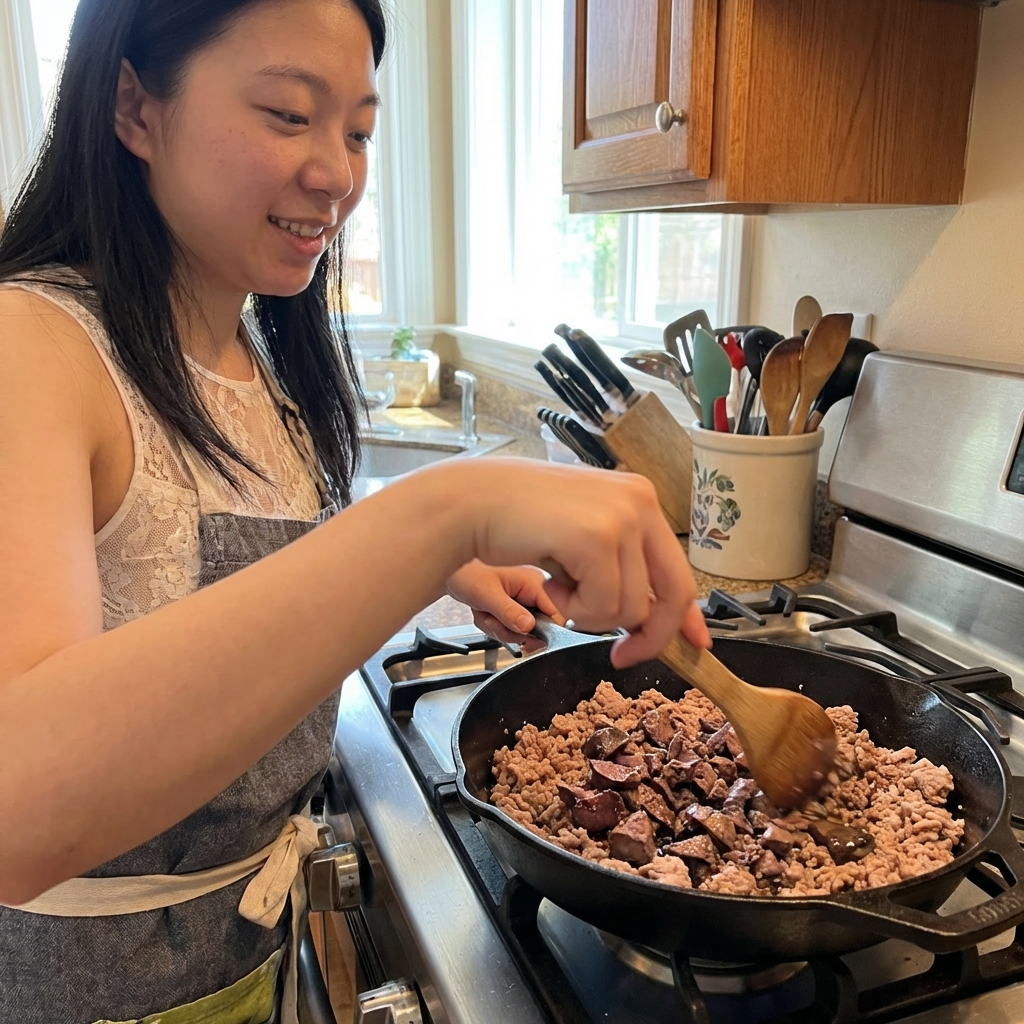
- Cook and cool the recipe according to instructions.
- Mix in the supplement only as directed (some are added after cooling).
- Weigh and portion into daily containers.
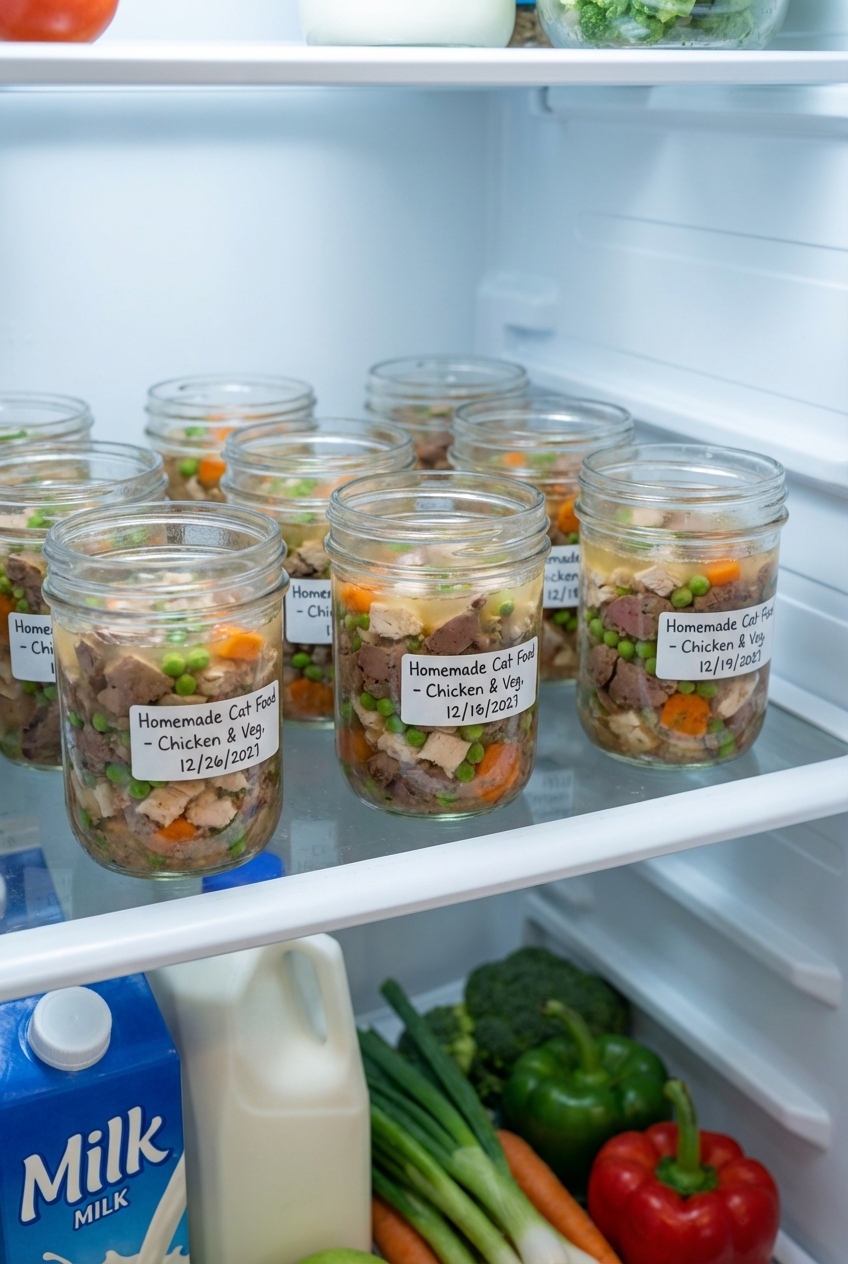
- Refrigerate 3 days worth, freeze the rest.
Days 1 to 7
Morning meal: Base homemade recipe portion
Evening meal: Base homemade recipe portion
Safe add-ons (optional)
These are optional and should stay small, about 5 to 10 percent of daily calories, unless your recipe specifically includes them:
- Sardine in water (tiny amount): Omega-3 support, very palatable. Keep it occasional.
- Cooked egg (small amount): Great protein. Avoid seasoning.
- Plain canned pumpkin (small amount): Some cats do well with it for stool quality, some do not.
Protein rotation
Rather than switching proteins daily, rotate by week or by batch:
- Week A: Turkey-based complete recipe
- Week B: Chicken-based complete recipe
- Week C: Rabbit or pork-based complete recipe (if tolerated)
Why not rotate daily? Frequent changes can trigger GI upset in sensitive cats, and it makes troubleshooting much harder.
Example one-day menu
This is an example of how the day might look once you have your vet-formulated recipe in place:
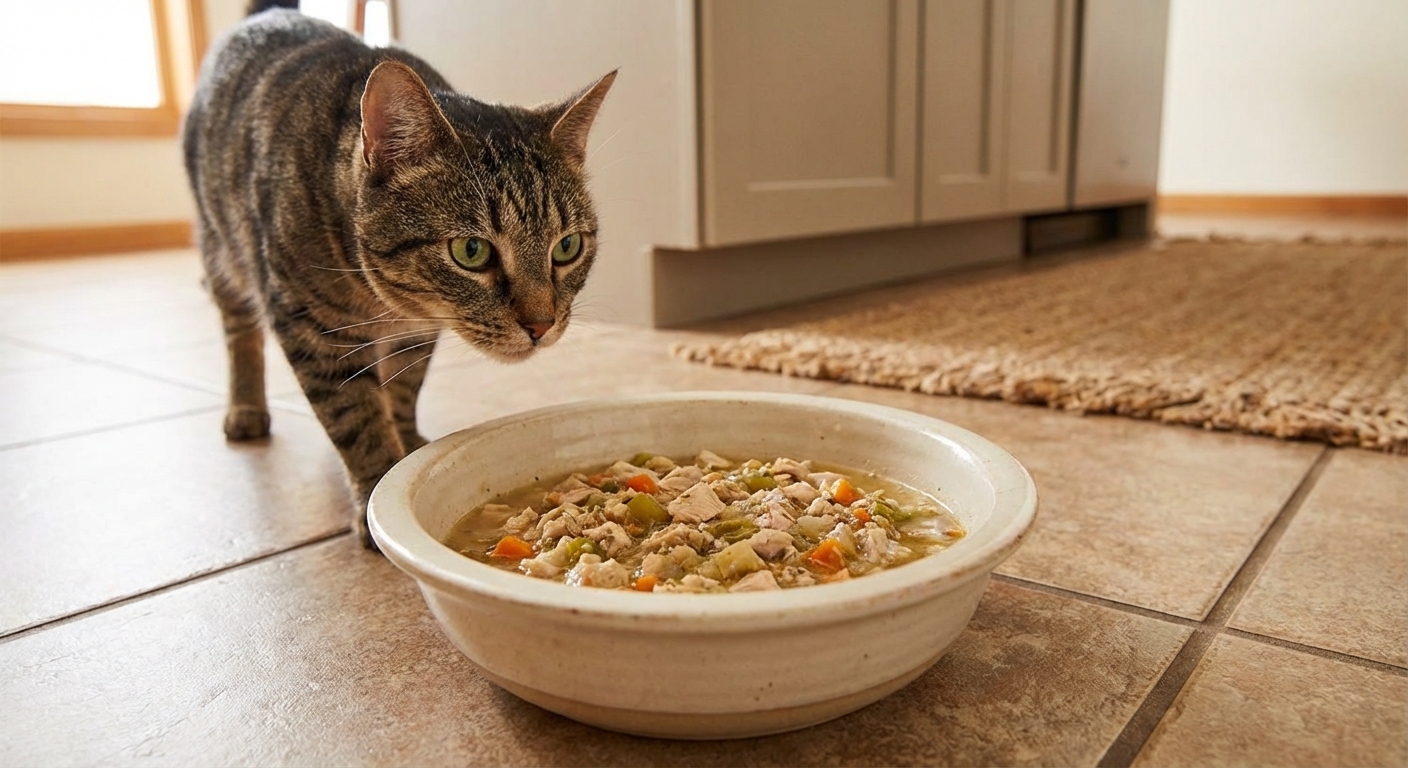
- 7:00 a.m.: Half of daily portion of balanced homemade recipe
- 6:00 p.m.: Remaining half of daily portion
- Optional topper (2 to 3 days per week): 1 to 2 teaspoons of sardine in water mixed into one meal
Fresh water should always be available. Many cats drink more with a fountain, and hydration is especially important for urinary health.
Transitioning (go slow)
Cats can be sensitive to change, and some are suspicious of anything new. A gradual transition is your best friend.
- Days 1 to 3: 10 to 25% homemade, the rest current food
- Days 4 to 6: 25 to 50% homemade
- Days 7 to 10: 50 to 75% homemade
- Days 11 to 14: 75 to 100% homemade
If stools loosen, pause at the current ratio for a few days. If your cat stops eating entirely or eats drastically less for more than 24 hours, call your veterinarian. Cats are at risk for hepatic lipidosis (fatty liver) if they do not eat enough, especially overweight cats.
Food safety and storage
- Refrigerate portions and use within 48 to 72 hours.
- Freeze extra portions immediately after cooling.
- Thaw in the refrigerator, not on the counter.
- Warm gently to slightly warm, near body temperature (not hot). A safe goal is food that feels neutral to slightly warm on your wrist.
- Wash hands, bowls, and surfaces after handling meat.
Common mistakes to avoid
- Feeding plain meat long-term without a balancing strategy
- Skipping calcium or using inconsistent calcium sources
- Overdoing liver or organ meats (too much can cause vitamin imbalances)
- Using onions, garlic, chives (toxic to cats)
- Seasoning with salt, spices, or sauces
- Using cooked bones (splinter hazard)
- Sharing human foods that can be toxic or risky, including chocolate, xylitol-containing products, alcohol, and cooked fatty scraps
If you want to add flavor, use a small amount of unsalted broth made without onion or garlic, or a teaspoon of the water from tuna packed in water, used occasionally.
Omega-3 and oils
Omega-3s can be helpful for some cats, but oils are calorie-dense and can go rancid. If your recipe calls for fish oil or another oil, store it properly (often in the fridge) and watch expiration dates. Do not add extra oils “just because” unless your vet or recipe directs it.
When to call the vet
Please reach out quickly if you notice:
- Vomiting that persists or worsens
- Diarrhea lasting more than 24 to 48 hours
- Straining to urinate, frequent trips to the box, or crying in the box
- Sudden weight loss or refusal to eat
- Dull coat, weakness, or behavior changes after diet change
Your cat’s diet is a powerful tool, but it should always support your cat’s medical needs, not work against them.
A gentle next step
If you are excited but a little overwhelmed, here is the simplest path forward:
- Pick a veterinary-formulated cooked recipe (Balance IT, PetDiets, or a DACVN) or consult a veterinary nutritionist.
- Commit to one balanced recipe for 2 to 4 weeks.
- Batch cook, portion, freeze, and track your cat’s weight and litter box habits.
Homemade cat food does not have to be perfect on day one. It just has to be safe, balanced, and consistent, and you can build confidence from there.