
Learn a proven, kind puppy house-training plan with a simple schedule, crate and supervision tips, a repeatable potty routine, cleaning methods, and nighttim...
Article
•
Designer Mixes
Vet-Friendly Puppy Housetraining Tips

Shari Shidate
Designer Mixes contributor
Housetraining a puppy can feel like a full-time job, but it really comes down to two things veterinarians and positive-reinforcement trainers love: predictability and prevention. Your puppy is not being “bad” when accidents happen. They’re learning to recognize body signals, building bladder control, and trying to understand what you want.
As a veterinary assistant here in Frisco, Texas, I always tell new puppy families this: your goal is to make the right choice easy. That means plenty of outdoor opportunities, close supervision indoors, and a simple plan everyone in the home follows.
A vet-friendly method
The most reliable, commonly recommended approach to housetraining is a combination of:
- Consistent schedule (feeding, water access, potty breaks)
- Crate training (humane, properly sized)
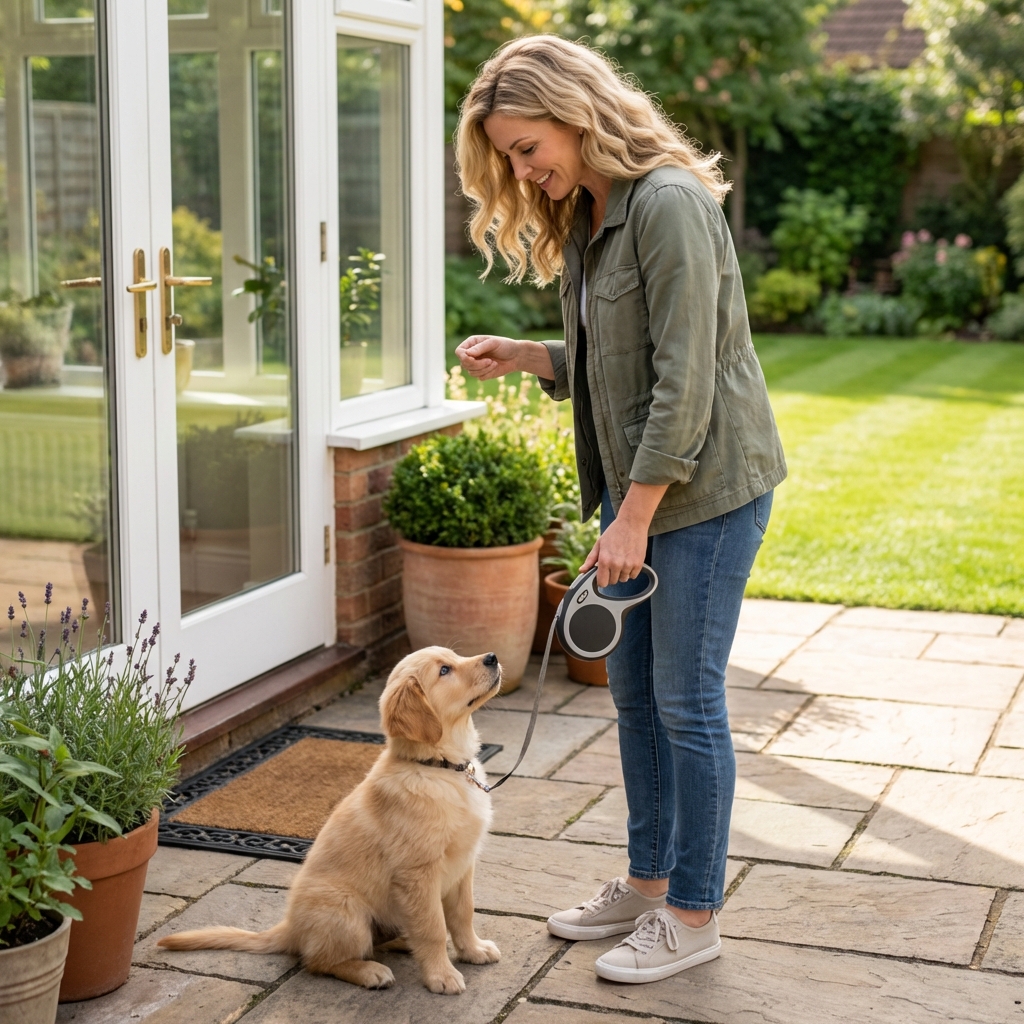
- Leash-to-spot potty trips (same door, same area, same cue)
- Fast rewards (within a few seconds)
- Accident prevention through supervision and smart confinement
Why this works: puppies learn through repetition, and a predictable routine builds a strong habit faster than guesswork.
Potty schedule by age
Bladder control improves with age, but most puppies need more frequent breaks than people expect. A common rule of thumb is about one hour per month of age, but it is only an estimate. Many puppies need more frequent trips when they are awake, active, excited, or in a new environment. Many pups also need overnight breaks when they are very young.
Timing that prevents accidents
- Immediately after waking up (naps count)
- Within 5 to 15 minutes after eating
- After drinking a large amount of water
- After play or excitement
- Before crating and right after coming out of the crate
- Every 2 to 3 hours during the day for many young puppies, even if they “should be able to hold it”
If your puppy is having frequent accidents despite a solid schedule, it is worth checking in with your veterinarian to rule out a urinary tract infection, intestinal parasites, or other medical issues.
Nighttime plan
Night accidents and sleep disruption are common in the early weeks. A simple routine helps your puppy learn what nighttime is for.
- Last potty trip: take your puppy out right before bedtime.
- Overnight whining: assume it might be a potty need at first. Take a calm, leashed, potty-only trip. Keep lights low, use your potty cue once, and go straight back to bed after they finish.
- No play at night: if nighttime becomes a party, you will get more wake-ups.
- Gradual progress: as your puppy grows, they will usually stretch the time between overnight breaks. If you are unsure what is normal for your puppy’s age and size, ask your veterinary team.
Water note: do not restrict water during the day. If your veterinarian agrees it is appropriate for your puppy, some families pick up the water bowl 1 to 2 hours before bedtime to reduce overnight urgency, but water should always be offered regularly and never withheld as a punishment.
Crate training that helps
A crate is not a punishment. Used correctly, it becomes your puppy’s safe, cozy “den” and a powerful housetraining tool because many puppies prefer not to soil where they sleep. That said, it is not universal. Very young puppies, anxious pups, sick pups, and some pet-store or shelter puppies may soil even in a crate, especially if they have had to do it before. If that is your situation, you are not failing. It just means you need a tighter schedule and a little more management while new habits form.
Crate basics
- Size matters: your pup should be able to stand up, turn around, and lie down comfortably, but not have a big extra area to potty in.
- Short and positive: start with brief sessions, treats, and calm praise.
- Potty first: always take your puppy out before crating and right after.
- Do not crate too long: extended crating increases the chance of accidents and stress. When in doubt, plan a potty break sooner than you think your puppy “should” need, especially when they are awake.
A perfect potty trip
This is where many families accidentally slow down training. The goal is to make potty time boring, clear, and repeatable.
Step-by-step
- Leash up and go to the same spot each time.
- Stand still and be quiet for up to a minute. Too much talking can distract.
- Use a simple cue like “Go potty” once.
- The moment your puppy finishes, reward right away outside with a tiny treat and happy praise.
- Then allow a brief sniffy walk or playtime as a bonus.
Tip: If your puppy does not go within 5 minutes, head back inside for close supervision and try again in 10 to 15 minutes.
Accidents: what to do
Accidents are information. They tell you your puppy needed a potty break sooner, had too much freedom, or got distracted and forgot the plan.
Do this
- Interrupt gently if you catch them mid-accident (a calm “Oops” is enough).
- Pick up and go outside to the potty spot right away.
- Clean thoroughly with an enzymatic cleaner made for pet urine and stool. Follow the label, fully saturate the area (including carpet pad if needed), and allow the recommended dwell time before blotting or letting it dry.
- Adjust the schedule so the next day is easier for your puppy to succeed.
Avoid this
- No punishment after the fact. Puppies do not connect delayed scolding with the accident.
- Do not rub their nose in it. This can create fear and make training take longer.
- Avoid ammonia-based cleaners. The smell may be similar to urine and can encourage repeat accidents in the same area.
Sample day schedule
If you want a plug-and-play starting point, here is a simple example for an 8 to 10 week old puppy. Adjust based on your puppy’s size, activity level, and how long they can truly stay dry when awake.
- 6:30 am: wake up, straight outside
- 7:00 am: breakfast, then outside within 5 to 15 minutes
- 7:30 to 9:00 am: play, training, and close supervision with a potty trip about every 30 to 60 minutes
- 9:00 am: nap in crate, potty before and after
- Late morning to afternoon: repeat the cycle (outside after naps, meals, big drinks, and play)
- Evening: dinner at a consistent time, then outside within 5 to 15 minutes
- Bedtime: last potty trip right before bed
- Overnight: 1 to 2 potty-only trips may be needed at this age
As your puppy grows and stays accident-free, you can slowly stretch the time between trips.
Fun facts that help
- Puppies learn faster with food rewards than with verbal praise alone. Treats are clear, consistent feedback.
- Sniffing is a bathroom warm-up. If your puppy is sniffing intensely and circling, that is your cue to head out fast.
- Small dogs often take longer. Their bladders are smaller, and indoor accidents are easier to miss.
- Potty pads can confuse some pups. They may learn that soft surfaces indoors are “okay.” If you use pads, place them near the exit and transition outside intentionally.
- Poop timing is predictable. Many puppies poop shortly after eating, especially in the morning.
Common mistakes
Mistake: Too much freedom
Fix: Use baby gates, a leash indoors, or a playpen. Supervision is prevention.
Mistake: Inconsistent meals
Fix: Feed meals at set times. Predictable input leads to predictable output.
Mistake: Waiting for signals
Fix: Assume they will not warn you reliably yet. Take them out before they have to ask.
Mistake: Rewarding too late
Fix: Reward outside within a few seconds after they finish. If you wait until you are back inside, the lesson gets fuzzy.
When to call the vet
Please contact your veterinarian if you notice:
- Straining to urinate, crying, or frequent squatting with little output
- Blood in urine or unusually strong odor
- Sudden increase in accidents after progress
- Diarrhea lasting more than 24 hours, or any vomiting with lethargy
- Repeated vomiting, loss of appetite, fever, or obvious pain
- Excessive drinking or very large urine volumes (especially with accidents)
Medical problems can look like “training issues,” and it is always okay to double-check.
7-day reset plan
If you feel behind, you can restart with a tight, kind routine for one week and most puppies show noticeable improvement.
- Days 1 to 2: Potty breaks every 2 hours, plus after waking, eating, drinking, and play. Supervise constantly when loose.
- Days 3 to 5: Keep the schedule. Add 10 to 15 minutes of freedom after a successful potty trip.
- Days 6 to 7: If accidents are minimal, increase supervised freedom slowly, one room at a time.
Progress is not perfectly straight. A few accidents do not mean failure. They mean your puppy is still learning, and you are adjusting the plan.
