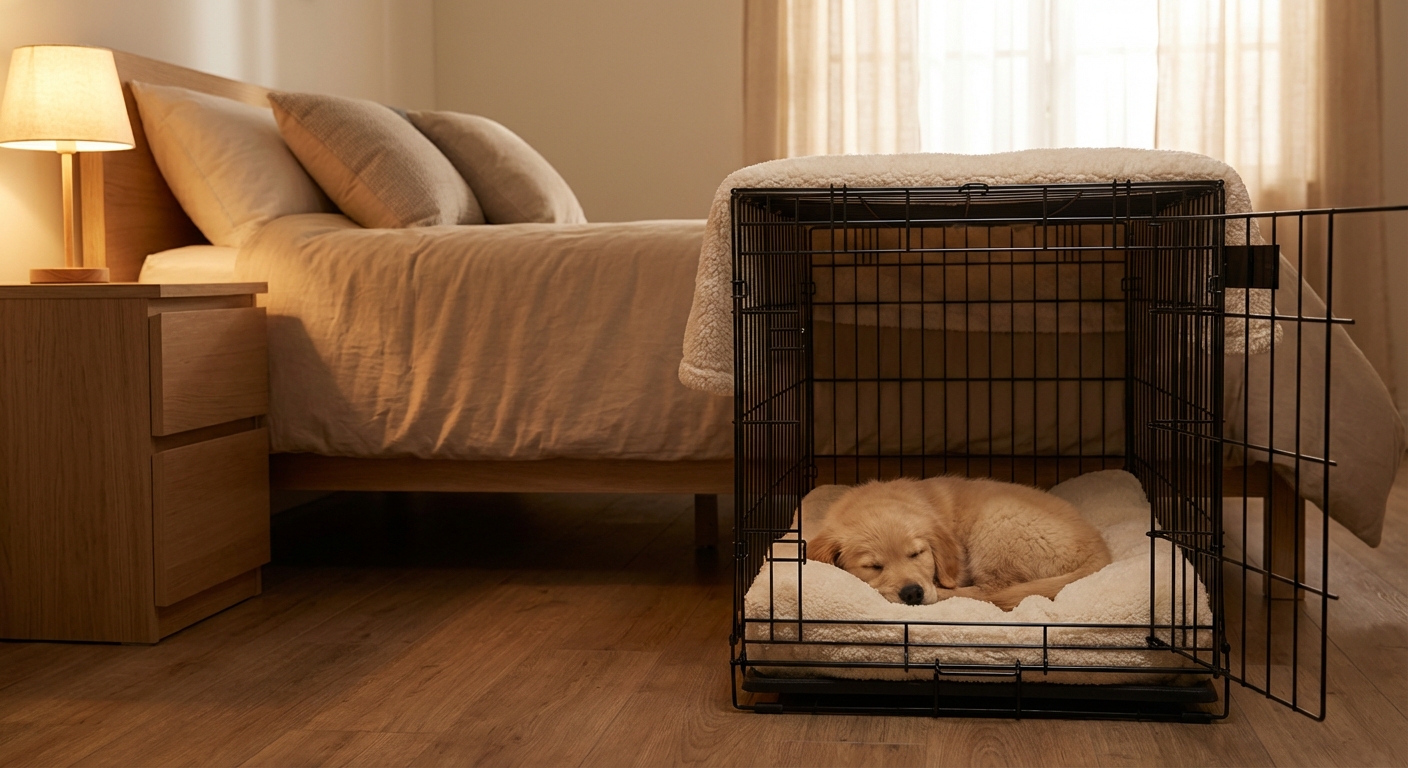
A step-by-step puppy crate training guide: choosing the right crate, building positive associations, first-week routines, nighttime potty breaks, and solutio...
Article
•
Designer Mixes
Vet-Friendly Crate Training Secrets for Puppies

Shari Shidate
Designer Mixes contributor
Crate training gets a bad reputation because people picture a puppy “stuck” in a box. But used correctly, a crate is more like a safe, cozy bedroom. As a veterinary assistant here in Frisco, Texas, I can tell you that many veterinarians and trainers recommend crates because they support house training, help prevent dangerous chewing, and reduce stress during travel and recovery.
The real secret is this: crate training is not about confinement. It is about teaching your puppy that calm alone time is safe, predictable, and even rewarding.
Quick reminder: This article is general education, not medical advice. If your puppy is panicking, getting injured, or suddenly acting “not like themselves,” check in with your veterinarian.
3 rules that make crate training work
- Go slow: Small steps prevent setbacks.
- Meet needs first: Potty, comfort, and enough play and enrichment.
- Reward calm: Quiet, relaxed behavior is the goal.
Why vets like crates
Veterinary teams often suggest crate training because it can fit normal puppy behavior. Many puppies prefer small, quiet spaces when they are tired or overwhelmed, especially when the space is introduced gently and paired with good things.
Benefits
- Safer house training: Most puppies avoid soiling where they sleep, which supports a predictable potty routine.
- Can help prevent emergency vet visits: Less access to cords, socks, plants, trash, and chew hazards when you cannot supervise.
- Supports recovery: After spay or neuter surgery, injuries, or illness, calm rest is often part of treatment.
- Travel safety: Crates can keep dogs more secure in the car and in unfamiliar places when the crate is the right size and properly secured. If possible, choose a crash-tested crate and use the manufacturer’s installation guidance.
When crates are not the right tool
If your puppy shows signs of intense panic in the crate, including drooling, self-injury, persistent screaming, or breaking teeth on the bars, pause and talk to your veterinarian. That may be separation anxiety or confinement distress, and you will get better results with a tailored behavior plan.
Normal puppy protest is usually short-lived whining that improves with practice and routine. Panic looks bigger: frantic escape attempts, heavy drooling, shaking, or worsening behavior over time.
Start before you need it
Most crate training problems happen when the crate is introduced during a stressful moment, like the first night home or right before you leave for work.
Instead, introduce the crate during calm, low-pressure times. Your goal is to teach your puppy:
- The crate predicts good things.
- The crate is optional at first.
- When your puppy is calm, you can briefly close the door, then open it again before they fuss.
Choosing the right setup
Crate type
- Wire crate: Great airflow and visibility. Often easiest for house training.
- Plastic kennel-style crate: More den-like and can feel secure for some puppies, especially for travel.
- Soft-sided crate: Usually best for already-trained, calm dogs, not young chewers.
Size matters
A crate should be large enough for your puppy to stand up, turn around, and stretch out. Too large can make potty accidents more likely because a puppy may choose one corner as a bathroom. If you have a fast-growing mix, use a crate with a divider panel.
Comfort and safety checklist
- Remove collars and harnesses: In a crate, they can snag and become a safety risk.
- Ventilation and temperature: Keep airflow good and avoid placing the crate in direct sun or cold drafts.
- Water: Offer water regularly. For longer crated periods, use a crate-safe bowl that clips on.
- Bedding: Start simple. If your puppy shreds blankets, switch to a safer, chew-resistant mat or go without bedding temporarily.
- Chews: Use vet-approved, age-appropriate chews. Avoid anything that splinters or is too hard for puppy teeth. A simple check: if you cannot indent it with a fingernail, it may be too hard. Supervise stuffed food toys at first to reduce choking or stomach upset risk.
- Location: Put the crate where your family spends time during the day. Puppies learn better when they feel included.
A gentle 7-day plan
Every puppy is different, so go slower if needed. Seven days is a sample timeline. Many puppies need longer, and that is normal. The rule I like is: if whining increases, you moved too fast.
Day 1: Door open, treats
- Leave the door open.
- Toss treats in and let your puppy go in and out freely.
- Praise calmly when they step inside.
Day 2: Meals in the crate
- Feed meals at the crate entrance, then gradually move the bowl farther inside.
- Still keep the door open.
Day 3: Close the door briefly
- After your puppy enters for food or a treat, gently close the door for 5 to 15 seconds.
- Open it again while your puppy is still calm.
- Repeat several short sessions.
Day 4: Add a chew, build minutes
- Give a safe chew or stuffed food toy.
- Close the door and sit nearby.
- Open the door while your puppy is calm.
Day 5: Step away
- Close the door with a chew inside.
- Stand up, take one step away, then return.
- Gradually add distance and a few seconds at a time.
Day 6: Real-life practice
- Crate your puppy while you take a quick shower or unload groceries.
- Keep it brief and positive.
Day 7: Start a routine
- Use the crate for predictable rest times, like after potty and play.
- Aim for consistency, not long duration.
Nighttime tips
Night one is where many families accidentally teach the wrong lesson. Here is what works and is commonly recommended by veterinary teams and trainers.
Keep the crate close
For the first week or two, place the crate beside your bed. Your puppy is adapting to a brand-new world, and closeness reduces fear. Once nights are smooth, you can slowly move the crate to your preferred location.
Use a simple routine
- Potty break.
- Quiet cuddle time or gentle petting.
- Into the crate with one small treat.
- Lights down, minimal talking.
Expect potty needs
Most young puppies cannot hold it all night. If your puppy cries, take them out on leash for a quick potty break. Keep it boring. No play, no roaming, then back into the crate.
Tip: If your puppy wakes you every hour, talk to your veterinarian about schedule, feeding times, and possible tummy upset or parasites, especially in newly adopted puppies.
How long is too long?
This is one of the most important questions. Puppies have small bladders and big needs for movement and social learning.
- Young puppies: Plan frequent potty breaks and short crated sessions.
- Common rule of thumb: You may hear “about one hour per month of age” during the day. Treat that as a loose starting point, not a promise. Many puppies need more breaks, especially under 4 months.
- Overnight: Some puppies can go longer when asleep, but do not assume. Track your puppy’s patterns.
If you routinely need long crated hours, consider a playpen setup, a pet sitter, a dog walker, or adjusting your schedule. Long confinement is frustrating for puppies and can slow training.
When your puppy cries
Whining is communication, and your job is to figure out which need is behind it.
Rule out real needs
- Do they need to potty?
- Are they too hot or too cold?
- Did they get enough exercise and enrichment?
- Are they hungry, or did you change food abruptly?
Teach calm
- Reward quiet moments: Even one second of silence is a starting point.
- Practice micro-absences: Do tiny departures throughout the day, like stepping into the next room for a few seconds, then returning before your puppy escalates.
- Keep entrances and exits calm: Big emotional greetings can make alone time feel scarier.
- Do not use the crate for punishment: You want your puppy to feel safe there.
The fastest crate training progress happens when the crate predicts comfort, not conflict.
Call your veterinarian if you see
- Sudden crate intolerance after it was going well
- Diarrhea, vomiting, straining, or frequent accidents
- Excessive drooling, frantic escape attempts, or self-injury
Crate and potty routine
Crate training becomes much easier when you pair it with a predictable potty schedule.
Try this cycle
- Potty right after waking.
- Potty after eating.
- Potty after play, excitement, or drinking.
- Crate for a nap with a safe chew or calm treat.
- Repeat through the day.
Most puppies get bitey and wild right before they crash. A nap in the crate can prevent overtired meltdowns and accidental potty mistakes.
The crate toolbox
These are simple, evidence-based tools many veterinary teams and trainers use to build positive crate habits.
- High-value treats: Tiny, soft pieces your puppy loves.
- Stuffed food toys: Great for calm licking and chewing. Choose puppy-safe options and ask your vet if you are unsure. Supervise at first until you know your puppy’s style.
- Cover part of the crate: Some puppies relax when the crate feels quieter and more private. Make sure airflow stays good.
- White noise: Can reduce startle barking in busy households or apartments.
- Enrichment outside the crate: Sniff walks, basic training, gentle play, and age-appropriate socialization.
FAQs
Should I let my puppy cry it out?
I do not recommend full “cry it out” for most puppies. It can create a negative crate association and increase stress. Instead, use gradual training, meet needs first, and reward calm behavior.
Is it okay to put toys in the crate?
Yes, but choose wisely. Avoid small pieces that can be swallowed. If your puppy is a power chewer, ask your veterinarian for safe chew recommendations.
What if my puppy has an accident in the crate?
Accidents happen. Clean thoroughly with an enzymatic cleaner, review crate size, and tighten your potty schedule. If accidents are frequent, check in with your veterinarian to rule out medical causes.
Bottom line
Crate training is one of the kindest skills you can teach a puppy. When it is done gradually and positively, your puppy learns a lifelong coping tool: how to settle, rest, and feel safe. Start small, stay consistent, and keep your puppy’s comfort at the center of every step.
If you hit a wall, it is not a failure. It is a clue that you need a slower plan, better enrichment, or veterinary guidance to rule out discomfort. You and your puppy can absolutely get there.