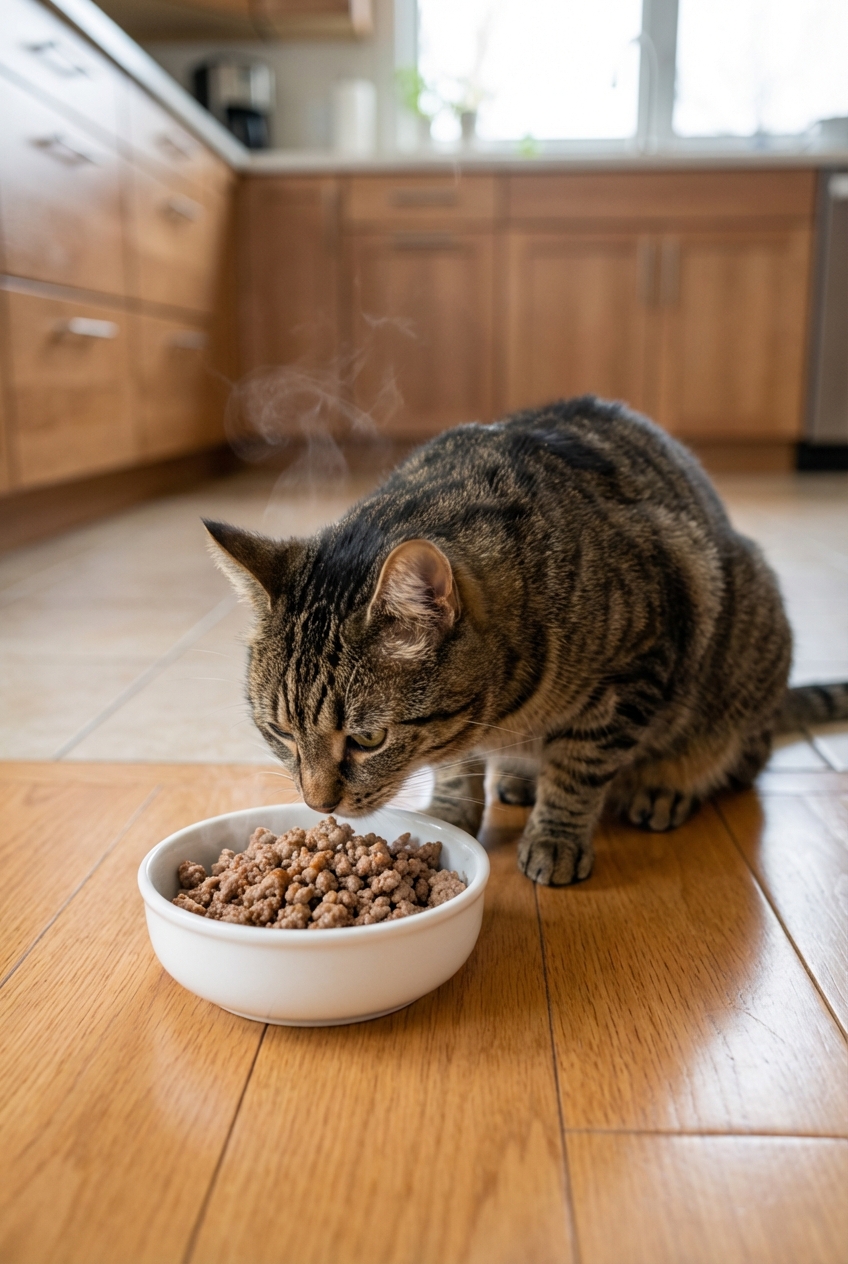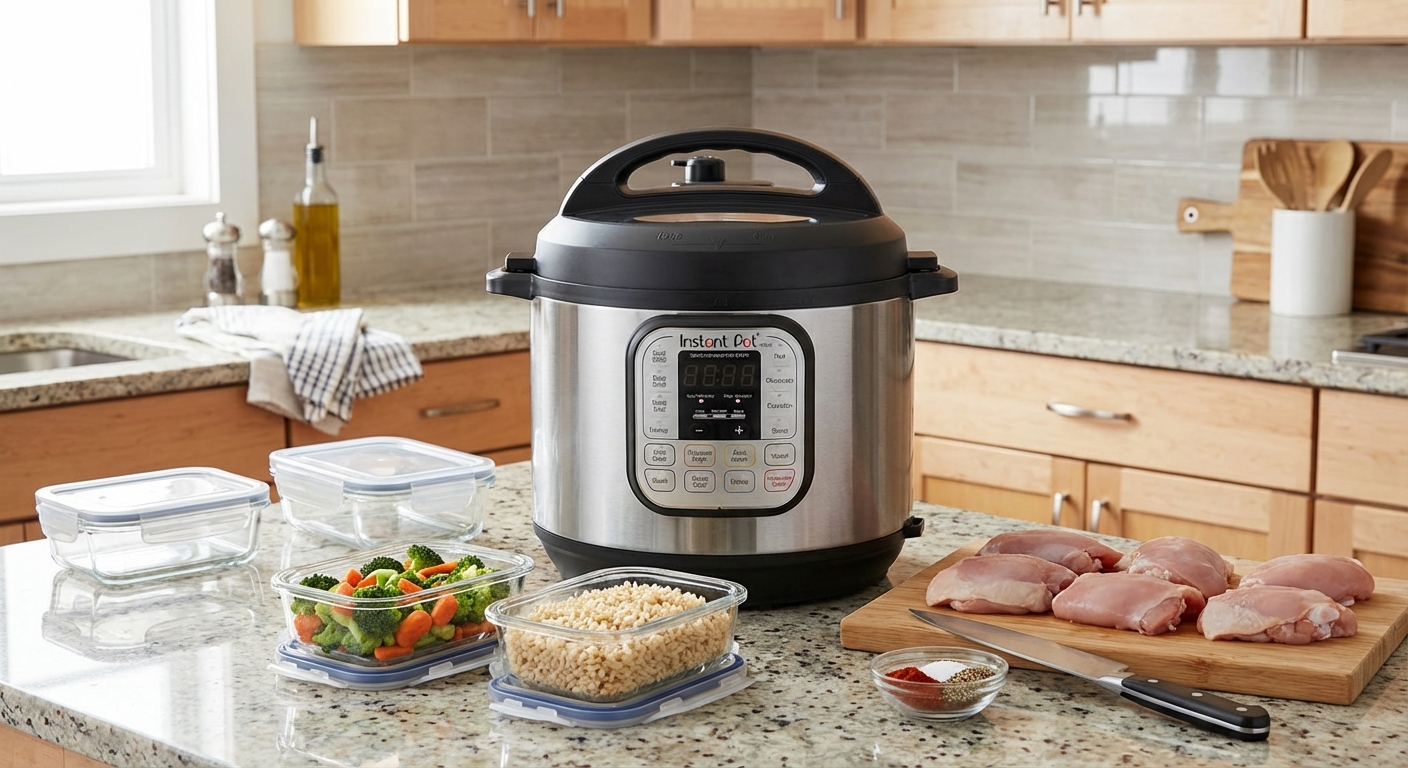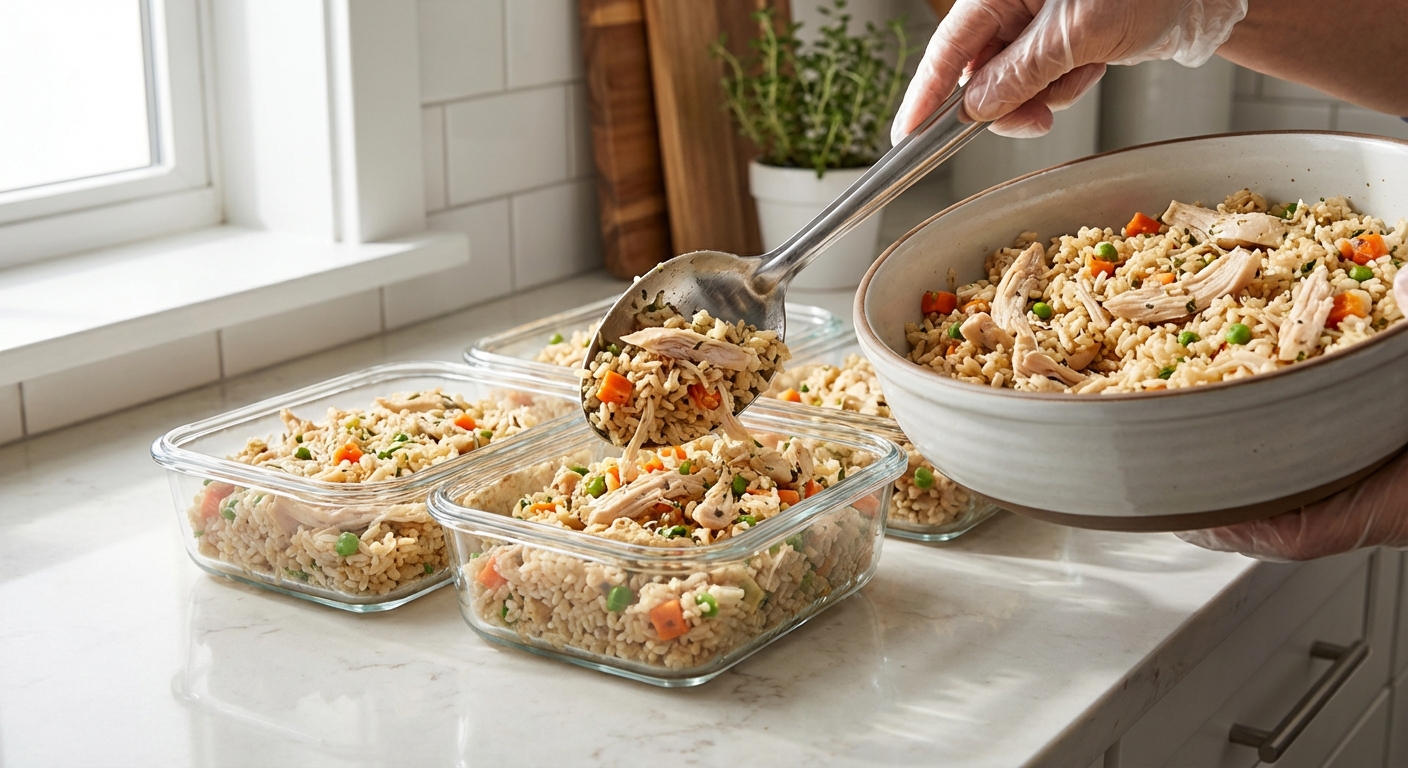
Is chicken safe for cats? Learn homemade cat food safety, what nutrients cats can’t miss (taurine, calcium, vitamins), easy chicken topper steps, and when ...
Article
•
Designer Mixes
Vet-Approved Homemade Cat Food Basics

Shari Shidate
Designer Mixes contributor
If you have ever flipped over a bag of cat food and thought, “What exactly is in here?” you are not alone. As a veterinary assistant in Frisco, Texas, I meet caring cat parents every week who want to feed better but feel overwhelmed by conflicting advice.
The good news is that homemade cat food can be done safely. The key is to understand a few non-negotiable nutrition basics for cats, then build simple recipes that are complete and balanced, not just tasty.
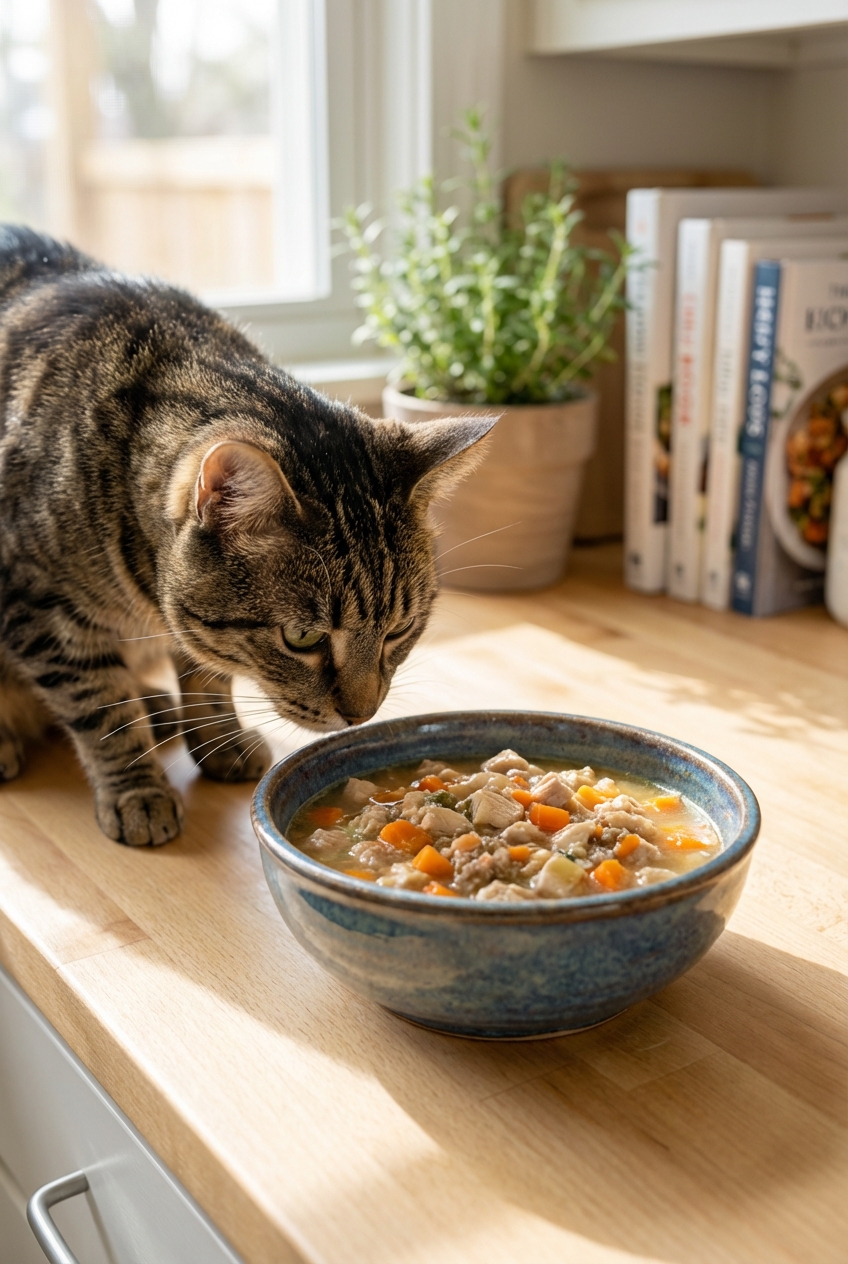
First, a safety note
Homemade food is a medical decision if your cat has kidney disease, diabetes, inflammatory bowel disease, pancreatitis, hyperthyroidism, urinary crystals, food allergies, or is a kitten, pregnant, or nursing. Please partner with your veterinarian and consider a board-certified veterinary nutritionist for a personalized recipe.
Also, food safety matters. Cats can get sick from bacteria just like we can, and some ingredients can be toxic.
- Wash hands, sanitize surfaces, and keep raw meat separate.
- Refrigerate promptly and freeze extra portions.
- When in doubt, cook the recipe rather than feeding raw.
If you are considering raw feeding, talk with your veterinarian first. Many vets recommend against raw diets because of pathogen risk, especially in homes with young children, seniors, pregnant people, or anyone immunocompromised. Some cats with health conditions are also higher risk.
What “vet-approved” really means
When people say “vet-approved homemade,” what we are really aiming for is a recipe that is formulated to meet established feline nutrient requirements, not just meat with a vitamin sprinkled on top. In practice, that usually means a recipe created by a veterinary nutritionist to meet NRC requirements and often cross-checked against AAFCO nutrient profiles (a commonly used benchmark in the US).
That means the recipe provides the right amounts of:
- Protein and essential amino acids
- Fat and essential fatty acids
- Vitamins and minerals in correct ratios
- Key nutrients that cats uniquely require, especially taurine
Many well-meaning homemade diets often fall short in calcium, taurine, iodine, vitamin E, and certain B vitamins. That is why supplements are usually part of a truly complete homemade plan.
Cat nutrition basics
1) Cats are obligate carnivores
Cats are built to thrive on animal-based nutrition. Practically, that means the foundation is meat, not grains or vegetables. Small amounts of plant ingredients can be fine, but they should not be the centerpiece.
2) Taurine is essential
Taurine is an amino acid cats must get from food. Inadequate taurine can contribute to serious health problems, including heart and eye disease. Taurine is found in animal tissues, especially darker meats and organs, but levels vary. Losses can occur with cooking (especially when juices are discarded), grinding, and storage. Many homemade recipes include a taurine supplement for reliability.
3) Calcium to phosphorus balance matters
Meat is high in phosphorus and low in calcium. If you feed meat without a proper calcium source, the diet becomes unbalanced. Over time, that can harm bones and overall health.
This is one of the most common mistakes I see: a loving cat parent makes “just meat” because their cat finally eats it. It feels like a win, until we realize the calcium piece is missing.
The fix is simple: a measured calcium source, commonly eggshell calcium or a veterinary-formulated supplement that includes calcium.
4) Fat is not the enemy
Cats use fat as an energy source and for skin and coat health. Too little fat can mean dull coat and poor satiety. Too much can cause digestive upset for some cats, so we aim for a balanced middle.
5) Water is part of the diet
Cats naturally have a low thirst drive. A moisture-rich diet can support urinary and kidney health for many cats. Homemade food is typically higher in moisture, which is one reason many cat parents love it.
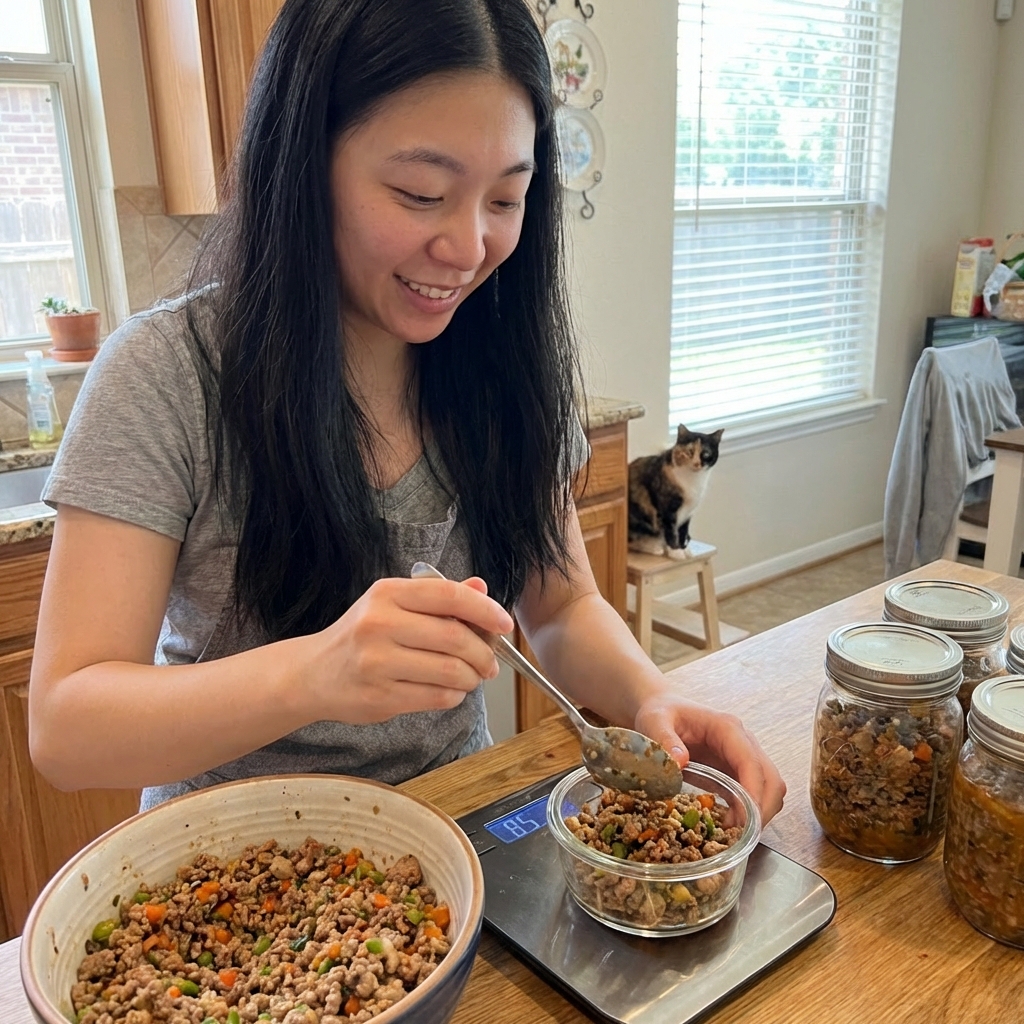
Build a safe base
Choose a primary protein
Pick one main animal protein your cat tolerates well:
- Chicken thighs
- Turkey thighs
- Rabbit
- Beef
- Pork
Leaner proteins often need added fat. Very fatty cuts can upset sensitive stomachs. If your cat is new to homemade, start with a protein they already eat in commercial foods.
Include organ meat in the right amount
Organ meats provide critical micronutrients. Liver is especially potent, so it must be used in correct amounts.
- Liver is typically included in small measured amounts for vitamin A and more.
- Other organs like heart can support taurine and minerals, depending on the recipe.
Because organ meat is easy to overdo, this is one area where a tested recipe or nutritionist guidance is important.
Add a reliable calcium source
Common options:
- Eggshell calcium powder (finely ground, measured carefully)
- Veterinary-formulated completers designed for homemade cat food
Do not guess on calcium. More is not better.
Add essential fatty acids
Omega-3s support skin, coat, and a healthy, normal inflammatory response. Many recipes use:
- Fish oil made for pets or high-quality human-grade fish oil
Omega-3s are fragile, so store oils properly and replace as recommended.
Add a complete vitamin and mineral plan
This is where most homemade attempts fail. The easiest path is using a reputable homemade diet completer that is designed specifically for cats and intended to be added to cooked meat.
If you prefer building supplements individually, do it with a veterinary nutritionist or a recipe that has been formulated to meet established feline nutrient requirements (often NRC targets, sometimes also cross-checked with AAFCO).
Picking a completer
If you go the “completer” route, look for a product that:
- Is cat-specific (not a general pet multivitamin)
- Clearly states whether it is for cooked or raw recipes
- Provides dosing based on the weight of meat (and tells you exactly what to add)
- Has clear quality control details such as lot numbers and contact info
- Does not require you to improvise substitutions
Starter framework (not a recipe)
I want to be very clear: a framework is not the same as a complete recipe. But this will help you understand the structure of a balanced homemade approach.
- Muscle meat as the main portion
- Small, measured organ portion (often liver plus another organ)
- Calcium source to balance phosphorus
- Taurine support (through ingredient choice and often supplementation)
- Omega-3 source
- Complete vitamin and mineral supplementation
- Water added for moisture if needed
If you want a truly vet-approved homemade plan, start with a recipe from a board-certified veterinary nutritionist or a veterinary-reviewed recipe paired with the exact supplement it was designed for.
Transition slowly
Cats are creatures of habit, and sudden diet changes can cause vomiting, diarrhea, or a full-on food boycott. Go slow and watch the litter box.
Transition schedule
- Days 1 to 3: 10% new, 90% current food
- Days 4 to 6: 25% new, 75% current food
- Days 7 to 10: 50% new, 50% current food
- Days 11 to 14: 75% new, 25% current food
- After day 14: 100% new if all is going well
It is absolutely fine to stay at a partial homemade mix if that is what your schedule and budget allow. Even improving part of the diet can make a meaningful difference.
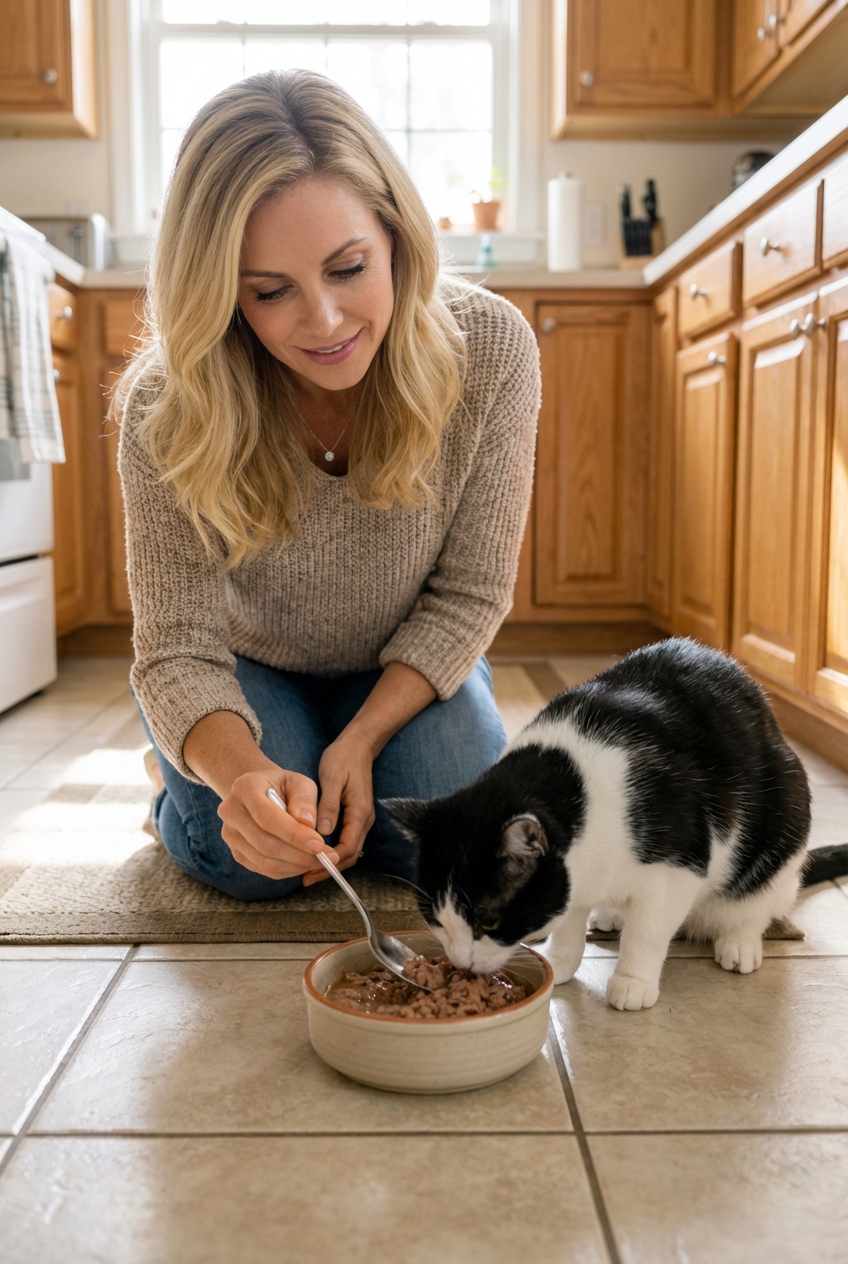
Portioning and storage
How much should you feed?
Calorie needs vary by age, activity, and body condition. Your vet can calculate a daily calorie target, then you can portion the homemade recipe accordingly.
At home, monitor:
- Body weight every 2 to 4 weeks
- Body condition score if you know how to check it
- Stool quality and frequency
- Coat shine, energy, and appetite
Storage
- Refrigerate portions you will use within 2 to 3 days (or follow your recipe’s specific instructions).
- Freeze the rest in meal-sized containers.
- Thaw in the refrigerator, not on the counter.
- Discard any food with an off odor, unusual texture, or signs of spoilage.
Ingredients to avoid
- Onion, garlic, chives, leeks
- Cooked bones (splinter risk)
- Excess liver (vitamin A toxicity risk)
- Unbalanced “meat-only” diets (calcium and micronutrient deficiencies)
Other common concerns:
- Grapes and raisins: toxicity is well documented in dogs, and it is less clear in cats. Because of the uncertainty, it is safest to avoid and contact your veterinarian if your cat eats them.
- Xylitol (found in some peanut butters and sugar-free products): dangerous for dogs. Toxicity in cats is not well documented, but it is still best to keep it away from cats.
If you ever suspect your cat ate something toxic, call your veterinarian right away. In the US, pet parents can also contact ASPCA Animal Poison Control or Pet Poison Helpline for guidance.
Broth and seasoning caution
If you add broth for moisture, keep it simple. Use unsalted broth with no onion or garlic, and avoid seasoning blends. Many store-bought broths contain alliums.
Common mistakes
- Skipping the kitchen scale and estimating portions
- Swapping ingredients without recalculating nutrients
- Skipping or underdosing supplements because “it looks like enough”
- Using broths or toppers that contain onion or garlic
- Assuming a general multivitamin makes a recipe complete
When homemade fits
Homemade can be wonderful if
- You can follow a formulated recipe accurately
- You are willing to use the required supplements
- Your cat eats it consistently
- You have veterinary oversight, especially for medical conditions
Homemade may not be the best choice if
- Your cat refuses new textures and you cannot risk appetite loss
- You cannot consistently measure ingredients and supplements
- Multiple medical conditions make nutrient targets very specific
And please remember: choosing a high-quality commercial wet food is also a loving, responsible choice. The best diet is the one that is complete, balanced, safe, and that your cat will actually eat.
My simplest next step
If you are ready to try homemade cat food the right way, here is the path I recommend:
- Book a vet visit to confirm your cat is healthy enough for a diet change.
- Ask for a referral to a board-certified veterinary nutritionist or use a recipe from a trusted veterinary source.
- Choose one protein and transition slowly.
- Track weight and stool for the first month.
You do not have to do this perfectly on day one. You just have to start with a plan that is safe and balanced, then build from there.