See why dogs suddenly tilt their head or stumble, how vets diagnose vestibular disease, what treatments help nausea and balance, and practical home safety ti...
Article
•
Designer Mixes
Vestibular Disease: Why Your Old Dog is Dizzy

Shari Shidate
Designer Mixes contributor
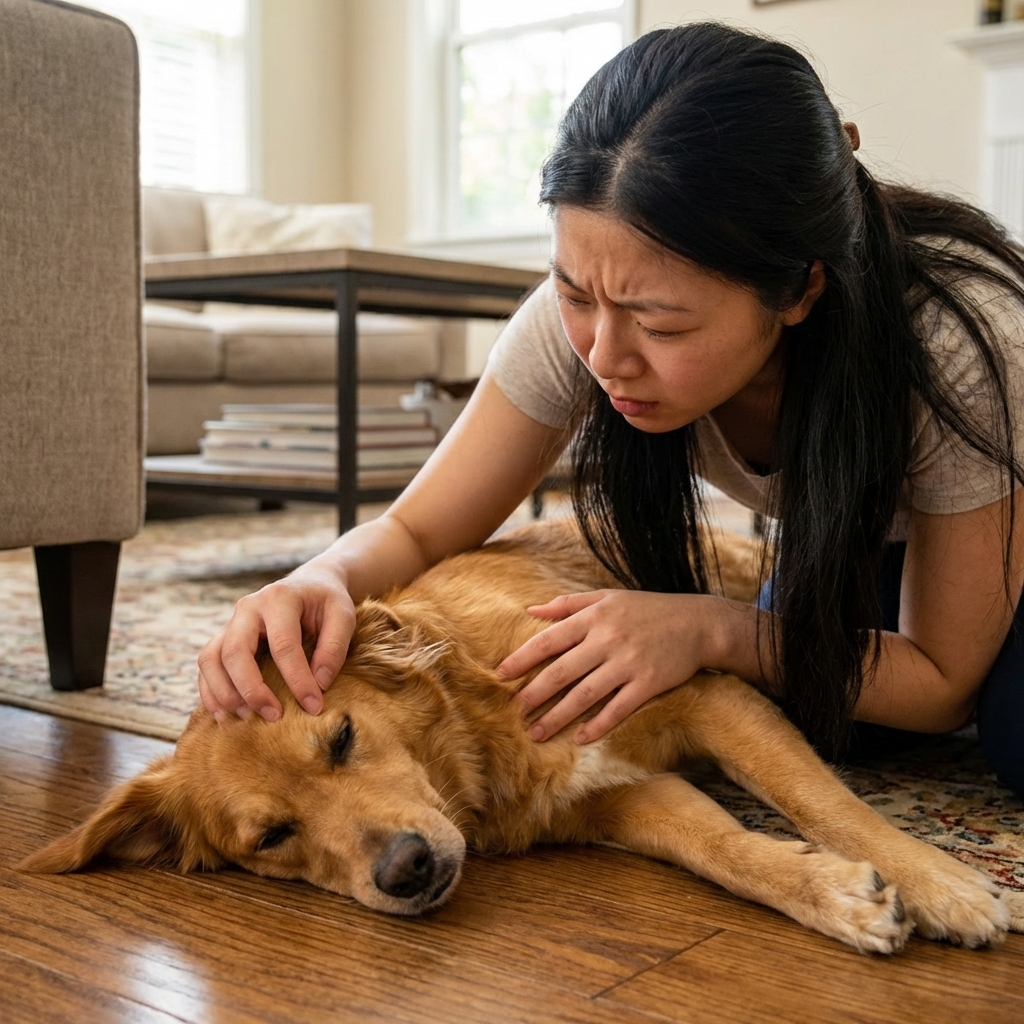
If your senior dog suddenly seems dizzy or wobbly, it is scary. I have seen families rush in thinking their dog is having a stroke , and honestly, the symptoms can look very similar at first glance. The good news is that many older dogs with vestibular disease improve significantly with the right support and a prompt veterinary exam.
Vestibular disease is a problem with the balance system. When that system misfires, your dog may feel like they are on a boat in rough water, even while standing still.
What it looks like
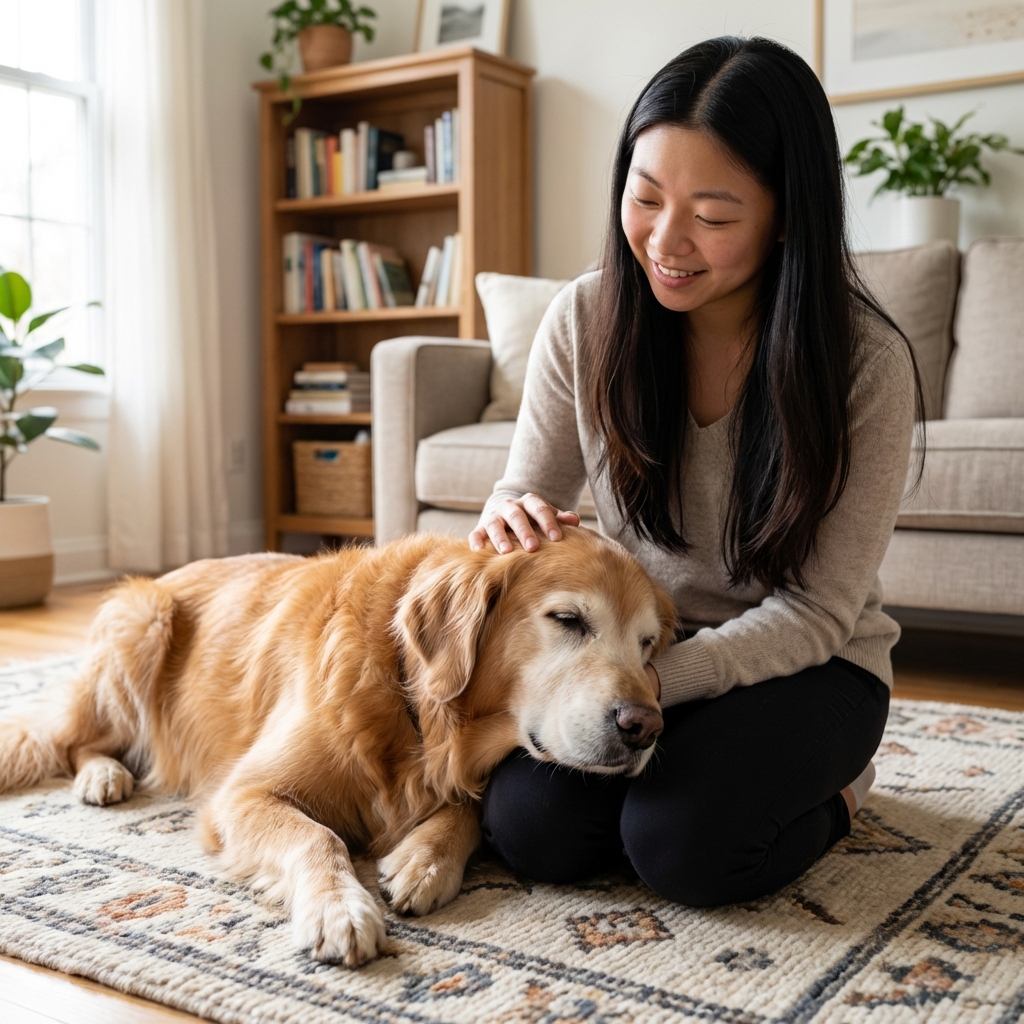
Vestibular episodes often come on suddenly. Many owners tell me, “He was fine this morning and then he couldn’t walk straight this afternoon.” Common signs include:
- Head tilt to one side
- Loss of balance, stumbling, or falling over
- Circling or leaning to one side
- Nystagmus, when the eyes flick back and forth or up and down
- Nausea , drooling, or vomiting (a motion-sickness feeling)
- Trouble standing or reluctance to walk
Some dogs look panicked because they feel so disoriented. Others are quiet and clingy. Both are normal responses to feeling dizzy.
Common causes in seniors
The vestibular system includes the inner ear, the vestibular nerve, and parts of the brain. Problems in any of these areas can cause similar symptoms, so the “why” matters.
Idiopathic vestibular disease
This is often called old dog vestibular syndrome. “Idiopathic” means we do not find a clear cause after an exam and basic testing. It is common in seniors, tends to be dramatic at the start, and many (but not all) dogs improve within days. Some need longer supportive care.
Ear infection or inflammation
Inner ear disease is a classic cause of vestibular signs . Middle ear disease can also play a role, especially if it extends deeper or affects the inner ear structures. Dogs may also have ear pain, odor, discharge, or a history of chronic ear problems, but not always. This is one reason a thorough ear exam is so important.
Brain-related causes
Problems in the brain can mimic vestibular disease. True ischemic stroke is less common than idiopathic vestibular disease, but it is still on the list, along with inflammation and tumors. These cases are more concerning when there are additional neurologic changes, especially ones you can see at home, like confusion, unusual sleepiness, new weakness, knuckling, facial droop, or abnormal eye movements (like up-and-down nystagmus or nystagmus that changes direction).
Medication or toxin effects
Some medications and toxins can impact balance. A classic example is aminoglycoside antibiotics (ototoxic drugs) in certain situations and exposure routes. This is not meant to imply that routine antibiotics commonly cause vestibular disease, but it is an important detail for your vet to consider. Always tell your veterinarian about any medications, supplements, new flea and tick products, or potential exposures at home.
Stroke or vestibular?
Owners are not expected to sort this out at home. Because the symptoms overlap, the safest plan is to treat sudden dizziness as an urgent veterinary issue.
That said, vets often consider a peripheral (inner ear and nerve) vestibular problem more likely when the dog has classic signs like head tilt and nystagmus but stays bright and alert. A central (brain-based) cause may be suspected when there are other neurologic abnormalities, like behavior changes, weakness, knuckling, or abnormal eye movement patterns.
If your dog suddenly cannot stand, has abnormal eye movements, or is vomiting and disoriented , call a veterinarian right away. Fast evaluation matters.
What your vet may do
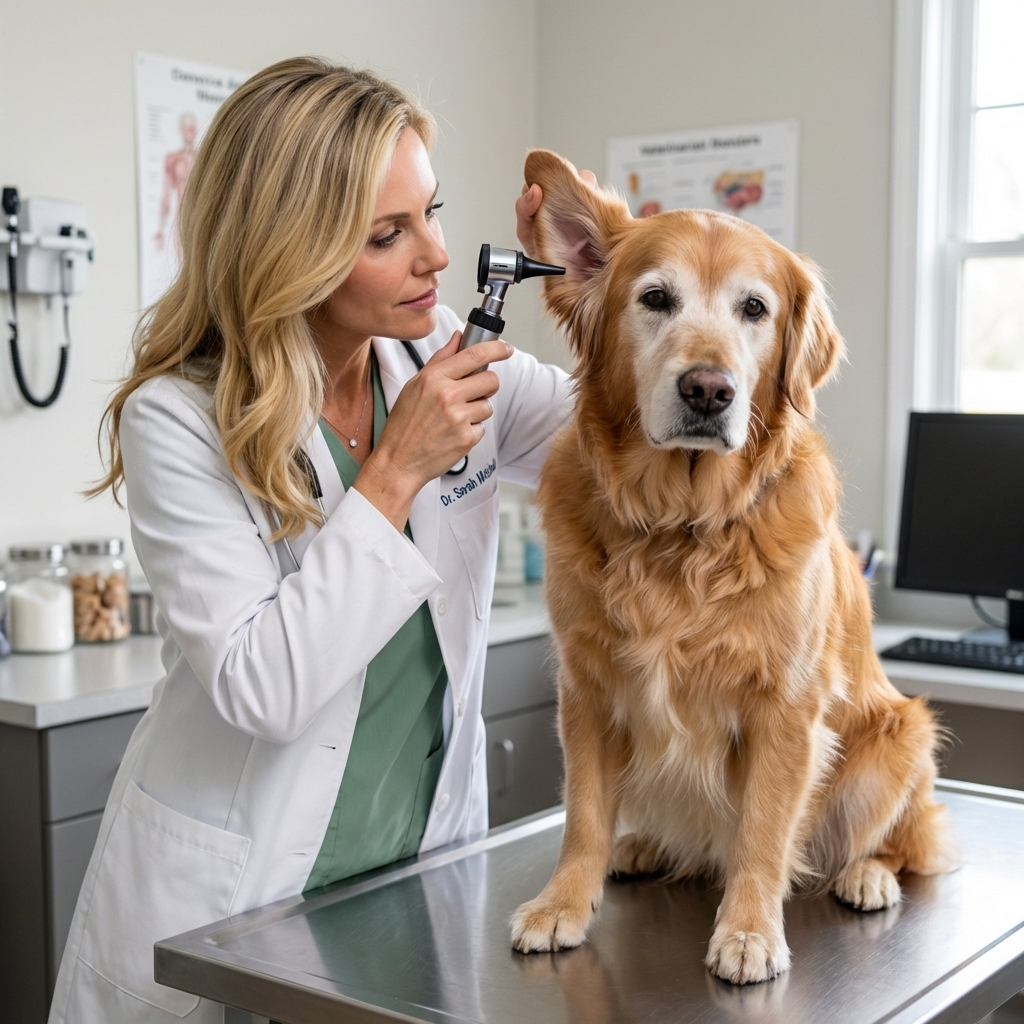
Your vet will start with a full physical and neurologic exam. This helps determine whether the issue is more likely peripheral (inner ear and nerve) or central (brain). Depending on what they find, they may recommend:
- Ear exam and ear cytology to look for infection
- Basic lab work (blood and sometimes urine) to assess overall health and rule out contributing factors
- Blood pressure measurement, especially in seniors
- Advanced imaging (MRI or CT) and possibly referral to a neurologist if central disease is suspected
Treatment
Treatment depends on the cause. For idiopathic (old dog) vestibular syndrome, the main goal is supportive care while the body resets.
Support at home
- Prevent falls: Block stairs, use rugs for traction, and keep your dog in one safe room.
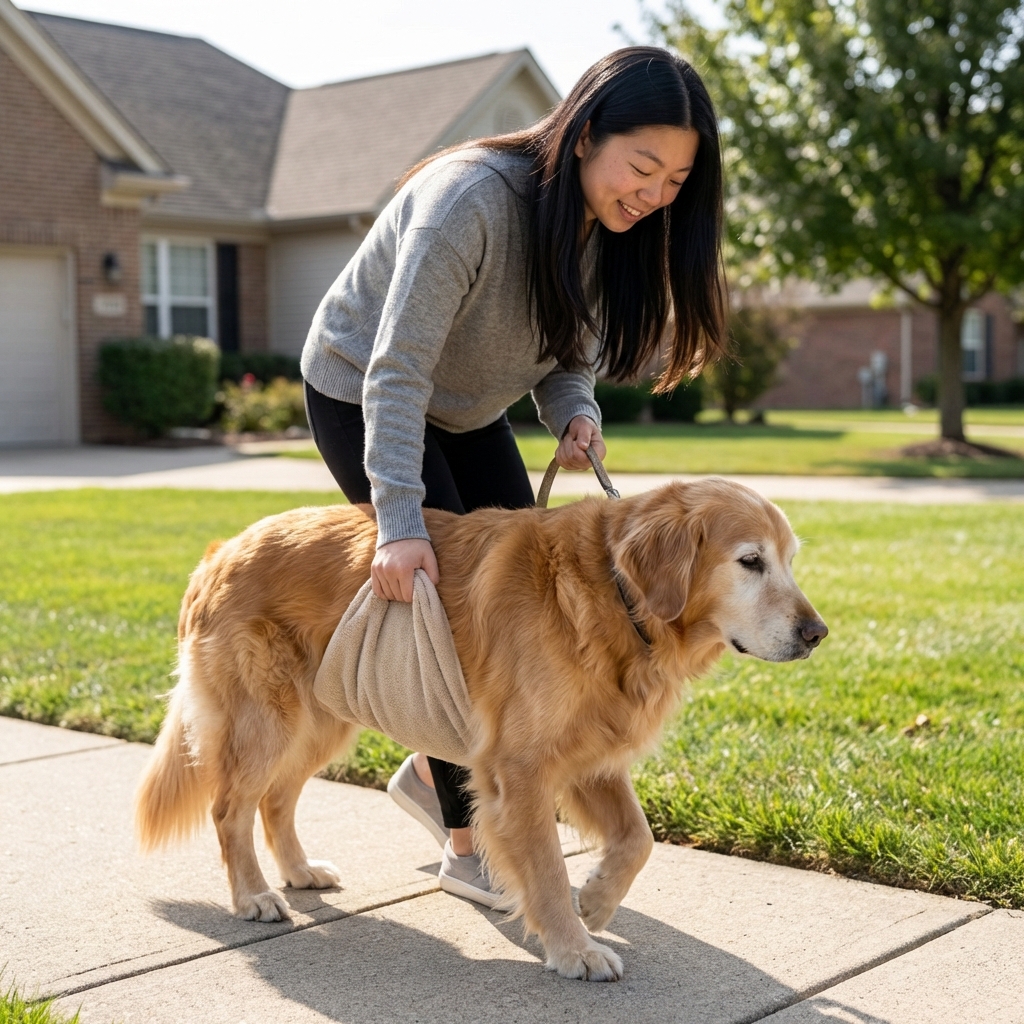
- Help them get up: A towel sling under the belly can provide stability for potty trips .
- Keep water and food easy: Place bowls close by, and consider slightly raising them.
- Reduce stimulation: Keep things quiet and predictable, and limit loud noise, visitors, and high-energy kids or pets in the recovery space.
- Take short leash breaks: Frequent, brief potty trips are better than long walks.
What not to do
- Do not let your dog use stairs or jump on furniture until they are steady.
- Do not allow off-leash time outdoors during an episode.
- Do not force food or water if your dog is actively vomiting. Call your vet for nausea control first.
- Do not give OTC or human medications (including motion-sickness meds) without veterinary guidance.
Medications your vet may prescribe
Depending on symptoms and suspected cause, your vet may use:
- Anti-nausea medications to reduce vomiting and motion sickness
- Appetite support if your dog refuses food
- Antibiotics or ear medications if an infection is present
- Pain control if ear disease is painful
Please do not give human motion sickness medications without veterinary guidance. Dosing and safety vary widely by dog size, age, and underlying conditions.
Some dogs need hospitalization for IV fluids and injectable anti-nausea medications if they cannot keep water down or are too unsteady to be safely cared for at home.
How long it lasts
In classic idiopathic vestibular disease, many dogs show noticeable improvement within 48 to 72 hours, but it is variable. Some recover quickly, while others take 2 to 3 weeks to regain confidence and coordination.
A mild head tilt can linger long-term, even after your dog feels normal again. That tilt does not necessarily mean they are still suffering.
Vestibular episodes can recur in some dogs. If your dog has repeat episodes, or if the pattern changes, it is worth a recheck so your vet can look for an underlying cause.
When it is an emergency
Seek urgent veterinary care if you notice any of the following:
- Collapse or inability to stand that is worsening
- Repeated vomiting or signs of dehydration
- Seizures
- Severe lethargy, confusion, or abnormal behavior
- New weakness in the face or limbs, especially on one side
- No improvement at all after 48 to 72 hours, or symptoms are progressively worse
Helping recovery
As a veterinary assistant, I always remind families: your dog is not being “dramatic.” Dizziness is genuinely miserable. A few practical steps can make recovery easier:
Make floors safer
Add yoga mats or non-slip rugs where your dog walks. Slick floors are a major reason vestibular dogs re-injure themselves.
Support hydration and nutrition
If your dog is nauseated, ask your veterinarian about appetite and nausea control first. Once the stomach is settled, offer small, simple meals. Warmed food often smells more tempting. If your dog has other health conditions like kidney disease or pancreatitis, follow the diet plan your vet recommends.
Handle gently
Avoid quick head movements. Move slowly. Use a harness rather than pulling on the collar if they are unsteady.
Can it be prevented?
Idiopathic vestibular episodes are not always preventable. But you can reduce risks and catch treatable causes early:
- Address ear issues promptly: If your dog has recurring ear infections, follow through with rechecks.
- Schedule senior wellness exams: Bloodwork, blood pressure checks, and early detection matter.
- Maintain a healthy weight: Extra pounds make it harder for an unsteady dog to regain mobility.
- Use medications carefully: Tell your vet everything your dog is taking, including supplements.
A hopeful note
Vestibular disease looks dramatic, but many senior dogs bounce back beautifully with supportive care, patience, and a safe environment. The most important step is getting your dog evaluated quickly so your veterinarian can rule out more serious conditions and help your pup feel steady again.
If you are in the middle of an episode right now, take a breath. Keep your dog safe from falls, keep them comfortable, and get veterinary guidance. You are doing the right thing.