From cooked chicken and eggs to pumpkin and a few fruits, learn cat-safe human foods, what to avoid (onion, garlic, chocolate, grapes), and smart portion tips.
Article
•
Designer Mixes
Vegetables Cats Can Eat

Shari Shidate
Designer Mixes contributor
Cats are obligate carnivores, so vegetables are never a “must.” But in small, thoughtful portions, certain veggies can be a gentle way to add moisture, fiber, and variety, especially for cats who beg for people food. The key is choosing cat-safe vegetables , preparing them correctly, and keeping portions small so you do not crowd out the animal protein your cat truly needs.
Quick note: This article is general education, not a substitute for veterinary advice. If your cat has any medical condition, is on a prescription diet, or has a history of urinary or GI issues, check with your veterinarian before adding new foods.
Quick safety rules first
- Vegetables are add-ons, not meals. Your cat’s nutritional base should be a complete and balanced cat food . Veggies should not displace essential nutrients.
- Use the “10% rule” as a guideline. Many veterinarians recommend keeping treats and extras (including vegetables) at under 10% of daily calories . It is a helpful rule of thumb, not a medical standard, and some cats need a lower limit.
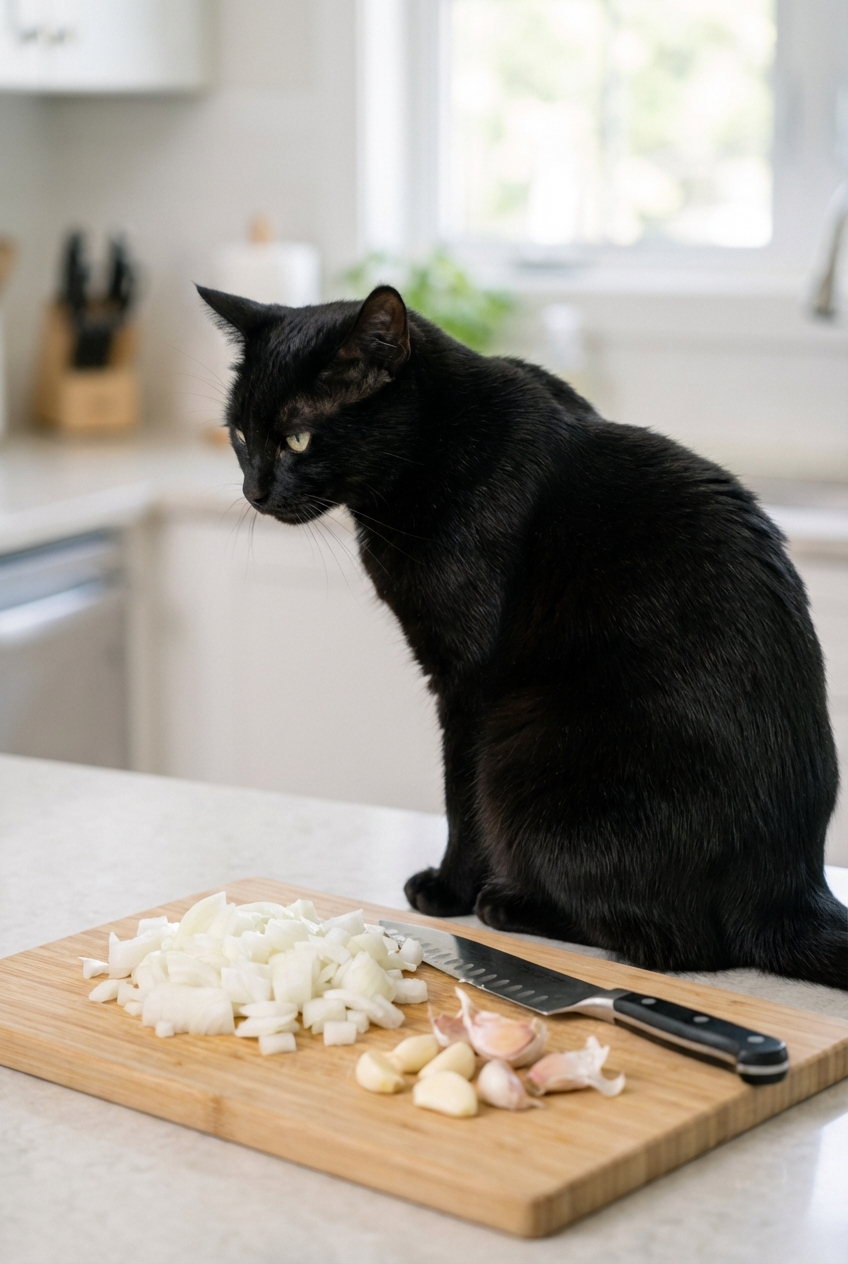
- Plain is best. No onion, garlic, chives, scallions, leeks, shallots, or powders . No butter, salt, sauces, or seasoning blends.
- Cooked usually beats raw. Light steaming or boiling softens fiber, making it easier to chew and digest.
- Cut small to prevent choking. Think pea-sized pieces or mash. Avoid stringy, long strips (like a whole green bean) and tough, fibrous chunks.
- Introduce slowly. Start with a tiny taste and watch stool quality, appetite, and vomiting for 24 to 48 hours. Cats with IBD or food sensitivities can react to any new ingredient, even “safe” ones.
Portion guide: how much is enough?
Because cats vary so much by size, age, and medical history, I like to keep portions simple and practical.
Easy portion ranges
- First try: 1/4 to 1/2 teaspoon (a single bite)
- Small cats (under 8 lb): up to 1 teaspoon, up to 2 to 3 times per week
- Average cats (8 to 12 lb): 1 to 2 teaspoons, up to 2 to 3 times per week
- Large cats (over 12 lb): 1 to 2 tablespoons, up to 2 to 3 times per week
“10% rule” reminder
Treats and extras (including vegetables) should ideally stay under 10% of total daily calories . Many indoor adult cats eat around 180 to 250 calories per day, but needs vary a lot based on ideal body weight, age, and activity level. When in doubt, check your food label, use your veterinarian’s calorie target, or ask your clinic for a safe daily range.
If your cat is overweight, has diabetes, chronic kidney disease, urinary issues, or GI disease, ask your veterinarian for a tighter target.
Best vegetables for cats
These options are commonly tolerated when served plain and in small portions. Every cat is an individual, so use this as a starting point, not a guarantee. This list is also not exhaustive.
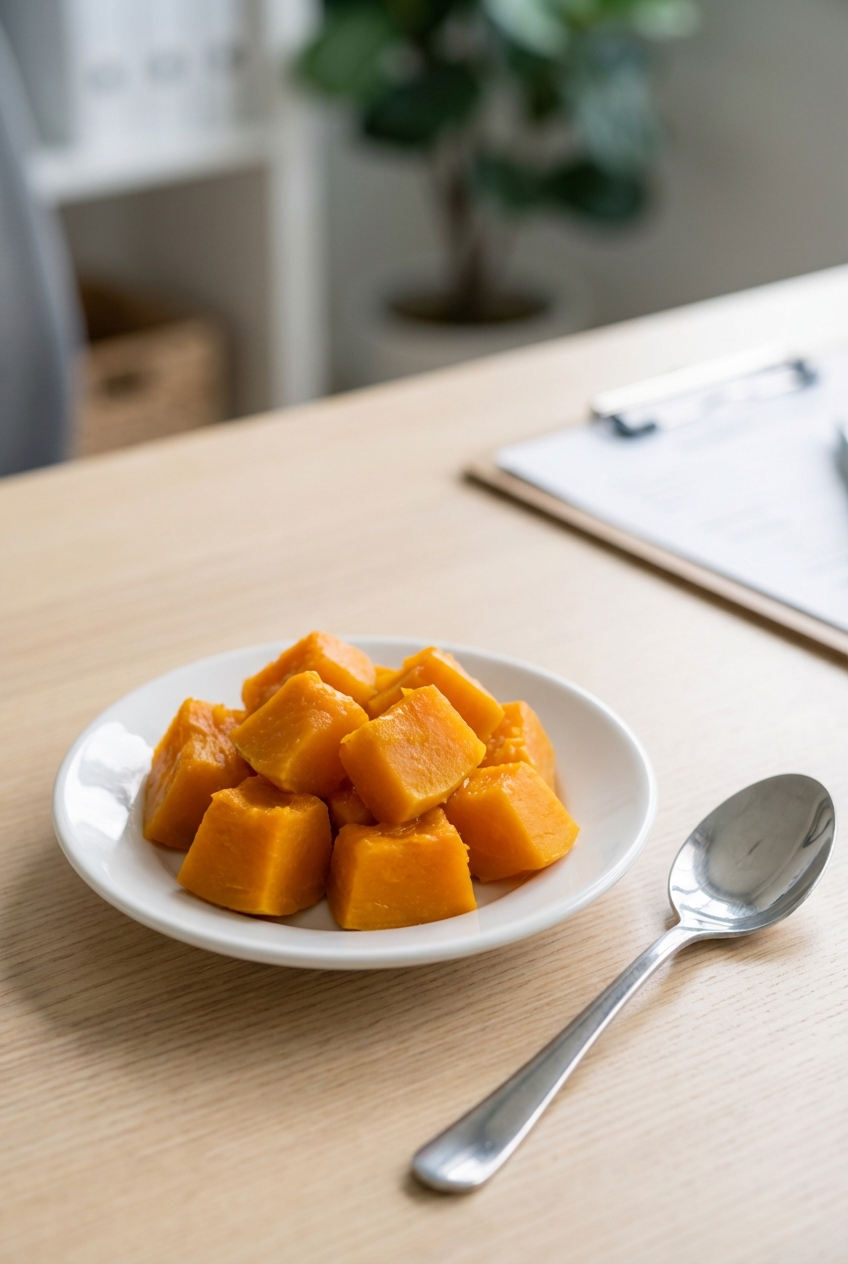
Pumpkin (plain, cooked or canned)
- Why it can help: Gentle soluble fiber, often used to support mild constipation or loose stool.
- Serving: Plain pumpkin only (not pie filling).
- Portion: 1/2 teaspoon to 2 teaspoons, up to once daily short-term if your vet approves.
- Start low: Too much fiber can cause diarrhea, gas, or even worsen constipation in some cats, so begin with a tiny amount.
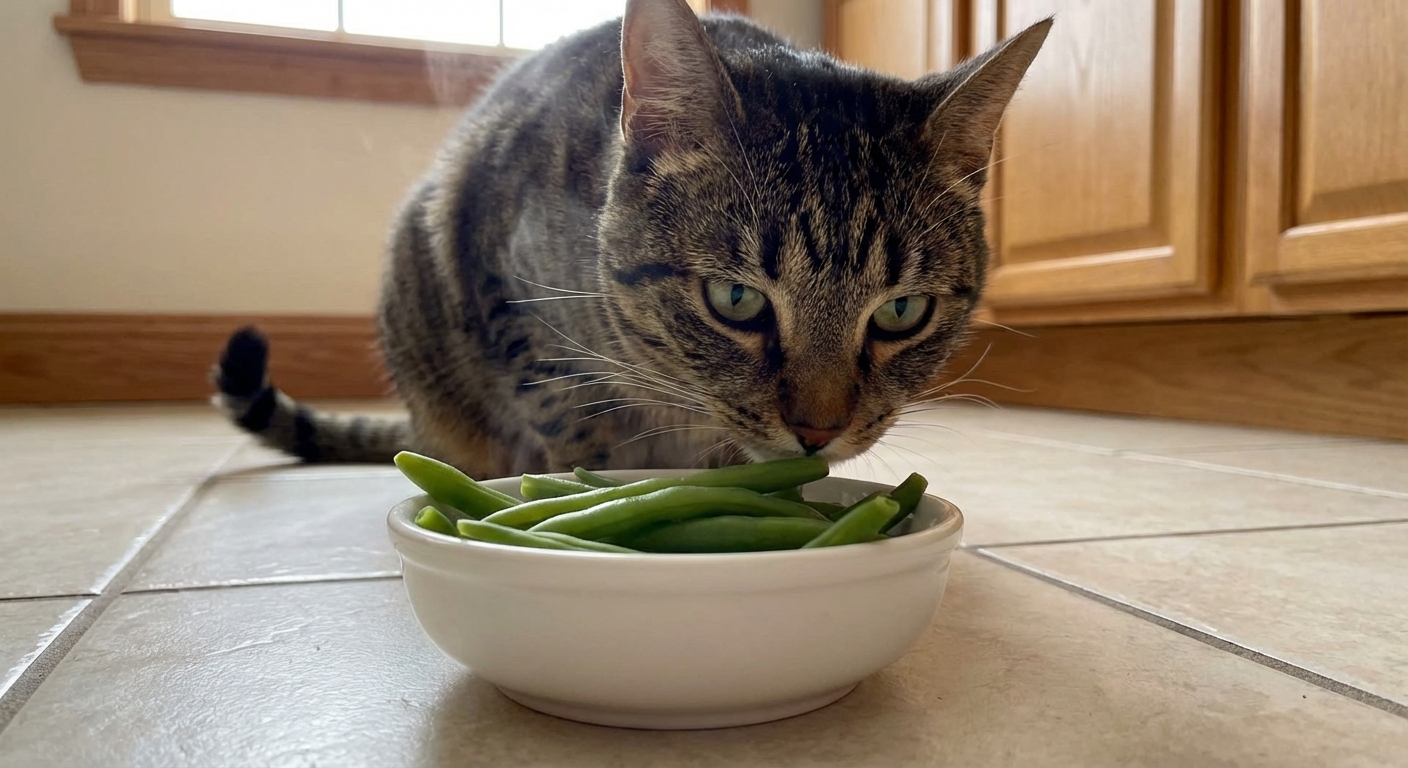
Green beans (steamed, chopped)
- Why it can help: Low-calorie crunch with fiber.
- Portion: 1 to 2 teaspoons (small to average cats), up to 1 tablespoon (large cats), up to 2 to 3 times per week.
- Tip: Chop well. Long pieces can be a choking risk or get “stringy.”
Carrots (cooked and diced)
- Why it can help: Mild fiber and texture enrichment.
- Portion: 1/2 teaspoon to 2 teaspoons, up to 1 to 2 times per week.
Zucchini (steamed, soft)
- Why it can help: Mild, watery vegetable that many cats tolerate.
- Portion: 1 to 2 teaspoons, up to 2 to 3 times per week.
Peas (cooked, mashed)
- Why it can help: Small amount of fiber and plant protein.
- Portion: 1/2 teaspoon to 1 teaspoon, up to 1 to 2 times per week.
- Note: Some cats get gassy with peas, so go slow.
Broccoli (steamed, tiny florets)
- Why it can help: Nutrient-dense, but can be gassy.
- Portion: 1/4 teaspoon to 1 teaspoon, about once weekly.
Spinach (cooked, small amount)
- Why it can help: Offers micronutrients, but not ideal for every cat.
- Portion: 1/4 to 1 teaspoon, occasionally (think once weekly or less).
- Caution: Avoid if your cat has a history of calcium oxalate bladder stones. If your cat has kidney or urinary conditions, discuss leafy greens with your veterinarian.
Cucumber (peeled, tiny pieces)
- Why it can help: Mostly water, a light crunchy treat.
- Portion: A few pea-sized pieces, up to 1 to 2 times per week.
Sweet potato (cooked, mashed)
- Why it can help: Soft texture, fiber.
- Portion: 1/4 teaspoon to 1 teaspoon, about once weekly.
- Note: Higher in starch, so keep it small, especially for overweight or diabetic cats.
Vegetables to avoid
When it comes to cats, “natural” does not always mean safe. Skip these entirely:
- Onion, garlic, chives, leeks, scallions, shallots (fresh, cooked, dehydrated, or powdered) : can damage red blood cells and lead to anemia.
- Wild mushrooms: risk of serious toxicity. Store-bought edible mushrooms are generally not considered “toxic,” but they are unnecessary and can still cause GI upset in some cats.
- Green or unripe tomatoes, and tomato plant parts (leaves, stems): higher risk due to natural toxins in the plant. Ripe tomato flesh is generally considered non-toxic, but it can still upset the stomach and is easy to overdo, so it is best to skip it.
- Raw potatoes and potato skins: can be irritating and potentially toxic when raw.
- Hot peppers: can cause mouth and stomach irritation.
- Pickled or seasoned vegetables: too much salt, spices, and often onion or garlic.
Best ways to serve veggies
If you have ever tried to offer your cat a carrot and got the look of pure betrayal, you are not alone. Texture and smell matter.
Preparation tips that work
- Steam or boil until soft, then cool completely.
- Mash or finely chop and mix into wet food.
- Add a teaspoon of warm water or low-sodium, onion-free broth to boost aroma.
- Use as a topper, not a replacement for the main meal.
Simple starter mix
For a cautious first try: mash 1/2 teaspoon plain pumpkin into a tablespoon of your cat’s usual wet food. If stools stay normal and your cat is interested, you can repeat up to 2 to 3 times per week.
When veggies can help
They may help with
- Mild constipation (pumpkin is the classic go-to)
- Hairball-prone cats who benefit from a little extra fiber (your vet may also recommend a hairball diet or lubricant gel)
- Food enrichment for cats who enjoy variety
Be cautious if your cat has
- Inflammatory bowel disease (IBD) or frequent vomiting
- Diabetes or needs tight carbohydrate control
- Chronic kidney disease
- Urinary crystals or bladder stones
- Pancreatitis history
In these cases, even “safe” vegetables can be the wrong choice for your individual cat. Your veterinarian can help you pick the best options and amounts, or confirm you should skip veggies entirely.
Signs a veggie is not working
Stop the new food and check in with your veterinarian if you notice:
- Vomiting or repeated gagging
- Diarrhea, mucus in stool, or constipation
- Loss of appetite or hiding
- Abdominal discomfort or excessive gas
- Any exposure to onion or garlic (call right away)
Cat veggie FAQ
Can cats eat raw vegetables?
Some can nibble small amounts, but many cats do better with cooked vegetables. Cooking reduces toughness and can make fiber gentler on the stomach.
Do vegetables help cats lose weight?
Sometimes a small amount of low-calorie fiber (like green beans) can help a cat feel more satisfied, but weight loss should be guided by a veterinarian. The safest approach is usually portion control and a high-protein, species-appropriate diet, not filling up on veggies.
What is the best vegetable for constipation?
Plain pumpkin is often recommended because it is easy to portion and tends to be well tolerated. It is not a substitute for veterinary care if constipation is frequent or severe.
Bottom line
Most cats do not need vegetables, but a few cat-safe options in very small portions can be a fun, healthy add-on. Keep it simple: cooked, plain, tiny servings, and always skip onion and garlic in every form. When in doubt, your veterinarian is your best partner in tailoring choices and portions to your cat’s unique needs.