Confused by accidents in an older dog? Learn how to tell incontinence from training issues, common medical causes, vet red flags, and simple routines and hom...
Article
•
Designer Mixes
Urinary Incontinence in Spayed Dogs

Shari Shidate
Designer Mixes contributor
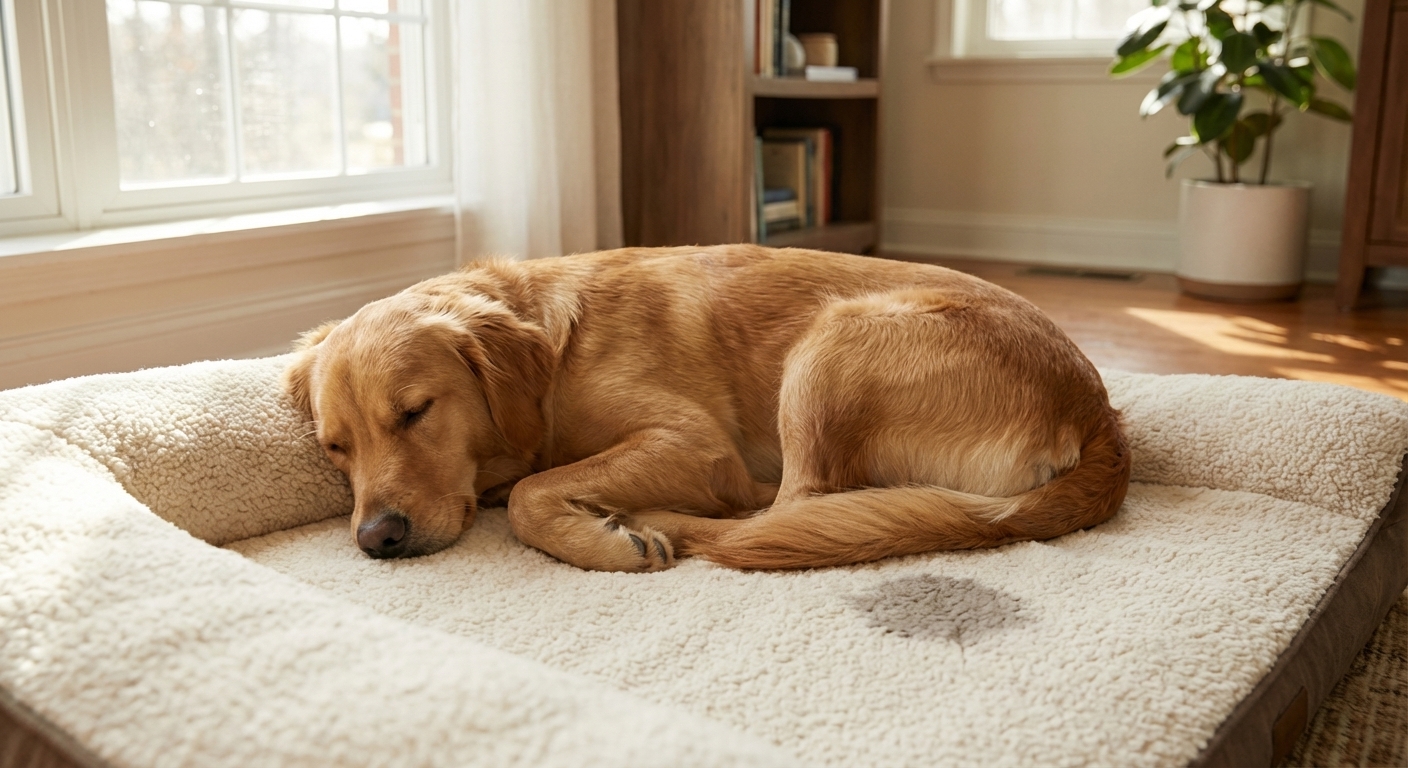
If your spayed female dog is leaving wet spots where she sleeps, or you notice a little urine dribbling when she is resting, you are not imagining it and you are not alone. As a veterinary assistant, I have talked with many loving owners who feel confused or even guilty about this change. The reassuring news is that post-spay urine leaking is relatively common, often very manageable, and it is not a behavior problem.
This article focuses on the most common pattern seen after spaying: urethral sphincter mechanism incompetence (USMI), which often responds to estrogen therapy. We will cover why it happens, which dogs are at higher risk, what symptoms owners typically notice, and the treatment options your veterinarian may recommend, including Proin and Incurin.
Quick note: This article is educational and is not a substitute for veterinary care. Because several medical issues can look like “incontinence,” it is important to confirm the cause before starting treatment.
What it is
Urinary incontinence means your dog leaks urine without meaning to. In spayed female dogs, the most common cause is USMI, a weakening of the urethral sphincter, which is the “valve” that helps hold urine in the bladder until your dog chooses to urinate.
Many dogs with USMI are otherwise healthy. They can still squat and pee normally on walks or in the yard, but they leak at rest because that urethral “seal” is not staying tight enough.
Why it can happen after spaying
In a typical spay (ovariohysterectomy or ovariectomy), the ovaries are removed. Ovaries produce hormones, including estrogen. Estrogen plays a role in maintaining tone and blood supply in the tissues of the lower urinary tract. When estrogen levels drop after spaying, some dogs gradually lose urethral sphincter strength.
This is also why leakage can show up months or even years after surgery. It often happens when a dog is deeply relaxed, sleeping, or resting on her side, when overall muscle tone naturally decreases.
Important note: Not every spayed dog becomes incontinent. This is a known potential long-term complication, but most spayed females never develop it.
Who is most affected
USMI can happen in any spayed female, but risk is higher in certain dogs. Factors veterinarians commonly consider include:
- Size: Medium and large breed dogs tend to be affected more often than very small dogs.
- Breed tendencies: Some breeds are overrepresented in clinical practice and studies, including Doberman Pinschers, Boxers, Old English Sheepdogs, Rottweilers, German Shepherd Dogs, Weimaraners, and some retrievers. Mixed breeds can absolutely be affected too.
- Body condition: Overweight dogs have a higher risk of incontinence and may have worse leakage. Extra weight can also increase pressure on the bladder and pelvic structures.
- Age at spay: Research is mixed and nuanced. Some studies suggest earlier spay may increase risk for some dogs, but decisions about spay timing should be individualized with your veterinarian based on overall health, breed, and lifestyle.
Signs you may see at home
Most owners first notice subtle signs. Common symptoms of spay-related incontinence include:
- Urine leaking during sleep or when relaxed
- Wet spots on bedding, blankets, or the couch
- Damp fur around the vulva or inner thighs
- A mild urine odor on the dog
- Occasional dribbling when getting up after resting
Many dogs with USMI are not acting sick. They may have normal energy, appetite, and thirst.
When it might not be USMI: If your dog is straining to urinate, urinating very frequently, drinking much more than normal, seems painful, or has blood in the urine, those are red flags for other conditions like a urinary tract infection (UTI), bladder stones, diabetes, kidney disease, or hormone disorders.
Getting the right diagnosis
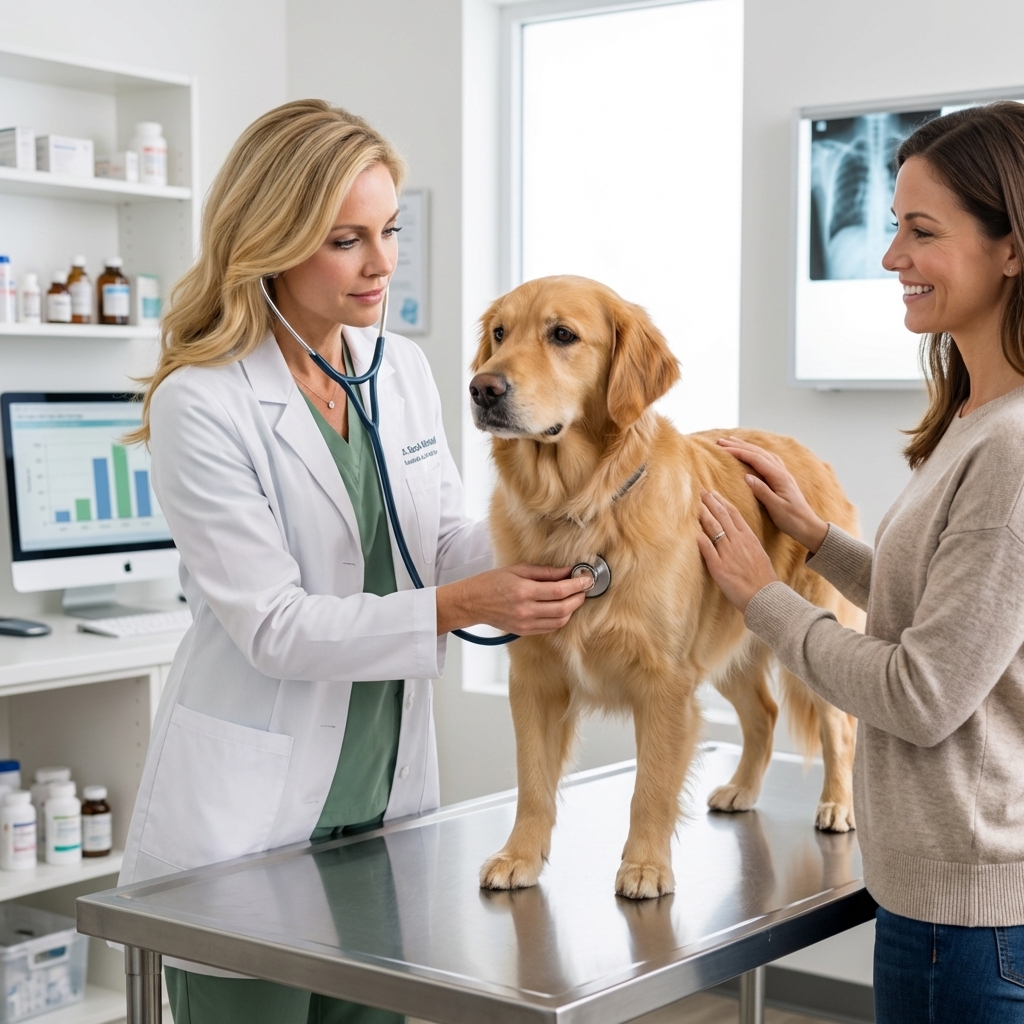
Because several medical issues can look like “incontinence,” it is important to confirm the cause before starting treatment. The medications used for USMI are helpful when the issue is sphincter weakness, but the plan may be very different for infections, stones, or systemic disease.
Your veterinarian may recommend:
- Urinalysis to check for infection, crystals, blood, or dilute urine
- Urine culture if infection is suspected, especially with recurrent issues
- Bloodwork if increased thirst, weight changes, or other systemic concerns are present
- Imaging such as X-rays or ultrasound if stones, masses, or anatomic issues are possible
USMI is often diagnosed after ruling out other common causes, combined with a classic history: spayed female, leakage at rest, normal urination otherwise.
Treatment options
The goal is simple: improve urethral closure so your dog can hold urine normally. Most dogs respond very well to medication, and many can be maintained long-term on the lowest effective dose.
1) Proin (phenylpropanolamine)
Proin is one of the most commonly prescribed medications for USMI. It works by increasing tone in the urethral sphincter, helping that “valve” stay closed.
- How it is given: Usually once to three times daily, depending on formulation and your veterinarian’s plan.
- What owners often notice: Less leaking within days, sometimes within 24 to 48 hours.
- Possible side effects: Restlessness, decreased appetite, elevated heart rate, increased blood pressure, or anxiety-like behaviors in some dogs.
- Important cautions: Your veterinarian will want to know about heart disease, glaucoma, high blood pressure concerns, or other medications. Some dogs benefit from periodic monitoring, such as blood pressure checks, especially if they are older or have other health conditions.
2) Incurin (estriol)
Incurin is an estrogen hormone (estriol) used specifically for post-spay incontinence. It supports the tissues of the lower urinary tract and can improve urethral closure pressure.
- How it is given: Often daily at first, then tapered to the lowest dose that keeps symptoms controlled.
- What owners often notice: Improved continence over the first one to two weeks.
- Possible side effects: Swelling of the vulva, mammary gland enlargement, or signs of heat in some dogs, especially at higher doses. Your veterinarian will typically adjust the dose if these appear.
3) Combination therapy
Some dogs do best with both Proin and Incurin, especially if one medication alone is not fully controlling leakage. Using two medications sometimes allows lower doses of each.
4) If medication is not enough
If your dog does not respond, or if side effects limit medication use, your veterinarian may discuss additional options. Depending on your dog’s needs, that can include trying different medication strategies, referral to a veterinary internal medicine specialist, or procedures designed to improve urethral closure, such as urethral bulking agents or surgeries like colposuspension. The right next step depends on your dog’s overall health, anatomy, and the underlying cause.
At-home tips
Medication is often the backbone of treatment, but home management can make a big difference in comfort and cleanliness. Here are practical steps I routinely share with families:
- Increase potty breaks: Make sure your dog empties her bladder right before bedtime and again first thing in the morning.
- Keep your dog lean: Weight management can reduce pressure on the bladder and may improve response to treatment.
- Protect bedding: Use washable covers, waterproof liners, or easily cleaned blankets on favorite sleep spots.
- Try dog diapers for flare-ups: Helpful during travel, while adjusting medication, or on nights with heavier leakage. Change frequently to prevent skin irritation.
- Gently clean the skin: If urine is sitting on the fur, rinse or wipe with a pet-safe wipe and dry thoroughly to help prevent urine scald.
- Watch for UTIs: Dogs that leak can be prone to urinary infections, and UTIs can also mimic or worsen leakage. If you notice stronger odor, frequent urination, accidents while awake, or discomfort, call your vet.

When to call the vet quickly
Spay-related incontinence is usually not an emergency, but some symptoms should be checked promptly:
- Straining to urinate or producing little to no urine
- Blood in the urine
- Crying out or signs of pain while urinating
- Sudden increase in thirst and urination
- Lethargy, vomiting, fever, or loss of appetite
- New incontinence in an unspayed female or in a male dog (the causes can be different and should be evaluated)
Long-term outlook
Most spayed dogs with USMI do very well. Many achieve excellent control with one medication and only minor lifestyle tweaks. The key is teamwork with your veterinarian so you can find the lowest effective dose and monitor for side effects, UTIs, and changes over time. If leakage returns after a period of control, it is worth a recheck rather than just assuming it is “the same thing.”
If your dog is leaking urine after being spayed, it is not your fault. It is a medical issue, and in many cases it is treatable.
Quick next steps
- Schedule a veterinary visit for a urinalysis and a discussion of symptoms.
- Bring details: when leakage happens, how often, and any changes in drinking or urination.
- Ask whether Proin, Incurin, or a combination makes the most sense for your dog.
- Start simple home support: extra potty breaks, washable bedding layers, and weight management if needed.