Step-by-step home care for mild dog diarrhea and vomiting: short food break, small sips of water, bland diet, pumpkin, probiotics, dehydration checks, and ur...
Article
•
Designer Mixes
Upset Tummy in Dogs: Wellness Facts & Insights

Shari Shidate
Designer Mixes contributor
As a veterinary assistant in Frisco, Texas, I can tell you this: an upset tummy is one of the most common reasons worried pet parents call or come in. The good news is that many mild stomach upsets can be managed safely at home when you know what to watch for and what to do next. The not-so-good news is that vomiting and diarrhea can also be early signs of something serious.
This article will help you sort through what’s normal, what’s not, and how to support your dog’s gut wellness with practical, evidence-based steps. Home care is only appropriate for mild, short-lived signs in otherwise healthy adult dogs. It is not a substitute for a diagnosis if your dog is getting worse or not improving.
What counts as an “upset tummy”?
Most people mean one or more of these signs:
- Vomiting (food, foam, bile, or liquid)
- Diarrhea (soft stool to watery stool, sometimes with mucus)
- Gassiness or abdominal rumbling
- Nausea signs like lip-licking, drooling, swallowing, or turning away from food
- Reduced appetite
- “Prayer position” (front end down, rear up) which can signal abdominal discomfort
One episode of vomiting or a short bout of mild diarrhea can happen from a simple dietary slip. But repeated vomiting, ongoing diarrhea, or any change plus low energy should raise your level of concern.
Common causes of tummy trouble
Dogs have curious noses and fast mouths. Many stomach upsets start with something they ate, but there are several categories to know.
Diet-related triggers
- Diet change too fast (switching foods abruptly)
- Table scraps or high-fat foods, which can irritate the gut and, in some dogs, contribute to pancreatitis
- Garbage gut (raiding the trash, compost, or cat litter)
- Food intolerance (not a true allergy, but a sensitivity that causes GI signs)
Infectious and parasite causes
- Intestinal parasites like roundworms, hookworms, whipworms, and Giardia
- Viral infections (more common in puppies, unvaccinated dogs, or dogs with heavy exposure to other dogs)
- Bacterial overgrowth or infection can occur, especially with contaminated food or in dogs that are already stressed or immunocompromised
Mechanical problems
- Foreign body (sock, toy, corn cob, bone fragments)
- Obstruction risk is higher in puppies and “everything is a snack” dogs
Health conditions that show up as GI signs
- Pancreatitis
- Inflammatory bowel disease
- Kidney or liver disease
- Addison’s disease (can look like on-and-off vomiting and diarrhea)
If your dog’s upset stomach keeps returning, it is worth investigating rather than repeatedly “waiting it out.” Chronic GI signs are often treatable, but the cause matters.
Red flags: when to call your vet right away
I’m a big fan of calm, thoughtful home care for mild cases. But these signs are not “watch and wait” territory.
- Repeated vomiting (for example, more than 2 episodes in a few hours), vomiting that keeps returning, or your dog cannot settle
- Vomiting plus inability to keep water down
- Blood in vomit or stool (bright red or black, tarry stool)
- Severe lethargy, weakness, collapse, or pale gums
- Signs of dehydration: sticky or tacky gums, very low energy, sunken-looking eyes, or a dry nose plus reduced urination. The “skin tent” test can be imperfect (age and body condition affect it), so use the whole picture and trust your gut.
- Abdominal swelling or unproductive retching (can be a bloat emergency)
- Suspected toxin exposure (xylitol, grapes/raisins, chocolate, rodent bait, human meds)
- Puppies, seniors, or dogs with chronic disease (they can decline faster)
- Possible foreign object ingestion
If you’re unsure, call your veterinary clinic. A quick phone triage can save time and, in some cases, save a life.
Gentle home support for mild cases
For a healthy adult dog with mild symptoms and normal energy, these steps are commonly recommended by veterinary teams. Always follow guidance from your own vet if your dog has medical conditions or is on medication.
Important safety note: Do not give over-the-counter human medications (like Pepto-Bismol, Imodium, or any pain reliever/NSAID) unless your veterinarian specifically tells you to. Some are unsafe for dogs, and others can mask symptoms or worsen certain conditions.
Step 1: Protect hydration first
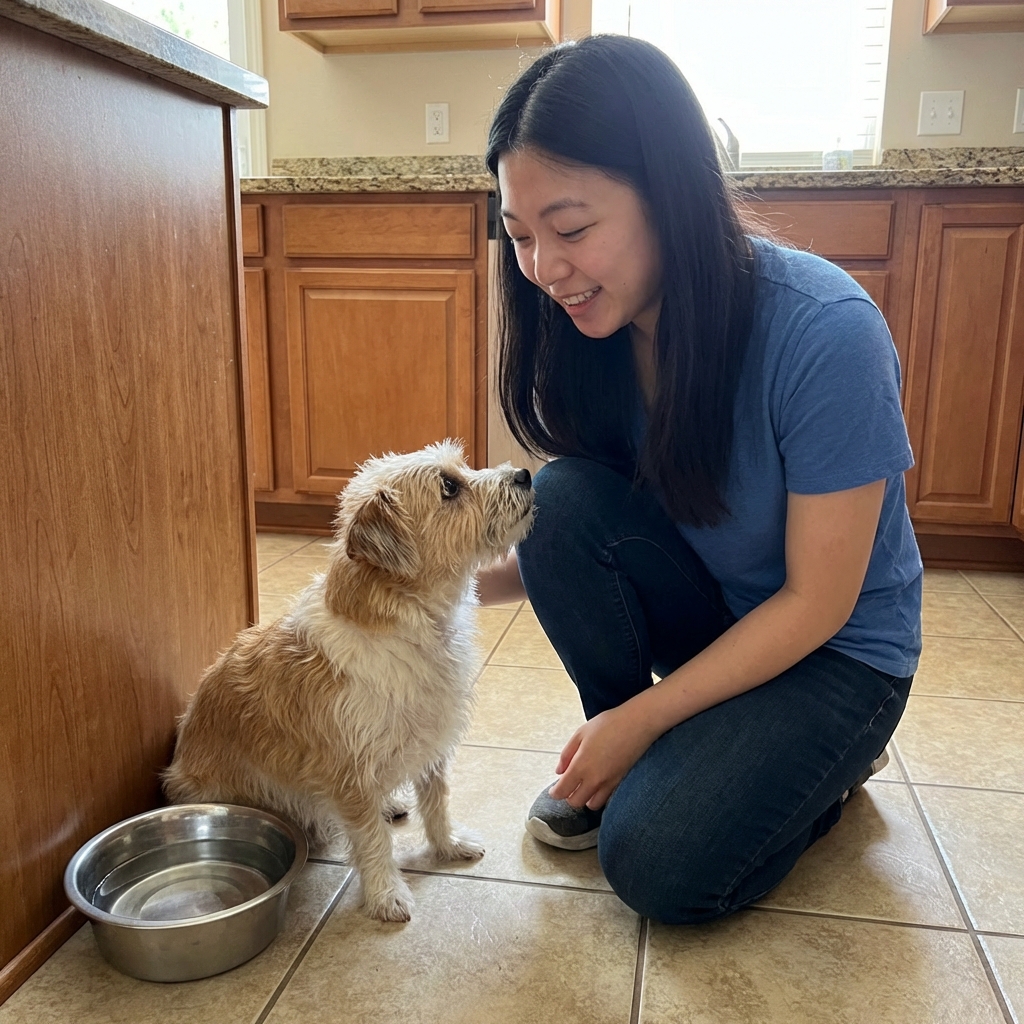
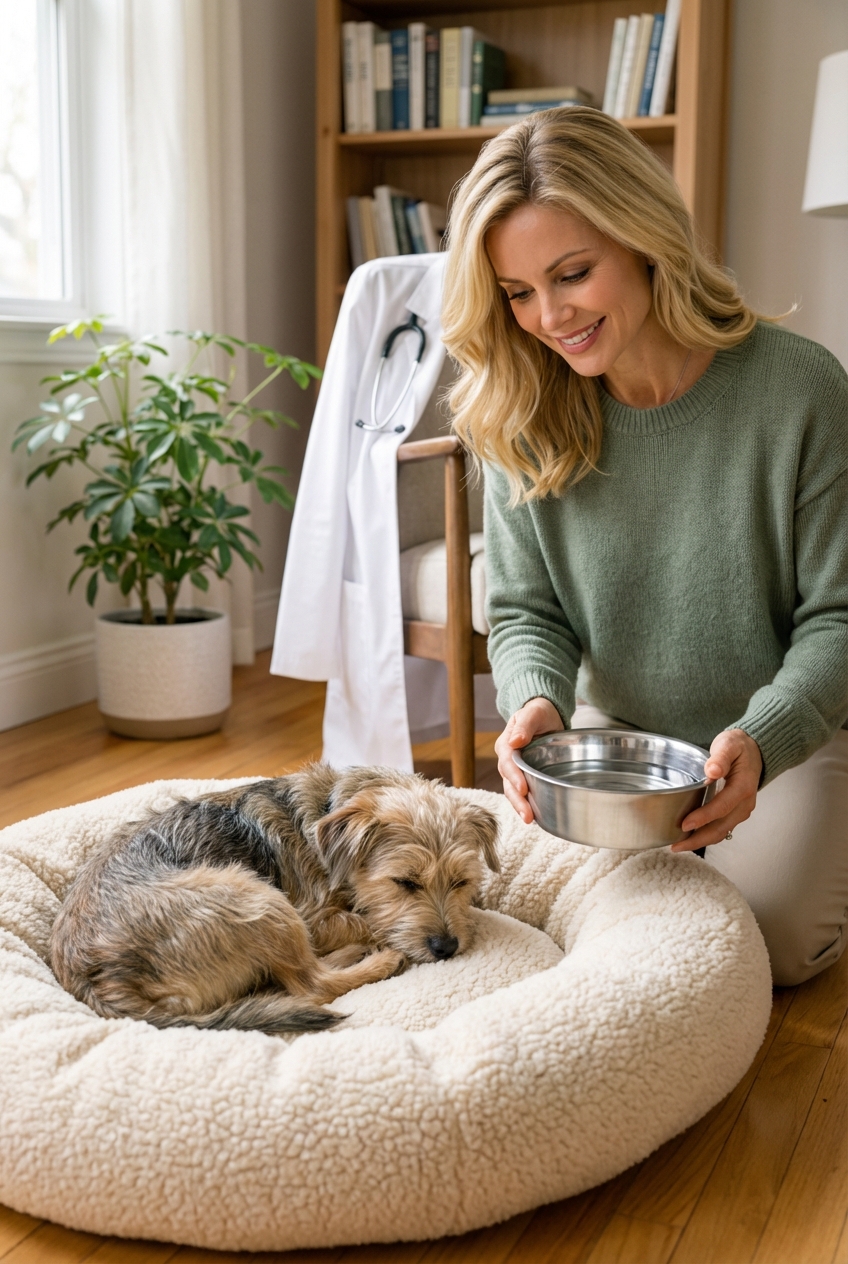
Small sips of water are better than a full bowl gulp. If your dog drinks too fast and vomits, offer a little at a time.
- Offer small amounts every 30 to 60 minutes.
- Ask your vet if an oral electrolyte solution is appropriate. Use pet-formulated or vet-approved products since some human electrolyte drinks can have unsuitable sugar or sodium levels, and certain “sugar-free” products may contain xylitol.
Step 2: Consider a short rest for the stomach
Some dogs benefit from a brief break from food after vomiting, but this is not one-size-fits-all. Puppies and tiny dogs can get low blood sugar, so do not fast them without veterinary guidance.
If your vet approves a short fast for an adult dog, you typically reintroduce food slowly once vomiting stops.
Step 3: Feed a bland, low-fat, easy-to-digest diet
When your dog is ready to eat again, keep it simple for 24 to 48 hours.
- Boiled skinless chicken with plain white rice
- Lean turkey with rice
- Prescription GI diets (often the easiest on the stomach)
Feed small meals, more often. Think “snack-sized portions,” not a full dinner.
Step 4: Add gut-friendly support (with vet approval)
- Probiotics formulated for dogs can help some cases of diarrhea and support healthy gut bacteria after stress or a diet change.
- Plain canned pumpkin (not pie filling) can help stool consistency for some dogs because of its fiber. Use small amounts, such as 1 teaspoon for small dogs and 1 tablespoon for medium to large dogs, mixed into food. Skip pumpkin if vomiting is ongoing, if diarrhea is profuse or bloody, or if your dog has medical needs that require a very specific diet (for example, diabetes) unless your vet says it is ok.
A quick note from experience: if diarrhea is severe, your dog seems painful, or things are not clearly improving, skip the DIY extras and get medical guidance. The right treatment depends on the cause.
Poop facts that actually matter
In clinic, we learn a lot from stool details. If your dog has diarrhea, try to note:
- Frequency (once vs. every hour)
- Volume (large vs. small frequent amounts)
- Mucus (common with colon irritation)
- Blood (bright red suggests lower GI irritation; black or tarry can suggest digested blood and is more urgent)
- Straining (can look like constipation but be colitis)
In general, large-volume watery diarrhea tends to point to the small intestines, while small frequent stool with mucus and straining often points to the colon. Either one can be mild or serious depending on the dog and the bigger picture.
If you can safely bring a fresh stool sample to the vet, it helps. Many parasites and Giardia are diagnosed via fecal testing, and treatment is much easier when we know what we are targeting.
How long to monitor at home
If your dog is bright, comfortable, and able to keep water down, a short period of home monitoring is often reasonable. My general clinic-style guideline for adult dogs is:
- Call your vet the same day if vomiting repeats (especially multiple times in a short window) or your dog seems off.
- Call within 24 hours if diarrhea is not improving, is happening very frequently, or your dog is not acting normal.
- Call right away for any red flags (blood, weakness, dehydration, belly swelling, possible toxin, or possible foreign body).
When in doubt, it is always ok to call and ask. That is what we are here for.
How to prevent future tummy upsets
Transition food slowly
If you are changing foods, give your dog’s gut time to adapt. A common schedule is 7 to 10 days, gradually increasing the new food while decreasing the old.
Keep treats simple and limited
Many stomach upsets are “treat overload” in disguise. Keep treats under about 10% of daily calories and avoid high-fat human foods.
Practice smart scavenger control
- Use covered trash cans.
- Pick up dropped food quickly.
- Supervise yard time if your dog is prone to eating sticks, acorns, or mushrooms.
Reduce contagious risk
If your dog has vomiting or diarrhea, assume there is at least some chance it could be contagious.
- Keep your dog away from other dogs until stools are back to normal.
- Pick up stool promptly and wash your hands well afterward.
- Disinfect soiled areas as best you can, especially if you have puppies or unvaccinated dogs in the home.
Support gut wellness with consistent routines
Stress affects the gut. Travel, boarding, new pets, and schedule changes can all trigger loose stool in sensitive dogs. Consistency plus a vet-approved probiotic during stressful times can help some dogs.
Stay current on prevention
Heartworm and flea and tick prevention do not directly prevent all GI problems, but good preventive care is part of a healthier baseline. Regular fecal checks are also important, especially for dogs who visit parks, daycare, or shared yards.
What your vet may recommend
If symptoms are moderate, persistent, or your dog has red flags, your veterinarian may recommend:
- Fecal testing for parasites and Giardia
- Parvo testing for puppies with vomiting and diarrhea
- Bloodwork to check hydration, infection, pancreatitis indicators, kidney and liver values, and electrolytes
- X-rays or ultrasound if a foreign body or obstruction is suspected
- Prescription GI diets for recovery
- Anti-nausea medication or stomach protectants
- Fluids (subcutaneous or IV) if dehydrated
The goal is not just to stop the symptoms, but to address the reason they started.
If your dog’s stomach upset keeps coming back, it’s a signal. Recurring vomiting or diarrhea is not “normal,” and it deserves a plan.