Step-by-step home care for mild dog diarrhea and vomiting: short food break, small sips of water, bland diet, pumpkin, probiotics, dehydration checks, and ur...
Article
•
Designer Mixes
Upset Stomach Symptoms in Dogs

Shari Shidate
Designer Mixes contributor
As a veterinary assistant here in Frisco, Texas, I hear it all the time: “My dog’s tummy is off. What should I watch for?” The tricky part is that an upset stomach can be mild and short-lived, or it can be the first clue of something more serious.
This guide will help you recognize common symptoms of an upset stomach in dogs, what you can safely do at home, and when it’s time to call your veterinarian.
Quick note: This article is for general education and is not a substitute for veterinary care. If you suspect toxin exposure, call your vet right away or contact ASPCA Animal Poison Control (888-426-4435) or Pet Poison Helpline (855-764-7661). Fees may apply.
Common symptoms
Dogs can’t tell us “I feel nauseous,” so we look for patterns in behavior, appetite, and bathroom habits. Many dogs show more than one symptom at the same time.
Vomiting (with or without food)
Occasional vomiting can happen from eating too fast, eating something new, or mild stomach irritation. It becomes more concerning when it’s frequent, forceful, or paired with other symptoms like lethargy or diarrhea.
- Foamy or clear liquid: can happen on an empty stomach, with nausea, or reflux, but it can also show up with other GI issues.
- Food present: may suggest dietary indiscretion, eating too quickly, or nausea.
- Yellow bile: often shows up when the stomach is empty, but bile vomiting is not always “normal,” especially if it repeats.
Diarrhea or soft stool
Loose stool is one of the most common signs of GI upset. Pay attention to how often your dog goes out, stool volume, and whether your dog is straining. These patterns can be helpful clues, but they are not definitive and can overlap.
- Larger volume diarrhea: often fits more with small intestine involvement (diet change, parasites, infection), but not always.
- Frequent small squirts: can fit more with large intestine irritation (colitis), sometimes with mucus, but overlap happens here too.
Nausea signs (without vomiting)
Dogs can feel sick even if they don’t throw up. Watch for:
- Excess drooling or “ropey” saliva
- Repeated lip licking or swallowing
- Eating grass or licking floors
- Turning away from food, then going back to sniff again
Loss of appetite
A dog who normally loves meals but suddenly refuses breakfast can be telling you something important. Appetite changes matter even more in puppies, seniors, or dogs with chronic conditions.
Gas, burping, belly noises
Some gurgling is normal, but louder-than-usual sounds, frequent gas, or discomfort after eating can point to irritation, a food sensitivity, or swallowing air.
Belly discomfort
Signs of stomach pain can be subtle. Look for:
- A “tucked up” abdomen
- Hunched posture
- Restlessness and inability to get comfortable
- Reluctance to be touched around the belly
- “Prayer position” stretching (front legs down, rear end up) that repeats often
Lethargy
Many dogs rest more when their stomach feels off, but significant tiredness, weakness, or acting “not like themselves” is a bigger red flag, especially when combined with vomiting or diarrhea.
Call your vet today
When in doubt, it’s always okay to call your veterinary clinic. These symptoms can signal dehydration, obstruction, pancreatitis, toxin exposure, infection, or other urgent issues.
- Repeated vomiting, especially more than 2 to 3 times in a short period
- Vomiting with blood (red streaks or dark coffee-ground material)
- Diarrhea with blood or black, tarry stool
- Severe lethargy, collapse, or weakness
- Bloated abdomen, repeated retching with little to no vomit (possible bloat)
- Obvious abdominal pain or crying out
- Signs of dehydration (dry or tacky gums, sticky saliva, sunken-looking eyes, not peeing much)
- Pale gums or very rapid breathing
- Suspected foreign body (toy pieces, socks, corn cobs) or trash ingestion
- Known or possible toxin exposure (xylitol, chocolate, grapes/raisins, rodent bait, human medications)
- Puppies, seniors, or dogs with conditions like diabetes, kidney disease, or Addison’s disease showing GI symptoms
If your dog is retching, pacing, and has a swollen belly, treat it like an emergency. Do not “wait and see.” Bloat (GDV) is more common in deep-chested breeds, but it can happen in other dogs too.
Puppy note: Vomiting and diarrhea in puppies can turn serious fast. Parvovirus is one reason we take these signs very seriously, especially if your puppy isn’t fully vaccinated.
Home care for mild cases
If your dog is bright, alert, and only has mild symptoms, these gentle steps can help while you monitor closely.
1) Pause and observe
Before changing anything, take a quick snapshot of what’s happening.
- How many times has your dog vomited or had diarrhea?
- Any blood?
- Is your dog drinking water?
- Energy level: normal, slightly low, or very low?
- Did your dog get into the trash, new treats, bones, table scraps, or a new food?
2) Hydration first
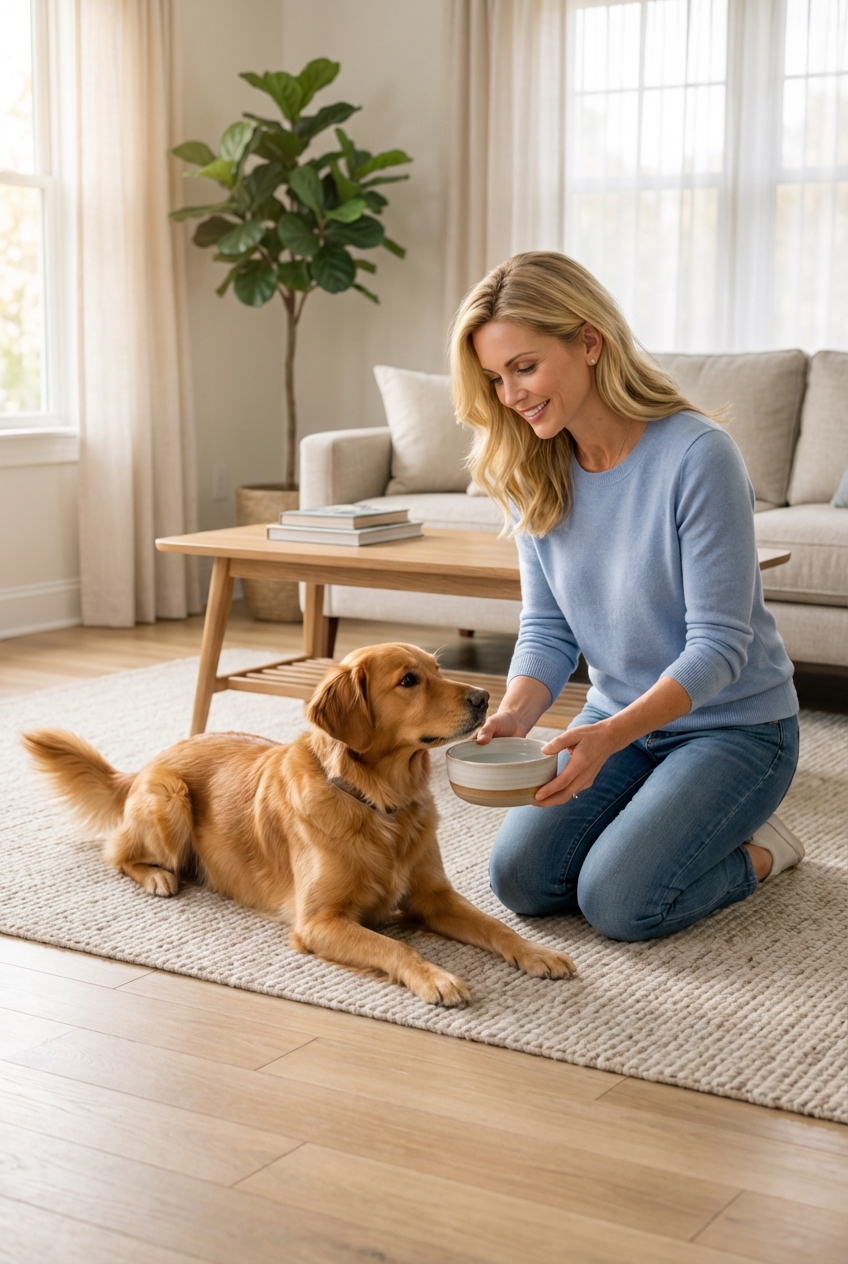
Small sips of water are usually helpful. If your dog gulps and vomits, offer smaller amounts more frequently. Some dogs tolerate ice chips well.
Do not force water. If vomiting persists, or your dog cannot keep even small sips down, that’s a good reason to call your vet.
3) Quick dehydration check
At home you can do a basic check, but it’s not perfect.
- Gums: gently touch the gums. They should feel slippery and moist, not tacky or dry.
- Skin tent: lift the skin over the shoulders and let go. It should snap back quickly. Slower return can suggest dehydration (and can also be affected by age and body condition).
4) Try a bland diet (short term)
A simple, low-fat bland meal can be easier on the stomach. Common vet-approved options include:
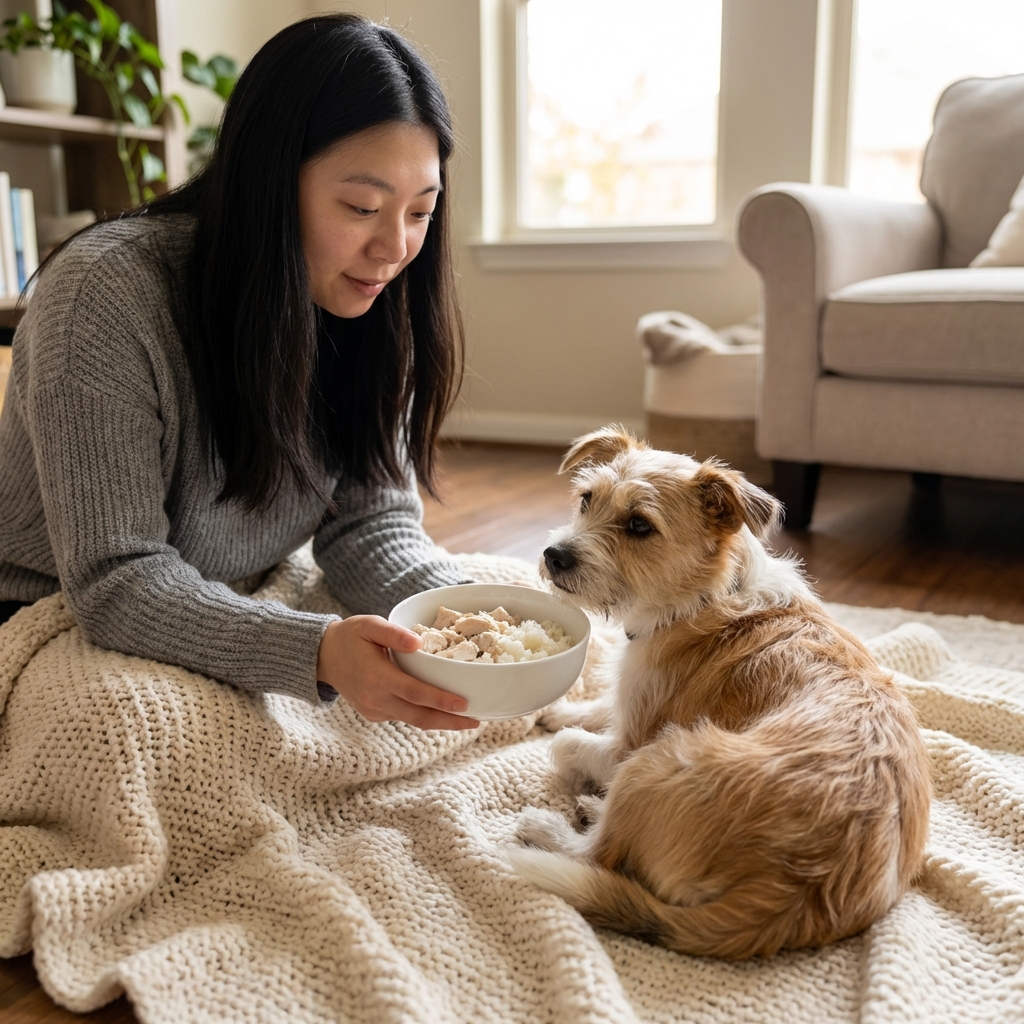
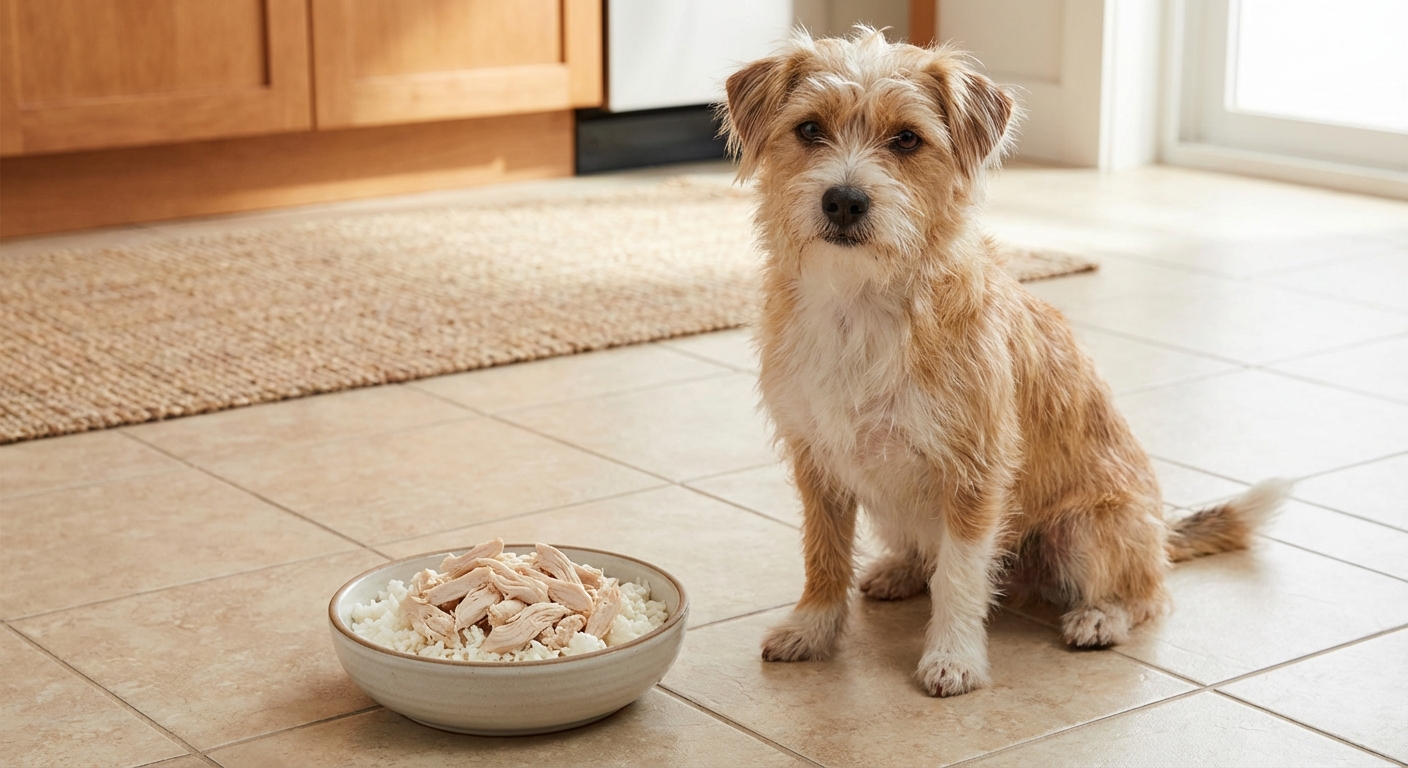
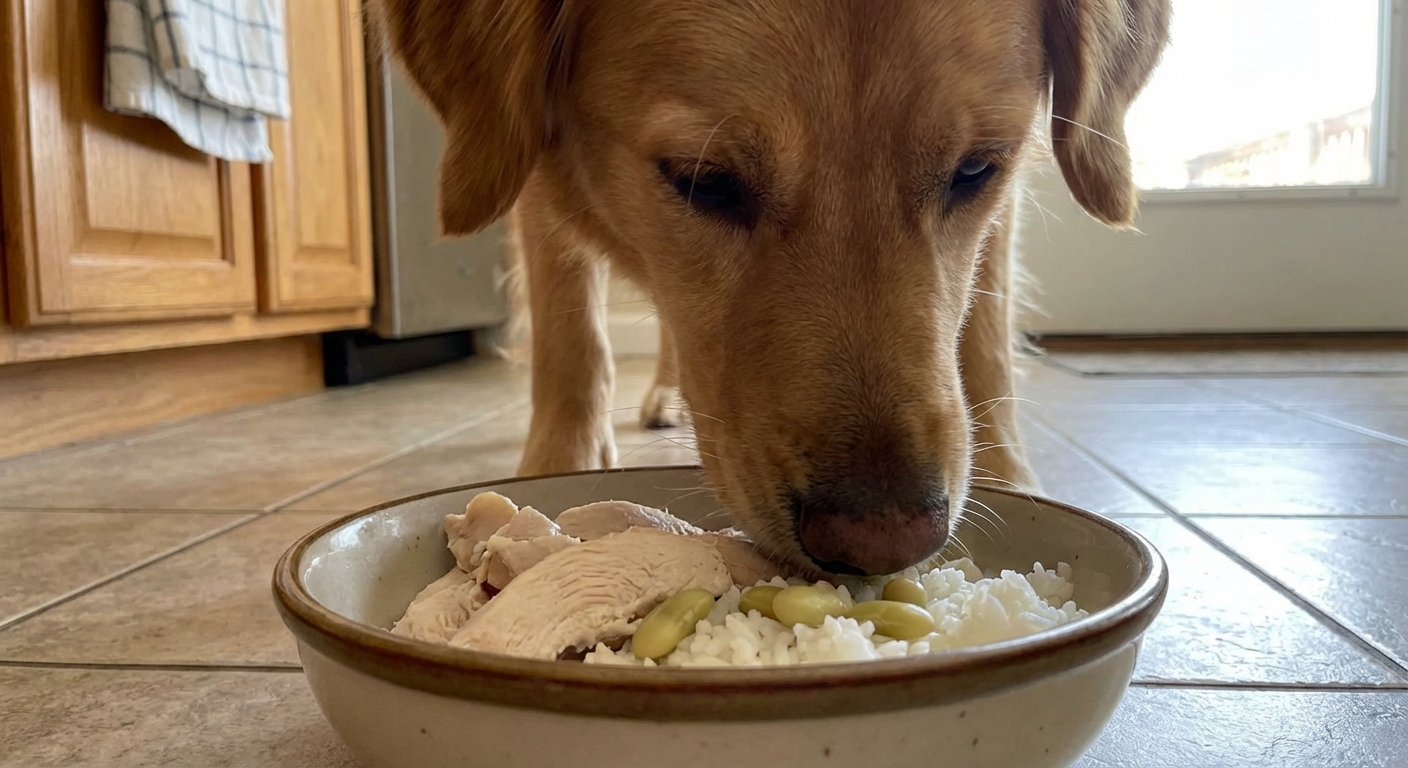
- Boiled skinless chicken breast with plain white rice
- Lean ground turkey, cooked and drained, with white rice
- Plain canned pumpkin (not pie filling) in a small amount may help some dogs, but dosing matters, so ask your vet what’s appropriate for your dog
Serve small portions and see how your dog responds before offering more. Many mild cases do best with a bland diet for about 2 to 3 days, then a gradual transition back to normal food.
5) Skip rich treats and chews
Pause new treats, fatty snacks, bones, bully sticks, and table scraps until stools are normal for a couple of days.
6) Ask before using OTC meds
Some human medications can be dangerous for dogs, and the correct dose depends on weight and health history. Your clinic can advise what is safe for your specific dog.
7) Transition back slowly
Once your dog is holding food down and stools are improving, transition back to normal food gradually over several days. A simple approach is:
- Day 1: 75% bland, 25% regular
- Day 2: 50% bland, 50% regular
- Day 3: 25% bland, 75% regular
- Day 4: 100% regular
How long to monitor
- Mild diarrhea only, acting normal: you can often monitor closely for 24 to 48 hours while doing bland food and hydration support.
- Vomiting plus diarrhea, or any low energy: call sooner, especially if it’s not improving within 12 to 24 hours.
- Any red flag signs: do not wait, call right away.
Clues from vomit and poop
I know it’s not glamorous, but these details can help your vet make faster decisions.
What vomit can suggest
- Undigested food soon after eating: eating too fast, nausea, or irritation
- Several hours after eating: can suggest delayed stomach emptying or other issues worth discussing
- Foreign material: grass, toy bits, fabric, bones, and more can indicate obstruction risk
What stool can suggest
- Mucus: often large bowel irritation
- Bright red blood: commonly lower GI irritation, but still needs attention
- Black, tarry stool: can indicate digested blood, call your vet
- Greasy or very pale stool: can be linked with fat malabsorption (such as EPI) or liver and bile-related issues, and it’s worth a vet conversation
If you can safely do so, take a photo to show your veterinarian. It sounds odd, but it helps more than you might think.
Common causes
Upset stomach is a symptom, not a diagnosis. Some of the most common causes include:
- Dietary indiscretion: trash, table food, fatty leftovers, new treats
- Sudden diet change: switching foods too quickly
- Parasites: especially in puppies or dogs who frequent dog parks
- Infections: viral or bacterial gastroenteritis
- Food sensitivities: recurring soft stool, gas, or vomiting with certain ingredients
- Pancreatitis: often triggered by fatty foods, tends to cause vomiting, pain, and lethargy
- Foreign body obstruction: toys, socks, bones, corn cobs, and more
- Stress: travel, boarding, routine changes can upset the gut
Prevention tips
The goal is fewer flare-ups and faster recovery when mild tummy trouble happens.
- Transition foods slowly: mix the new food in over 7 to 10 days.
- Keep rich foods off the menu: fatty meats and greasy scraps are common triggers.
- Use puzzle feeders or slow bowls: helps dogs who eat too fast.
- Stay current on parasite prevention: and talk to your vet about fecal testing schedules.
- Know your “no” list: grapes/raisins, onions, large amounts of garlic, xylitol, chocolate, macadamia nuts, alcohol, and many human medications.
And one more gentle reminder from the clinic world: if your dog has a history of GI sensitivity, consistency matters. Regular meals, predictable treats, and slow changes can make a huge difference.
What to share with the vet
To help your veterinary team triage quickly, have this ready:
- Your dog’s age, weight, and breed mix
- How long symptoms have been happening
- How many episodes of vomiting or diarrhea
- Any blood present
- Energy level and appetite changes
- Any new foods, treats, chews, meds, or known ingestion
- Whether your dog can keep water down
- Whether your dog is fully vaccinated (especially puppies)
Most of the time, early support leads to a smoother recovery. You know your dog best. If something feels off, trust that instinct and reach out.