Know if your indoor cat is truly thriving. Learn the clearest happiness cues (slow blinks, relaxed body, play, appetite, affection) plus subtle stress signs ...
Article
•
Designer Mixes
Tuxedo Cats: The Personality Behind the Pattern

Shari Shidate
Designer Mixes contributor
Tuxedo cats have a way of turning an ordinary moment into something a little more special. One minute they are curled up like a perfect black and white cameo, and the next they are trotting into the room like they own the place. While the “tuxedo” look is a coat pattern, not a breed, many families swear their tuxie has a distinct, confident charm.
Let’s talk about what a tuxedo cat actually is, what their personality is really like (and what is just myth), plus the best ways to support their health and happiness at home.
What makes a cat a tuxedo?
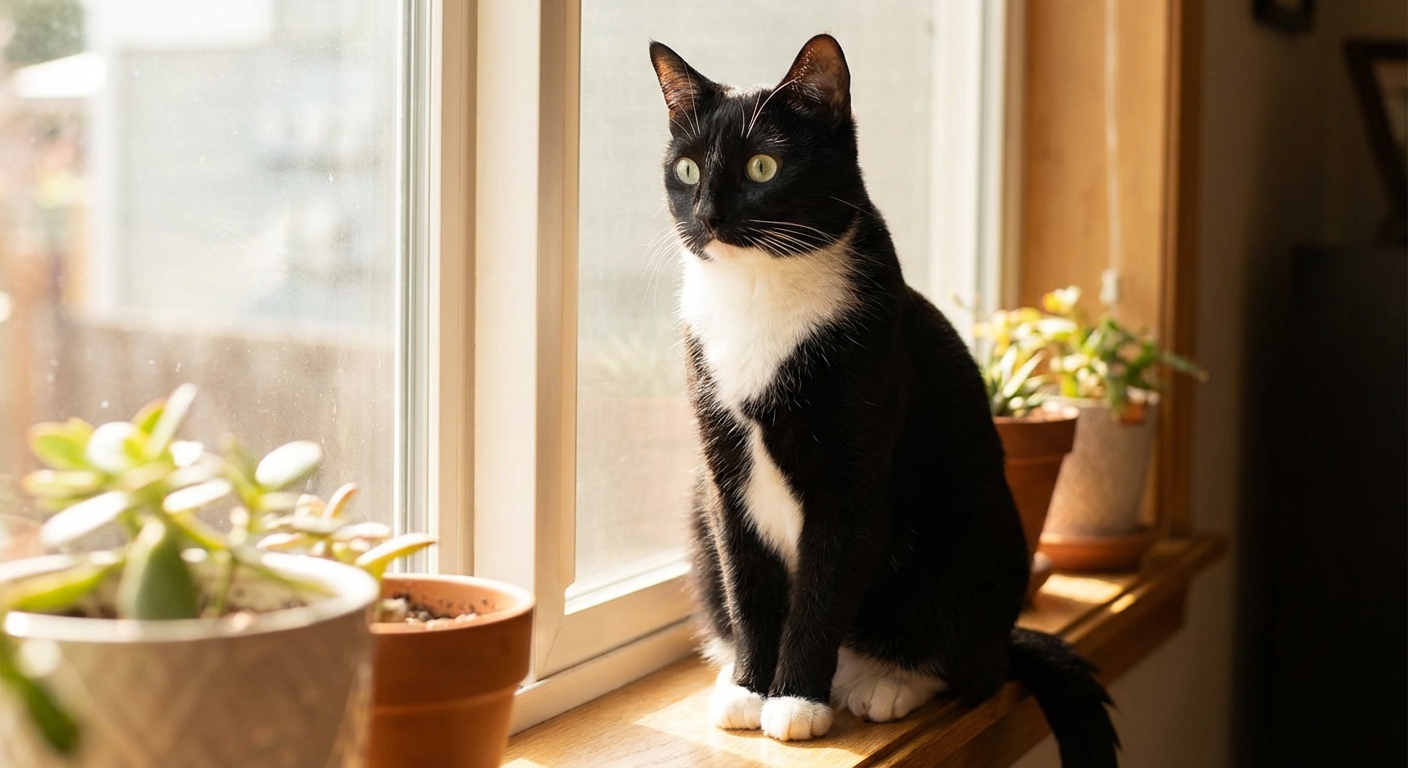
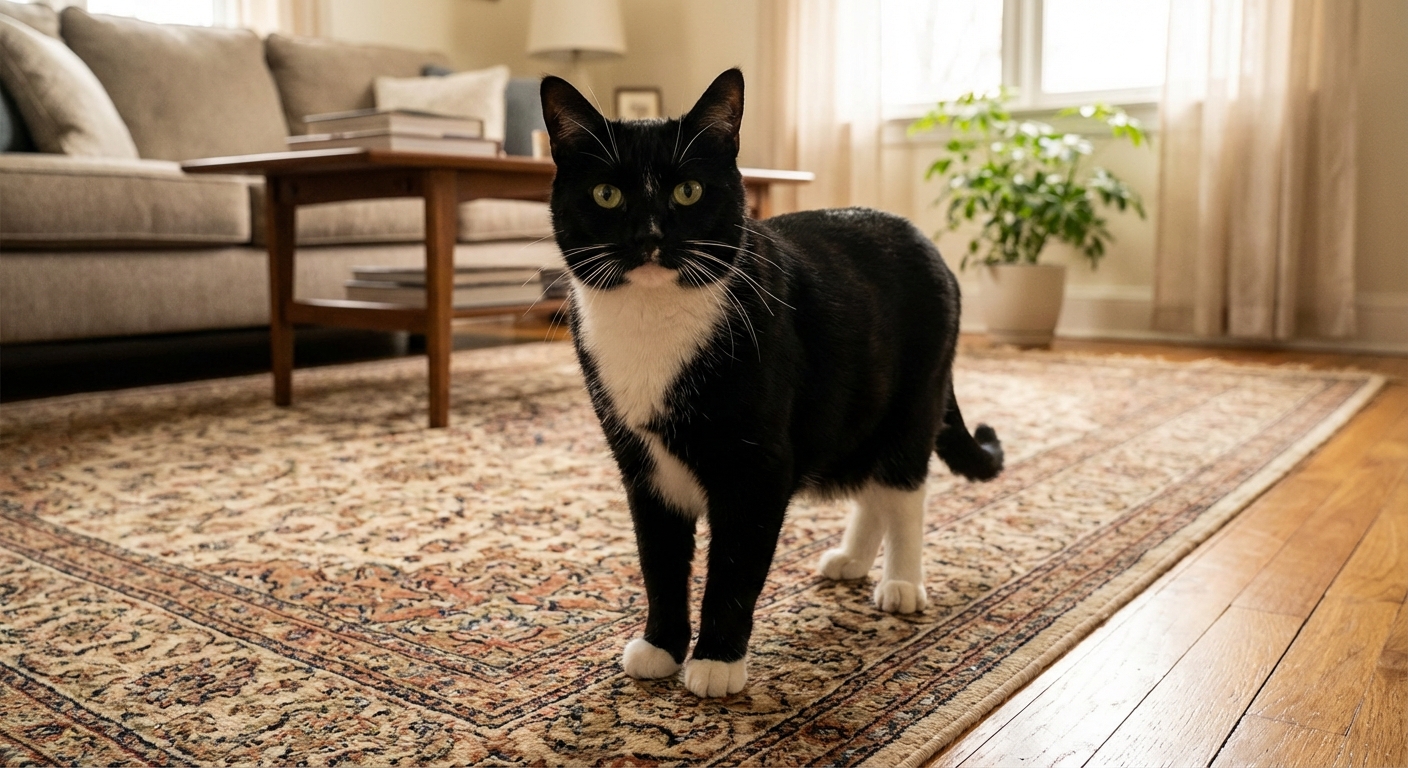
A tuxedo cat is any cat with a black and white bicolor pattern. “Bicolor” simply means two colors. In this case, it is usually a mostly black coat with crisp white areas that resemble formalwear. Typically, the back and head are mostly black, while the chest, belly, paws, and sometimes the face have white markings that can look like a shirtfront, bowtie, or little “mittens.”
Pattern, not breed
This is important because it explains why tuxedo cats can have a wide range of temperaments and sizes. You can see tuxedo patterning in many breeds and mixed-breed cats, including:
- Domestic shorthair and domestic longhair cats (very common)
- American Shorthair
- British Shorthair
- Maine Coon
- Norwegian Forest Cat
- Persian
- Scottish Fold
The pattern is tied to genetics that influence pigment and white spotting (how much white shows up and where), not to a specific “tuxedo personality.” Still, there are some real reasons tuxies may feel extra memorable.
The “tuxedo personality”: truth vs myth
You will hear tuxedo cats described as bold, social, smart, and a little mischievous. In my experience with cats over the years, I have met tuxies who are total charmers and tuxies who would prefer we all keep our distance. Most of what people call “tuxedo attitude” comes down to individual temperament, early socialization, and the cat’s environment.
Traits owners often report
- Confident: Many tuxies stroll into new spaces with curiosity rather than caution.
- People-focused: They often enjoy being near their humans, even if they are not full-time lap cats.
- Playful: Tuxedo cats are frequently described as energetic and interactive, especially in younger years.
- Vocal: Some families report more “conversation,” especially around meals or attention.
Why tuxedo cats look so expressive
The black and white contrast can make facial expressions and body posture look extra dramatic. A slow blink, a head tilt, or wide eyes can seem more theatrical on a tuxedo coat, which may be part of why people remember their tuxie as having a larger-than-life personality.
Bottom line: tuxedo is a look, not a behavior type. But a well-socialized, enriched cat often becomes the friendly, confident companion people associate with tuxies.
Common tuxedo-style patterns
Not all tuxedos look identical. You may hear a few informal pattern nicknames. They are not medical terms, but they can help you describe your cat.
- Classic tuxedo: black body with white chest and paws
- Mask and mantle: a darker “mask” and “cape” with more white on the body
- Van pattern: mostly white body with color concentrated on the head and tail
- “Reverse tuxedo” (informal): a mostly white cat with darker patches, sometimes used loosely for van-like looks
- Bowtie or bib: a small white patch under the chin or on the chest
From a health standpoint, the pattern itself usually does not change care needs. What matters more is coat length (shorthair versus longhair), body condition, and overall lifestyle.
Care tips that matter
If you want your tuxedo cat to look polished and feel their best, focus on the basics that support lifelong health. These are the same foundations I recommend for any cat, regardless of color or pattern.
1) Nutrition and weight
Obesity is one of the most common issues we see in companion cats. Extra weight increases the risk of diabetes and arthritis, and it may also increase the risk of some lower urinary tract issues in certain cats.
- Choose a complete and balanced diet that meets AAFCO standards for your cat’s life stage.
- Measure meals instead of free-feeding, especially after spay or neuter when metabolism can shift.
- Use treats strategically, ideally under 10 percent of daily calories.
2) Enrichment and routine
Many tuxedo cats thrive with interactive play and predictable routines, especially if they are indoor-only.
- Offer 1 to 2 short play sessions daily using wand toys or hunt-style games.
- Add vertical space like cat trees or window perches.
- Rotate toys weekly to keep novelty high.
- If your cat begs for adventure, consider a harness, a stroller, or a secure “catio” instead of unsupervised outdoor roaming.
3) Grooming
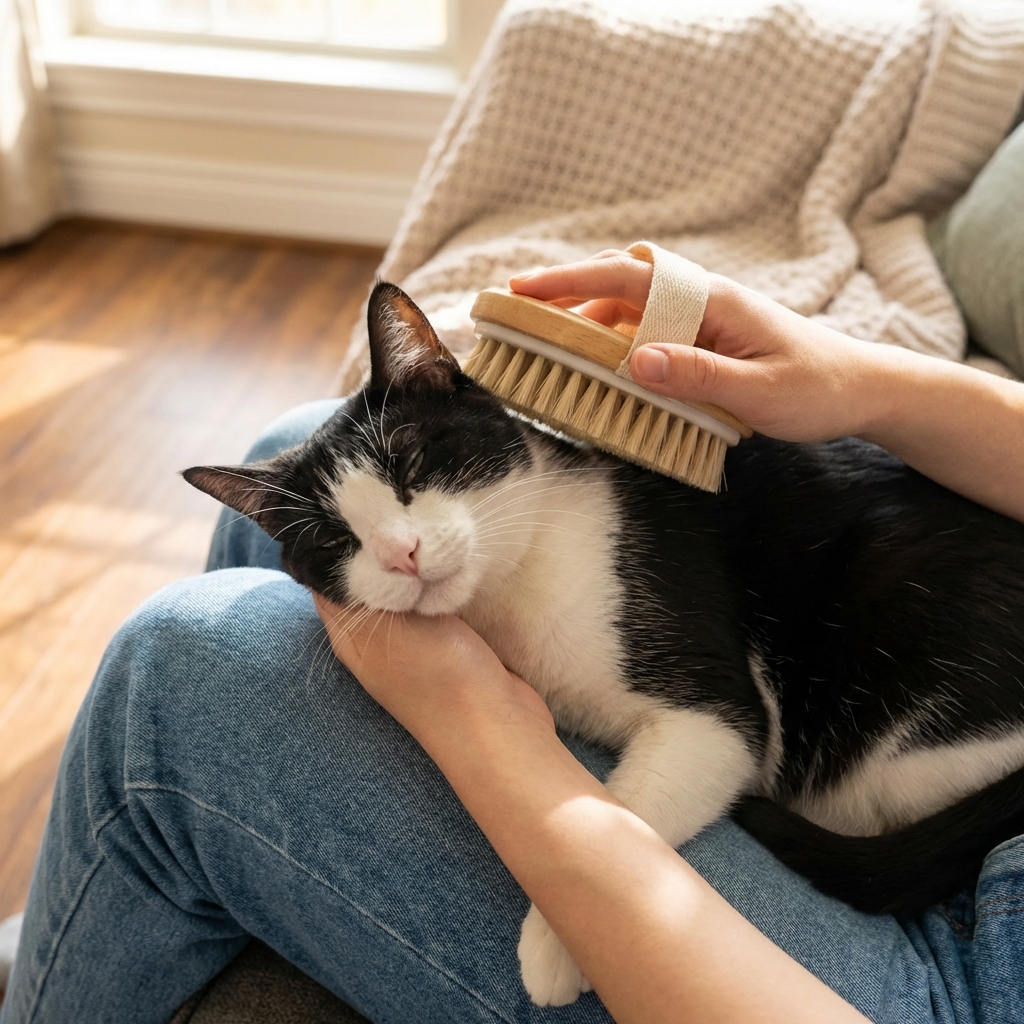
Tuxedo cats can show dandruff and loose hair more noticeably because of the color contrast.
- Shorthair: brush 1 to 2 times per week
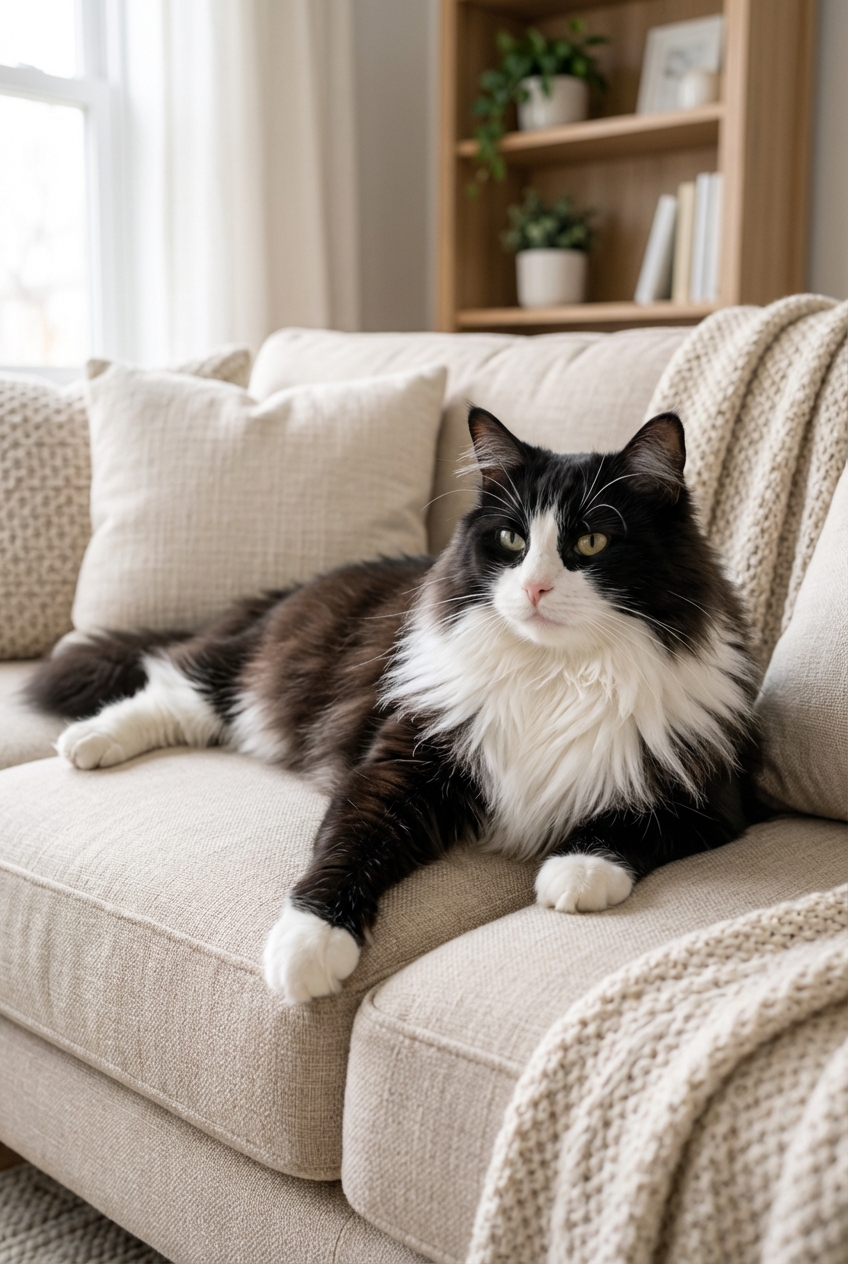
- Longhair: brush most days to prevent mats, especially on the rear leg fur (“pants”), armpits, and chest ruff
- Use grooming time to check ears, nails, and skin for changes
4) Dental care
Dental disease is extremely common in cats and can impact appetite, comfort, and overall health.
- Ask your veterinarian about at-home brushing, dental diets, or dental treats with evidence behind them.
- Schedule professional dental cleanings as recommended.
Health and longevity
There is no strong evidence that tuxedo coloring alone makes a cat healthier or sicker. Health risks depend more on genetics, breed background, body condition, diet, stress level, and preventive care.
Key health areas to watch
- Weight: aim for a lean body condition with a visible waist and easily felt ribs
- Urinary health: encourage water intake with fountains and, if appropriate, wet food
- Hairballs: more common in longhaired cats and heavy groomers
- Stress: can contribute to urinary flare-ups and overgrooming
Basic preventive care
- Vaccines: keep core vaccines current based on your vet’s recommendations and lifestyle risk
- Parasite prevention: use vet-recommended flea, tick, and heartworm prevention as appropriate for your area
- Microchip: helpful for indoor cats too, since doors and carriers are not perfect
- Checkups: routine wellness visits help catch subtle issues early
If you ever notice appetite changes, litter box changes, hiding, new aggression, or decreased grooming, those are real signals to call your veterinarian. Cats often hide discomfort until they cannot anymore.
Adopting a tuxedo cat
If you are thinking about welcoming a tuxie into your home, choose based on temperament first. The pattern is a bonus.
Questions to ask
- How does the cat handle new people and new rooms?
- Do they enjoy being picked up or do they prefer petting only?
- Are they playful? Food-motivated? Shy?
- Any history of litter box issues or urinary concerns?
Set up the first week
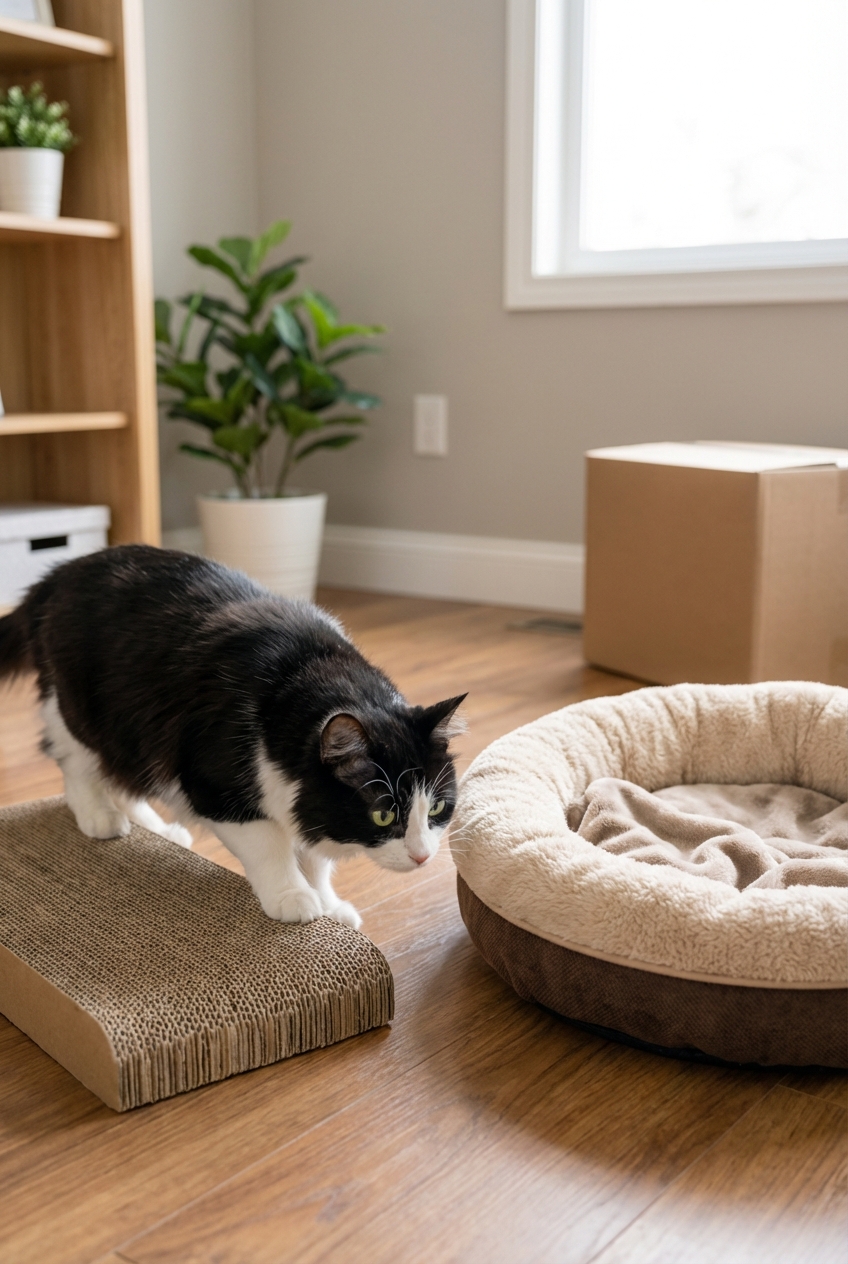
- Create a quiet “home base” room with food, water, litter box, scratching surface, and a hiding spot.
- Keep routines consistent and introductions slow.
- Schedule a new-pet veterinary exam within the first couple of weeks, sooner if anything seems off.
Fun facts
Some tuxedo trivia is more folklore than science, but it is part of the charm.
- Many famous fictional cats are tuxedo-patterned, which reinforces the “clever and charismatic” stereotype.
- Tuxedo cats are often photographed easily because the pattern reads clearly, especially in good lighting.
- Owners frequently describe tuxies as “old souls” or “little comedians,” which usually reflects a strong bond and a cat who feels safe enough to show personality.
The takeaway
Tuxedo cats are a reminder that looks may catch your eye, but relationship and care shape the real experience. Whether your tuxie is a social butterfly or a quiet best friend, you can support that dapper confidence with balanced nutrition, daily play, grooming, preventive care, and regular veterinary checkups.
If you tell me your cat’s age, coat length, and lifestyle (indoor only or indoor-outdoor), I can suggest a simple enrichment and grooming routine that fits your home.