Understand canine cognitive dysfunction (CCD) in senior dogs. Learn DISHA signs, rule-outs to discuss with your vet, and home + routine changes to ease pacin...
Article
•
Designer Mixes
Trusted Symptoms of Canine Dementia

Shari Shidate
Designer Mixes contributor
If your senior dog is acting a little “off,” you are not imagining it. Canine Cognitive Dysfunction (CCD), often called canine dementia, is a real, research-supported condition that affects the aging brain. The key is knowing which changes are common aging and which are reliable red flags that deserve a veterinary check.
In this quick guide, I will walk you through the most reliable symptoms, how they tend to show up at home, and what to do next so you feel supported and your dog feels safe.
What canine dementia looks like
CCD is a progressive syndrome linked to age-related brain changes. It typically develops slowly, which is why many people say, “It crept up on us.” Many dogs show mild signs first, then more noticeable changes over months.
Veterinary teams often use a simple memory aid to group symptoms: DISHA. It stands for Disorientation, Interaction changes, Sleep-wake changes, House soiling, and Activity changes. You may also see it written as DISHAA, with an extra “A” for Anxiety, since anxiety commonly shows up alongside cognitive changes.
Trusted symptoms (DISHA) to watch for
Disorientation
- Getting “stuck” in corners or behind furniture and seeming unsure how to back out.
- Staring at walls or into space for longer periods.
- Walking into a room and acting confused about why they are there.
- Seeming lost in familiar places, including your home or backyard.
Tip: A single odd moment can happen to any dog. What matters is repetition and a trend over time.
Changes in social interaction
- Less interest in greeting you or participating in daily routines.
- Clinginess or increased anxiety when you move from room to room.
- Not responding to their name as reliably (after ruling out hearing loss).
- Reduced tolerance for handling, brushing, or being approached while resting.
Sleep-wake cycle disruption
- Restlessness at night, pacing, or frequent waking.
- Sleeping more during the day and being active at unusual hours.
- Vocalizing at night, including whining or barking for no clear reason.
Nighttime changes are a very common concern for families, and they are worth discussing with your veterinarian sooner rather than later.
House soiling and new accidents
- Urinating or defecating indoors despite previously solid house training.
- Seeming to forget to signal, or signaling too late.
- Accidents occurring shortly after coming back inside.
Important: This symptom overlaps with many medical issues like urinary tract infections, kidney disease, diabetes, arthritis, and gastrointestinal problems. A vet visit is essential to rule those out.
Activity level and behavior changes
- Repetitive behaviors like pacing the same path or circling.
- Less interest in toys, play, or walks.
- Increased irritability, startle responses, anxiety, or restlessness.
- Apparent “aimless wandering” rather than purposeful exploring.
Other common signs
These signs can support the picture, but they are not exclusive to dementia. They still matter because they help your veterinarian build a full, accurate story.
- New fears (especially at night or in dim light).
- Reduced learning or difficulty with familiar cues like “sit” or “wait.”
- Changes in appetite or picky eating.
- Increased vocalization even when basic needs seem met.
Also worth noting: sensory decline (hearing or vision loss) can look a lot like cognitive change, and it can also make true CCD feel worse. Either way, it is something your veterinarian can help assess.
When to call your veterinarian
CCD is typically diagnosed based on patterns you are seeing at home, paired with a veterinary exam and ruling out medical problems that can look similar. Many clinics also use validated questionnaires (such as CADES or CCDR) to help measure and track cognitive change over time.
Make an appointment soon if you notice two or more DISHA changes lasting more than a couple of weeks, or if any single symptom is clearly worsening.
Seek urgent care if you see any of the following:
- Sudden, severe confusion or a sudden change from your dog’s baseline (for example, acting “normal” yesterday and markedly disoriented today).
- Collapse or extreme weakness.
- Seizures.
- Head tilt, loss of balance, or rapid eye movements.
- Refusal to eat for 24 hours, repeated vomiting, or obvious pain.
What your vet may check
It can be reassuring to know what “ruling things out” often looks like. Depending on your dog’s symptoms and age, your veterinarian may discuss:
- A full physical and neurologic exam, plus a review of medications and supplements.
- Pain and mobility assessment (arthritis is a common driver of sleep disruption and irritability).
- Vision and hearing screening.
- Bloodwork and urinalysis to look for issues such as infection, kidney disease, diabetes, thyroid disease, or Cushing’s disease.
- Blood pressure check.
- A cognitive screening questionnaire (CADES, CCDR), and guidance for tracking changes at home.
- Imaging (X-rays, ultrasound, or advanced imaging like MRI) if something suggests an underlying neurologic condition such as vestibular disease or a brain tumor.
What to track at home
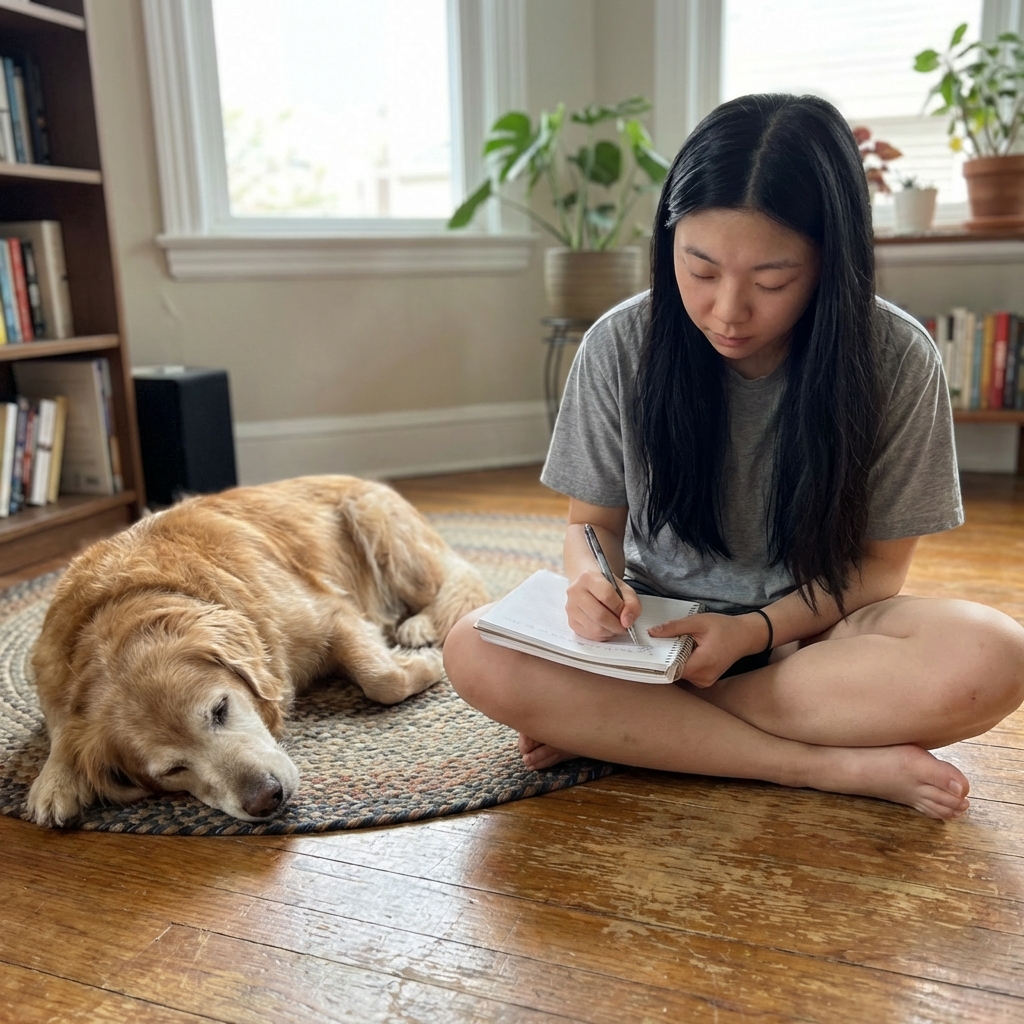
You do not need to diagnose your dog. Your job is to observe. A short log gives your veterinarian much better information than memory alone.
- Frequency: How often did the behavior happen this week?
- Timing: Is it worse at night, after naps, or during storms?
- Triggers: Visitors, stairs, slippery floors, changes in routine?
- Examples: “Stuck behind the recliner for 2 minutes” is more useful than “confused.”
- Video: A 10 to 20 second clip of pacing, staring, or getting stuck can be extremely helpful.
Support you can start today
While treatment decisions should be made with your veterinarian, there are gentle, low-risk changes that often help many senior dogs feel more secure.
Keep life predictable
- Feed, walk, and bedtime routines at consistent times.
- Use the same door for potty breaks when possible.
Make the home easier to navigate
- Add night lights in hallways and near the water bowl.
- Use non-slip rugs or runners on slick floors.
- Block off tight spaces where your dog tends to get stuck.
Gentle brain and body enrichment
- Short sniff walks (even 10 minutes counts).
- Food puzzles that are easy, not frustrating.
- Simple cues your dog knows well, done for fun and confidence.
Care options your vet may discuss
Every dog is different, but a plan often combines several supports, such as managing pain, addressing anxiety, improving sleep, and considering prescription or diet options when appropriate. Your veterinarian may talk with you about:
- Environmental and routine adjustments (like the ones above).
- Treating contributing conditions (pain, infection, endocrine disease).
- Prescription options for cognitive support in certain cases (for example, selegiline).
- Therapeutic diets or supplements with veterinary guidance.
The goal is not to “fix” aging. The goal is comfort, safety, and preserving the joy your dog can still access every day.
Bottom line
The most trusted symptoms of canine dementia are the DISHA (or DISHAA) changes that repeat and gradually become more noticeable. If something feels different in your senior dog, trust your instincts, start a simple log, and bring those notes to your veterinarian. Early support can make daily life calmer for both of you, and tracking helps you make kind, clear quality-of-life decisions as needs change.