Your dog got skunked? Follow calm first steps, use the proven peroxide + baking soda + dish soap mix safely, protect eyes and ears, deodorize your home, and ...
Article
•
Designer Mixes
Trusted Skunk Spray Dog Behavior Guide

Shari Shidate
Designer Mixes contributor
Skunk spray is one of those dog moments you never forget. The smell is intense, it sticks to fur, and it can make even calm dogs panic. But here is the reassuring truth I have seen again and again as a veterinary assistant in Frisco, Texas: with the right first aid steps and a simple behavior plan, most dogs bounce back quickly.
This guide covers two things that matter most: (1) how to handle skunk spray safely and effectively, and (2) how to reduce the odds of a repeat encounter by working with your dog’s instincts.
Why skunks spray
Skunks do not want a fight. Spraying is a defensive last resort. Dogs, on the other hand, are wired to investigate movement, scent, and small animals. The combo is perfect for trouble, especially at dawn and dusk when skunks are commonly active.
Common triggers
- Chasing or cornering a skunk near a fence line, shed, or under a deck.
- Off-leash freedom in backyards with brush, woodpiles, or gaps under structures.
- Curiosity on walks, especially in quieter neighborhoods or near creek beds.
- Unsecured food sources like pet food left outside, fallen fruit, accessible trash, or bird seed on the ground.
Behavior note: your dog is not being “bad.” They are doing what dogs do. The goal is not punishment. The goal is management plus training.
Safety first
Before you worry about the smell, check for medical issues. Skunk spray can cause significant irritation, especially to the eyes. If your dog licked or swallowed spray, stomach upset is also common.
Call your vet now if
- Spray in the eyes, squinting, pawing at the face, redness, swelling, or discharge. Eye exposure can lead to painful corneal irritation and, in some cases, ulcers.
- Repeated vomiting, severe drooling, weakness, or collapse (possible significant GI irritation or stress response).
- Breathing trouble or significant facial swelling.
- Puppies, seniors, or dogs with chronic conditions (asthma-like coughing, heart disease).
Do this at home
- Keep your dog outside if possible while you gather supplies, so the odor does not soak into furniture.
- Prevent face rubbing (use a cone if you have one) because spray can irritate skin and eyes.
- Rinse eyes with sterile saline if you have it, and call your vet if the eyes may have been hit.
- Avoid a frantic water-only rinse (a “panic-bathe”). Water can dilute and spread the odor compounds and reduce the effectiveness of de-skunking products.
Rabies and contact note
If your dog had direct contact with the skunk (bite, scratch, or you are not sure what happened in the dark), call your veterinarian the same day. They can advise you on rabies booster timing, wound care, and any local reporting guidance.
De-skunking that works
Skunk odor comes from sulfur-based compounds called thiols. The reason “tomato juice baths” usually fail is that they do not neutralize thiols effectively. A widely recommended at-home approach uses an oxidation reaction that changes those compounds.
Oxidation mix
Use only 3% hydrogen peroxide. Higher concentrations can burn skin.
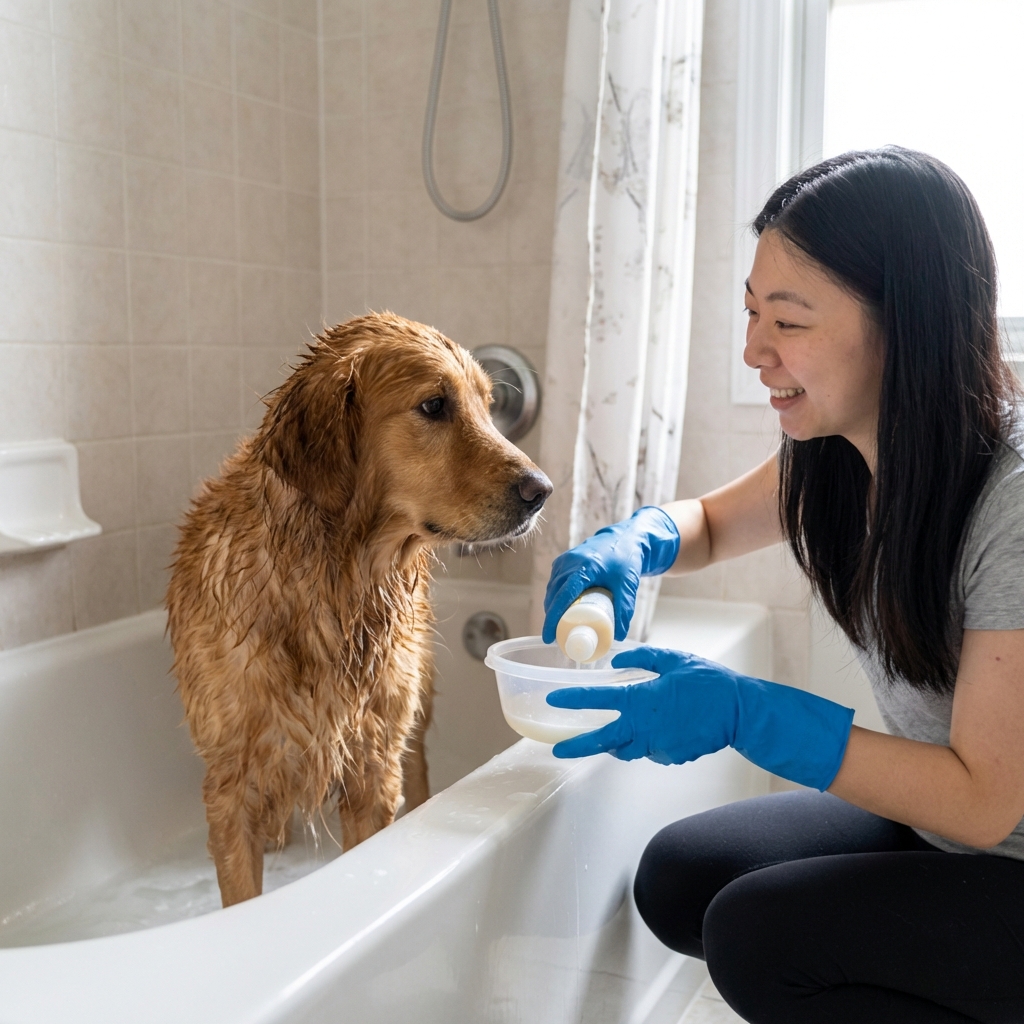
Typical recipe: 1 quart of 3% hydrogen peroxide, 1/4 cup baking soda, and 1 to 2 teaspoons of dish soap.
How to use it (quick steps):
- Start with a dry coat. Do not pre-wet.
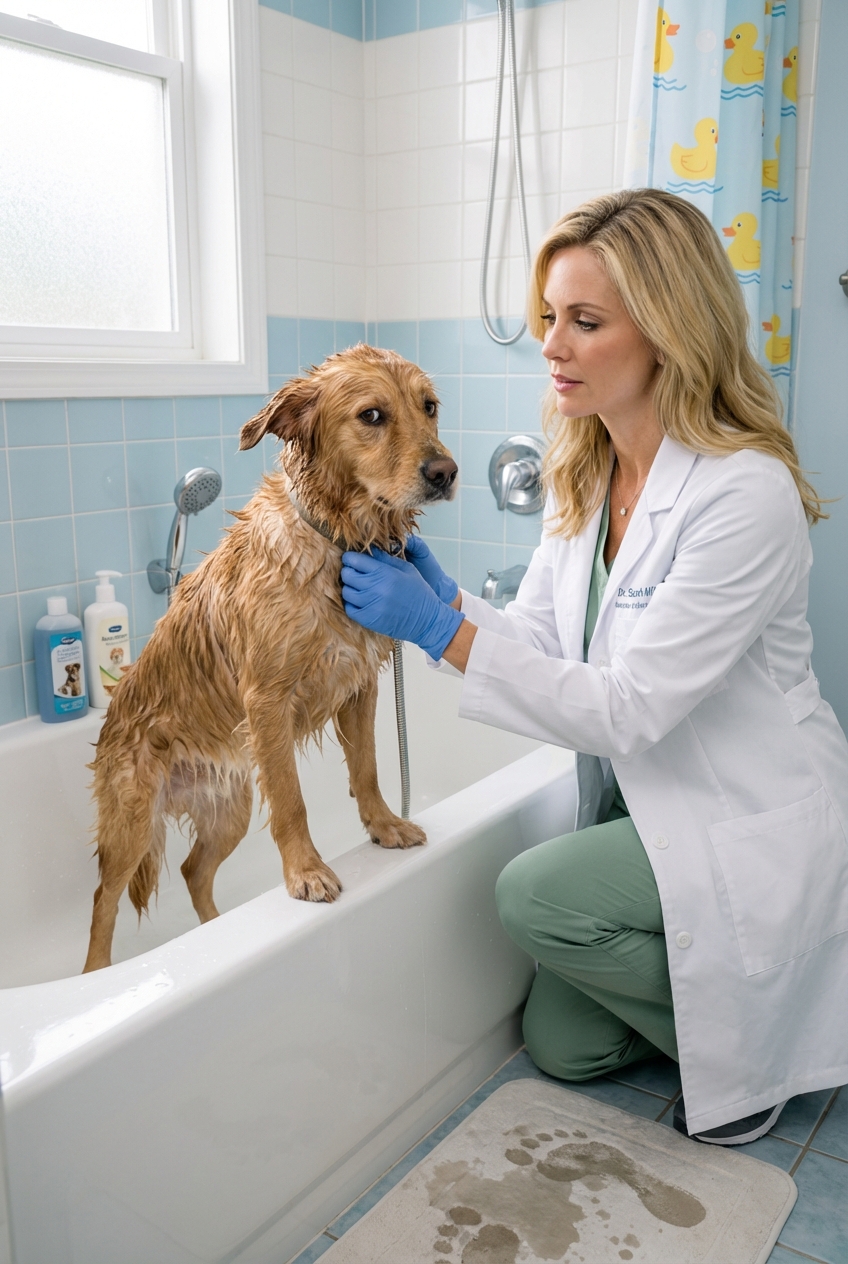
- Wear gloves and work the fresh mixture into the fur.
- Leave on 3 to 5 minutes (shorter for sensitive skin), avoiding eyes, nose, mouth, and genitals.
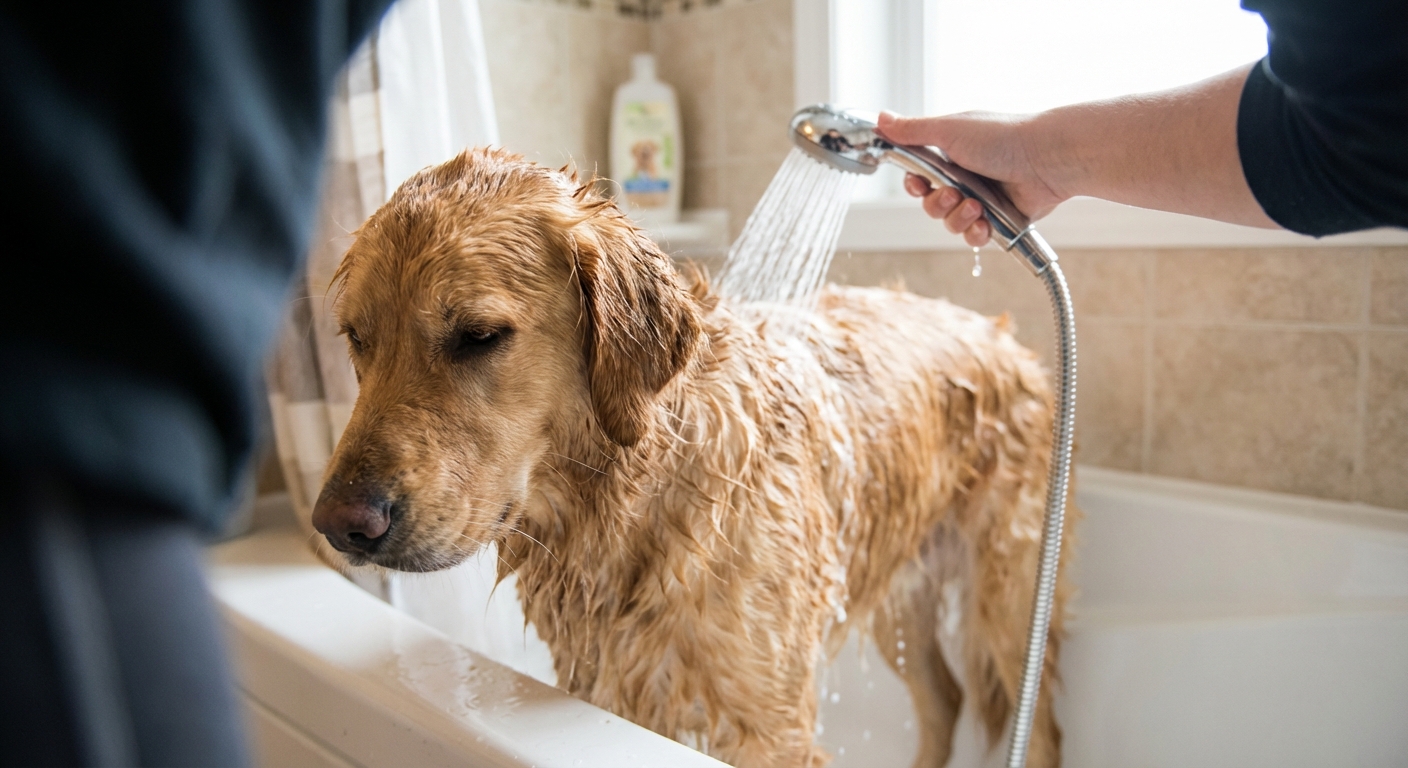
- Rinse thoroughly.
- Repeat once if needed, as long as the skin is not getting irritated.
Important safety notes:
- Do not store the mixture in a closed container. It can build pressure.
- Mix fresh each time and discard leftovers.
- Coat and skin caution: hydrogen peroxide can bleach or alter coat color and can irritate skin. Keep contact time short, and consider a small patch test for dogs with sensitive skin.
- Do not use on open wounds or irritated, broken skin. If your dog has hot spots, dermatitis, or fresh scrapes, call your veterinarian for a safer plan.
- Face and eye caution: do not apply this around the eyes or inside the mouth. If the face was sprayed and your dog is squinting or uncomfortable, your vet may recommend an eye exam and a fluorescein stain to check for corneal injury.
- Multi-pet homes: keep cats and other pets away from the mixture and wet fur. If you need to de-skunk a cat, contact your veterinarian for cat-safe options.
Store-bought skunk remover
If you want a simpler option, choose a skunk remover that specifically says it neutralizes odor, not one that only “masks” it. Many veterinary clinics carry professional formulas that are effective and skin-conscious.
After-bath odor control
- Wash collars, harnesses, and leashes. These hold odor for days.
- Launder bedding and wipe down crates with pet-safe cleaner.
- Wipe the muzzle and whisker area with a damp cloth (no peroxide mix near eyes).
- Clean touch points if your dog got indoors: door handles, light switches, walls near the entry, and the floor path to the bath.
- Ventilate your home. If odor persists, consider replacing HVAC filters.
After a skunking
Many dogs act jumpy or clingy after being sprayed. Some refuse to go into the yard for a day or two. Others do the opposite and become more excited on walks, because the skunk smell is still “interesting” to them.
What you may see
- Startle responses to normal backyard noises.
- More sniffing than usual on walks.
- Restlessness or trouble settling the first night.
- Aversion to the yard if the skunk was encountered there.
If your dog seems frightened, respond with calm structure: short potty breaks, gentle praise, and predictable routines. Avoid scolding. They will not connect punishment with “skunk avoidance,” but they can learn that the yard is scary because you are upset.
Prevent a repeat
Prevention works best when you combine yard management, supervision, and training. You do not need to do everything perfectly. Even one or two changes can significantly reduce risk.
1) Yard management
- Remove food attractants: do not leave pet food outside, secure trash, clean grills, pick up fallen fruit.
- Block access under decks and sheds with sturdy wire mesh.
- Trim brush and remove woodpiles where possible.
- Use motion lighting in high-traffic skunk areas.
2) Supervise risky times
Many skunk encounters happen at dusk, night, and dawn. If your dog must go out during those times, use a leash even in a fenced yard, especially if you have bushes, a creek line, or a back fence with wildlife gaps.
3) Train two core skills
In my experience, the most useful behavior tools are a rock-solid recall and a reliable leave it. These are life skills, not party tricks.
- Recall: Practice indoors first, then in the yard on a long line. Reward heavily. The goal is “come to me is always worth it.”
- Leave it: Start with food in a closed fist. Reward when your dog disengages. Progress slowly to items on the ground, then to squirrels and birds at a distance.
Tip: use a high-value reward that your dog never gets for free. Small pieces of chicken, cheese, or a special treat can help you compete with wildlife temptation.
Repeat offenders
Some dogs are magnetically drawn to skunks. If you have a repeat skunk-chaser, think of it like a management problem first and a training project second.
Practical solutions
- Nighttime leash rule: no off-leash yard time after dark, even in a fenced area.
- Long-line potty breaks: 15 to 30 feet gives freedom while keeping control.
- Predator-proof routine: go out with your dog, scan the yard, keep porch lights on.
- Enrichment to reduce hunting drive: scent games, puzzle feeders, and structured play can reduce roaming and “patrol mode.”
Aversion training
Some areas offer wildlife aversion training for snakes or porcupines. Skunk aversion training exists in some places, but methods and quality vary widely. If you consider it, ask detailed questions about safety, humane practices, and trainer credentials. If you feel uneasy, trust that instinct and choose management plus positive training instead.
Skunk kit checklist
If you live in an area with skunks, a small kit can turn a miserable night into a manageable one.
- Nitrile gloves
- 3% hydrogen peroxide
- Baking soda
- Dish soap
- Saline eye rinse (sterile)
- Old towels you can throw away
- A spare collar or slip lead
- Trash bags for smelly items
Kind reminder: if the eyes are involved, skip the home experimenting and call your veterinarian. Eye injuries can worsen quickly, and relief can be simple with the right care.
If smell lingers
Even with great de-skunking, you may notice faint odor after your dog gets wet again, like after rain or a bath a week later. That is common. Rewashing with a proven skunk remover shampoo or a second careful oxidation bath (when skin is not irritated) usually helps.
If your dog develops redness, itchiness, or flaky skin afterward, contact your veterinarian. Skin irritation can come from the spray, the cleanup products, or both.