Your cat in heat? Learn common signs, how long estrus lasts, and practical at-home steps to reduce stress, prevent escape and pregnancy, and know when to cal...
Article
•
Designer Mixes
Trusted Signs of a Female Cat in Heat

Shari Shidate
Designer Mixes contributor
If your sweet girl cat suddenly seems louder, clingier, and a little restless, you are not imagining it. Those changes often point to estrus, also called being in heat. As a veterinary assistant here in Frisco, Texas, I have seen how stressful a heat cycle can feel for both cats and their people, especially the first time it happens.
This guide will help you spot the most trusted signs of heat, understand what is normal (and what is not), and learn simple, humane ways to keep your cat comfortable and safe until the cycle passes.
What “in heat” means
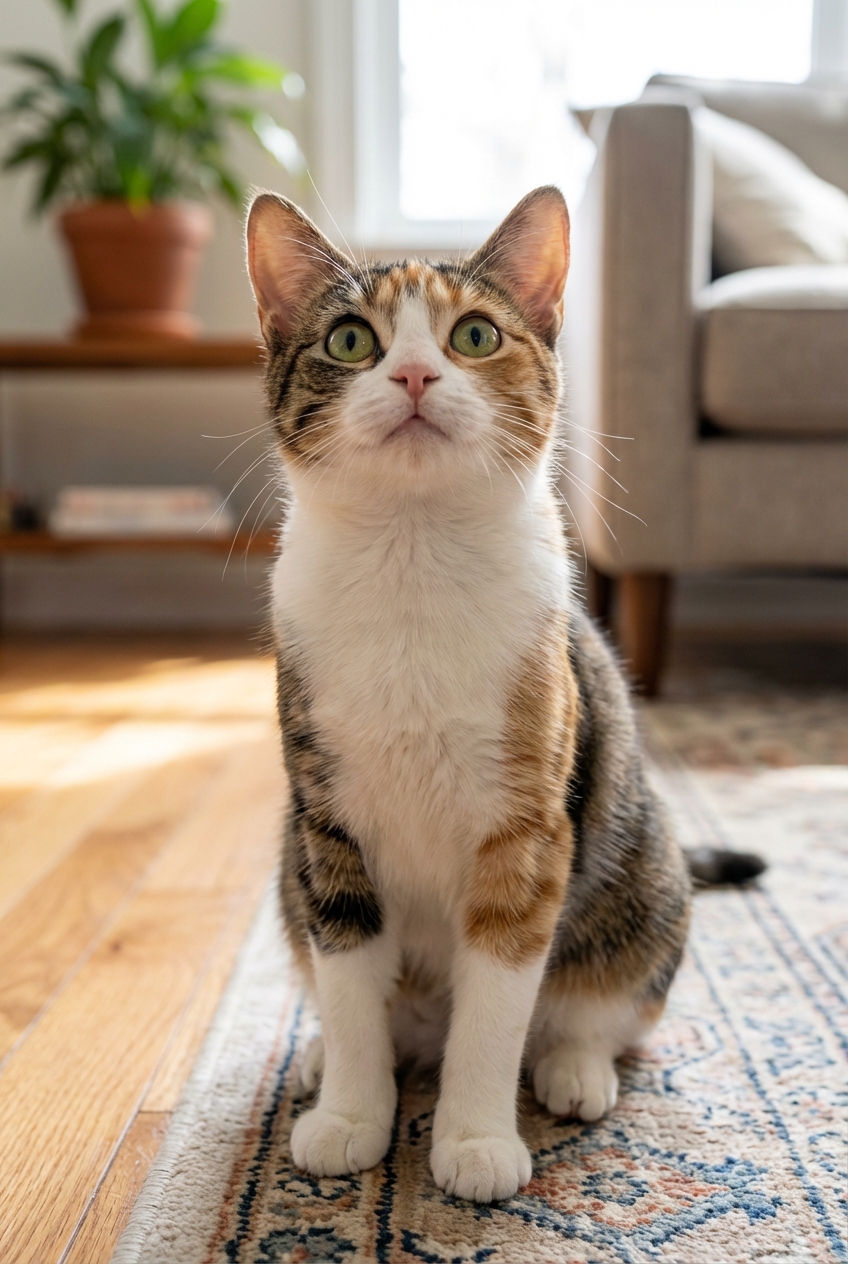
A female cat is “in heat” when she is in the fertile part of her reproductive cycle and is ready to mate. Most cats are seasonally polyestrous, meaning they can have multiple heat cycles during longer daylight months. Indoor lighting can also influence cycles, so some indoor cats show heat behaviors throughout the year.
Many cats have their first heat around 5 to 9 months, sometimes as early as 4 months. Timing varies based on breed, season (daylight), and body condition. In general, smaller, short-haired breeds may cycle earlier, while larger, long-haired breeds can mature later. Cats that are underweight or not in ideal body condition may also cycle later.
One more helpful detail: cats are induced ovulators. That means they often keep cycling if they do not mate, which is a big reason heat can feel like it keeps coming back.
Trusted signs your female cat is in heat
Not every cat shows every sign, but the patterns below are the ones I see most consistently in practice and at home with clients.
1) Loud, persistent vocalizing
This is the classic sign. Heat vocalizations can sound like yowling, moaning, or intense meowing that seems out of character, especially at night. It is not “bad behavior.” It is a biological mating call.
2) Extra affection (or moodiness)
Many cats become Velcro-cats. They may follow you from room to room, rub their face and body on your legs, roll around more, or constantly request petting. Some cats do the opposite and seem a bit irritable, overstimulated, or harder to settle. Both patterns can be normal during heat.
3) Rubbing, rolling, and scent marking
You may notice more rubbing on furniture, door frames, or people. Some cats spray urine, although this is more common in intact males. Still, intact females can mark too, especially if there are other cats nearby.
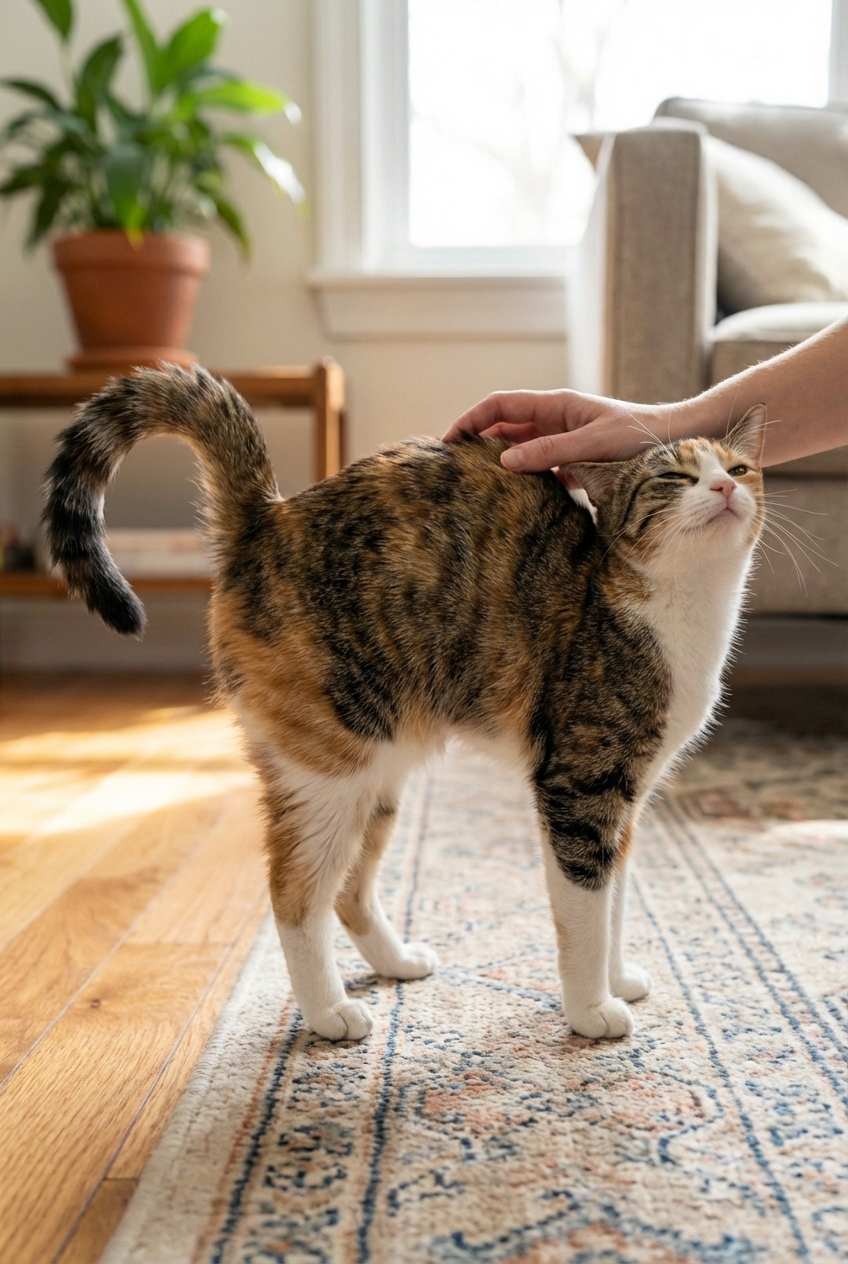
4) The “heat posture” (lordosis)
This is one of the most specific signs. When you pet along her back, she may:
- Lower her front end
- Raise her hindquarters
- Move her tail to the side
- “Tread” with her back feet
This posture is normal in estrus and does not mean she is in pain.
5) Restlessness and escape attempts
Cats in heat often become laser-focused on getting outside. They may bolt through doors, linger near windows, or pace. This is one of the biggest safety risks during a heat cycle. You may also notice neighborhood tomcats hanging around doors and windows.
6) Decreased appetite or distracted eating
Some cats eat less because their drive to find a mate is stronger than their interest in food. Others may eat normally. Either can be normal as long as she is still drinking and otherwise acting normal.
7) Increased grooming around the rear
Extra licking can happen due to mild swelling and increased secretions. Noticeable discharge is uncommon in cats. If you see blood, thick discharge, a bad smell, or anything that looks like more than a tiny amount of clear moisture, call your veterinarian.
Signs people confuse with heat
Because heat can involve vocalizing and changes in litter box habits, it is easy to mistake estrus for illness. Here are common mix-ups.
Heat vs. urinary tract issues
Heat can come with restlessness and occasional marking. A urinary tract infection or inflammation typically includes straining to urinate, frequent small urinations, urinating outside the box, crying in the litter box, or blood-tinged urine.
If your cat is making repeated trips to the box with little output, call your vet promptly. Urinary problems can worsen quickly.
Heat vs. pain
Heat posture can look odd, but it should not come with hiding, growling when touched, limping, or refusing to move. Those signs deserve a veterinary exam.
Heat vs. constipation
Straining to poop can be confused with straining to pee. If stools are hard, small, or absent for more than 48 hours, ask your veterinarian for guidance.
How long heat lasts
A heat cycle often lasts about 4 to 7 days, but it can range from roughly 3 to 10 days. If a cat does not mate, she may cycle again in as little as 2 to 3 weeks during breeding season.
This frequent cycling is one reason owners feel like it “never ends.” The good news is that each individual heat does end, and there are practical steps that can help in the meantime.
At-home care
Your goal is comfort, safety, and preventing an accidental pregnancy.
Keep her strictly indoors
- Check window screens for gaps.
- Use a double-door routine: open one door only after the other is closed.
- Tell family members and guests that she may try to bolt.
Boost enrichment
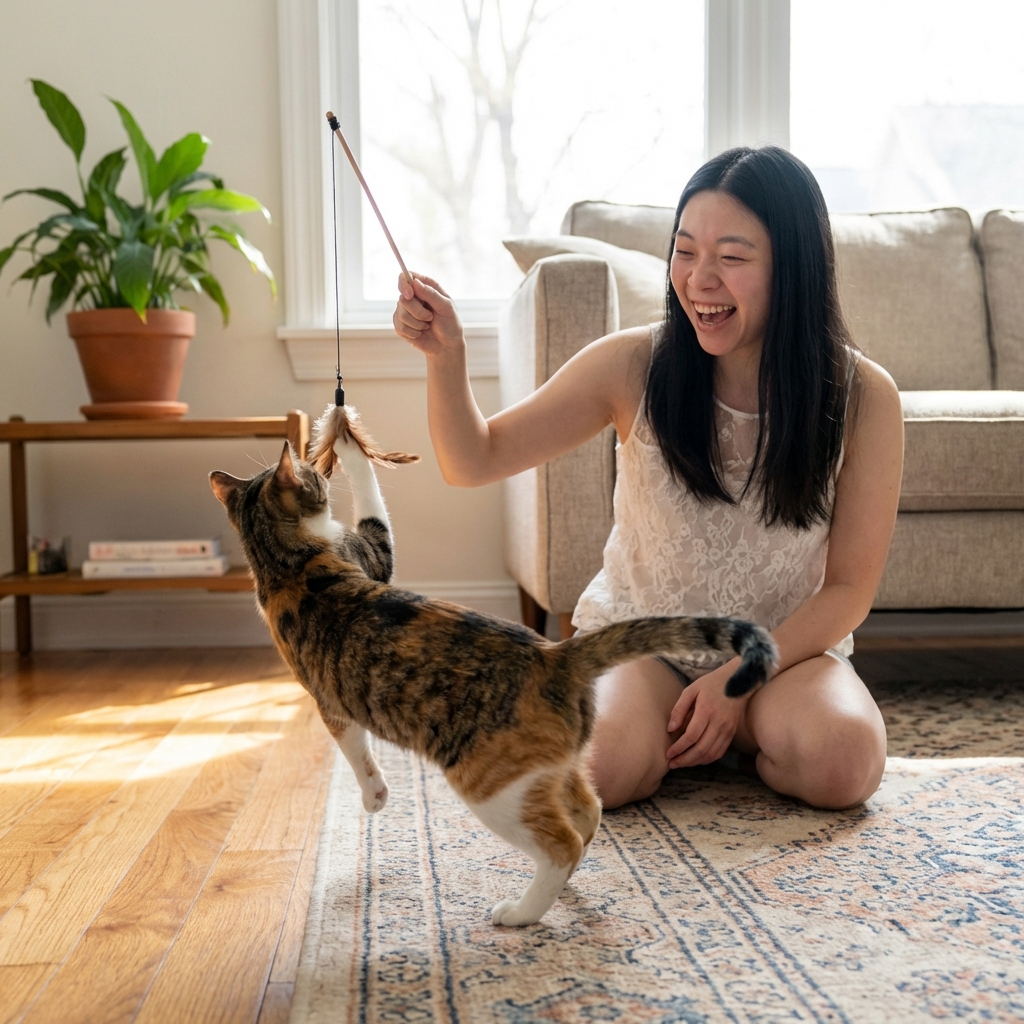
- Schedule two to three short play sessions daily using wand toys or chase toys.
- Offer food puzzles or scatter feeding to keep her brain busy.
- Create a cozy “nest” area with a soft blanket in a quiet room.
Comfort measures that often help
- Gentle brushing and calm petting if she seeks it.
- Warmth, like a warmed (not hot) blanket or a pet-safe heating pad on low with supervision.
- Pheromone support (like a feline facial pheromone diffuser) can take the edge off for some cats.
Manage the noise humanely
Heat yowling can be intense. Try:
- White noise at night
- Closing curtains to reduce visual triggers from outdoor cats
- Increasing play before bedtime to encourage sleep
Litter box and cleanliness tips
- Scoop at least once daily.
- Add an extra box if you have multiple cats.
- If she marks, clean with an enzymatic cleaner made for pet urine.
What not to do
- Do not punish vocalizing or rubbing. It increases stress and does not stop hormonal behavior.
- Do not use human medications or leftover pet sedatives unless your veterinarian specifically instructs you to.
- Do not attempt hormonal products purchased online. Hormone manipulation can carry serious risks, including uterine disease and mammary tumors.
- Do not let her “just mate once” to calm down. Pregnancy risk is high, and pregnancy and birth carry real medical risks.
When to call your vet
Heat itself is not an emergency, but these situations warrant a call:
- She stops eating for more than 24 hours or seems weak.
- You see heavy vaginal discharge, blood, a foul odor, or lethargy.
- She seems painful, is hiding, or reacts aggressively to touch.
- There is straining in the litter box, blood in urine, or repeated unproductive trips.
Pyometra risk
Unspayed females can develop pyometra, a life-threatening uterine infection, often within a few weeks (commonly 1 to 8 weeks) after a heat cycle. Signs can include lethargy, vomiting, increased thirst, fever, and sometimes discharge. If you notice these, seek veterinary care immediately.
Spaying
The most reliable way to prevent heat cycles is spaying (typically an ovariectomy or ovariohysterectomy). Beyond avoiding the stress of cycling, spaying:
- Prevents pregnancy and reduces shelter overpopulation
- Greatly reduces the risk of pyometra
- Significantly lowers mammary tumor risk when done early
Timing is individualized. Many clinics recommend spaying around 5 to 6 months, but your veterinarian will guide you based on your cat’s health and local considerations. If your cat is currently in heat, some vets prefer to wait until the cycle ends, while others can proceed with added precautions. Ask what is safest for your cat.
Quick Q and A
Can my cat get pregnant during her first heat?
Yes. If she is in heat and mates, pregnancy is possible even on the first cycle.
How soon can she go into heat again?
If she does not mate, some cats cycle again in about 2 to 3 weeks during breeding season.
Is bleeding normal in a cat in heat?
No. Unlike dogs, cats typically do not have noticeable bleeding with heat. If you see blood or significant discharge, call your veterinarian.
Quick checklist
- Sudden loud yowling, especially at night
- Extra affection, rubbing, rolling (or irritability)
- Tail held to the side with rear raised when petted
- Restlessness and escape attempts
- Possible decreased appetite
If you are seeing several of these together and she is not spayed, heat is the most likely explanation.
Final thoughts
A heat cycle can feel like a lot, but you do not have to power through it alone. With a calm environment, extra enrichment, and a strong safety plan to prevent door dashing, most cats ride it out just fine. And if something feels “off,” trust that instinct and call your veterinary team. You know your cat best.