
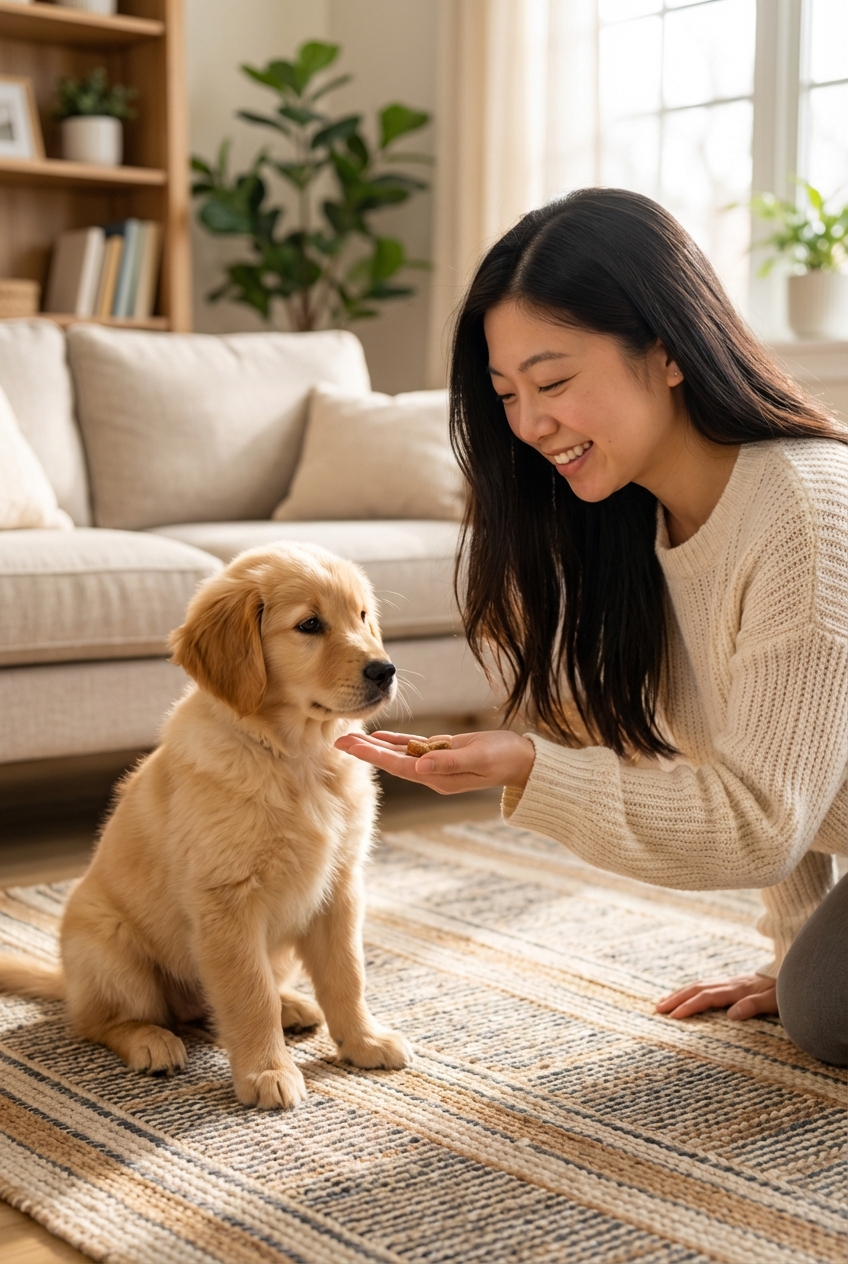
Train your puppy with modern, reward-based methods. Learn potty and crate training, safe socialization, loose-leash walking, bite inhibition, and easy routin...
Article
•
Designer Mixes
Trusted Puppy Training Tips and Tricks

Shari Shidate
Designer Mixes contributor
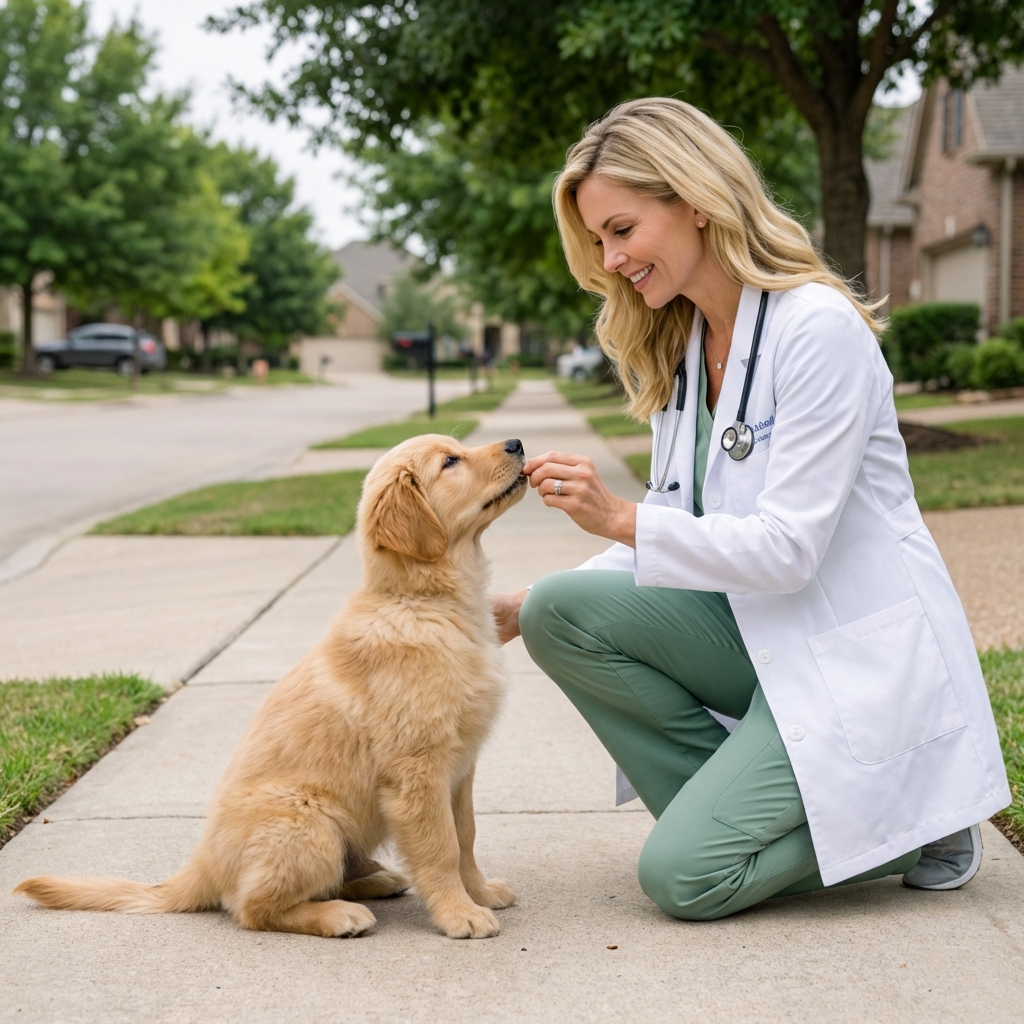
Bringing home a puppy is pure joy, and also a little chaos. As a veterinary assistant in Frisco, Texas, I see the same pattern over and over: the puppies who thrive are not the “perfect” ones. They are the ones with a plan, consistent expectations, and lots of positive reinforcement.
This guide walks you through the practical, evidence-based basics: how puppies learn, what to focus on first, and what to do when things get messy. The payoff is real: fewer accidents, calmer greetings, and a puppy who learns faster because they feel safe and understood.
Start here: how puppies learn
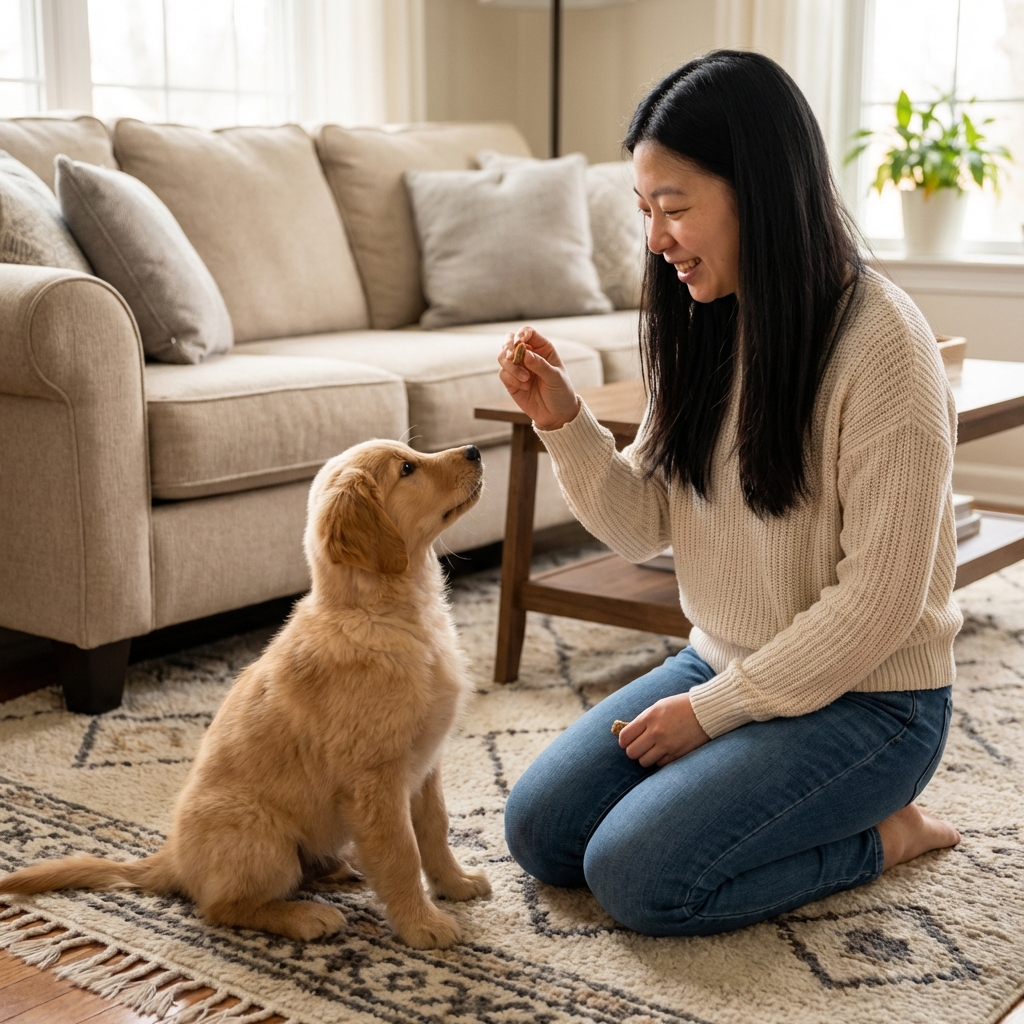
Puppies repeat what works. If jumping earns attention, they jump. If chewing the coffee table feels good and no one interrupts, they chew again. Training is simply helping your puppy learn which behaviors pay off.
- Reward what you want within a second or two, or as quickly as possible. A marker word (“yes”) or a clicker helps you mark the right moment even if the treat arrives a beat later.
- Prevent rehearsals of problem behavior using crates, pens, gates, leashes, and supervision.
- Keep sessions short for young puppies, usually 1 to 5 minutes. Stop while they are still successful, before they fade.
- Use positive reinforcement (treats, toys, praise, sniff breaks). This is the most strongly supported approach for building reliable behaviors and a confident dog.
Think of training as teaching, not correcting. Your puppy is not “being bad.” They are being a puppy.
Your first week plan
If you only do a few things in week one, do these. They set the foundation for everything else.
1) Create a simple routine
Most puppies do best with a predictable rhythm: potty, play, training, snack, nap. A routine reduces accidents, nipping, and overstimulation.
- Potty after waking, after eating or drinking, after play, and frequently when they are young. A helpful starting point is the “months = hours” guideline (for example, a 2 month old pup may need a potty break about every 2 hours when awake), but individual puppies vary.
- Nap time in a crate or pen. Overtired puppies turn into bitey, zoomy puppies.
- Meals on schedule (and use part of the meal as training rewards).
Sleep reality check: many puppies sleep around 18 to 20 hours per day. It varies, but if your puppy is wild and nippy, they often need more sleep, not more exercise.
2) Teach your puppy their name
Say the name once in a happy voice. The moment your puppy looks at you, mark it with “yes” and give a treat. Repeat 5 to 10 times, a couple times a day.
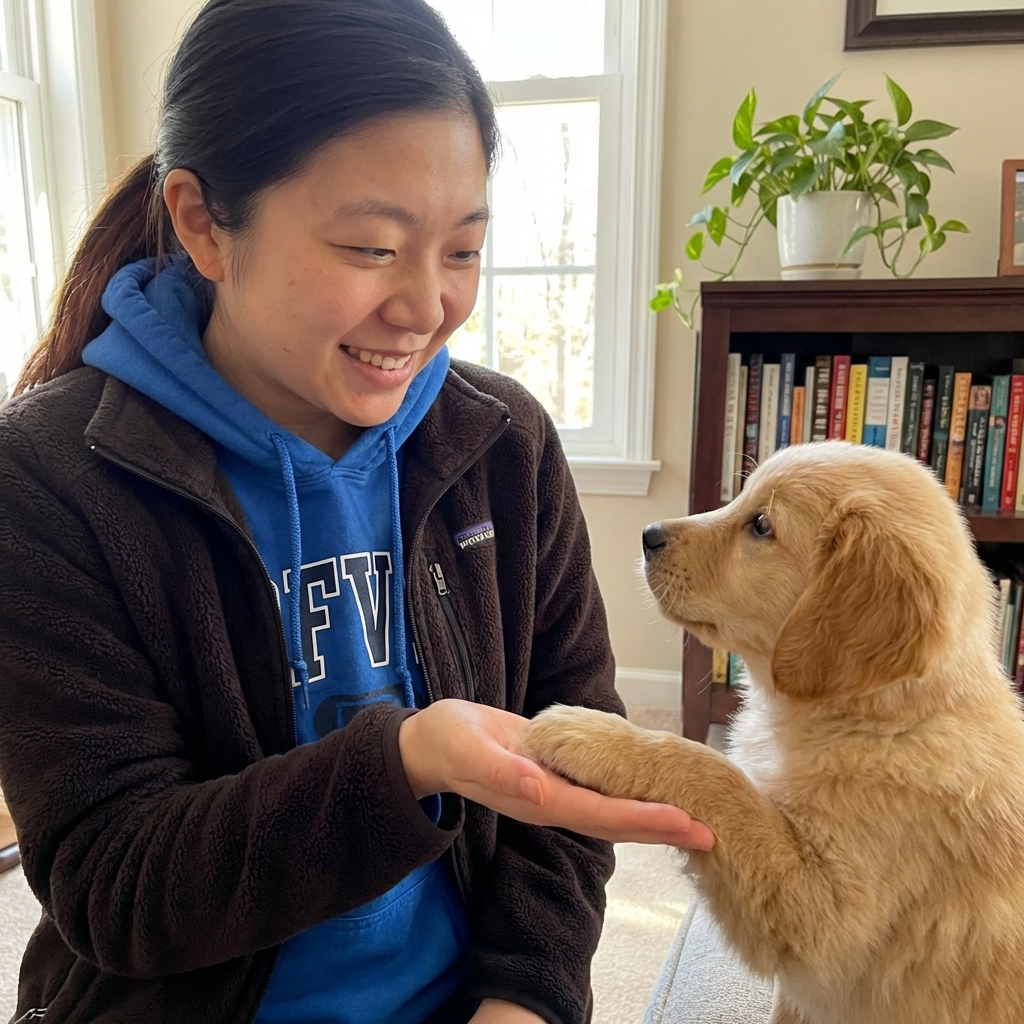
3) Start “touch” (hand target)
Hold your hand out. When your puppy sniffs or bumps it, say “yes” and treat. This becomes a gentle way to guide your puppy without grabbing the collar.
House training you can trust
House training is not about punishment. It is about supervision, timing, and rewards.
Potty training checklist
- Choose a potty spot outdoors and go to the same area each time.
- Use a leash at first so your puppy does not get distracted.
- Reward immediately when they finish. Treats happen outside, not once you get back inside.
- Track patterns for a few days. Puppies are surprisingly predictable once you write it down.
What to do after an accident
- If you catch them mid-accident, calmly pick them up and go outside.
- Clean with an enzymatic cleaner so the scent does not invite a repeat performance.
- Do not scold. It tends to teach puppies to hide when they need to go.
When to call your vet: frequent urination, straining, blood in urine, diarrhea, vomiting, or a sudden change in potty habits can signal medical issues like parasites or a urinary tract infection.
Crate training without the guilt
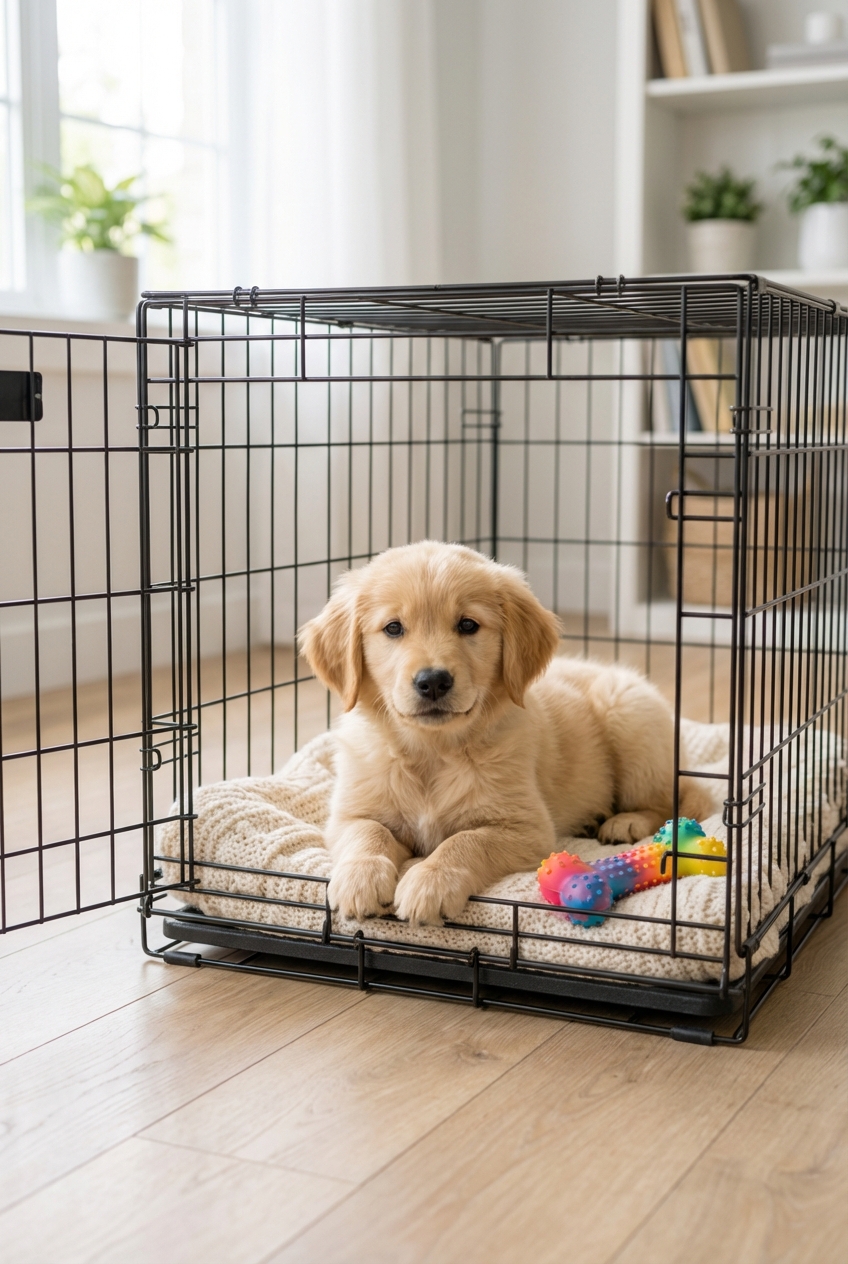
A crate is not a punishment. It is a safe place and a management tool that helps with potty training, travel, and recovery if your pup ever needs medical rest.
How to introduce the crate
- Make it cozy: add bedding only if your puppy does not chew or shred fabric. Chewing bedding can become a choking or obstruction risk, so start simple and supervise until you know their habits.
- Feed meals near it, then inside it, so the crate predicts good things.
- Start with seconds, not hours. Close the door briefly while your puppy is happily chewing, then open it before they fuss.
- Build duration gradually and practice when you are home, not only when you leave.
Tip: If your puppy panics in a crate, do not force it. Use a playpen or gated puppy-proof area while you rebuild positive crate feelings slowly.
Nipping and biting
Puppies explore with their mouths, and they also bite more when they are overtired, overstimulated, or teething. The goal is to teach bite inhibition and give them appropriate outlets.
Do this in the moment
- Freeze briefly when teeth touch skin, then redirect to a toy.
- Reinforce gentle play by continuing the game when your puppy is soft-mouthed.
- Use short breaks if they get wild. Calmly step behind a gate for 10 to 20 seconds, then return and offer a toy.
Set your puppy up to succeed
- Offer a rotation of chews appropriate for puppies (ask your vet if unsure).
- Increase naps. A lot of “bad behavior” is simply exhaustion.
- Practice handling games: touch collar, touch paws, treat. This reduces future stress at the vet and groomer.
Chew safety basics
- Supervise chews, especially new ones.
- Choose the right size: bigger than your puppy’s mouth, so they cannot swallow chunks.
- Remove small pieces that could be swallowed.
- If you are unsure, ask your vet team for puppy-safe options (a durable rubber toy, a puppy-specific dental chew, or a frozen food-stuffed toy are common starting points).
Loose leash walking basics
Walking nicely is a skill. Puppies are not born knowing how to follow a leash, especially in a world full of exciting smells.
A simple method
- Start indoors or in your backyard.
- Take one step. If the leash stays loose, say “yes” and reward by your leg.
- If your puppy pulls, stop. Wait for slack, then reward and continue.
Keep walks age-appropriate: for many puppies, “walks” are short training strolls plus sniff time, not long-distance exercise.
Equipment note: If pulling is intense, a properly fitted front-clip harness can help while you train. Skip aversive tools that cause pain or fear, and ask a trainer or your vet team for fit help if needed.
The 5 cues that give you the biggest payoff
You do not need 25 tricks. You need a handful of life skills that make your home calmer and your puppy safer.
- Sit for greetings, meals, and polite pauses.
- Down for calm settling.
- Come (recall) for safety. Practice in easy places first.
- Leave it to prevent swallowing hazards.
- Drop it to trade items without chasing or grabbing.
Recall tip: avoid calling your puppy to do unpleasant things (like nail trims). Pay them well, and use a long line outdoors until recall is reliable.
How to teach “leave it”
- Put a treat in your closed fist.
- Your puppy will sniff, lick, paw. Wait.
- The moment they back off, say “yes” and give a different treat from your other hand.
- Repeat until they quickly disengage, then progress to an open hand.
Socialization: safe and smart
Socialization is not just “meet every dog.” It is positive, controlled exposure to the world during your puppy’s early learning window. For many puppies, this window is strongest roughly from 3 to 14 to 16 weeks, but it does not slam shut. The goal is a puppy who feels safe around new sights, sounds, surfaces, and people.
Safe socialization ideas
- Watch traffic from a distance while your puppy eats treats.
- Meet calm, dog-savvy friends one at a time.
- Practice gentle handling with rewards (ears, paws, mouth, tail).
- Introduce common sounds at low volume (vacuum, thunder recordings) paired with treats.
Health note: Talk with your veterinarian about your puppy’s vaccine schedule and what public areas are safe in your region. In many cases, you can socialize safely with smart precautions before the final boosters.
Alone time practice
You do not have to wait for separation issues to show up. A little proactive practice helps many puppies learn that alone time is safe.
- Start tiny: step out of sight for 5 to 10 seconds, come back, and calmly continue your day.
- Pair alone time with something good: give a food-stuffed toy, then pick it up when you return.
- Mix it up: practice when you are home, not only when you are leaving.
- Keep greetings low-key: avoid big “goodbye” and “I’m back!” moments.
Handling and grooming basics
These mini-sessions pay off for vet visits, grooming, and life in general.
- Brush touch: show the brush, treat, touch the shoulder for one second, treat. Build slowly.
- Nail intro: touch paw, treat. Tap one nail with the clipper (no cut), treat. Progress gradually.
- Teeth touch: lift lip, treat. Touch a tooth, treat. Add a puppy toothbrush later.
Common mistakes and easy fixes
- Too much freedom too soon: Use gates and pens until habits are solid.
- Repeating cues: Say it once, then help your puppy succeed. Repeating teaches them to ignore you.
- Training when your puppy is wild: Try after potty and a short play session, then keep it brief.
- Only training at home: Once your puppy knows a cue, practice in new places with easier expectations.
- Inconsistent rules: Decide as a household. If one person allows couch jumping and another does not, your puppy gets confused.
Your first vet visit
If you have not already, schedule a new puppy appointment. Your vet team will tailor recommendations to your puppy and your area.
- Vaccines: review schedule and safe socialization options.
- Deworming and parasite prevention: discuss intestinal parasites, flea and tick prevention, and heartworm prevention.
- Microchip and ID: confirm your contact info is correct and up to date.
- Nutrition: choose an appropriate puppy diet and confirm how much to feed.
Food and treat safety
Treats are powerful, but they should be puppy-appropriate and used thoughtfully.
- Keep treats small (pea-sized) and count them as part of daily calories.
- Avoid common hazards: xylitol (often in sugar-free gum and candies), grapes and raisins, chocolate, alcohol, and cooked bones.
- If your puppy gets into something, call your veterinarian or a pet poison hotline right away.
When you need extra help
Some puppies need more support, and that is normal. If you are seeing fear, aggression, extreme separation distress, or guarding food or toys, reach out early.
- Ask your veterinarian to rule out medical pain or illness that can affect behavior.
- Look for a trainer who uses reward-based methods and can explain their approach clearly.
- For complex cases, a veterinary behaviorist can be a game-changer.
Your puppy is learning every day. With consistency, kindness, and the right structure, you will be amazed how quickly those “puppy problems” turn into good habits.
