A practical ferret care guide for every life stage—kits to seniors. Learn safe housing, ferret-proofing, carnivore diet, daily routines, litter training, e...
Article
•
Designer Mixes
Trusted Litter Training a Ferret

Shari Shidate
Designer Mixes contributor
Ferrets are smart, curious, and wonderfully opinionated. They also have short, fast digestive tracts, which means they need a bathroom plan that works for real life. The good news is that most ferrets can learn to use a litter box or litter pads reliably, especially when you set up their space the way their instincts already work.
As a veterinary assistant, I always tell new ferret families the same thing: litter training is less about “teaching” and more about making the right choice the easiest choice. Let’s do that together.
Quick-start (do this first)
- Set one bathroom station per major area (cage plus play space), and add extras in any “favorite corners.”
- Use a big, low-entry box and keep litter shallow to reduce digging.
- Use ferret-safe litter (paper pellets are a great default) or secure litter pads.
- Reward right away, clean accidents with an enzymatic cleaner, and skip punishment.
- Expand space slowly once you hit about 80 to 90 percent success.
Note: This article is general education, not medical advice. If you are worried your ferret is ill or in pain, contact your exotic vet.
How ferrets pick a bathroom spot
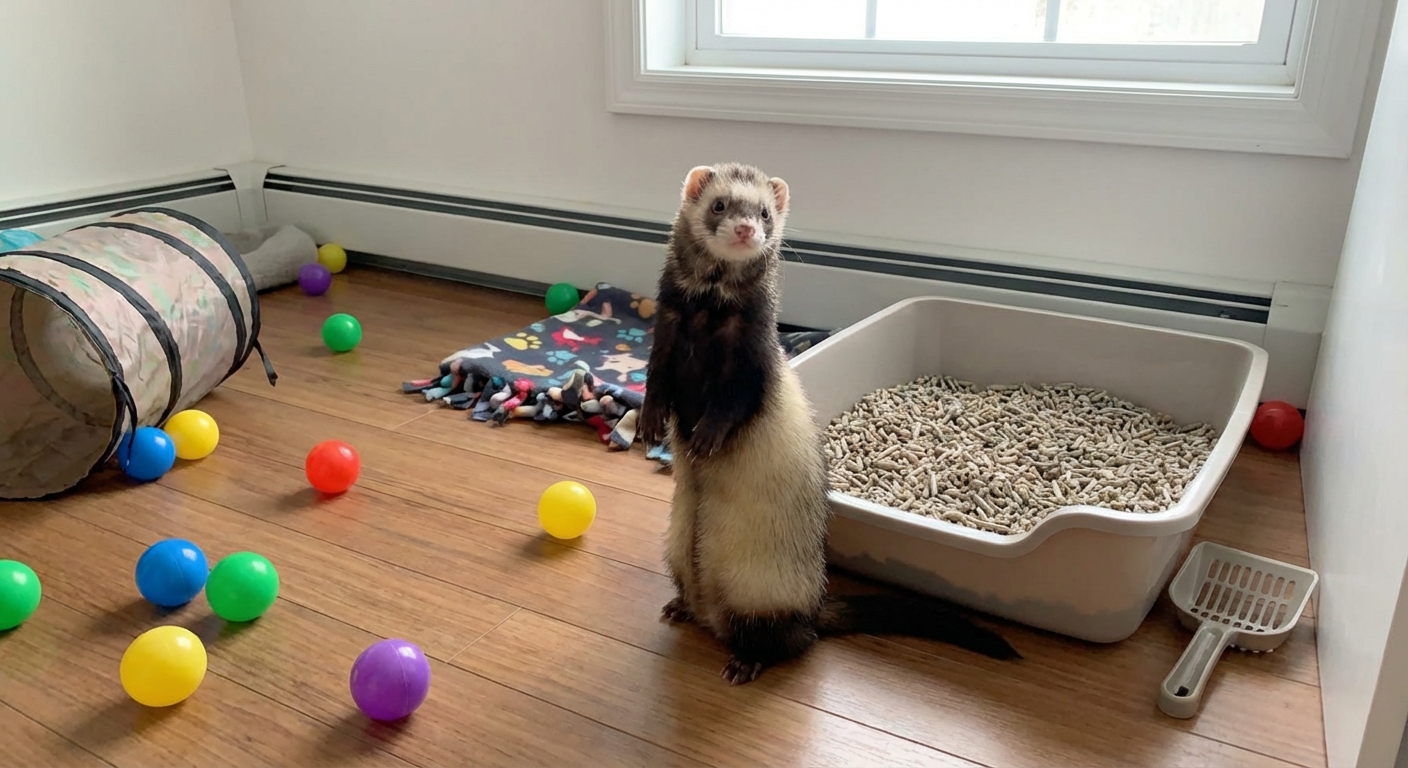
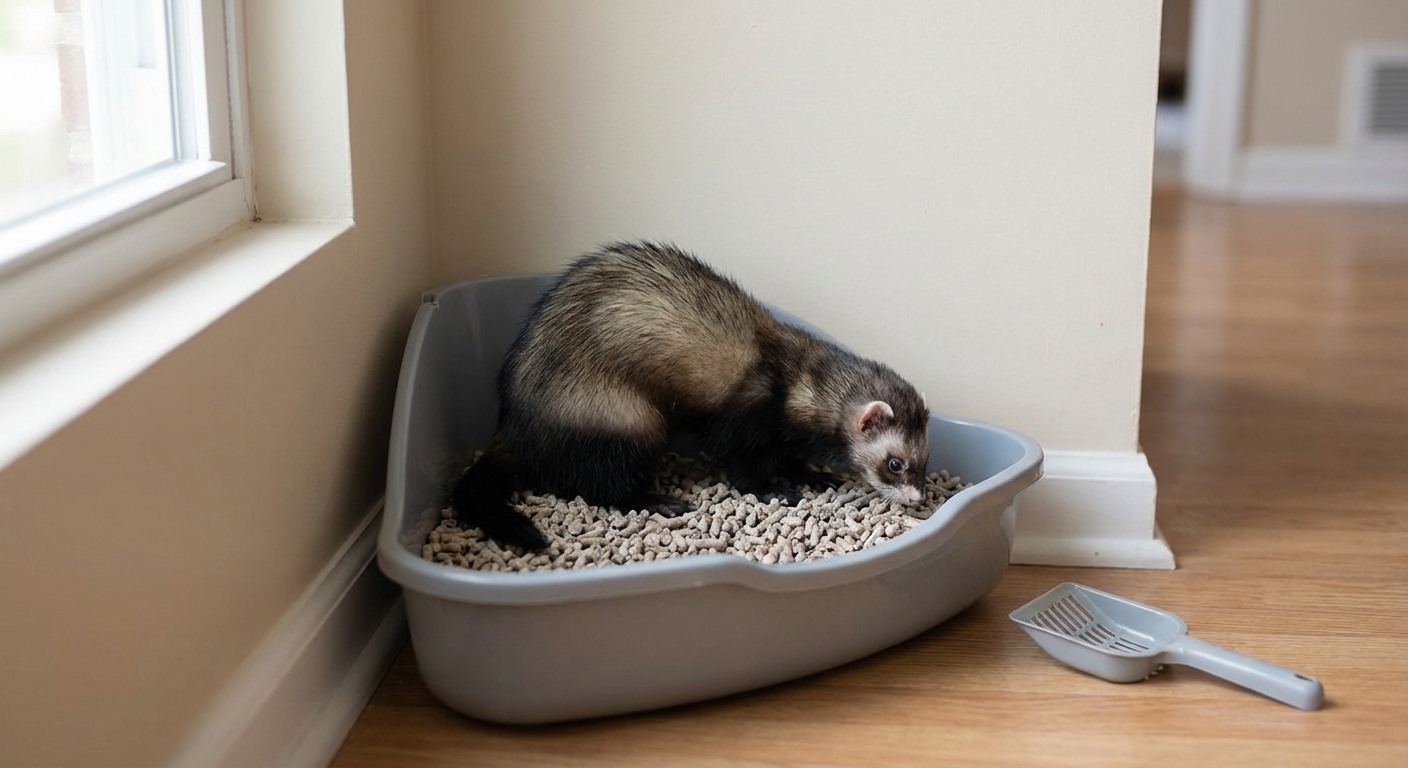
Ferrets typically back into a corner to go. They like privacy and predictability, and they tend to pick the same corner again and again. That is why corner litter boxes and corner litter pad setups work so well.
One important detail: ferrets often have multiple “favorite corners,” especially if they have access to more than one room. When people say, “My ferret refuses the litter box,” what they often mean is, “My ferret found a corner I didn’t plan for.”
Supplies that help
Litter box basics
- Low entry: Ferrets are small and quick. A low front edge helps them get in fast.
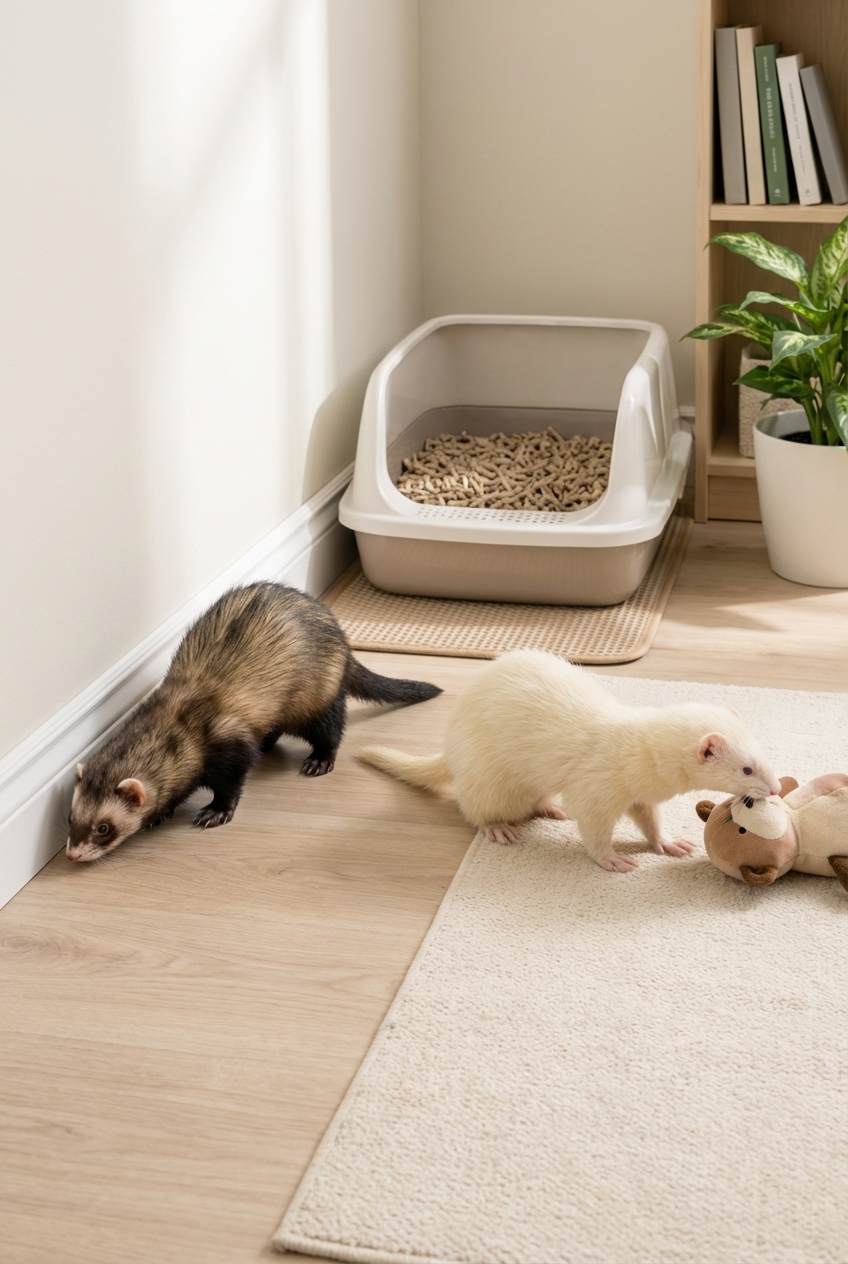
- Large enough to fit the whole ferret: Many “small animal” boxes are too tiny. Your ferret should be able to stand with all four feet inside.
- Corner boxes: Great for cages and corners, but choose a roomy model.
- Stable and secure: If it slides, tips, or flips, a ferret will absolutely make that your problem.
Ferret-safe litter options
For respiratory and safety reasons, choose litter that is low-dust and unscented.
- Paper pellet litter: Often the top choice because it is absorbent and low dust.
- Recycled paper crumbles: Soft underfoot, but can track more.
- Wood pellets (kiln-dried, unscented): Can work well, but avoid aromatic softwoods and anything heavily scented.
Avoid clumping clay litter, scented litters, and dusty options. Clay and clumping litters are widely discouraged for ferrets because they can irritate airways, stick to fur, and may cause serious problems if licked or eaten (including GI blockage risk).
Litter pads for “too fast for the box” ferrets
Some ferrets do great with a litter box in the cage and litter pads in play areas. Pads can be a lifesaver for busy households and for ferrets who sprint to the nearest corner.
If your ferret has strong texture preferences, follow their lead. It is fine to use pads long-term. If you want to transition from pads to pellets (or the reverse), do it gradually by placing the new option right next to the old one and slowly increasing the “new” surface area over 1 to 2 weeks.
Set up the cage
Start where your ferret spends the most time: the cage. A consistent cage setup creates the habit that later transfers to the rest of the home.
- Put the litter box in the corner they already use. If you are not sure, look for the corner with the most frequent droppings.
- Keep litter shallow: Many ferrets potty more reliably with a thin layer. Deep litter can turn into a dig pit.
- Make other corners less appealing: Place bedding, a hammock edge, a food bowl, or a favorite sleep sack in the corners you want to discourage. Many ferrets avoid soiling where they sleep or eat, but this works best when the cage is roomy, clean, and not overcrowded.
- Anchor the box: If your ferret can flip it, they might. Use a cage clip, a box with hooks, or a heavier base.
- Use a small amount of soiled litter at first: A little scent cue helps them understand, “This is the bathroom.”
Step-by-step plan
Step 1: Keep it small
For the first 1 to 2 weeks, limit your ferret to a smaller, easy-to-manage area when they are out. A playpen or a single ferret-proofed room is ideal. Too much space too soon creates too many “new corners.”
Step 2: Cover likely corners
In the beginning, your job is to anticipate their corner choice. Use:
- One litter box in their top choice corner, plus
- Litter pads or an extra box in any corner they repeatedly target
Once the habit is consistent, you can gradually remove extras. Keep at least one bathroom station always available in any area they can access.
Step 3: Watch for the “about to go” signs
Many ferrets eliminate shortly after waking up, after a big drink, or after an exciting play burst. Ferrets often:
- Pause and sniff
- Back up into a corner
- Lift tail slightly
When you see that, calmly scoop them and place them in the box or on the litter pad. Then give quiet praise and a tiny treat after they finish.
Step 4: Reward and clean
- Reward immediately after correct potty behavior.
- Clean accidents with an enzymatic cleaner to remove odor cues.
- Do not punish. Punishment often creates fear or hiding, not better litter habits.
Step 5: Expand slowly
When your ferret is using the box or litter pads correctly about 80 to 90 percent of the time in one area, expand to a second area. Add a new box or pad immediately in the most likely corner of that space.
Why training stalls
The box is too small
If your ferret cannot comfortably fit, they may go “half-in, half-out,” which looks like an accident but is really a setup problem. Upgrade to a larger, low-entry box.
The bathroom is too far
Many ferrets cannot hold it long, especially right after waking up. Put the bathroom option close to sleep spots and favorite play corners.
The box moves or becomes a dig pit
Secure the box. If your ferret loves digging, try paper pellets in a heavier box and keep digging enrichment separate (like a supervised rice box or crinkle tunnel). Supervise dig boxes to reduce ingestion risk, and keep the material clean and dry.
The cleaner is working against you
Ammonia-smelling cleaners may smell similar to urine and can encourage repeat accidents in that spot. Use an enzymatic cleaner and let it fully dry.
New room, new corner
New spaces often equal new “claims.” Add a litter pad or box in the new room for the first couple of weeks, then fade it out once habits solidify.
Multi-ferret homes
With multiple ferrets, you will usually need:
- More than one bathroom station
- More frequent cleaning so boxes do not get “too gross” to use
- Multiple corner options in large play spaces
A simple rule: one litter box per major area, plus one extra if you have more than two ferrets.
Cleaning and odor control
Ferret waste can be strong, and strong odors often make people over-clean with harsh products. Instead, focus on a consistent routine that is safe for small lungs.
- Scoop daily if using litter (more often in multi-ferret cages).
- Change litter pads regularly, often daily or every other day depending on use.
- Wash boxes weekly with mild soap and hot water. Rinse well and dry.
- Use enzymatic cleaner for accidents outside the box.
If odor is suddenly much worse than usual, or if stools look very different, that is a health signal, not just a cleaning issue.
When it might be medical
As a vet assistant, I always encourage a quick check-in with your exotic vet if litter habits change suddenly. Ferrets are masters at hiding discomfort, and “missing the box” can happen when they do not feel well.
Call your veterinarian if you notice:
- Diarrhea lasting more than 24 hours (or sooner if your ferret is young, very small, not eating, dehydrated, or lethargic)
- Straining, crying, or frequent attempts with little output
- Blood or black, tarry stool
- Lethargy, reduced appetite, or weight loss
- Sudden accidents in a previously trained ferret
Trusted training tip: Behavior is communication. If your ferret is suddenly not making it to the box, it is worth ruling out pain, GI upset, or mobility issues.
The bottom line
Litter training a ferret is absolutely doable, and you do not have to be perfect to see real progress. Start with the corners they already choose, make the box easy to reach, reward success, and be patient during the first couple of weeks.
Small changes add up fast. And once your ferret learns where “the bathroom” lives, you will both enjoy more freedom and a lot more peace of mind.