Learn what causes hot spots in dogs and how to treat mild cases at home: prevent licking, clip for airflow, clean and dry well, use pet-safe antiseptics, and...
Article
•
Designer Mixes
Trusted Hot Spot Remedies for Dogs

Shari Shidate
Designer Mixes contributor
Hot spots can look like they show up overnight, and honestly, they kind of do. One minute your dog is fine, and the next you notice a wet, angry-looking patch that your pup cannot stop licking, chewing, or scratching. As a veterinary assistant here in Frisco, Texas, I have seen how fast these can spread when the skin stays moist and irritated.
The good news is that many mild hot spots can be managed at home if you act quickly and safely. The key is knowing what is truly helpful, what is risky, and when it is time to call your veterinarian.
One quick note: I can share safe, general care tips, but I cannot diagnose your dog online. If you are unsure, an exam is always the safest next step.
What a hot spot is
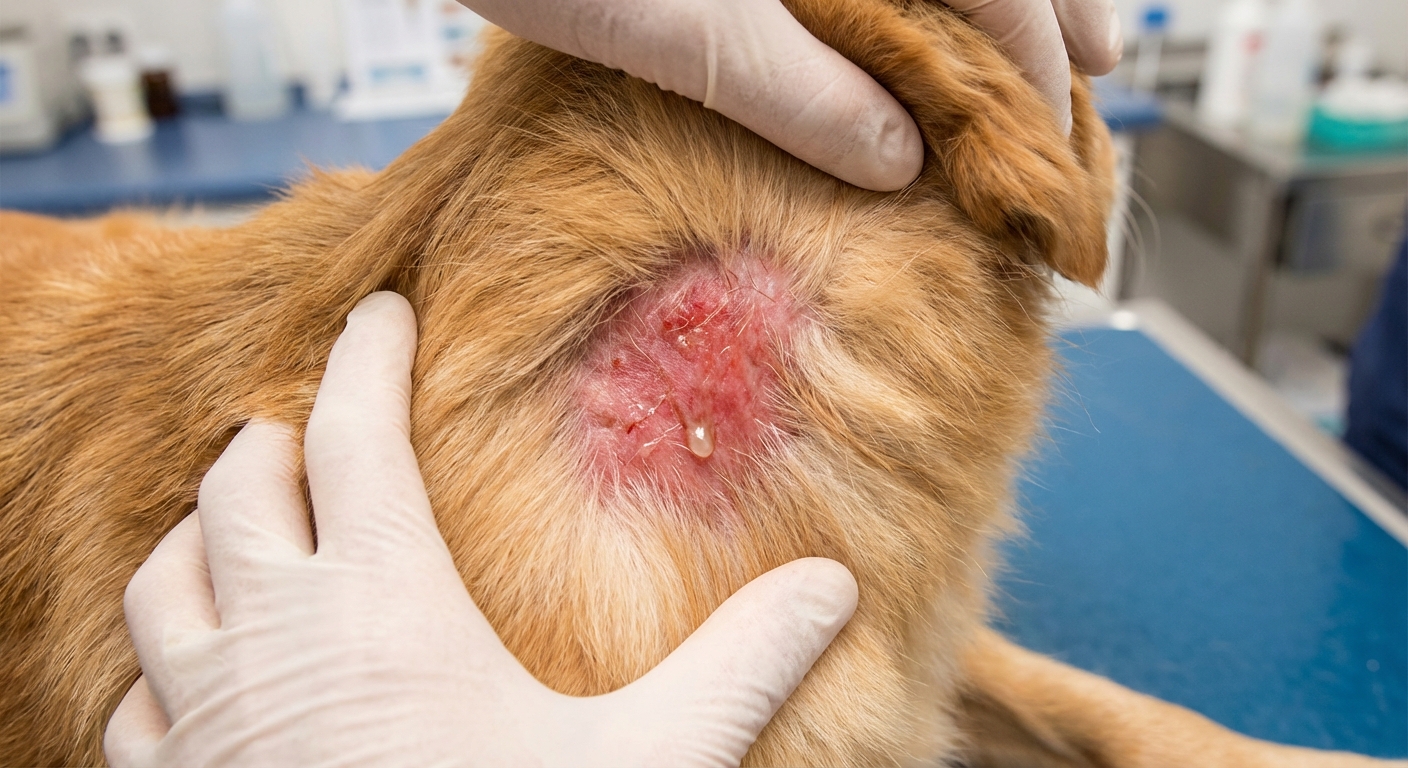
A “hot spot” is the common name for acute moist dermatitis. It is a painful, inflamed skin lesion that usually starts with irritation and self-trauma (licking, chewing, scratching). A secondary bacterial overgrowth or infection commonly follows once the skin barrier is damaged.
Here is why it spreads so fast:
- It itches, so your dog licks and chews.
- Licking adds moisture, which breaks down the skin barrier.
- Bacteria take advantage of that damaged, wet skin.
- More inflammation leads to more itching, and the cycle continues.
Hot spots are especially common during warm months, after swimming, and in dogs with seasonal allergies or dense coats.
Red flags first
Before you try home care, do a quick safety check. Contact your vet promptly if any of these are true:
- The area is on the face, near the eyes, or on the genitals.
- The spot is larger than about 2 to 3 inches, spreading fast, or there are multiple spots.
- You see pus, a strong odor, thick crusting, or significant swelling.
- Your dog seems painful, lethargic, feverish, or is not eating.
- Your dog has underlying issues (immune disease, endocrine disease) or is on steroids.
- No improvement within 24 to 48 hours of careful home care.
Hot spots are treatable, but they can become much more extensive and very painful quickly. When in doubt, it is always okay to ask your vet if an exam is the best next step.
Safe home care
If your dog is bright, comfortable, and the spot is small and early, this plan is typically the safest and most effective approach at home.
1) Stop the licking now
If licking continues, nothing else works. Use:
- E-collar (cone) or an inflatable collar
- A well-fitted recovery suit or T-shirt (only if it keeps the area dry, not damp)
If you cannot prevent chewing, skip home care and see your vet. Constant self-trauma can turn a mild skin issue into a severe infection fast.
2) Clip the fur around it
This is one of the most important steps because fur holds moisture and bacteria.
- Use pet clippers if you have them and your dog tolerates it.
- Clip at least 1 inch beyond the red area.
- Do not use scissors near inflamed skin. It is easy to cut your dog’s skin.
- Go slowly to avoid clipper burn. If your dog is stressed, the skin is very painful, or the area is tightly matted, stop and call your vet.
If matting is tight or your dog is painful, a vet visit is safer. In clinics, we can clip and clean thoroughly, sometimes with calming meds if needed.
3) Clean gently, then dry well
Clean 1 to 2 times daily for the first couple of days. The goal is to remove bacteria and debris without burning or over-drying the skin.
Trusted cleansing options (choose one):
- Pet-formulated chlorhexidine (commonly 2% to 4% solution or wipes): widely used in veterinary skin care for its antibacterial properties. Avoid eyes and do not use inside ears unless the product specifically says it is safe there.
- Diluted povidone-iodine: dilute with water until it looks like weak tea. Avoid eyes and mouth.
- Veterinary antimicrobial shampoo (if you already have one): lather gently and rinse well.
After cleaning, pat dry with clean gauze or a soft towel. You can use a cool setting on a blow dryer from a distance if your dog tolerates it. Dryness matters because moisture keeps the irritation going.
4) Apply a light topical
Less is more. You want a thin layer that supports healing without trapping moisture.
- Veterinary hot spot sprays often include chlorhexidine and sometimes an anti-itch ingredient.
- Veterinary-approved hydrogel products can soothe without creating a greasy seal.
If your dog will lick it, do not apply it unless you are using a cone. Many “natural” topicals can upset the stomach if ingested.
5) Know what to expect
If home care is going to work, you should usually see less oozing and redness and less interest in licking within 24 to 48 hours. Full healing can take about 7 to 14 days depending on severity. If it worsens at any point, it is time for a vet visit.
What to avoid
Some home remedies are popular online but can make hot spots worse or delay proper treatment.
- Hydrogen peroxide: damages healthy tissue and slows healing.
- Rubbing alcohol: painful and overly drying, and it can irritate inflamed skin.
- Essential oils (tea tree, oregano, etc.): can be toxic if licked and irritating on broken skin.
- Thick ointments that seal moisture in (especially if the area is still wet).
- Human steroid creams without vet guidance: may worsen infection, delay proper treatment, and licking can cause GI upset.
- Bandages: hot spots usually need airflow. Covering can trap moisture unless your vet specifically directs you to do it.
- Human pain medicine (ibuprofen, naproxen, acetaminophen): do not give these unless your veterinarian tells you to. They can be dangerous for dogs.
Why it happened
Hot spots are often a symptom, not the root problem. Once your dog is comfortable, look upstream so you can prevent the next flare.
Common triggers
- Allergies (environmental or food): itch leads to licking and skin breakdown.
- Fleas: even one bite can trigger intense chewing in sensitive dogs. Check for fleas or flea dirt, and make sure all pets in the home are on a solid prevention plan.
- Ear infections: dogs scratch near the head and neck, starting hot spots behind ears.
- Moisture: swimming, rain, humid weather, or not drying the coat fully.
- Matting: tight mats pull skin and trap moisture and bacteria.
Prevention that helps
- Dry after swimming: pay attention to neck folds, behind ears, armpits, and hips.
- Keep up with flea prevention: talk with your vet about a product that fits your dog’s lifestyle.
- Brush regularly: especially double-coated mixes that mat easily.
- Address allergies early: your vet may recommend medicated shampoos, allergy meds, or diet trials.
- Support skin health: many dogs benefit from omega-3 fatty acids (ask your vet about dosing and product quality).
What your vet may do
If the area is infected, painful, or not improving quickly, your veterinarian may recommend:
- Prescription topical antibiotics or medicated sprays
- Oral antibiotics for more severe or spreading infections
- Prescription anti-itch medication to break the lick-scratch cycle
- Pain relief options that are safe for dogs
- Ear testing and treatment if the hot spot is secondary to an ear infection
- An allergy plan for recurring hot spots
In many cases, the fastest relief comes from professional clipping and cleaning plus the right medication to stop itching.
Home care checklist
- Use a cone to stop licking
- Clip fur around the area safely (no scissors)
- Clean with pet-formulated chlorhexidine or diluted iodine
- Dry completely
- Use a light, vet-appropriate topical if your dog cannot lick
- Recheck twice daily and watch for spreading, odor, pus, or pain
- Call your vet if not clearly improving in 24 to 48 hours
Your dog does not need perfection. They need you to step in early, keep the skin clean and dry, and stop that itch cycle. If you do those three things, you are already doing a lot right.