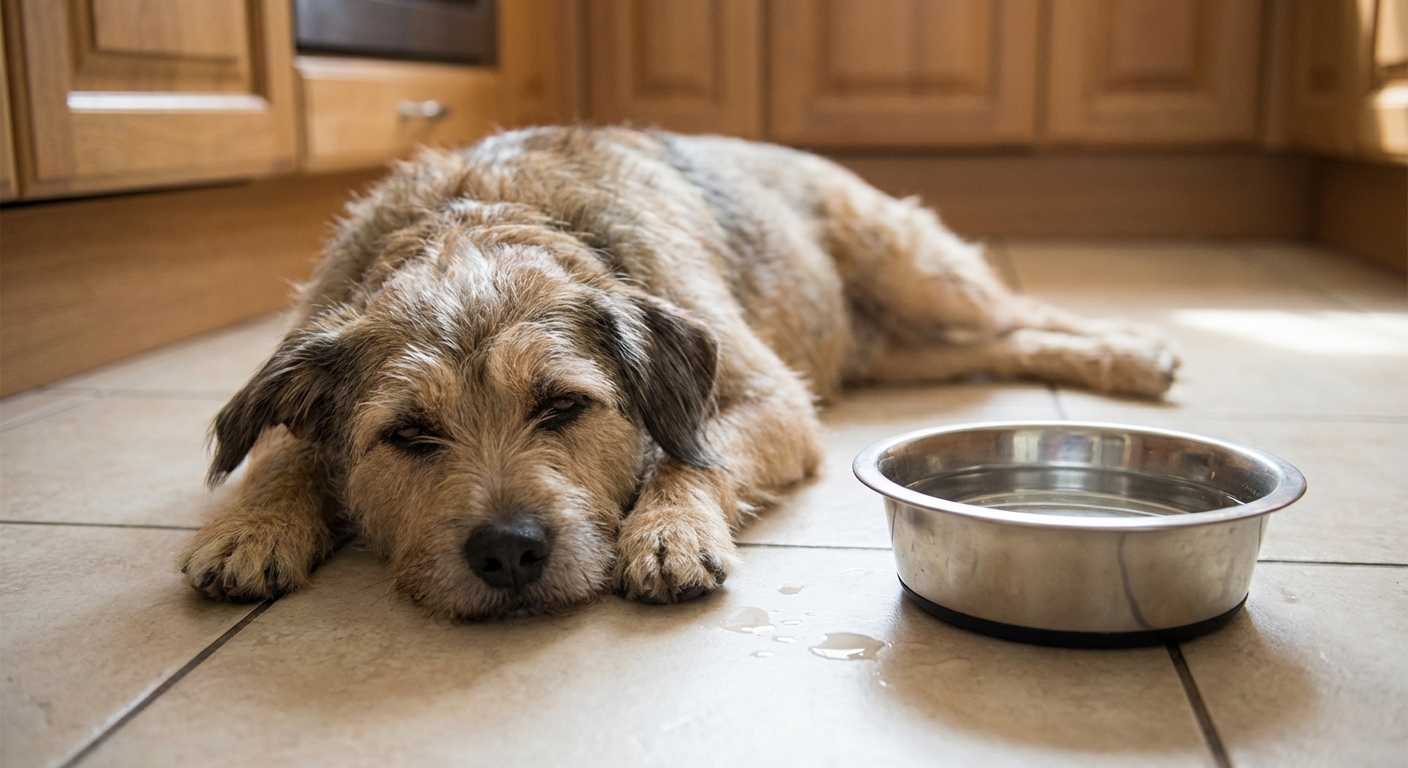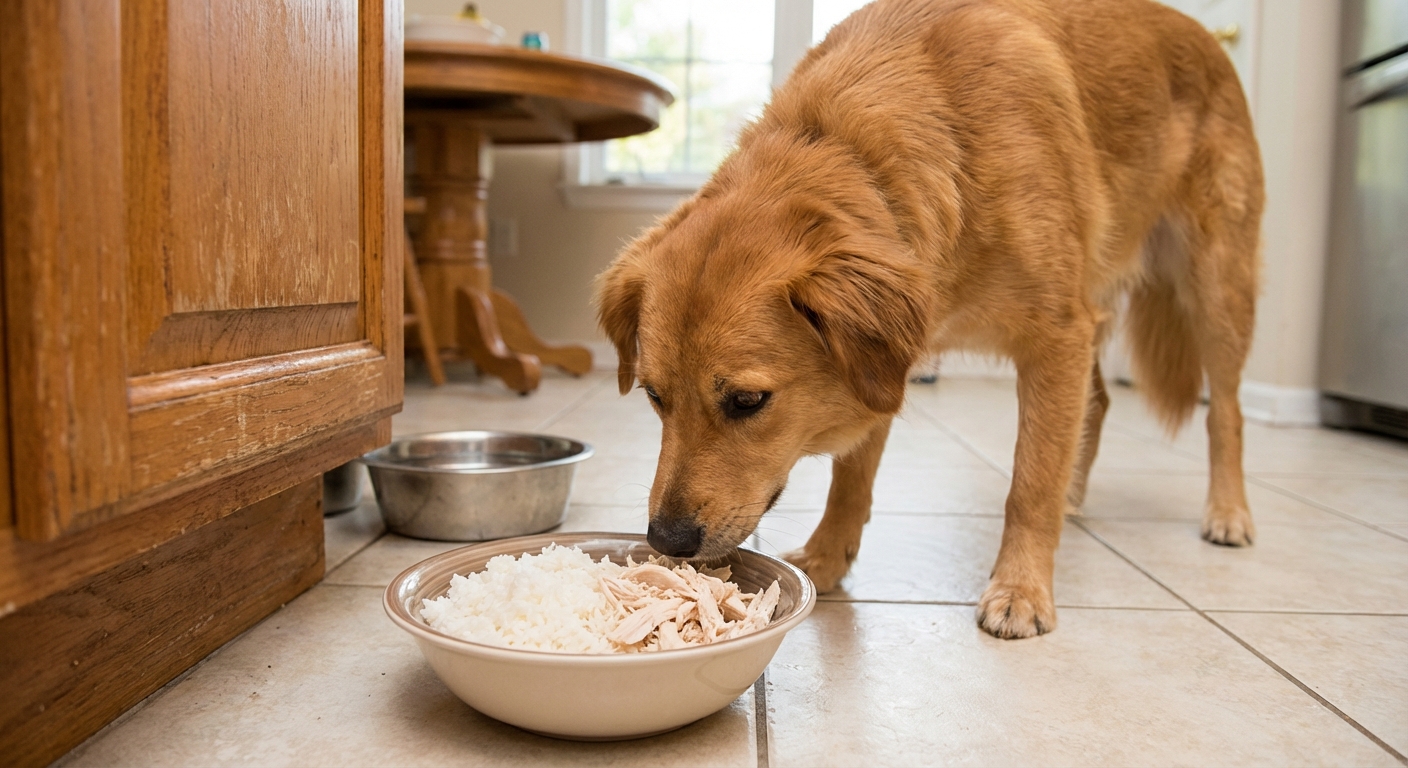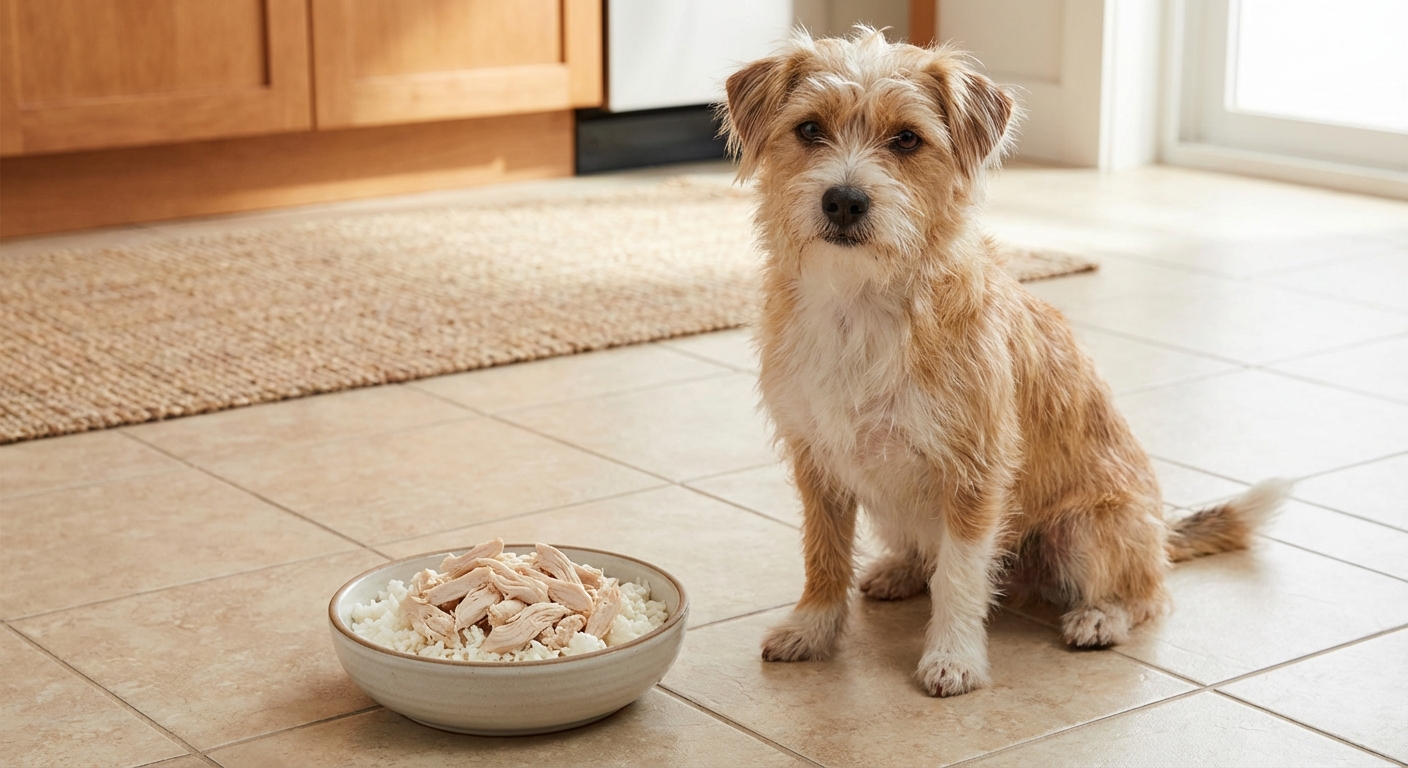
Chicken and rice can soothe mild stomach upset and help dogs transition back to normal food. Learn safe recipes, portions, how long to feed it, and when to c...
Article
•
Designer Mixes
Trusted Dog Upset Stomach Tips

Shari Shidate
Designer Mixes contributor
If your dog has an upset stomach, you are not alone. In the clinic, tummy trouble is one of the most common reasons families call in, and it can range from a mild food mismatch to something that needs urgent care.
In this article, I am going to share the trusted go-to steps I lean on as a veterinary assistant in Frisco, Texas: what actually causes stomach upset, what you can safely do at home, what not to do, and when to stop guessing and get your veterinarian involved.
Common signs
Dogs cannot tell us if they feel nauseated, but their bodies often give clear clues. Upset stomach can show up as:
- Vomiting (food, foam, bile, or liquid)
- Diarrhea (soft stool to watery stool)
- Loss of appetite or eating grass
- Lip licking, drooling, gulping, or swallowing repeatedly
- Gurgly belly and mild restlessness
- Prayer position (front end down, rear end up), which can signal abdominal discomfort
One episode of vomiting after a scarfed meal can be very different from repeated vomiting, blood, or lethargy. The pattern matters.
Common causes
Here are the usual culprits behind sudden stomach upset, plus a few sneaky ones that surprise people.
Dietary indiscretion
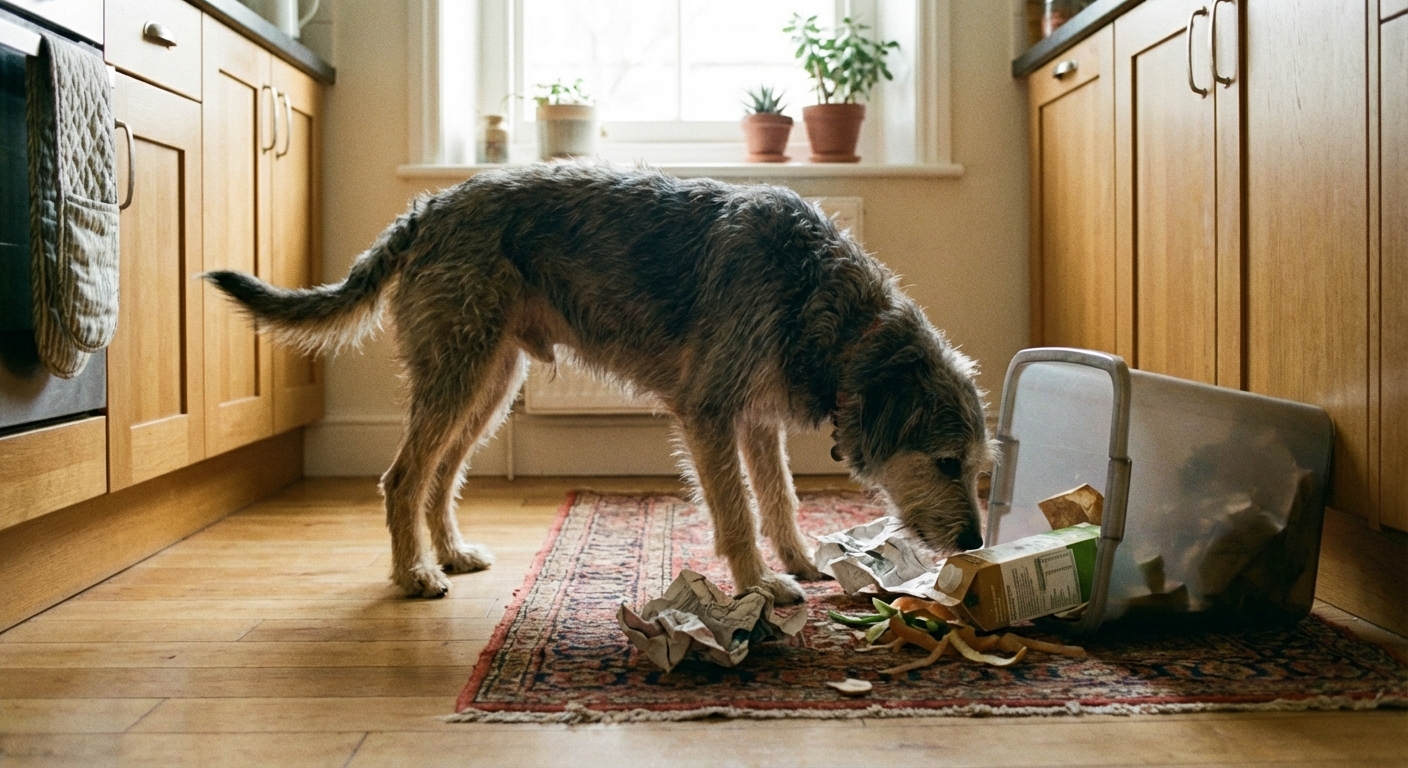
Trash, table scraps, greasy foods, new treats, chews, and “mystery snacks” from the backyard can irritate the stomach and intestines. Even a brand new bag of the same kibble can cause GI upset in sensitive dogs.
Fast food changes
Many dogs need a slow transition. A sudden switch can disrupt the gut microbiome and lead to diarrhea, gas, or vomiting.
Parasites and infections
Giardia, roundworms, hookworms, and some bacterial or viral infections can all cause diarrhea, mucus, and tummy pain. Puppies and recently adopted dogs are especially at risk.
Food sensitivity
This is not always a dramatic allergy. Sometimes it looks like intermittent soft stool, gassiness, and occasional vomiting that comes and goes.
Stress
Boarding, travel, new pets, storms, and even schedule changes can cause “stress colitis,” which often shows up as sudden diarrhea and urgency.
Medication side effects
Some pain medications, antibiotics, and supplements can upset the GI tract. Always tell your veterinarian what your dog is taking, including over-the-counter products.
Dysbiosis
Sometimes the gut bacteria get out of balance (often after stress, diet changes, illness, or antibiotics). This can contribute to loose stool, gas, and a sensitive stomach. It is usually part of a bigger picture rather than the only cause.
Foreign body
Socks, toys, corn cobs, bones, and chunks of chew can partially or fully block the intestines. This can become urgent or emergent, especially if your dog has repeated vomiting, abdominal pain, bloating, or cannot keep water down.
Call your vet now
Home care is only for mild cases. Contact your veterinarian promptly or seek emergency care if you notice any of the following:
- Repeated vomiting or cannot keep water down
- Blood in vomit or stool, or black tarry stool
- Severe lethargy, weakness, collapse, or pale gums
- Abdominal pain, bloating, or a tight, distended belly
- Unproductive retching (trying to vomit but nothing comes up), especially in deep-chested dogs, as this can be a sign of bloat (GDV)
- Suspected toxin exposure (chocolate, xylitol, grapes/raisins, rodent poison, certain plants)
- Foreign body risk (chewed toy, sock, bones, corn cob)
- Very young, senior, or medically fragile dogs (diabetes, kidney disease, Addison’s disease, heart disease, etc.)
- Diarrhea lasting more than 24 to 48 hours or vomiting lasting more than 12 to 24 hours, sooner if your dog is small, very young, or worsening
- Signs of dehydration (tacky or sticky gums, sunken eyes, skin that stays tented when gently lifted, weakness, reduced urination)
Trust your instincts. If your dog just looks “off,” it is worth a call.
At-home plan for mild cases
If your dog is bright, alert, and only has mild symptoms, these steps are often what veterinarians recommend as a first line of support. When in doubt, call your vet first, especially for small dogs and puppies.
1) Pause and assess
Write down what happened: when symptoms started, what your dog ate in the last 24 hours, whether they got into anything unusual, and how many episodes occurred. This helps you and your veterinarian spot patterns quickly.
2) Hydration first
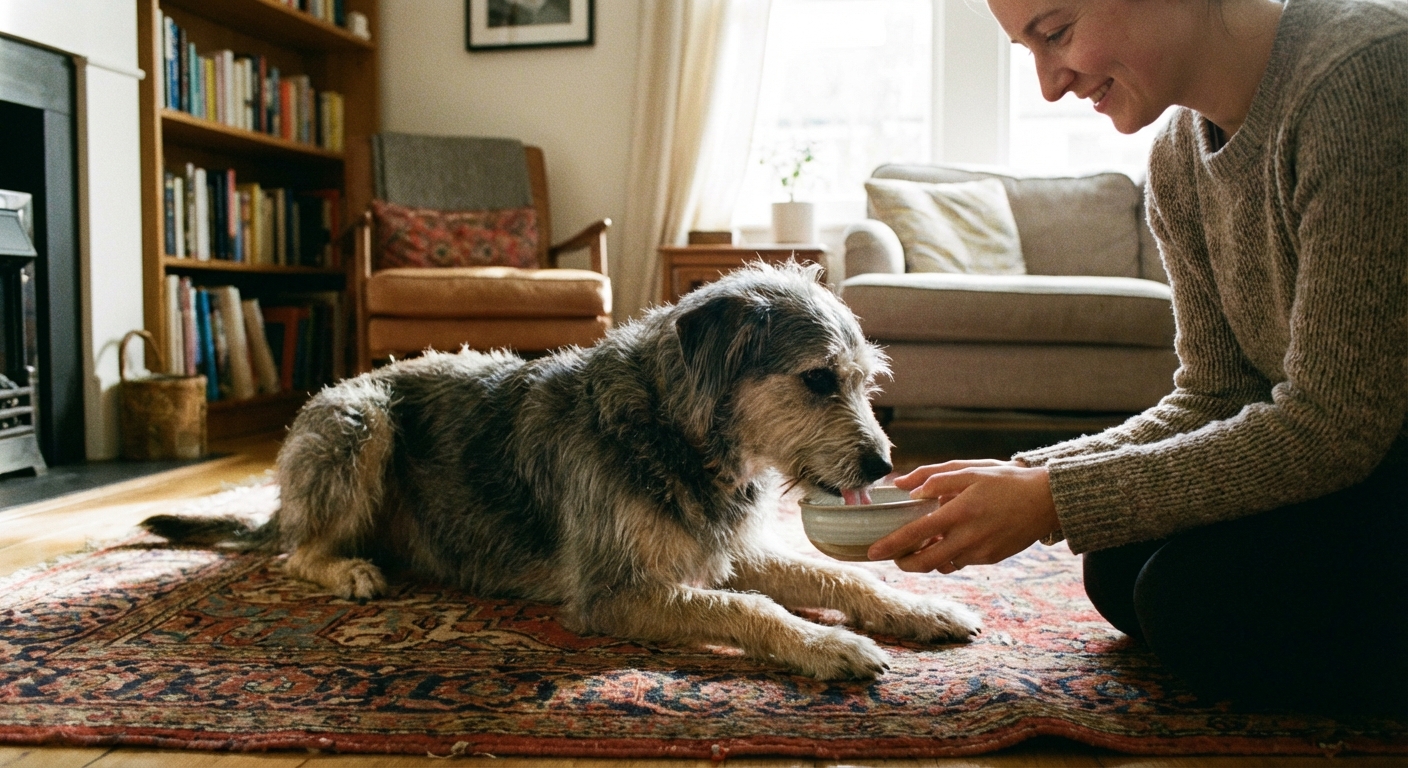
Offer small amounts of fresh water frequently. If your dog gulps and vomits, offer a few sips every 15 to 30 minutes instead of a full bowl.
You can ask your veterinarian whether an electrolyte solution made for pets is appropriate. Dosing matters, and some dogs (especially those with kidney disease, heart disease, or on certain medications) may need a different plan.
Avoid forcing water by syringe unless your veterinarian specifically instructs you, since aspiration is a real risk.
3) Ask about a short food break
For some adult dogs with vomiting, your veterinarian may recommend a brief pause from food (often 6 to 12 hours) while you focus on hydration, then restarting with a bland diet. Do not fast puppies or toy breeds without veterinary guidance, since they can crash and dehydrate quickly.
4) Bland diet
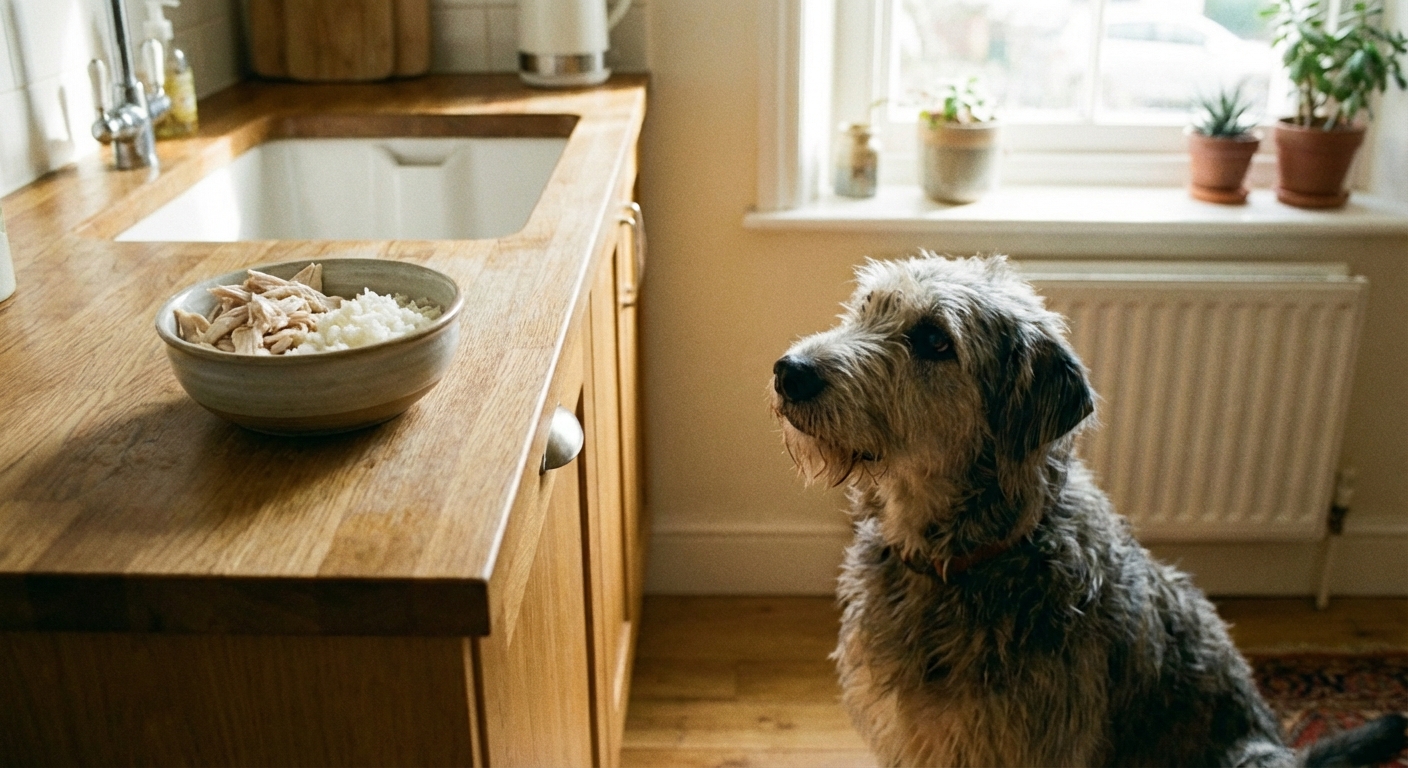
A simple bland meal can give the GI tract a break. The goal is easy-to-digest, low-fat protein plus a gentle carbohydrate, served in small portions.
- Protein options: boiled skinless chicken breast or lean turkey (no seasoning)
- Carb options: plain white rice (a common go-to) or plain cooked sweet potato (a little higher in fiber, so skip it if it seems to worsen diarrhea)
Choose one carb and keep it simple. Feed small meals throughout the day rather than one large serving.
If you want simple portion guidance to start, you can try:
- Small dogs: 1 to 2 tablespoons per meal
- Medium dogs: 1/4 to 1/2 cup per meal
- Large dogs: 1/2 to 1 cup per meal
Then adjust based on your dog’s size, appetite, and your veterinarian’s advice. After 24 to 48 hours of improvement, slowly transition back to your normal diet over several days.
Some dogs do better with a low-fat prescription GI diet instead of home-cooked bland food, so if your dog has a sensitive stomach, recurring episodes, or pancreatitis risk, ask your vet what they prefer.
5) Gut support
Some dogs benefit from a veterinarian-approved probiotic during mild diarrhea or after antibiotics. Look for products made specifically for dogs and ask your veterinarian for brand guidance. Not all probiotics are equal, and dosing matters.
6) Rest and calm
Stress can worsen GI upset. Keep activity gentle, keep the routine predictable, and limit access to trash, toys that can be swallowed, and rich treats.
What not to do
- Do not give human medications like Pepto-Bismol, Imodium, aspirin, or ibuprofen unless your veterinarian instructs you. Some are unsafe for dogs or unsafe for your dog’s specific situation.
- Do not fast puppies without veterinary guidance. Small bodies can become dehydrated and weak quickly.
- Do not switch foods repeatedly in panic. Rapid changes can keep the gut irritated.
- Do not give fatty “comfort foods” like bacon, burger grease, or cheese. Fat can trigger pancreatitis in some dogs.
- Do not ignore repeated vomiting. If it keeps happening, it is not “just a bug” until proven otherwise.
Prevention tips
Most tummy trouble is preventable. Here are the habits that make the biggest difference.
Transition foods slowly
A simple schedule is:
- Days 1 to 3: 25% new food, 75% current food
- Days 4 to 6: 50% new food, 50% current food
- Days 7 to 9: 75% new food, 25% current food
- Days 10 to 14: 100% new food
Go slower if your dog has a sensitive stomach.
Stop the “garbage buffet”
Use a trash can with a locking lid, keep counters clear, and supervise backyard time if your dog snacks on plants, mushrooms, or droppings.
Keep treats boring
Too many treats, too many types, and high-fat chews are common triggers. Stick with one or two simple options and keep treats under about 10% of daily calories.
Stay current on parasite prevention
Monthly preventives and routine fecal tests are not glamorous, but they are powerful. Parasites are a very common reason dogs have recurring loose stool.
Consider add-ons carefully
Some families like adding small amounts of simple, low-fat whole foods to a complete and balanced diet. Some owners report firmer stools with careful, slow changes, but it is not a guaranteed fix and it is easy to unbalance a diet (or add too much fat) if you get aggressive with it.
If you want to go fully homemade, work with your veterinarian or a board-certified veterinary nutritionist so the diet is complete and balanced.
Quick FAQ
How long should an upset stomach last?
Mild cases often improve within 24 to 48 hours with rest, hydration support, and a bland diet. If symptoms persist or worsen, get veterinary guidance. If your dog is small, very young, or not keeping water down, do not wait.
Is vomiting once a big deal?
One isolated episode in an otherwise normal, bright dog can be minor. Multiple episodes, vomiting plus lethargy, vomiting plus abdominal pain, or any inability to keep water down is more concerning.
What about pumpkin?
Plain canned pumpkin can help some dogs with mild diarrhea or constipation due to its fiber content, but it is not a cure-all. Use only plain pumpkin, not pie filling, and ask your veterinarian for a portion that fits your dog’s size.
When should I bring a fecal sample?
If diarrhea lasts more than a day or two, keeps coming back, or your dog is a puppy or newly adopted, ask your clinic if they want a fecal sample. Parasites like Giardia are common, and you cannot diagnose them just by looking at the stool.
Could this be pancreatitis?
Sometimes, yes. Pancreatitis often shows up as repeated vomiting, reduced appetite, belly pain (some dogs hunch or seem very uncomfortable), and lethargy. It can be triggered by fatty foods in some dogs. If you are worried about pancreatitis, call your veterinarian.
Bottom line
Most mild upset stomach episodes are manageable with careful hydration, a simple bland diet, and a little patience. But the key is knowing when it is not mild anymore. Trust your gut, watch your dog’s energy level, and do not hesitate to call your veterinarian. Getting ahead of GI problems early can prevent dehydration, complications, and a much bigger bill later.