From sneezing and congestion to low appetite, learn practical home care that helps cats with URIs feel better—plus red flags, antibiotics guidance, and pre...
Article
•
Designer Mixes
Treatment for URI in Cats

Shari Shidate
Designer Mixes contributor
If your cat is sneezing, congested, or has watery eyes, you might be dealing with a URI, which is short for upper respiratory infection. As a veterinary assistant, I have seen how stressful this can feel for pet parents, especially when your cat seems miserable and you are not sure what is normal versus urgent.
The good news is that many feline URIs improve with supportive care, and you can do a lot at home while working closely with your veterinarian. The key is knowing what helps, what can harm, and when to escalate care.

What a URI means
A feline URI is an infection of the upper airways, most often affecting the nose, nasal passages, throat, and sometimes the eyes. URIs are very common, especially in:
- Kittens
- Cats adopted from shelters or rescues
- Multi-cat homes
- Cats under stress, such as travel or a new household
Most feline URIs start with viruses, and the most common culprits are feline herpesvirus (FHV-1) and feline calicivirus (FCV). Bacteria can join in as a secondary infection, which is one reason some cases get worse or linger.
Common signs at home
URI symptoms can range from mild sniffles to full-blown congestion that affects eating and drinking. Keep an eye out for:
- Sneezing and nasal congestion
- Clear or colored nasal discharge
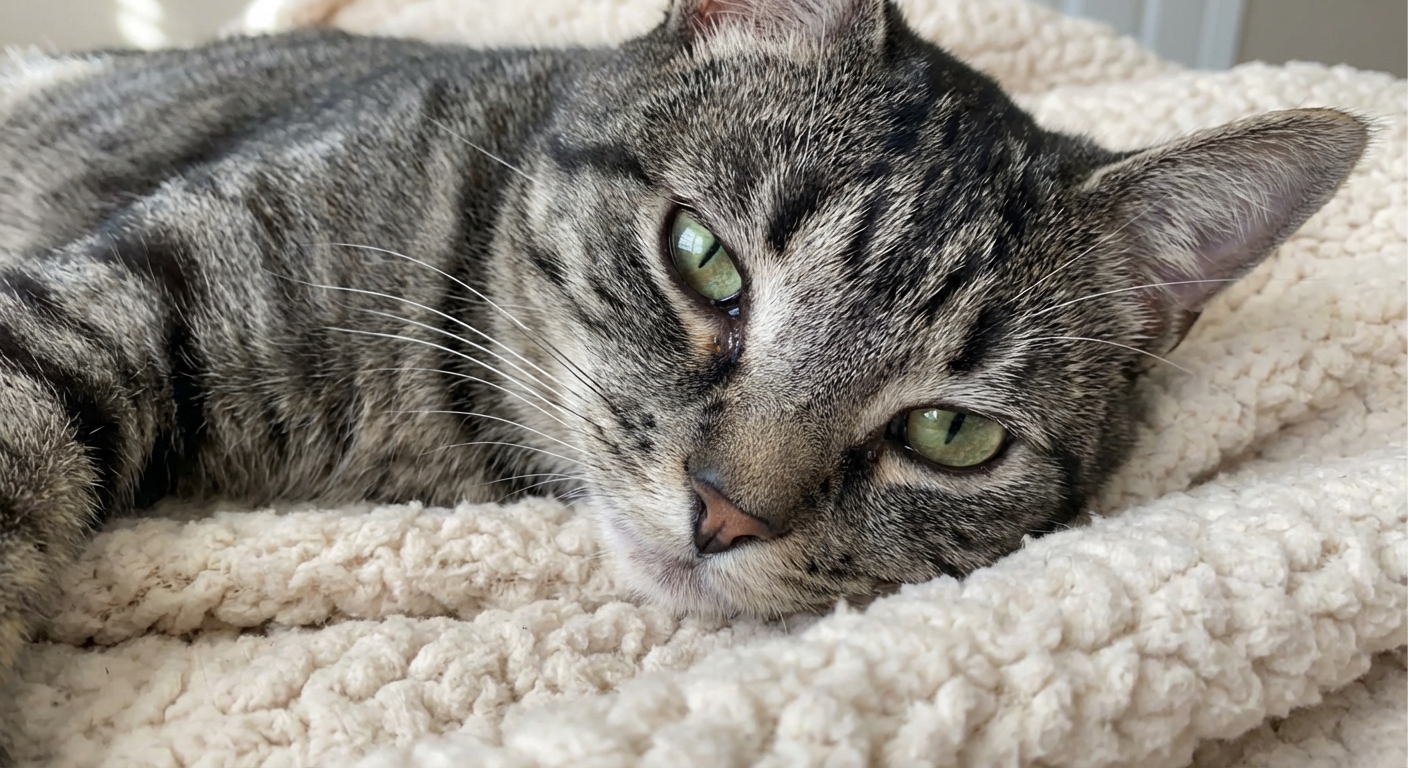
- Watery eyes or eye discharge
- Squinting, red eyes, or crusting around the eyes
- Coughing or noisy breathing (less common than in dogs)
- Drooling or mouth ulcers (more typical with calicivirus)
- Decreased appetite, especially if the nose is blocked
- Lethargy and hiding
Important: Cats often stop eating when they cannot smell. Even a “simple cold” can become serious if a cat will not eat for more than a day, especially in overweight cats (risk of fatty liver disease).
How long it usually lasts
Many uncomplicated URIs improve within about 7 to 21 days. Some cats, especially those with herpesvirus, can have flare-ups later during stress. If your cat is not improving by about a week, is worsening at any point, or symptoms are still lingering past roughly two weeks, it is time to check in with your veterinarian.
How vets diagnose it
Many URIs are diagnosed based on a physical exam and history. Your veterinarian may also recommend tests depending on severity, duration, or outbreak situations:
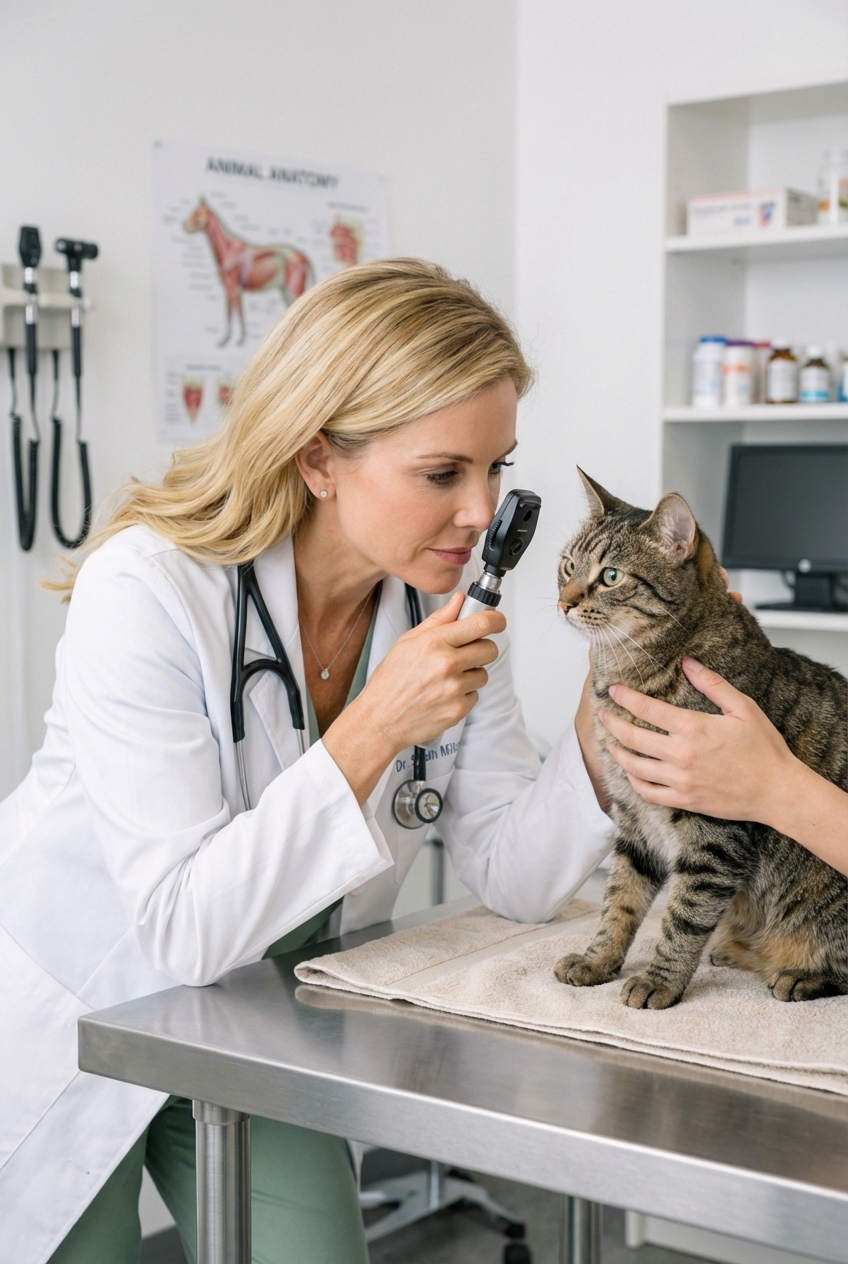
- Oral and eye exam to look for ulcers, dehydration, and eye involvement
- Temperature check for fever
- PCR testing to identify specific viruses or bacteria in persistent cases
- Chest imaging if lower airway disease or pneumonia is suspected
- Eye staining (fluorescein) if a corneal ulcer is possible
Treatment that helps
URI treatment is usually a mix of supportive care and targeted medications when needed. The plan depends on whether the cause is primarily viral, bacterial, or complicated by eye disease, dehydration, or poor appetite.
1) Supportive care at home
- Humidity: Use a cool-mist humidifier where your cat rests. You can also bring your cat into the bathroom while a hot shower runs for 10 to 15 minutes, once or twice daily, if your cat tolerates it.
- Gentle cleaning: Use warm water or saline on a soft cloth or cotton pad to loosen crust around the nose and eyes.
- Encourage eating: Offer warmed wet food, strong-smelling foods, or veterinary recovery diets. Warming food slightly can boost aroma.
- Hydration: Offer fresh water and more wet food. Ask your veterinarian before using any oral rehydration products.
- Reduce stress: Keep the environment quiet, warm, and predictable. Stress can worsen viral flare-ups, especially with herpes.
2) Medications your vet may use
- Antibiotics: Not all URIs need antibiotics. They are more likely if there is suspected secondary bacterial infection, fever, or thick colored discharge.
- Antiviral plans: Some cases, especially herpes-associated issues, may benefit from specific treatment plans your veterinarian chooses based on the situation.
- Eye medications: If conjunctivitis or corneal ulcers are present, topical eye meds can be essential.
- Appetite support: If your cat is not eating, your vet may prescribe appetite stimulants or anti-nausea medications.
- Fluids: Subcutaneous fluids or hospitalization may be recommended if dehydration is present.
3) When hospitalization helps most
Some cats need inpatient care for oxygen support, nebulization, fluids, assisted feeding, or intensive monitoring. This is more common for young kittens, senior cats, and cats with underlying disease.
Higher-risk cats
Any cat can get a URI, but I am extra cautious with:
- Very young kittens (they can decline quickly)
- Senior cats
- Flat-faced breeds (like Persians), who may struggle more with congestion
- Cats with asthma, heart disease, or immune system issues
If your cat falls into one of these groups, it is smart to call your veterinarian sooner rather than later.
What not to do
When your cat is congested, it is tempting to reach for human cold medicines. Please do not. Many over-the-counter products are toxic to cats.
- No human decongestants unless explicitly prescribed by your veterinarian
- No essential oils for “clearing sinuses”, many are irritating or unsafe for cats
- No leftover antibiotics from other pets or old prescriptions
- No forcing food or water in a way that risks aspiration
- No human eye drops unless your veterinarian tells you exactly what to use (some can worsen ulcers or cause serious harm)
If you are unsure whether something is safe, call your veterinary clinic before giving it.
When to call the vet urgently
Cats can seem like they are coping, then suddenly worsen. Reach out to your veterinarian quickly if you notice:
- Not eating for 24 hours (for kittens, call the same day if they are not eating normally, and do not wait if they are very young)
- Open-mouth breathing or obvious breathing difficulty
- Blue or gray gums
- Extreme lethargy or collapse
- Eye pain, thick eye discharge, squinting, a closed eye, or a cloudy-looking eye (corneal ulcers can be emergencies)
- Suspected dehydration (tacky gums, sunken eyes, weakness)
- Not improving by 7 to 10 days, worsening at any point, or lingering beyond about 2 weeks
Contagious and easy to spread
Most feline URIs spread through droplets, close contact, shared bowls, and contaminated hands. Some viruses can also spread through contaminated objects (fomites). Calicivirus, in particular, can be hardy in the environment.
If you have multiple cats:
- Isolate the sick cat when possible
- Use separate food and water bowls and a separate litter box
- Wash hands between cats
- Clean surfaces and bedding regularly
Cleaning note: Use a pet-safe disinfectant your veterinarian or shelter recommends, and follow label directions for contact time. If your cat was adopted recently, your rescue or shelter may have specific guidance for isolation and cleaning.
Prevention and long-term tips
Vaccines do not always prevent infection entirely, but they can reduce severity and complications. Talk to your veterinarian about the appropriate vaccine schedule for your cat’s lifestyle.
Some cats, especially those with herpesvirus, can have flare-ups during stress. For these cats, prevention often looks like:
- Keeping routines stable
- Reducing household stressors
- Prompt treatment at the first sign of sneezing or eye changes
- Regular wellness exams to catch underlying issues early
My pet-parent reminder: your cat does not have to “tough it out.” If breathing sounds worse, the eyes look painful, or appetite drops, your veterinarian can make a huge difference quickly.
Quick home checklist
- Warm, strong-smelling wet food offered 3 to 4 times daily
- Humidifier or steamy bathroom sessions
- Wipe nose and eyes gently with warm water or saline
- Track appetite, water intake, energy, and litter box use
- Give medications exactly as prescribed
- Call your vet if appetite drops or breathing worsens