Practical, vet-informed kennel cough home care: quiet rest, switch to a harness, add humidity, keep your dog hydrated, choose soothing treats, and know the w...
Article
•
Designer Mixes
Treating Kennel Cough at Home

Shari Shidate
Designer Mixes contributor
Kennel cough is one of those illnesses that can sound scarier than it looks. Your dog may seem bright, hungry, and playful, but then suddenly they let out that classic dry, honking cough that makes every pet parent pause. It can be especially stressful at night when the coughing seems louder and more frequent. As a veterinary assistant, I want you to feel supported and informed because there are safe, practical things you can do at home for mild cases, and there are also clear moments when you should stop DIY care and call your veterinarian.

What kennel cough is
“Kennel cough” is a common name for infectious tracheobronchitis, an upper respiratory infection. It is usually caused by a mix of viruses and bacteria. One frequent bacterial player is Bordetella bronchiseptica.
It spreads through respiratory droplets and close contact, so it often pops up after:
- boarding
- daycare
- dog parks
- grooming
- training classes
Many dogs recover well with supportive care, especially when symptoms are mild and they are otherwise acting normal. It can still become serious in higher risk dogs or if pneumonia develops, which is why monitoring and good triage matters.
Signs that fit
Common symptoms include:
- Dry, hacking or honking cough, sometimes with gagging at the end
- Retching that can look like they are trying to “cough something up”
- Runny nose or mild sneezing
- Normal or slightly reduced energy
A key detail: many dogs still eat and drink normally. If your dog is acting very sick, that is not something to “wait out.”
Home care vs vet
Home care may be reasonable if
- Your dog is bright and alert
- Cough is mild to moderate
- They are eating and drinking
- No breathing effort is present
- No fever is suspected
Practical note: you cannot reliably check for fever by touch. If you are trained and comfortable taking a rectal temperature safely, do so. Otherwise, let your veterinary team check.
Call a vet promptly if you notice
- Labored or fast breathing, wheezing, or belly breathing
- Blue or pale gums
- Refusing food or water for 12 to 24 hours (sooner for puppies and small dogs)
- Fever. Many vets consider about 103°F (39.4°C) or higher concerning, especially when paired with lethargy or poor appetite
- Thick nasal discharge (yellow or green), especially if it is increasing or paired with fever, low appetite, or lethargy
- Extreme lethargy
- Persistent cough that is worsening or not improving after several days
Extra caution groups
Please involve your veterinarian early if your dog is a puppy, a senior, pregnant, immunocompromised, brachycephalic (Pug, French Bulldog, etc.), or has heart or lung disease. These dogs can deteriorate faster and may need medications sooner.
At-home care
Supportive care is about reducing irritation, keeping airways hydrated, and helping your dog rest.
1) Rest and quiet time
Coughing often increases with excitement. Keep exercise gentle. Skip hard running, rough play, and long fetch sessions until the cough is gone.
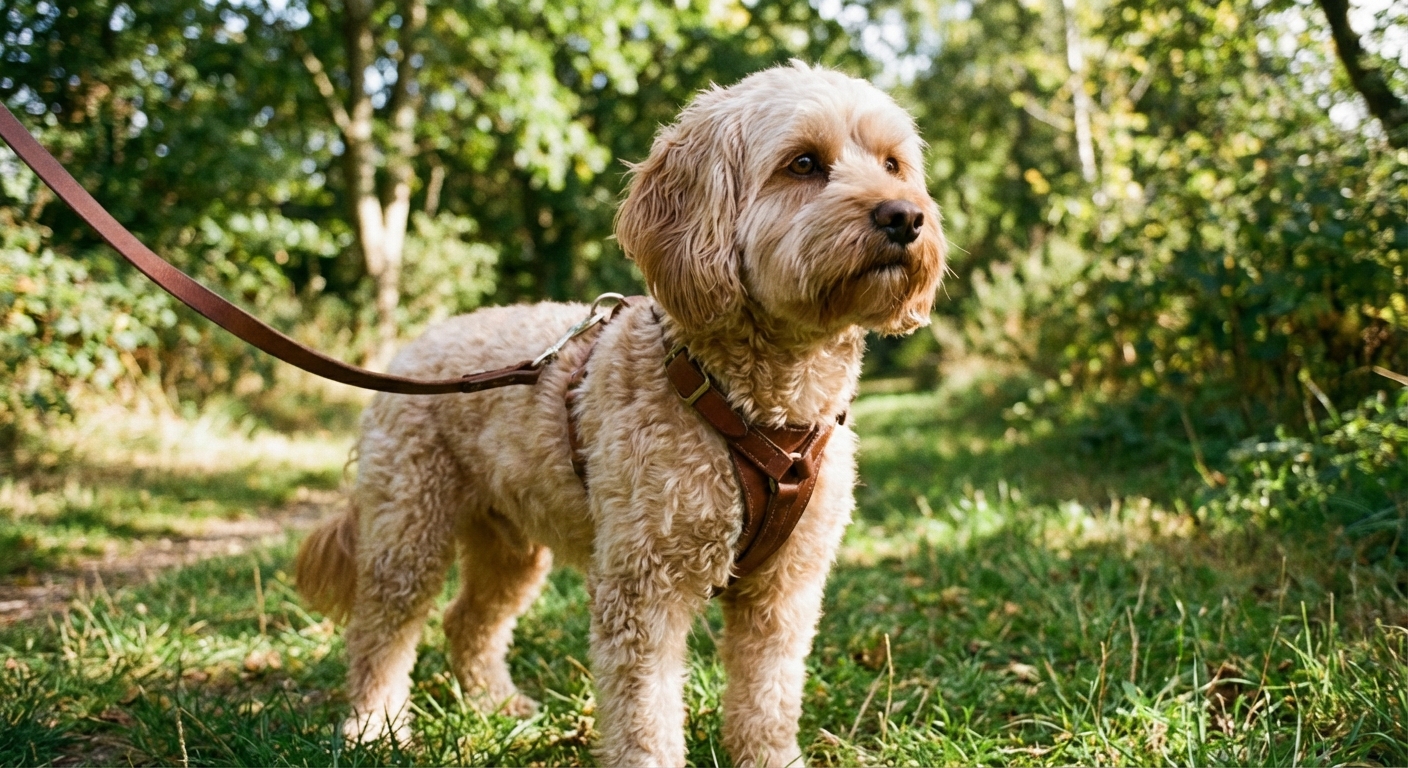
2) Use a harness
Pressure on the trachea can trigger coughing fits. A well-fitted harness reduces airway irritation during walks.
3) Add humidity
Moist air can soothe a dry, irritated throat.
- Run a cool-mist humidifier near your dog’s resting area.
- Or sit with your dog in a steamy bathroom for 10 to 15 minutes while the shower runs hot. Keep your dog out of the shower stream, keep the door cracked if the room gets too warm, and supervise to avoid overheating.
4) Hydration and soft meals
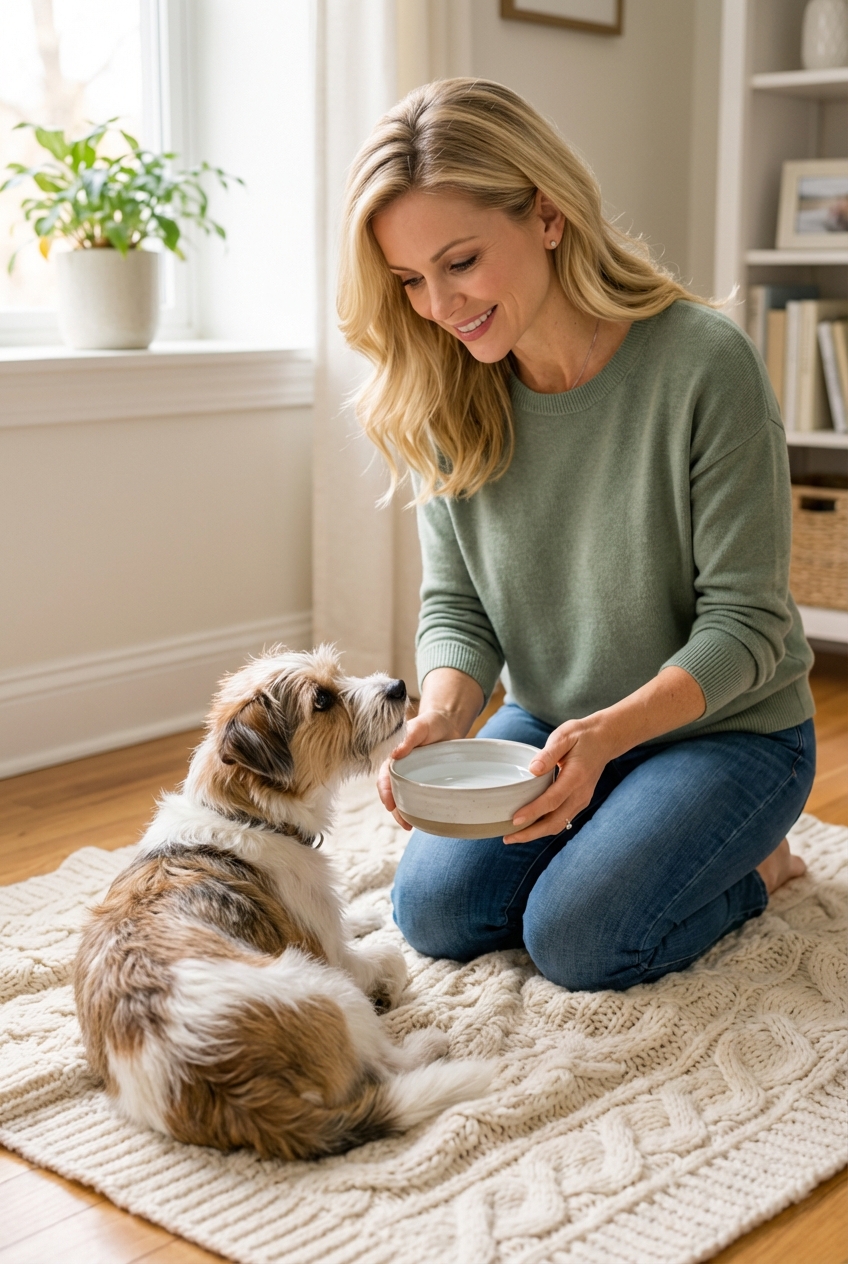
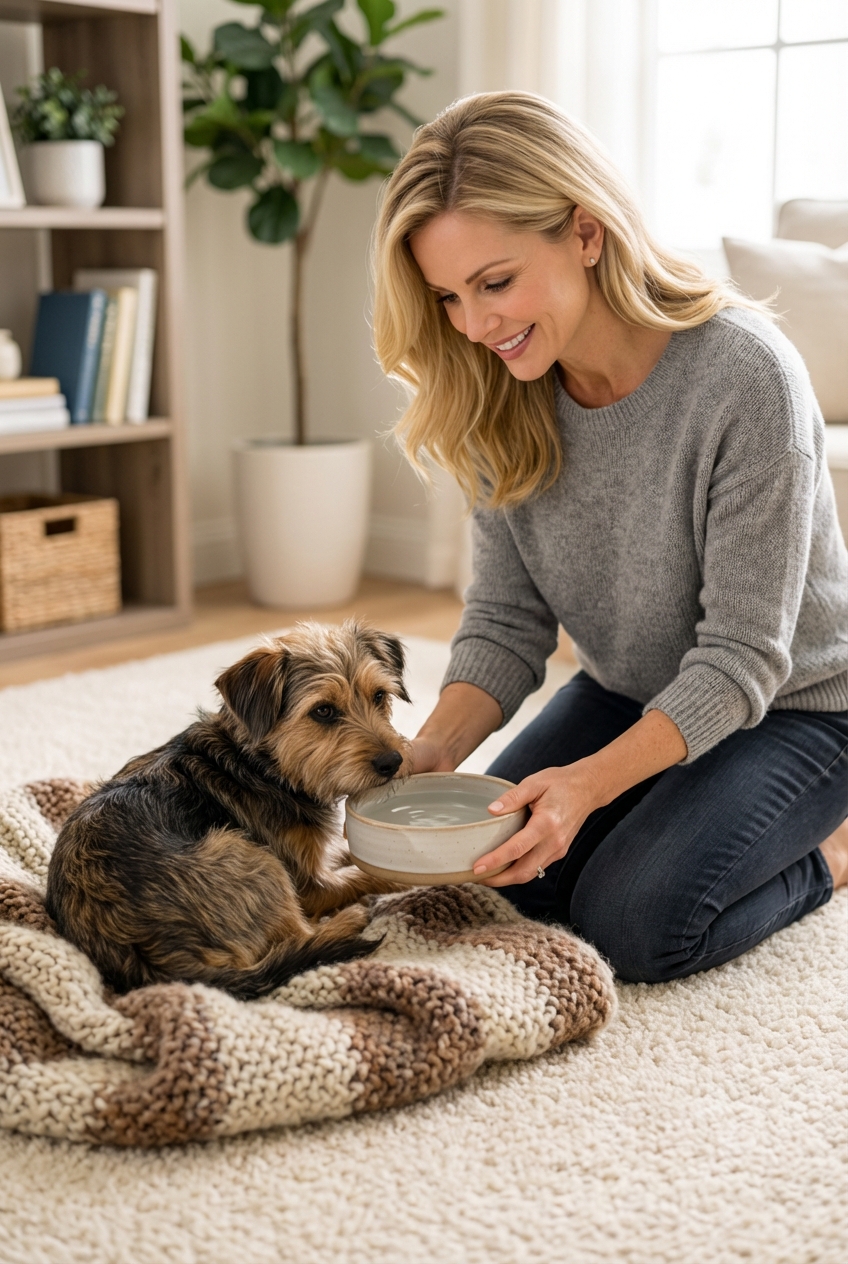
Encourage water intake. If your dog is reluctant, you can offer:
- water flavored with a splash of low-sodium broth
- wet food
- adding warm water to kibble to soften it
5) Reduce irritants
Strong scents and particles can worsen coughing. Avoid:
- smoke (including fireplaces)
- plug-in fragrances
- aerosol sprays
- dusty powders near your dog
6) Honey
Honey can coat the throat and may reduce coughing for some dogs. A commonly suggested amount is 1/2 to 1 teaspoon for small dogs and 1 to 2 teaspoons for larger dogs, up to a few times per day.
Use plain honey only (not sweetened products). Avoid or limit honey in dogs where sugar or calories are a concern (for example, diabetes or weight loss plans). If you have a very young puppy, check with your veterinarian before offering honey.
What to avoid
Skip human cough and cold meds
Do not use human cough and cold meds unless your vet tells you to. Many human products contain ingredients that are dangerous for dogs (for example, certain decongestants, xylitol, or multi-symptom combinations). Dosing is also not straightforward and depends on your dog’s weight, health, and the exact cause of the cough.
Do not push exercise
Do not force heavy exercise “to clear it out.” That can aggravate the airway and extend recovery time.
Do not assume it is always kennel cough
Coughing can also come from heart disease, collapsing trachea, allergies, chronic bronchitis, airway foreign material, parasites, or pneumonia. If the pattern does not fit, get checked.
How long it lasts
Many uncomplicated cases improve within 1 to 3 weeks. Some dogs cough longer, especially if their trachea stays irritated or if there are mixed infections.
If your dog is still coughing past the two-week mark, or if the cough is getting harsher, it is a good time to recheck with your veterinarian.
Keeping other pets safe
Kennel cough is contagious. Smart home management protects your household and your neighbors.
- Isolate your sick dog from other dogs as much as possible.
- Avoid daycare, boarding, grooming, and dog parks until fully recovered.
- Avoid nose-to-nose greetings on walks.
- Wash bedding and bowls regularly.
- Clean and disinfect high-touch items like toys, leashes, and hard surfaces your dog drools on.
- Practice good hand hygiene, especially after wiping noses or handling saliva-covered toys.
Contagious timing varies by cause and by dog. Many cases are most contagious for about 1 to 2 weeks, but some dogs can shed organisms longer. Your veterinarian can give the best “return to group settings” timeline for your dog’s situation.

Does the vaccine help?
The Bordetella vaccine can reduce the risk and often lessens the severity, but it does not guarantee complete prevention because kennel cough can be caused by multiple organisms. Think of it like a helpful layer of protection, especially for dogs who are frequently around other dogs.
What the vet may do
If you do need to bring your dog in, your veterinarian will usually start with a physical exam and temperature. Depending on your dog’s risk level and symptoms, they may recommend:
- Chest x-rays if pneumonia is a concern
- Testing in outbreaks or persistent cases
- Cough suppressants in selected cases (not appropriate for every cough)
- Antibiotics when a bacterial component is suspected or if your dog is higher risk
The goal is to treat the dog in front of us, not just the cough sound.
Home checklist
- Switch to a harness for walks
- Keep activity calm and low-impact
- Add humidity (humidifier or steamy bathroom sessions)
- Encourage fluids and softer meals
- Remove airway irritants (smoke, strong scents)
- Monitor breathing, appetite, gum color, and energy daily
- Call your vet if any red flags appear
Your goal at home is comfort and observation. If your dog is struggling to breathe, not eating, or acting “off,” that is your sign to stop guessing and get veterinary help.