
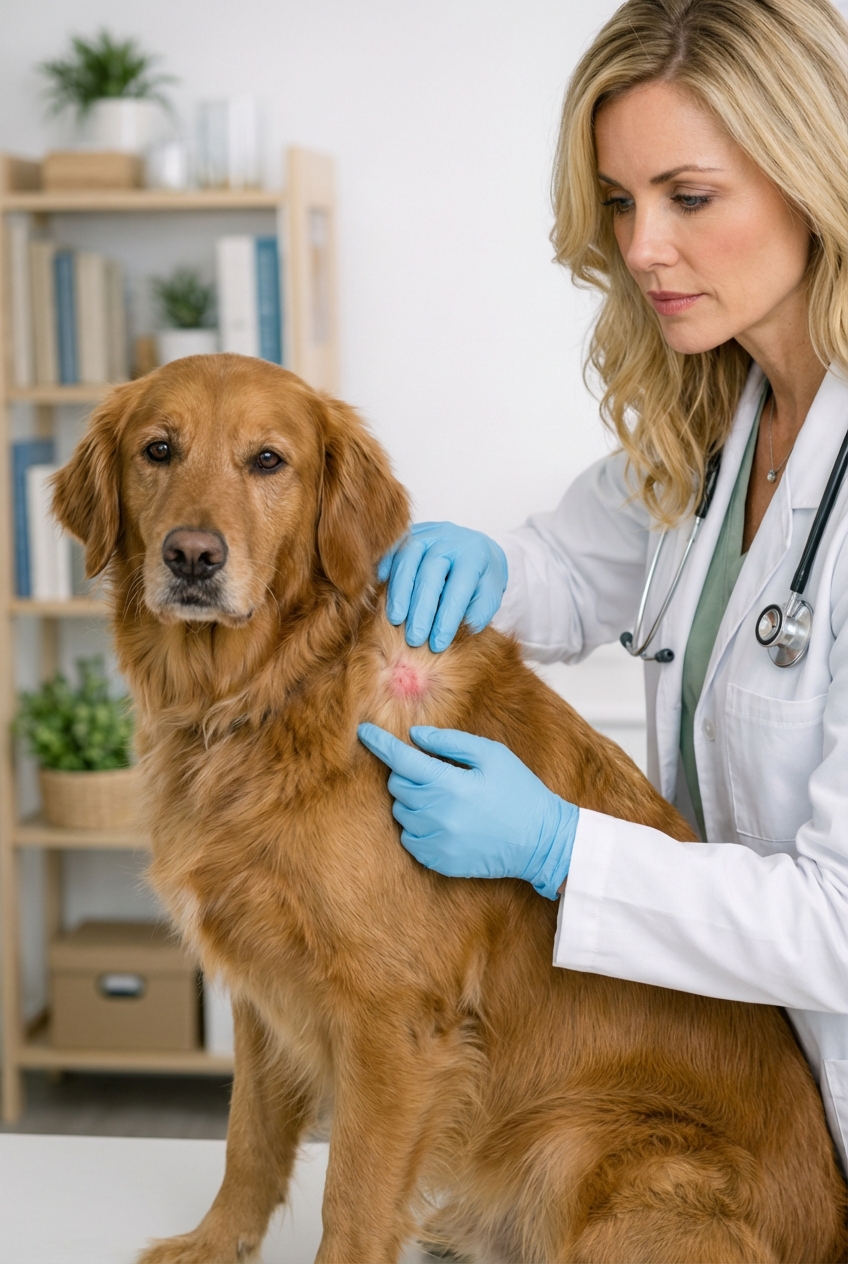
Hot spots can spread fast. Learn the top triggers—allergies, fleas, trapped moisture, ear issues, infections, and stress—plus safe home care and when to ...
Article
•
Designer Mixes
Treating Hot Spots on Dogs

Shari Shidate
Designer Mixes contributor
Hot spots can look scary fast. One minute your dog has a small irritated patch, and by evening it is a wet, red, angry-looking sore. As a veterinary assistant in Frisco, Texas, I have seen how quickly these can escalate, especially in our warm, humid months. The good news is that many hot spots improve quickly with the right first steps, and knowing when it is time to call your vet can save your dog a lot of discomfort.
Important note: This article is for general education and first-aid support, not a substitute for veterinary care. If your dog seems very painful, the sore is rapidly spreading, there is pus or a bad odor, or your dog is lethargic or feverish, contact your veterinarian right away.
What a hot spot is
A “hot spot” is the common name for acute moist dermatitis, also called pyotraumatic dermatitis. It is an area of skin that becomes inflamed and infected because the dog licks, chews, or scratches the area repeatedly. That self-trauma breaks the skin’s protective barrier, bacteria overgrow, and the lesion becomes moist and raw.
Hot spots are often:
- Sudden in onset and fast-spreading
- Moist, oozing, or crusty
- Very itchy or painful
- Hidden under thick fur until they are advanced
What you might see: a red, weepy patch with hair loss around it, fur that is clumped or “stuck together,” and skin that feels warm or tender.
Common locations include the cheek, neck, chest, hips, base of the tail, and thighs.
Why hot spots happen
The hot spot is the symptom. The real key is figuring out why your dog started licking in the first place. The most common triggers I see are:
- Allergies (environmental allergies, food sensitivities, flea allergy dermatitis)
- Fleas, even if you never see them
- Moisture trapped in the coat after swimming or bathing
- Ear infections causing head shaking and cheek or neck lesions
- Skin parasites (less common, but possible)
- Pain or orthopedic issues that lead to chronic licking in one area
- Stress or boredom, especially in dogs prone to compulsive licking
Actionable tip: if hot spots keep coming back, ask your vet about a plan that addresses itch control, infection control, and prevention. Treating only the surface usually means you will see it again.
Early signs
Hot spots often start as subtle behavior changes. Watch for:
- Sudden intense licking, chewing, or scratching in one spot
- Restlessness, waking up to scratch
- Clumps of wet fur or a “stuck together” patch
- A warm, tender area when you touch the coat
- Hair loss in a small circle that seems to be expanding
If you find it early, you may be able to shorten the whole episode dramatically.
First aid at home
If your dog is otherwise acting normal and the area is small, you can take a few immediate steps while you arrange veterinary care if needed.
1) Stop the licking
This is non-negotiable. If your dog keeps licking, the lesion will keep spreading.
- Use an E-collar (cone) or an inflatable collar.
- For some dogs, a t-shirt or recovery suit helps protect body lesions.
2) Clip or part the fur
Hot spots thrive in moist, covered environments. If you can safely clip around the lesion with pet clippers, it helps the area dry and makes cleaning effective.
- Do not use scissors on wiggly dogs. Scissor injuries are a very real emergency.
- If you cannot clip safely, part the hair and keep it dry and separated.
Heads up: some dogs need the clinic to do this step because the area is painful, the spot is in a tricky location, or your dog will not hold still. In those cases, your veterinarian may recommend sedation so it can be clipped and cleaned safely.
3) Clean gently, then dry well
Use a gentle antiseptic rinse that is dog-safe, then pat dry. Drying matters because moisture feeds the problem.
- Common vet-recommended options include dilute chlorhexidine solutions or dilute povidone-iodine (it should look like weak iced tea, not dark brown). Because product concentrations vary (for example, 2% vs 4% chlorhexidine), follow the label and your veterinarian’s dilution directions.
- Pat dry with clean gauze or a soft towel.
4) Skip the products that backfire
In clinic, we see delays in healing when well-meaning owners apply the wrong products.
- Avoid hydrogen peroxide and rubbing alcohol. They can damage healing tissue and sting badly.
- Avoid thick ointments that keep the area wet and sealed, unless your vet specifically prescribed them for this lesion.
- Avoid human creams with lidocaine, benzocaine, or high-strength steroids unless your veterinarian instructed you to use them.
If your dog seems uncomfortable, do not give human pain relievers. Common over-the-counter medications like ibuprofen, naproxen, and acetaminophen can be toxic to dogs. Call your veterinarian for safe options.
What not to do
- Do not bandage tightly or cover the spot in a way that traps moisture, unless your vet tells you exactly how to do it.
- Do not apply human antibiotic ointments unless your veterinarian directs you. Some dogs lick them off, and the wrong product can irritate skin or keep it too moist.
- Do not “let it air out” without stopping licking. Air helps, but only if your dog cannot keep traumatizing the skin.
When to see the vet
Many hot spots need prescription help, especially once infection is established. Seek veterinary care if:
- The lesion is larger than a couple of inches or spreading
- There is a strong odor, pus, or thick discharge
- Your dog is very painful or cannot settle
- The hot spot is on the face, near the eyes, or near the genitals
- Your dog has multiple spots
- No improvement within 24 to 48 hours of preventing licking and cleaning
- Your dog has underlying conditions (like Cushing’s disease) or is immunocompromised
Veterinary treatment may include:
- Clipping and deep cleansing of the area
- Prescription topical therapy (antibiotic, antifungal, anti-inflammatory)
- Oral antibiotics if the infection is deeper
- Itch control (often crucial) such as prescription anti-itch meds
- Investigation of triggers like fleas, ear infections, or allergies
Why this matters: once bacteria are involved, the infection can extend deeper than it looks from the outside, and it often will not resolve if the itch and licking cycle is not broken.
Could it be something else?
Sometimes a “hot spot” look-alike has a different cause. A vet visit is especially helpful if you are unsure, it keeps returning, or it is not improving. Conditions that can mimic or overlap with hot spots include:
- Allergic dermatitis flare without secondary infection (yet)
- Deep pyoderma (a deeper skin infection)
- Ringworm or mites (some causes can be contagious)
- Anal gland issues (often linked to licking near the tail base)
- Foreign body (like a splinter or foxtail) causing localized irritation
Preventing hot spots
Prevention is about reducing itch, moisture, and skin barrier disruption.
Keep coats clean and dry
- Dry thoroughly after swimming or baths, especially under the collar, behind the ears, and in thick feathering.
- Consider a grooming schedule during high-risk seasons.
- Brush regularly to prevent mats that trap moisture and bacteria.
Use flea prevention
- Use veterinarian-recommended flea control year-round in regions where fleas are common.
- Remember: one flea bite can trigger major inflammation in allergic dogs.
Get ahead of allergies
- If your dog is a seasonal “itcher,” talk to your vet early, before the skin breaks down.
- Ask about allergy testing, diet trials, medicated shampoos, and safe itch control options.
Support skin health
Nutrition matters for the skin barrier. Many dogs benefit from:
- A high-quality, complete diet with appropriate fatty acids
- Veterinarian-approved omega-3 supplements for skin support, especially in allergy-prone dogs
- Maintaining a healthy weight, because inflammation is harder to manage in overweight pets
Actionable habit: do a quick “hands-on scan” a few times a week. Feel for dampness, scabs, mats, or tender spots. Finding a hot spot early is half the battle.
Hot spot FAQs
Are hot spots contagious?
Usually, no. The bacteria involved are commonly found on the skin. The issue is the broken barrier and inflammation. However, underlying problems like ringworm or mites can mimic hot spots and can be contagious, which is another reason a vet exam is helpful when you are unsure.
Should I bathe my dog if they have a hot spot?
Bathing can help if you are using a vet-recommended product and you can dry your dog extremely well. If bathing stresses your dog or leads to trapped moisture, it can worsen the problem.
How long do hot spots take to heal?
With proper clipping, licking prevention, and effective treatment, many improve within a few days and heal in 1 to 2 weeks. Delays usually happen when licking continues or the underlying itch trigger is not controlled.
Bottom line
Hot spots are common, uncomfortable, and fast-moving, but they are also very treatable. The winning strategy is simple: stop the licking, dry and clean the area, and address the underlying itch trigger. If your dog’s hot spot is large, smelly, painful, or not improving quickly, your veterinarian can help you break the cycle and prevent the next flare-up.