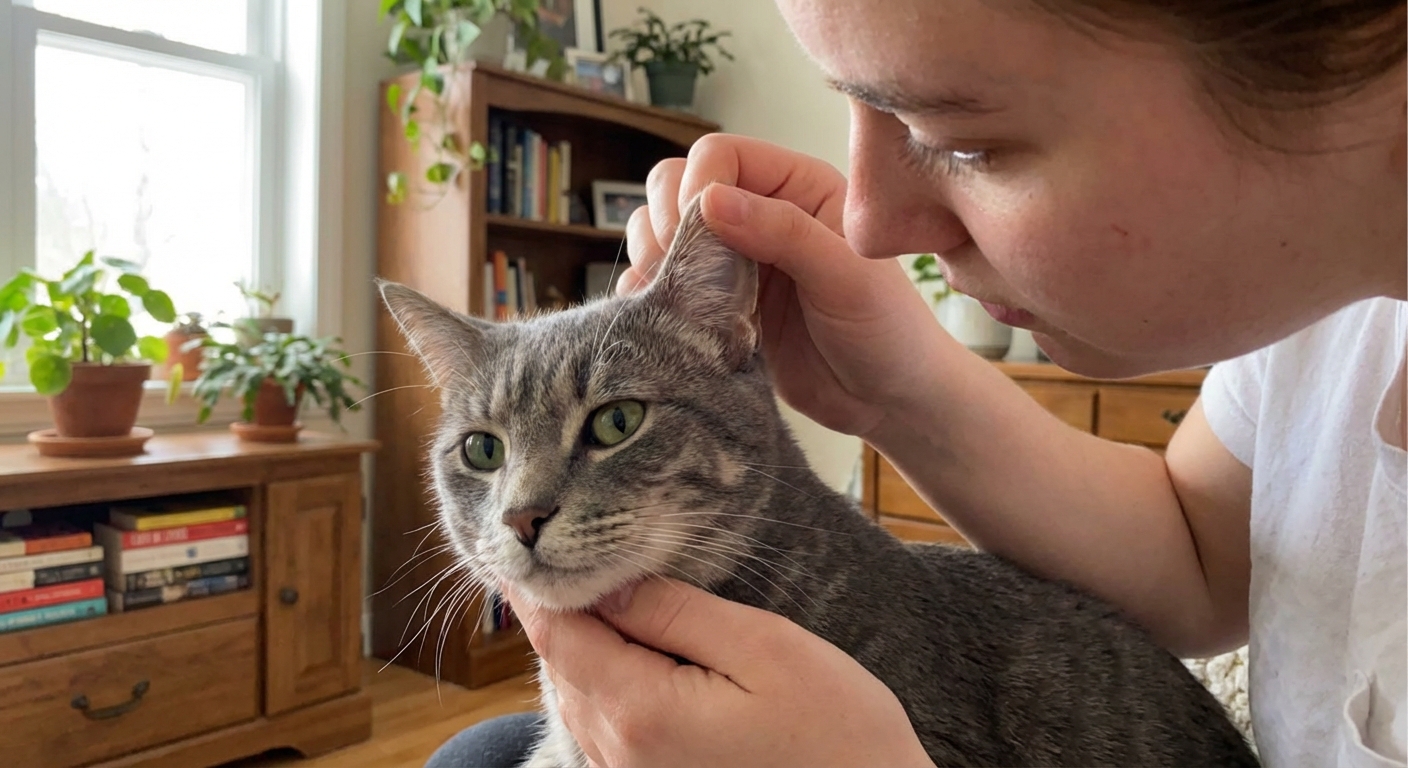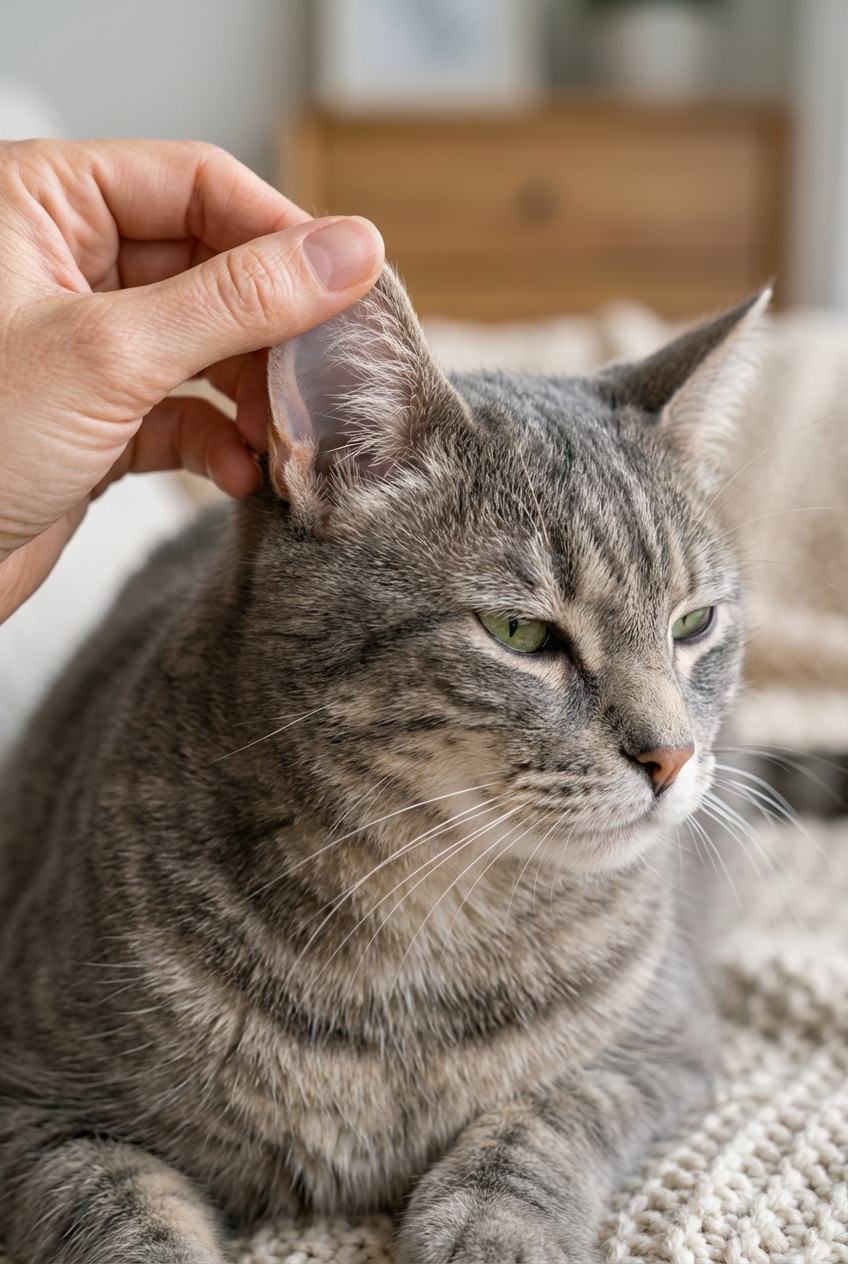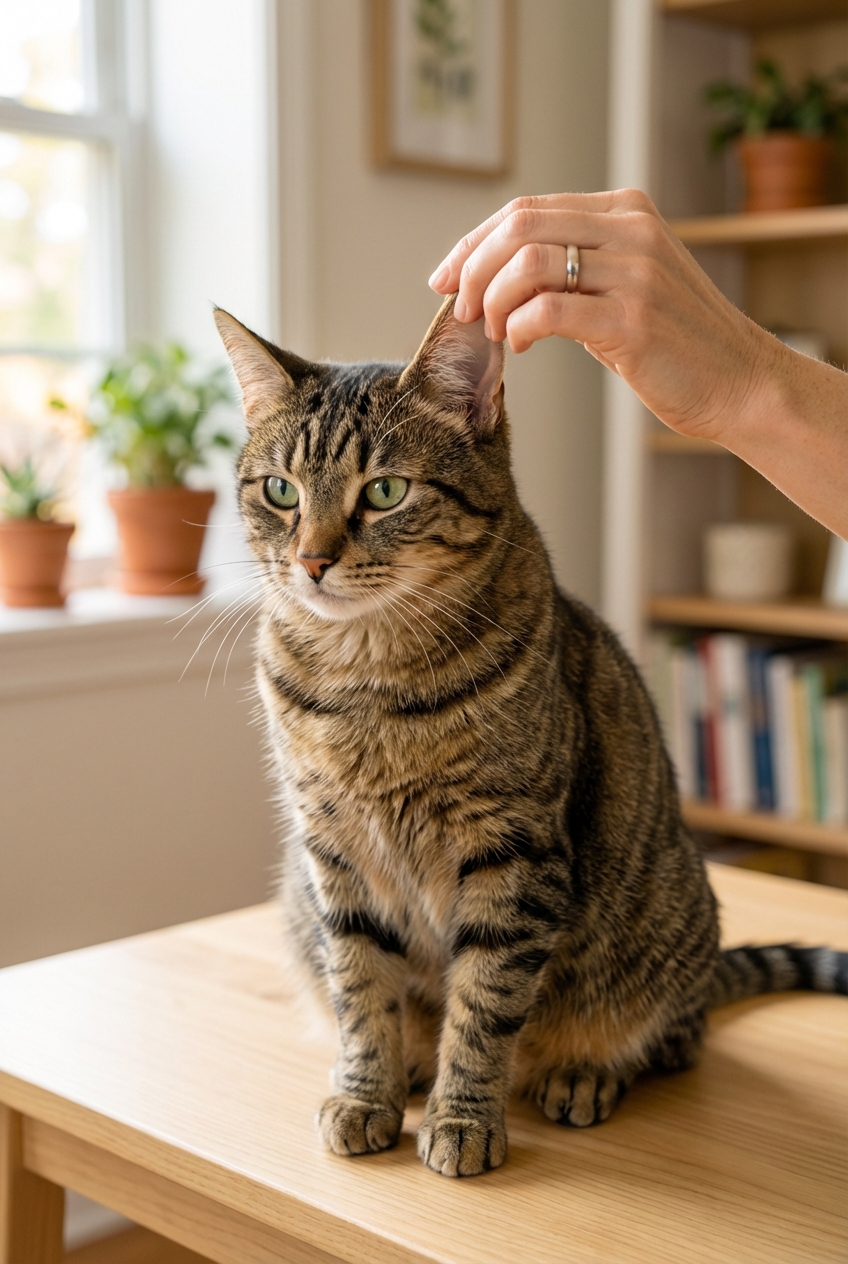
From “coffee ground” ear debris to nonstop scratching, learn how vets diagnose ear mites and the most effective treatments, safe ear cleaning steps, and ...
Article
•
Designer Mixes
Treating Ear Mites in Cats

Shari Shidate
Designer Mixes contributor
Ear mites are one of those “small problem, big misery” issues I see all the time in veterinary settings. The good news is that ear mites in cats are very treatable, and most cats feel relief quickly once the right plan starts. The not-so-good news is that ear mites are contagious between pets (especially cats, but also dogs and ferrets) through close contact, and half-treatment or home “guessing” often leads to repeat infections.
Let’s walk through how to recognize ear mites, what treatment actually works, how long it takes, and what you can do at home to prevent reinfection.
What ear mites are and why they matter
Ear mites (most commonly Otodectes cynotis) are tiny parasites that live on the skin surface inside the ear canal. They feed on skin debris and wax. In response, your cat’s ears often become inflamed and produce that classic dark, crumbly discharge.
Ear mites are especially common in:
- Kittens and young cats
- Cats from shelters, rescues, or multi-cat homes
- Outdoor cats or cats who have contact with outdoor animals
They matter because they can cause intense itching, secondary infections, and in some cats, so much irritation that the ear canal becomes swollen and painful. Severe scratching can also lead to complications like an aural hematoma (a painful blood-filled swelling of the ear flap) that needs veterinary care.
Signs your cat might have ear mites
Many ear problems look similar at home, so I always encourage pet parents to treat the symptoms as a clue, not a final diagnosis.
Common signs
- Frequent head shaking
- Scratching at the ears or rubbing the head on furniture
- Red, irritated ear canals
- Dark brown or black debris that can look like coffee grounds
- Hair loss or scabs around the ears from scratching
- Fussy behavior when the ears are touched
When it might be more than mites
If you notice a strong odor, yellow or green discharge, pus, significant swelling, or your cat seems off balance, mites may not be the only issue. Bacterial or yeast infections, ear polyps, foreign material, allergies, and other conditions can cause similar discomfort.
How vets confirm ear mites
At the clinic, confirmation is usually quick. A veterinarian may:
- Look into the ear canal with an otoscope
- Collect a small sample of ear debris
- Check the sample under a microscope to identify mites or mite eggs
This step is important because it helps avoid treating the wrong problem and missing a secondary infection that needs medication too.
Complete treatment: what works
To fully solve ear mites, you want a plan that:
- Eliminates mites across the full life cycle through residual activity and or repeat dosing (many products do not “kill eggs” directly, so coverage over time matters)
- Treats every exposed pet
- Reduces re-exposure so pets are not passing mites back and forth
1) Prescription parasite preventives
Several prescription flea and tick preventives for cats also treat ear mites, but it depends on the specific product and its label. Your veterinarian will choose what is safest based on your cat’s age, weight, overall health, and household situation.
- Topical spot-on medications applied to the skin often work very well for ear mites.
- Some options are single-dose, while others require repeating in a few weeks.
Follow the full schedule even if your cat seems better in a few days. Mites can be sneaky, and stopping early is one of the top reasons they come back.
2) Treat the ears themselves (only when appropriate)
Depending on how inflamed the ears are and whether there is a secondary infection, your veterinarian may recommend:
- Professional ear cleaning at the clinic
- Prescription ear drops to calm inflammation and treat bacteria or yeast if present
Important: Never put peroxide, alcohol, or essential oils into your cat’s ears. These can worsen irritation and can be unsafe. Also, if the eardrum is damaged, certain products can be risky. Use only products prescribed or specifically approved by your veterinarian for your cat.
3) Treat every pet in the home
If you have multiple cats, treat them all. If you also have a dog or ferret, ask your vet if they need treatment too. Ear mites spread easily through close contact, and one untreated pet can keep the cycle going.
4) Clean the environment to reduce re-exposure
Ear mites spend most of their time on the pet, and they do not persist long in the environment. Still, basic cleaning helps reduce the chance of pets re-exposing each other.
- Wash bedding in hot water
- Vacuum carpets and soft furniture
- Wipe down favorite sleeping spots
How long treatment takes
Most cats show improvement quickly, often within a few days of effective treatment. However, a complete plan often spans several weeks, depending on the medication used, your cat’s level of inflammation, and whether a secondary infection is present.
A common timeline looks like this:
- Days 1 to 7: itching and head shaking start to decrease
- Weeks 2 to 4: debris reduces as mites are eliminated and irritation calms
- Follow-up: your vet may recheck ears, especially if symptoms persist
If your cat is still very itchy after treatment starts, call your vet. Persistent itching can mean ongoing inflammation, a secondary infection, incomplete dosing coverage, or another underlying issue.
Safe at-home care
You can support healing without accidentally making the ears worse.
What you can do
- Give medications exactly as directed. Mark your calendar for any repeat dose.
- Prevent self-trauma. If your cat is scratching until the skin breaks, ask about an e-collar or other options.
- Trim sharp nails carefully to reduce skin damage from scratching.
- Keep stress low. Calm routines help cats tolerate treatment and grooming better.
What to avoid
- Do not use cotton swabs deep in the ear canal. They can push debris deeper and irritate the canal.
- Do not use over-the-counter dog ear products in cats unless your veterinarian says it is safe.
- Never use dog-only parasite products on cats. Some dog products (including those containing permethrin) can be dangerous for cats.
- Do not skip treating other pets because “they look fine.” Many animals carry mites with mild or no symptoms.
When to see a vet urgently
Ear mites are common, but certain signs mean your cat should be seen quickly.
- Ear swelling, bleeding, or intense pain (including a swollen ear flap that could be an aural hematoma)
- Head tilt, stumbling, circling, or balance issues
- Loss of appetite or lethargy
- Thick yellow or green discharge or a strong foul odor
- Your cat is a kitten, senior, pregnant, or has chronic illness
These can point to a severe infection or deeper ear involvement that needs prompt care.
Prevention: stopping a comeback
Prevention is about consistent parasite control and smart household habits.
- Use a vet-recommended monthly preventive that covers fleas and, when appropriate, ear mites.
- Quarantine new pets and schedule a wellness exam before introducing them to your household.
- Keep rescue or foster pets on preventives from day one if your veterinarian approves.
- Check ears weekly during brushing or nail trims. Early changes are easier to handle.
Evidence-based tip from the clinic: If mites have been confirmed in one pet, treating the whole household and completing the full dosing schedule is the most reliable way to stop the cycle.
Frequently asked questions
Can humans catch ear mites from cats?
Ear mites are primarily a pet-to-pet issue. In rare cases, people may get temporary skin irritation after close contact, but a true infestation is unlikely and symptoms are usually self-limited. If anyone in your home develops a rash, contact a healthcare provider.
Will ear mites go away on their own?
Typically, no. Without treatment, mites often persist and can lead to secondary infections and significant discomfort.
Is ear cleaning enough?
Cleaning can remove debris and bring comfort, but it does not reliably eliminate mites and eggs. You need a proven medication to fully treat ear mites.
Can I use home remedies?
I know it is tempting, especially when your cat is miserable. But many home remedies are irritating, unsafe, or simply ineffective. The fastest path to relief is a proper diagnosis and cat-safe treatment.
Bottom line
Ear mites are common, contagious between pets, and uncomfortable, but they are also one of the more straightforward problems to solve when you use the right tools. If your cat is scratching, shaking their head, or you see dark debris in the ears, schedule an exam. A simple microscope check can save you weeks of frustration and help your cat feel like themselves again.
If you are dealing with a multi-pet household, remember: complete treatment means treating every exposed pet and finishing the full dosing schedule.