A practical 24–72 hour diet and hydration plan for mild dog diarrhea, with bland food options, safe add-ons like probiotics, foods to avoid, and clear red ...
Article
•
Designer Mixes
Treating Dog Diarrhea

Shari Shidate
Designer Mixes contributor
Diarrhea can look scary, especially when it seems to come out of nowhere. The good news is that many mild cases clear up quickly with the right at-home care. The key is knowing what you can safely do at home, what to watch for, and when it is time to call your vet.
As a veterinary assistant in Frisco, Texas, I have seen two very different stories: a dog with a simple upset tummy after raiding the trash, and a dog with a serious illness where diarrhea was the first warning sign. This guide will help you respond calmly and effectively.
Quick note: This article is educational and not a substitute for veterinary care. If something feels off, call your clinic.
First: assess the situation
Before you change food or give anything, take a moment to size up what you are dealing with. This helps you decide whether home care is appropriate.
Mild diarrhea that often improves with home care
- Loose stool for less than 24 to 48 hours
- Dog is bright, alert, and acting mostly normal
- Eating, or at least interested in food
- No vomiting, or only one mild episode
- No blood in the stool
Call your vet now or seek urgent care if you see any of these
- Puppies, seniors, pregnant dogs, or dogs with chronic conditions (kidney disease, diabetes, Addison’s, cancer)
- Repeated vomiting, cannot keep water down, or signs of dehydration
- Blood in stool (bright red) or black, tarry stool (melena, which can mean digested blood)
- Severe lethargy, collapse, pale gums, painful belly, fever
- Diarrhea lasting more than 48 hours
- Worsening diarrhea (more frequent, larger volume, or accidents in the house) or new vomiting
- Refusing food for more than 24 hours (or any refusal in small puppies)
- Straining with frequent small amounts of diarrhea (possible colitis), especially if it persists beyond a day
- Possible toxin exposure (medications, xylitol, rodent bait, marijuana, cleaning products)
- Possible foreign object ingestion (toy pieces, socks, bones, corn cob)
- Your dog is on medications like NSAIDs, steroids, antibiotics, or other prescriptions, and diarrhea starts or worsens
If you are unsure, it is always appropriate to call your veterinary clinic and describe symptoms. A quick conversation can save you a lot of worry.
Step-by-step: what to do at home
Step 1: Hydration comes first
Diarrhea can lead to fluid and electrolyte losses. Dehydration is one of the biggest risks, especially for small dogs.
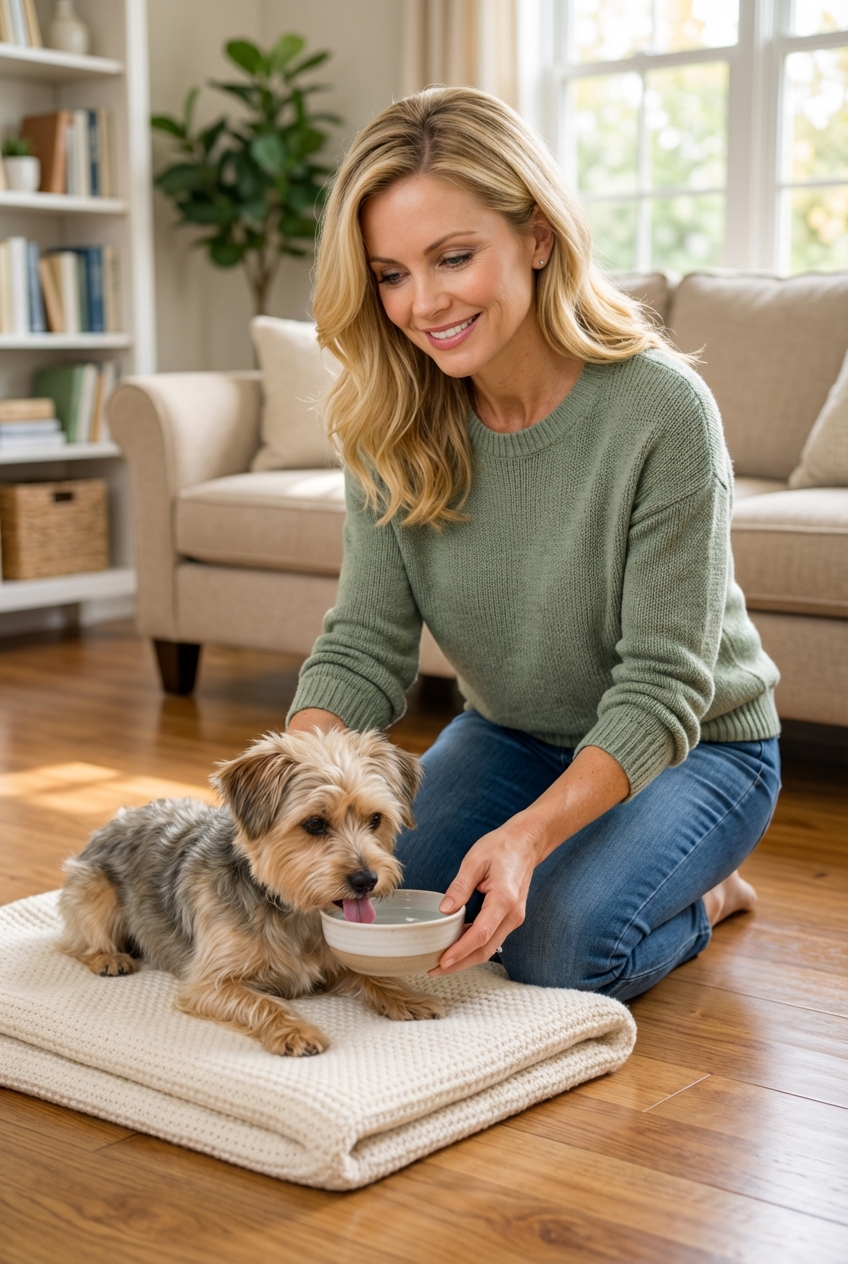
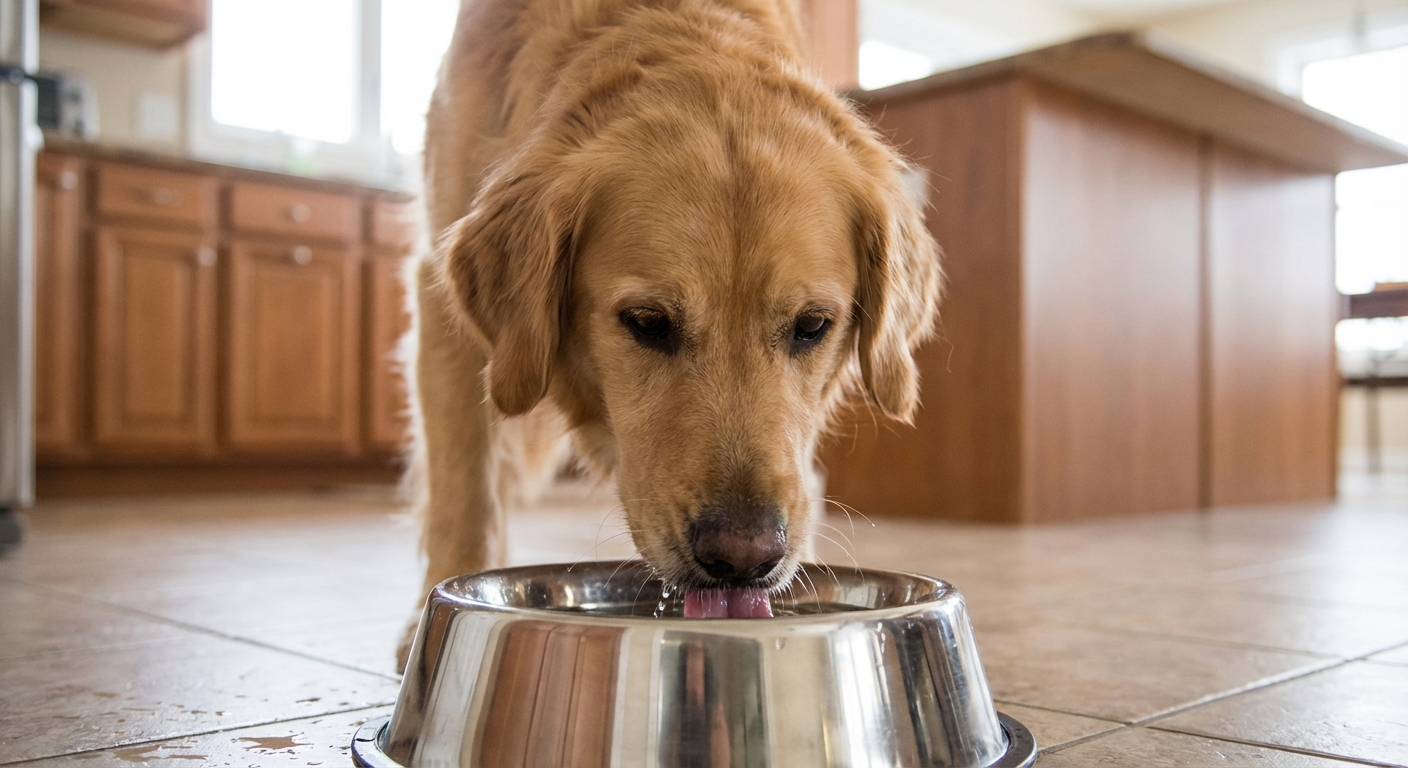
- Offer fresh water at all times.
- If your dog gulps and then vomits, offer smaller amounts more frequently.
- Encourage drinking by adding an ice cube to the bowl or offering a small amount of low-sodium broth. Avoid onion and garlic powders in broths.
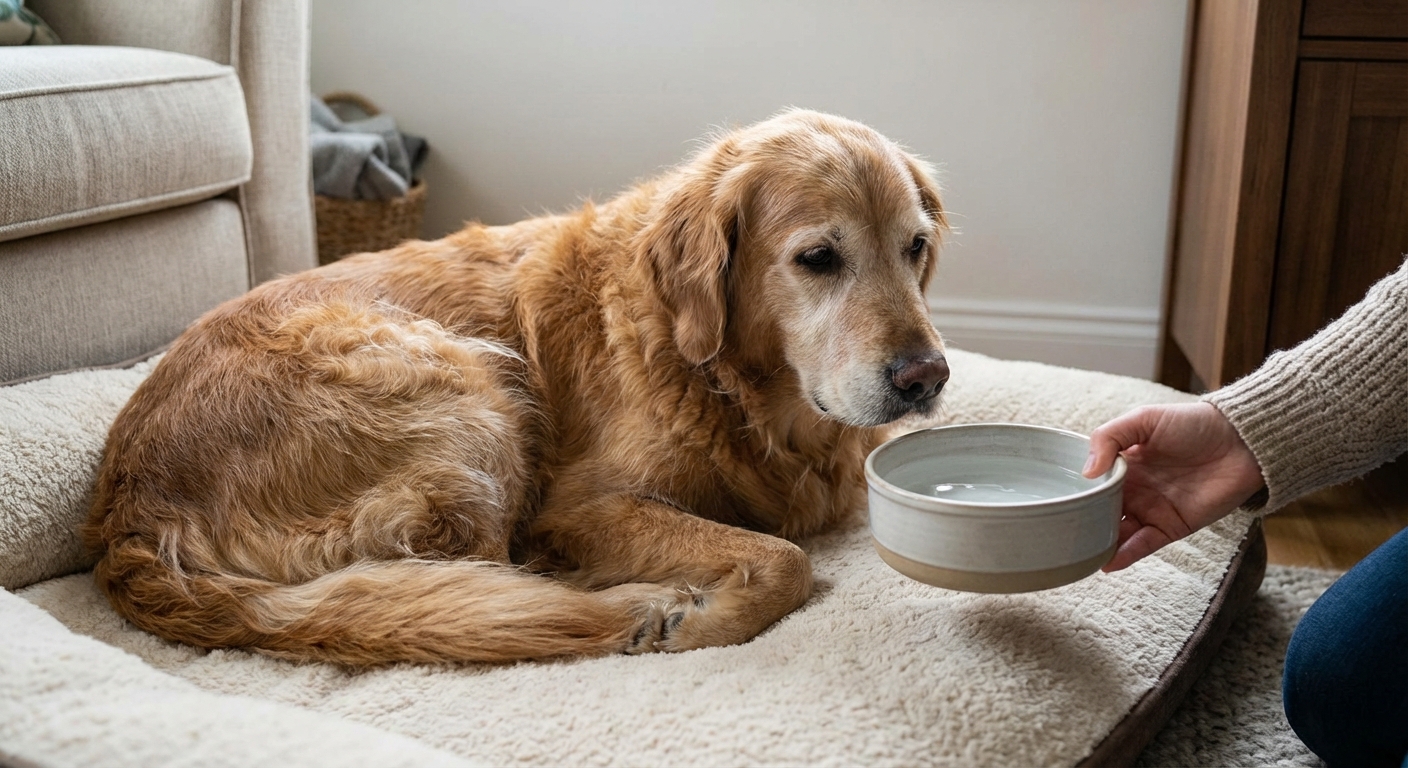
Hydration check at home: The skin tent test can be a clue, but it is not very reliable on its own (it varies by age, weight, and coat). Also watch for tacky or dry gums, sunken-looking eyes, low energy, and reduced urination. If you notice any of these, call your vet.
Step 2: Rest the gut safely
For healthy adult dogs with mild diarrhea, your veterinarian may recommend a short rest from food. Many clinics suggest a brief pause of about 8 to 12 hours, especially if there has been vomiting too. That said, fasting is not always necessary for uncomplicated diarrhea, and some dogs do better with earlier, small meals. When in doubt, call your vet for guidance for your dog.
- Do not fast very young puppies, toy breeds prone to low blood sugar, or dogs with medical conditions unless a vet tells you to.
- Continue to offer water.
Step 3: Feed a bland diet
When you reintroduce food, think simple, low-fat, and easy to digest. The goal is to calm irritation in the intestines and allow normal stool to return.
Gentle bland options
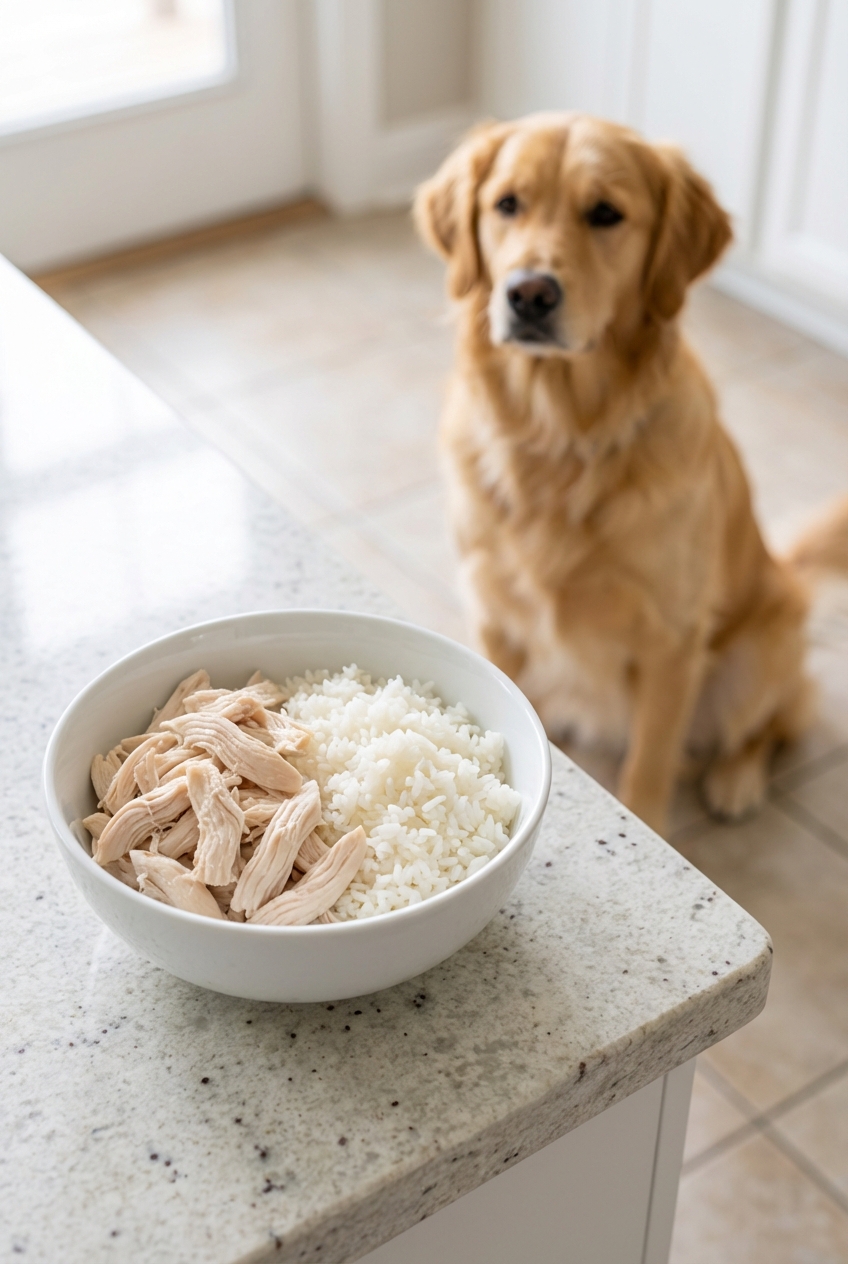
- Boiled skinless chicken breast and white rice
- Lean ground turkey (boiled and drained) and white rice
- Scrambled egg made with no butter or oil, plus rice
How much to feed: Start small, usually about 25 to 50 percent of your dog’s normal meal size, split into 3 to 4 small meals for the day. If your dog keeps it down and stools start to improve, you can slowly increase toward normal amounts over 1 to 2 days.
If stools firm up, gradually transition back to your dog’s normal diet over 3 to 5 days by mixing increasing amounts of regular food into the bland food.
Skip these during diarrhea: fatty meats, rich treats, dairy (unless your vet has recommended a specific probiotic), table scraps, and anything spicy.
Step 4: Ask about probiotics
Some studies suggest certain veterinary probiotics may help shorten the duration of acute diarrhea by supporting a healthier gut microbiome. Ask your vet for a product and dose. Not all human probiotics are appropriate for dogs, and quality varies widely.
If your clinic cannot be reached right away, you can ask specifically whether a canine probiotic is appropriate for your dog’s age, size, symptoms, and current medications.
Step 5: Consider fiber support
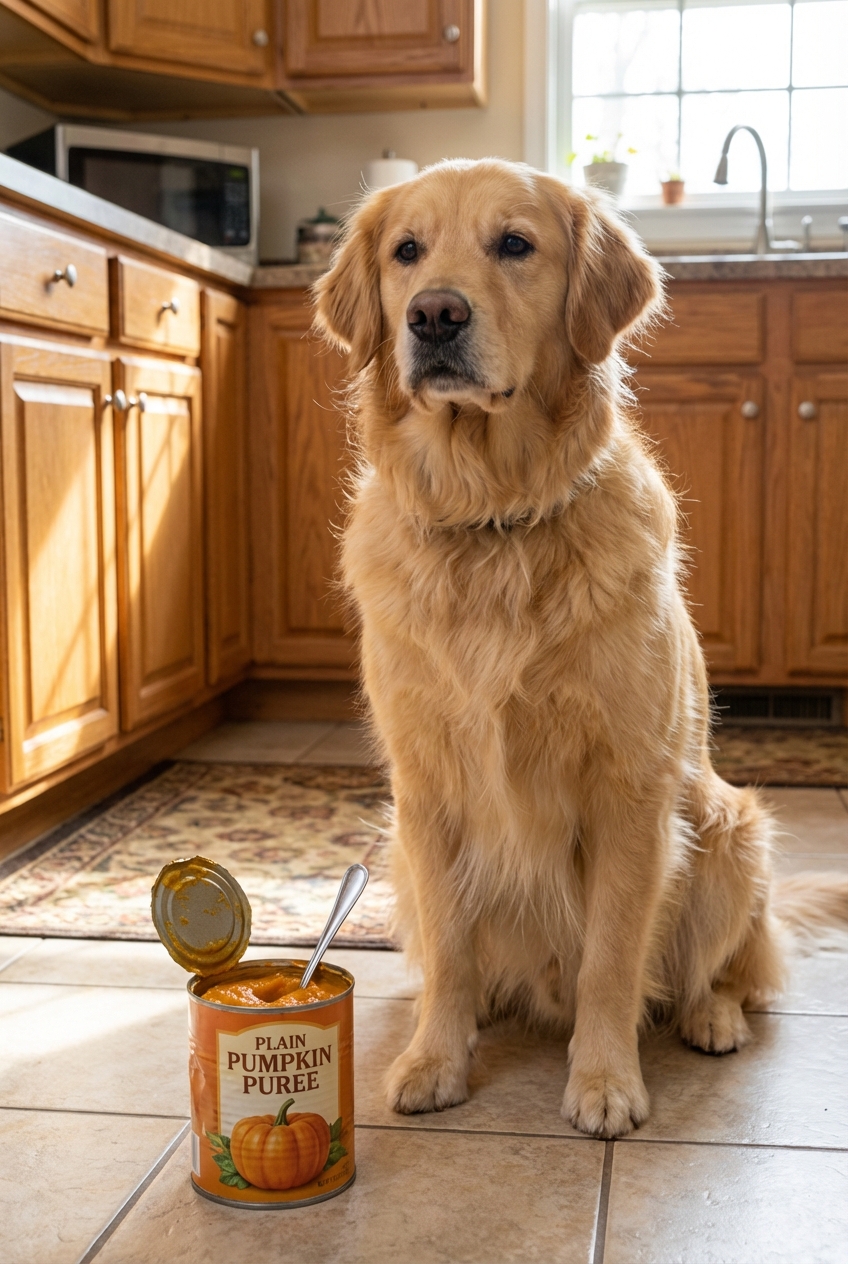
Many veterinarians recommend plain canned pumpkin (not pumpkin pie filling) as a gentle source of fiber that can help some dogs. It may firm stool by absorbing water and supporting healthy gut movement.
- Use plain pumpkin only.
- Typical amounts are small and depend on size. Confirm dosing with your vet, especially for small dogs.
Pumpkin is not one-size-fits-all. It may not help, and in some dogs it can worsen gas, loose stool, or upset stomach. If symptoms persist or your dog seems unwell, your dog needs an exam and likely a fecal test.
What not to do
When your dog has diarrhea, it is tempting to reach for quick fixes. A few common choices can actually make things worse.
- Do not give human anti-diarrheal medications unless your veterinarian tells you to. Some are unsafe for certain breeds, certain toxins, or certain illnesses.
- Do not switch foods repeatedly hoping something sticks. Too many changes can keep the gut irritated.
- Do not ignore blood in the stool or black, tarry stool.
- Do not rely on bones or high-fat “settling” foods. Fat can trigger pancreatitis in some dogs, which can be life-threatening.
Why dogs get diarrhea
Understanding the most common causes helps you prevent the next episode.
- Dietary indiscretion: trash, rich treats, sudden diet changes
- Stress: travel, boarding, new pets, schedule changes
- Parasites: giardia, roundworms, hookworms, whipworms
- Infections: viral or bacterial causes
- Food intolerance or allergy
- Pancreatitis
- Chronic intestinal disease: inflammatory bowel disease, endocrine disorders
- Toxins or medications
If diarrhea keeps returning, that is a signal to dig deeper with your vet. Recurrent diarrhea is not “normal” and should not be brushed off.
What to track for your vet
If you end up needing an appointment, your notes help your veterinary team move faster and treat more accurately.
- When diarrhea started and how often it is happening
- Any vomiting, appetite changes, or lethargy
- Any diet change, new treats, chews, or people food
- Possible trash access or foreign object chewing
- Travel, boarding, dog park visits, or new pets
- Any current medications or recent medication changes
- Photos of the stool (yes, it helps)
Bring a fresh stool sample if your clinic requests it. Many cases require a fecal test to check for parasites like giardia.
Prevention tips
- Transition foods slowly: mix new and old food over 7 to 10 days.
- Be consistent with treats: keep them simple and limit rich add-ons.
- Keep trash secure: especially after holidays and parties.
- Use monthly parasite prevention as recommended by your vet.
- Support gut health: some dogs do well with a veterinarian-recommended probiotic during stress events like boarding.
Home-care checklist
- Check for red flags and call the vet if present
- Prioritize hydration
- Brief, vet-guided food rest if appropriate
- Bland diet in small meals
- Ask about a canine probiotic
- Monitor stool and energy closely for 24 to 48 hours
- Stop home care and call your vet if symptoms worsen or new symptoms appear
If your dog is acting unwell, cannot hold down water, has blood in the stool, or diarrhea lasts more than 48 hours, please call your veterinarian. Trust your instincts. You know your dog best.