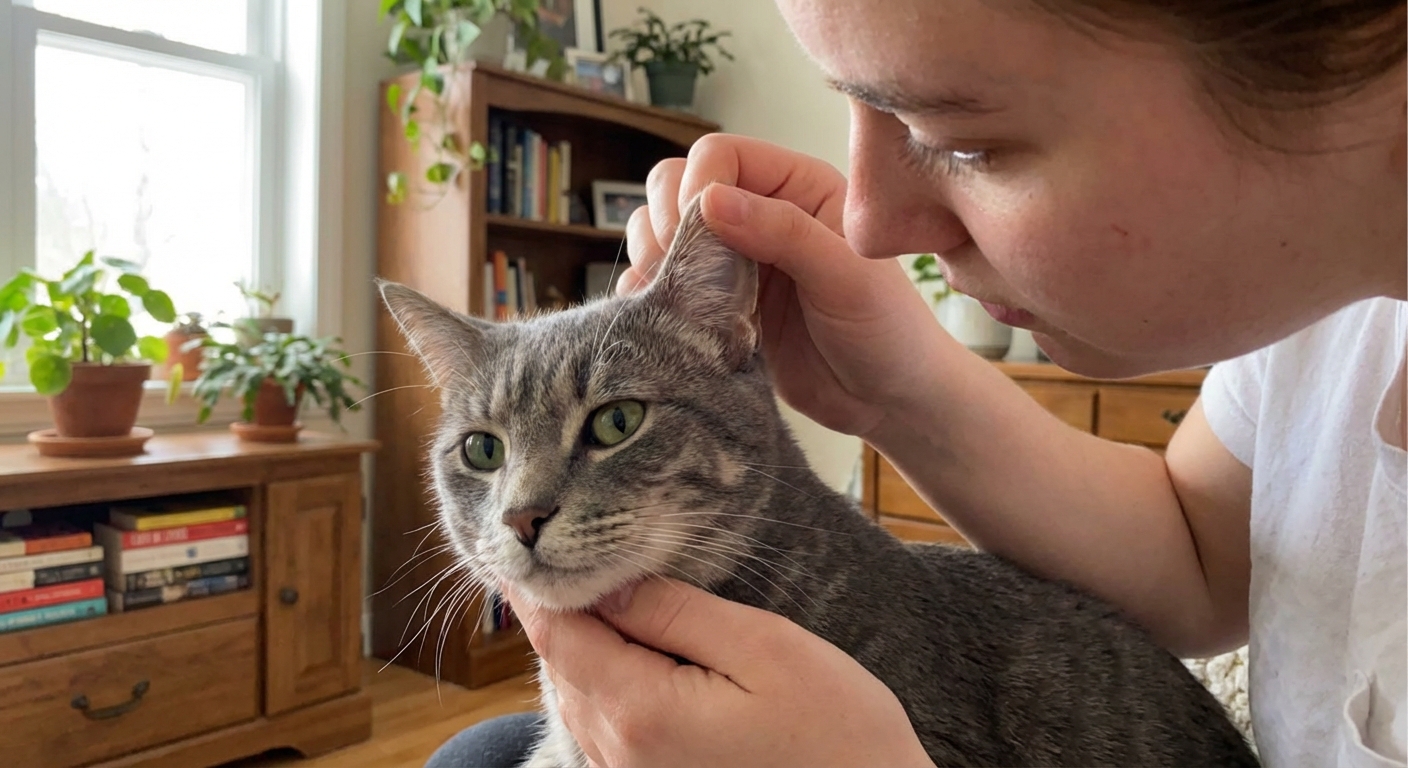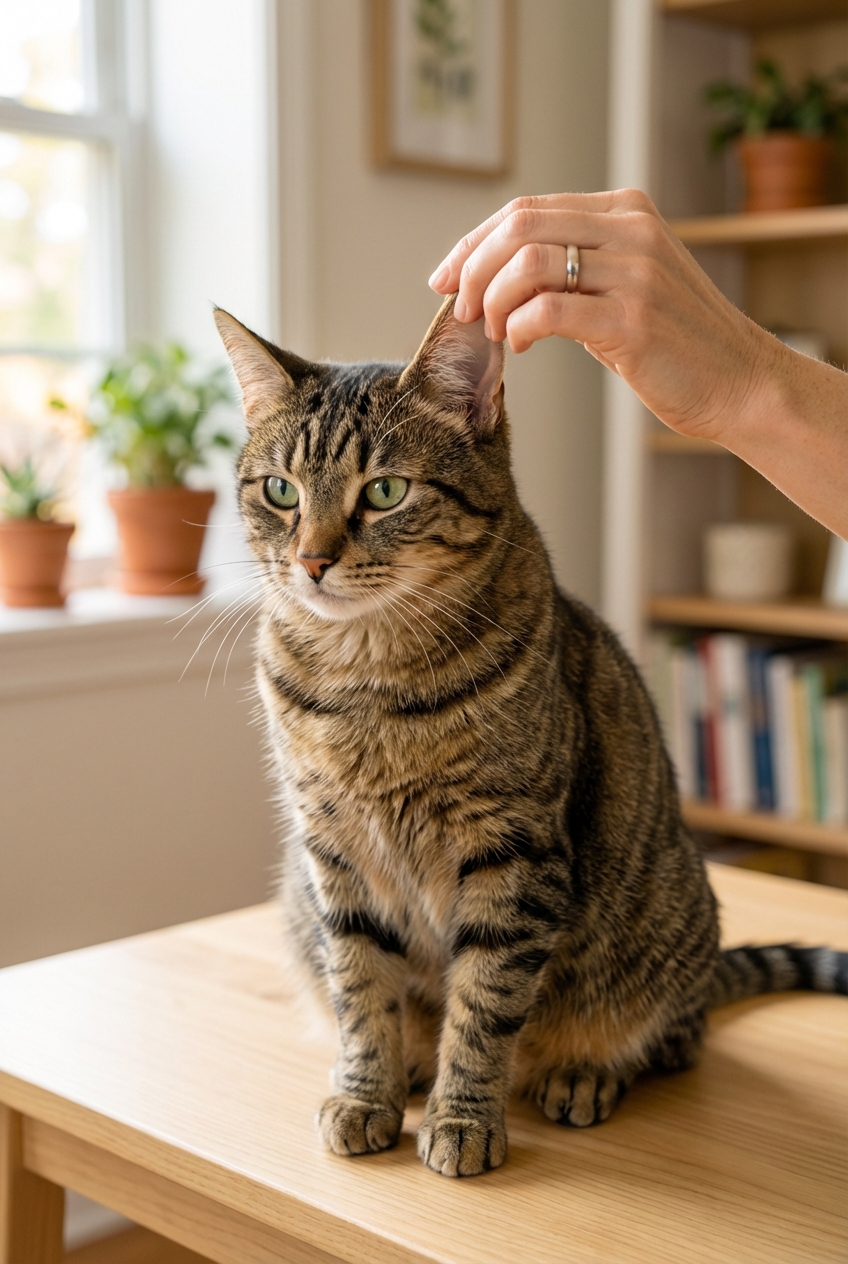
From “coffee ground” ear debris to nonstop scratching, learn how vets diagnose ear mites and the most effective treatments, safe ear cleaning steps, and ...
Article
•
Designer Mixes
Treating Cat Ear Mites: Overview and Care

Shari Shidate
Designer Mixes contributor
Ear mites are one of those problems that can sneak up on even the most attentive cat parent. One day your cat is fine, and the next you notice nonstop scratching, head shaking, and dark debris in the ears. The good news is that ear mites are very treatable. The key is following the full treatment plan exactly as directed (sometimes that means daily drops, and sometimes it is a single or less frequent dose), long enough to fully break the mite life cycle, and making sure every pet in the household is addressed when needed.
As a veterinary assistant, I like to reassure families right away: you did not “fail” your cat. Ear mites are common, contagious between pets, and they can show up even in clean homes.
What ear mites are
Most feline ear mite cases are caused by Otodectes cynotis, a tiny parasite that lives primarily in the ear canal and feeds on skin debris and ear wax. They are especially common in kittens, newly adopted cats, and multi-pet households.
Ear mites spread through close contact, like cuddling, play fighting, and shared sleeping spots. They can also move between cats and dogs. People sometimes worry about catching them, but ear mites rarely cause ongoing problems in humans. If you get an itchy rash after handling an infested pet, check in with your doctor.
Common signs to watch for
Some cats show obvious symptoms, while others have milder irritation that is easy to miss until the infestation gets bigger. These are the most common signs:
- Intense ear scratching or rubbing ears on furniture
- Head shaking or head tilt
- Dark, crumbly debris that can look like coffee grounds
- Redness or swelling of the ear canal or ear flap
- Ear odor
- Scabs around the ears or neck from scratching
If the ears are very painful, if your cat cries when you touch them, or if you see swelling that narrows the ear canal, please treat this as urgent and get a veterinary exam quickly.
Why consistency matters
Here is the part many loving pet parents do not hear clearly enough: ear mite treatment is not just about killing the mites you see today. It is also about interrupting the mite life cycle so new mites do not keep hatching and restarting the itching.
Depending on which medication your veterinarian prescribes, you may need a daily routine for a set number of days, or you may use a longer-acting prescription that is applied once or less often. Even with long-acting options, some cats still need short-term daily care such as cleaning, soothing inflamed ears, or treating a secondary infection.
Many protocols aim to cover roughly a few weeks of the mite life cycle. Your clinic may schedule a recheck to make sure everything is truly resolved. Follow your veterinarian’s timeline even if your cat seems better quickly.
Consistency is what wins with ear mites. Missing doses or stopping early is a common reason cats stay itchy longer than they should.
Get the diagnosis before you treat
Several ear problems can look like mites. Yeast and bacteria can create dark debris and odor too, and allergies can cause chronic inflammation. Treating for mites when the real issue is infection or allergies can delay relief.
A veterinary team can confirm ear mites by:
- Looking in the ear with an otoscope
- Examining debris under a microscope
This matters because cats often have more than one issue at the same time, like mites plus a yeast or bacterial infection. In those cases, your cat needs the right combination of medication, not just one product.
Daily care routine
Always follow your veterinarian’s instructions first. The routine below is a general framework to make day-to-day care less stressful for you and your cat.
Step 1: Set up a calm space
- Choose a quiet room with a door.
- Have treats ready, plus cotton rounds or gauze.
- Use good lighting so you can see what you are doing.
Step 2: Consider ear cleaning only if your vet recommends it
Some cats do best with minimal cleaning because inflamed ears can be very tender. If your veterinarian recommends cleaning:
- Use a cat-safe ear cleaner and avoid home remedies.
- Do not use Q-tips deep in the ear canal. This can push debris deeper or injure the ear.
- Apply cleaner as directed, gently massage the base of the ear, then let your cat shake.
- Wipe away what you can see on the outer canal using cotton or gauze.
If you see bleeding, thick pus, severe swelling, or your cat seems extremely painful, stop and call your veterinary clinic.
Step 3: Apply the medication exactly as prescribed
There are several effective options that veterinarians use, including topical ear drops and prescription spot-on products. Your instructions may include:
- How many drops to use
- Whether to massage the ear afterward
- How many days to continue
- Whether to treat both ears, even if only one looks affected
Do not stop early just because the ears look better. Mites can still be present, and symptoms can rebound.
Safety reminder: Do not share prescriptions between pets. Doses differ by species and weight, and some products that are safe for dogs can be dangerous for cats.
Step 4: Reward and release
End with something positive: a favorite treat, playtime, or brushing. This is not bribery. It is training, and it helps daily care become easier over time.
If your cat becomes very stressed or you do not feel safe handling the ears, stop and call your clinic. There are alternatives, including different medications and strategies to reduce stress during treatment.
Treat every pet that needs it
Ear mites commonly spread between cats, and they can spread to dogs as well. If you treat only one pet but leave others untreated, your cat can get reinfested.
Ask your veterinarian whether:
- All cats in the home should be treated
- Dogs should be treated too
- Any pets should be checked for mites even if they have no symptoms
Home care that helps
Medication and treating all in-contact pets is what clears ear mites. Home care is supportive, and it can make your cat more comfortable while treatment does its job.
Refresh the environment
- Wash bedding and blankets in hot water if possible.
- Vacuum favorite sleeping areas.
- Clean grooming tools.
Prevent self-trauma
Some cats scratch so hard they create sores on the ears. If your cat is causing injuries, your veterinarian may recommend a protective cone or an inflatable collar for a short period.
Support skin health
If your veterinarian approves, nutrition can support skin health while the ears recover. Many cats benefit from veterinary-recommended omega-3 fatty acids, especially if there is underlying inflammation.
What to avoid
- Over-the-counter “mite treatments” made for dogs: some ingredients can be dangerous for cats.
- Essential oils in or near the ear: cats are sensitive to many oils, and dosing is hard to control.
- Hydrogen peroxide, alcohol, vinegar in the ear canal: these can sting and worsen inflamed tissue.
- Q-tips deep in the ear: risk of injury and pushing debris deeper.
When to call your veterinarian
Please contact your veterinary clinic promptly if you notice any of the following:
- No improvement after a few days of treatment
- Worsening odor, swelling, or discharge
- Severe pain or your cat will not allow ear handling
- Head tilt, balance issues, or walking oddly
- Bleeding or open wounds from scratching
These signs can point to a secondary infection, a ruptured eardrum, or deeper ear involvement, and those situations require professional care.
How long does it take?
With the right medication and consistent instructions, many cats feel noticeably better within days. Full resolution can take longer, especially if there is significant inflammation or infection. Your veterinarian may recommend a recheck to confirm the mites are gone and the ear canal looks healthy.
My best encouragement is simple: stay steady. Treatment can feel like a lot, but it is temporary, and it brings real relief.
Prevention
If your cat has had ear mites once, ask your veterinarian about an ongoing parasite prevention plan that covers mites when appropriate. This can be especially helpful in multi-pet homes, for cats who spend time with other animals, or when bringing home a new kitten or rescue.