Vet-approved guidance for cleaning minor cat wounds with saline, preventing licking, and avoiding harmful products. Learn warning signs of infection, punctur...
Article
•
Designer Mixes
Treating Cat Bites

Shari Shidate
Designer Mixes contributor
Cat bites can look small on the surface, but they are a big deal medically. As a veterinary assistant here in Frisco, Texas, I have seen tiny puncture wounds turn into painful, fast-moving infections in less than a day. The reason is simple: a cat’s sharp teeth can push bacteria deep under the skin, then the small surface holes seal over and trap that bacteria where it can thrive.
This handbook walks you through what to do right away, when to get urgent care, what treatment usually involves, and how to prevent the next bite. I am sharing practical first-aid and cat-handling insight from the veterinary side, but human bites are a human-medicine issue, so when in doubt, call a clinician or local urgent care for guidance.
Why cat bites are risky
Compared to many dog bites or scratches, cat bites have a higher risk of infection because they often create deep punctures. Common bacteria involved include Pasteurella multocida (very common in cats’ mouths), along with Staphylococcus, Streptococcus, and anaerobic bacteria.
Hands and fingers are especially high risk because tendons, joints, and small tissue spaces are close to the surface. Infection can spread quickly and may threaten function if it reaches a tendon sheath or joint.
Higher risk situations
- Bites to the hand, wrist, fingers, face, or near a joint
- Deep punctures, crush injuries, or severe pain
- Delayed cleaning or delayed medical care
- Diabetes, immune suppression, cancer therapy, advanced liver disease
- Swelling that limits motion, numbness, or worsening redness
What to do now (first 5 to 15 minutes)
Your goal is to flush bacteria out and reduce how much gets trapped under the skin.
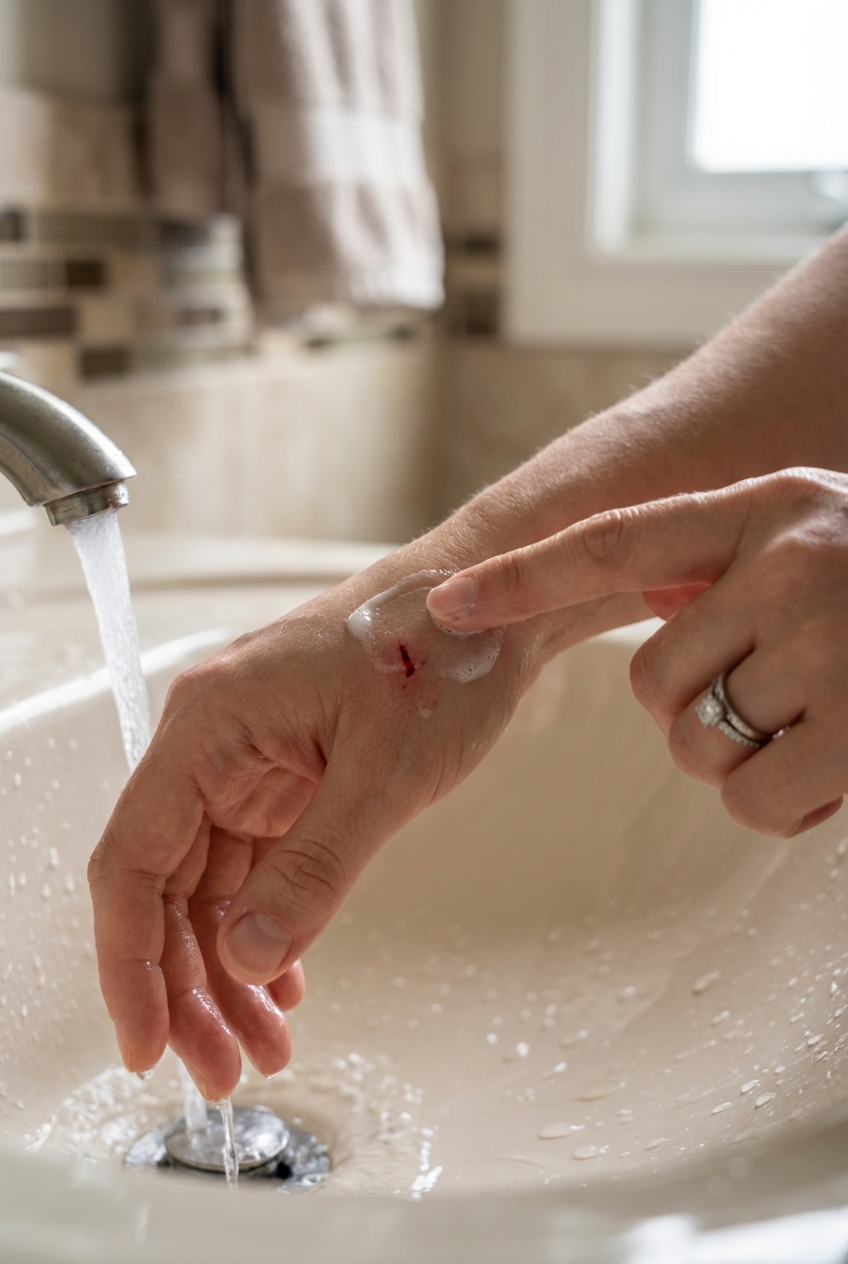
Rinse the wound right away under running water. If the bite is on your hand and you cannot really “wash your hands” first, do not overthink it. Start rinsing immediately.
Control bleeding the smart way. If bleeding is heavy or spurting, apply firm pressure with a clean cloth and get urgent care immediately. If it is a minor puncture and lightly bleeding, do not panic. A brief, gentle ooze can happen. Do not delay rinsing while you “let it bleed.”
Wash with mild soap around the area while continuing to rinse. Aim for several minutes of thorough rinsing (at least 5 minutes is a good target if you can manage it).
Remove rings or tight jewelry from the bitten hand. Swelling can happen fast.
Cover with a clean dressing. A gauze pad or clean cloth is fine.
Elevate the area above heart level if possible to limit swelling.
Skip these common mistakes:
- Do not seal the wound shut with glue, butterfly strips, or tight bandages.
- Do not soak the bite in standing water (baths, hot tubs, pools, lakes).
- Do not put hydrogen peroxide, rubbing alcohol, or harsh iodine solutions into deep punctures. These can irritate tissue and do not replace proper rinsing.
- Do not rely on topical antibiotic ointment alone for puncture bites.
- Do not wait “a couple of days” to see what happens if the bite is on the hand.

When to get urgent care
For many cat bites, especially to the hand, medical evaluation the same day is the safest choice. Cat bites frequently need prescription antibiotics.
Go now
- Any bite to the hand, fingers, wrist, or over a joint
- Rapidly spreading redness, warmth, or swelling
- Increasing pain, throbbing, or tight shiny skin
- Pus or cloudy drainage
- Fever, chills, body aches, or feeling unwell
- Red streaks traveling up the arm or leg
- Difficulty moving fingers, pain with motion, or the finger held in a partially bent position
- Numbness, tingling, or color change in the skin
- A deep wound, a puncture that “disappears” under the skin, or a bite you cannot fully clean
- You are immunocompromised or have diabetes
Call within 24 hours
- The bite broke the skin, even if it looks small
- You are not sure about your tetanus status
- The cat is unknown, unvaccinated, or acting strangely
Evidence-based takeaway: many clinicians treat cat bites to the hand with prophylactic antibiotics because infection rates are high and hand infections can become serious quickly.
Tip: If you can do it safely, write down what happened and who the cat belongs to (owner contact info, vaccine history, where the bite occurred). If it was a stray or an aggressive animal, your clinician or local animal control may recommend reporting steps in your area.
What treatment looks like
Healthcare providers base treatment on bite location, depth, time since injury, and your risk factors.
Wound care
- Thorough irrigation (flushing) and assessment of tendon, nerve, and joint involvement. Clinics may use higher-pressure irrigation than what you can do at home.
- Sometimes imaging (like an X-ray) if a tooth fragment, foreign material, or bone involvement is suspected
- Many bite wounds are not closed with stitches, especially punctures, because closing can trap bacteria
- In some cases, stitches may be used, such as certain facial wounds after careful cleaning and based on clinical judgment
Antibiotics
Cat bites often need antibiotics that cover Pasteurella and anaerobes. A common first-line option many clinicians use is amoxicillin-clavulanate, with alternatives if you are allergic. The exact medication depends on your history and the clinician’s judgment. Take the full course exactly as prescribed, even if it starts to look better in 24 to 48 hours.
Tetanus
Tetanus boosters are commonly recommended if you are not up to date, particularly for puncture wounds. If you cannot remember your last tetanus shot, call your provider and ask.
Rabies
Rabies risk depends on your region, the cat’s vaccination status, whether it was a known pet, and whether the animal can be observed. In many parts of the U.S., a healthy dog, cat, or ferret that can be confined is observed for 10 days, but local public health guidance can vary. If the cat is stray, unknown, acting oddly, or cannot be quarantined and observed, contact your clinician or local health department promptly for next steps.

Home care (if cleared)
If you have been evaluated and told to manage the wound at home, these basics help support healing and catch problems early.
Daily care
- Wash gently with mild soap and water once or twice daily as directed
- Change the dressing if it gets wet or dirty
- Keep it clean and dry between cleanings
- Elevate the area when you can, especially in the first 24 to 48 hours
Pain and swelling
Use cold compresses for short periods (10 to 15 minutes) during the first day if swelling is mild, unless your clinician advises otherwise. For pain control, follow your clinician’s directions and read medication labels carefully.
Track changes
Take a quick photo once a day in similar lighting so you can compare redness and swelling. If redness spreads, pain increases, or you lose range of motion, get rechecked quickly.
Infection signs
Cat bite infections can show up fast. Sometimes symptoms begin within hours and often within the first 24 hours.
- Redness that expands or becomes more intense
- Warmth, swelling, or a firm, tender lump
- Increasing pain, especially deep aching pain
- Pus, cloudy fluid, or a foul odor
- Fever, chills, fatigue
- Reduced ability to bend or straighten fingers
- Red streaks moving up the limb
If you see these signs, do not try to “tough it out.” A bite infection can become much harder to treat once it spreads.
Special situations
Hand and finger bites
These deserve extra caution. The anatomy is tight and complex, so swelling can limit movement quickly. If you have pain with finger movement or swelling that makes it hard to bend or straighten, seek urgent care.
Face bites
Facial bites may require specialty care for cosmetic and functional reasons. Even small punctures near the eye or lip should be evaluated promptly.
Bites in children
Children may not describe symptoms clearly, and punctures can be missed. If a cat bite breaks the skin, call a pediatrician the same day.
Bites from your own cat
Even indoor, vaccinated cats carry bacteria that can cause infection. Being your own cat does not automatically make it safe to wait and see.
Cat scratch disease
Scratches and occasionally bites can transmit Bartonella henselae. Symptoms can include a blister or bump at the site and swollen lymph nodes days to weeks later. If you develop swollen, tender lymph nodes or persistent fever after a cat injury, ask your clinician about cat scratch disease.
Preventing cat bites
Prevention is always kinder for you and your cat. Most bites happen when a cat is fearful, overstimulated, in pain, or feeling trapped.
Warning signs
- Tail flicking, tense body, flattened ears
- Dilated pupils, growling, low crouch
- Skin twitching along the back, sudden head turns toward your hand
- “Love bites” that are getting stronger, especially during petting
Safer handling
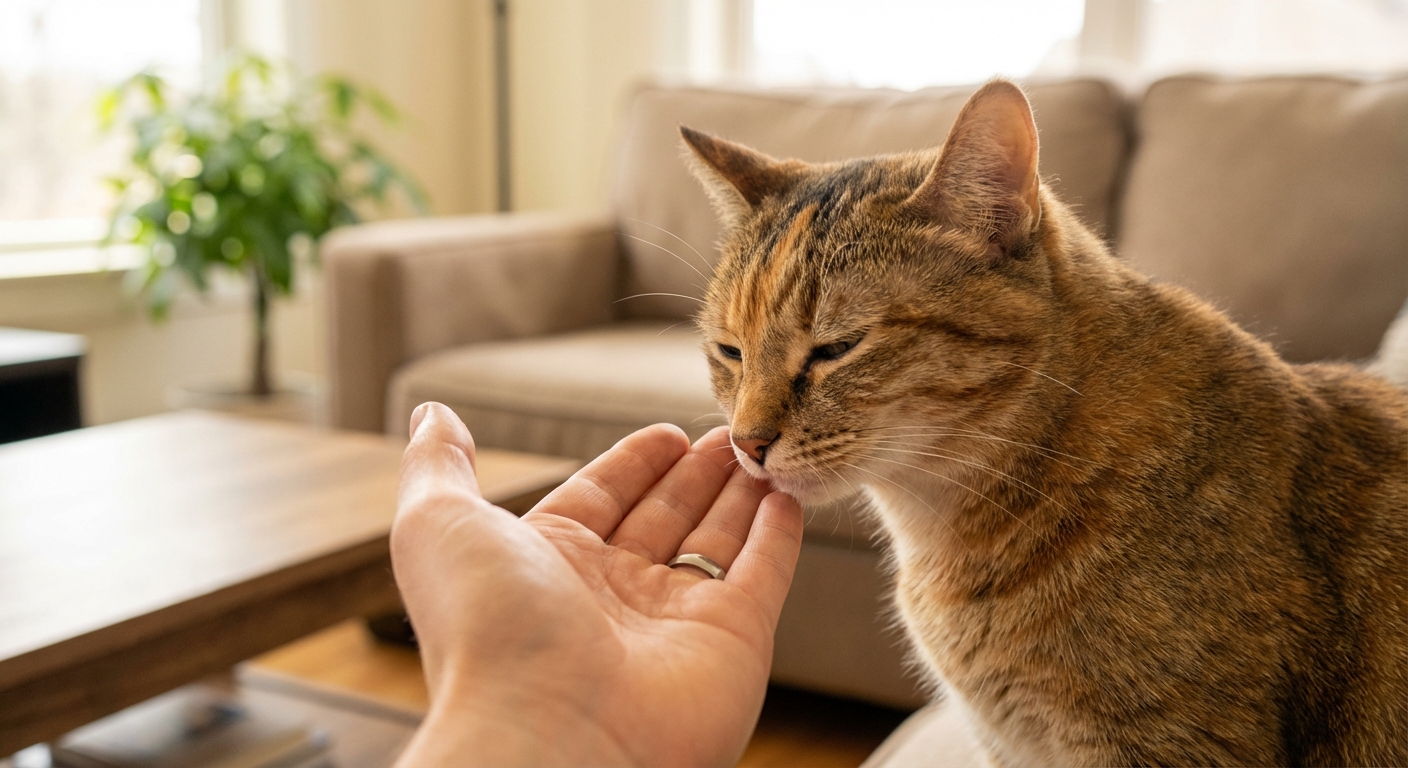
- Let the cat choose the pace. Offer your hand to sniff rather than reaching over the head.
- Keep sessions short and positive, especially with new or nervous cats.
- Use toys for play, not hands.
- If you must handle an anxious cat, use a towel as a barrier and ask your vet team about safe handling techniques.

Quick checklist
- Rinse and wash thoroughly right away (several minutes, and aim for 5 if you can).
- Remove rings and elevate the limb.
- Hand bites and deep punctures should be evaluated the same day.
- Watch closely for infection in the first 24 to 48 hours.
- Ask about tetanus and rabies guidance based on your situation and local public health advice.
Important: This article is educational and not a substitute for medical care. If you are worried at all, trust that instinct and get checked.