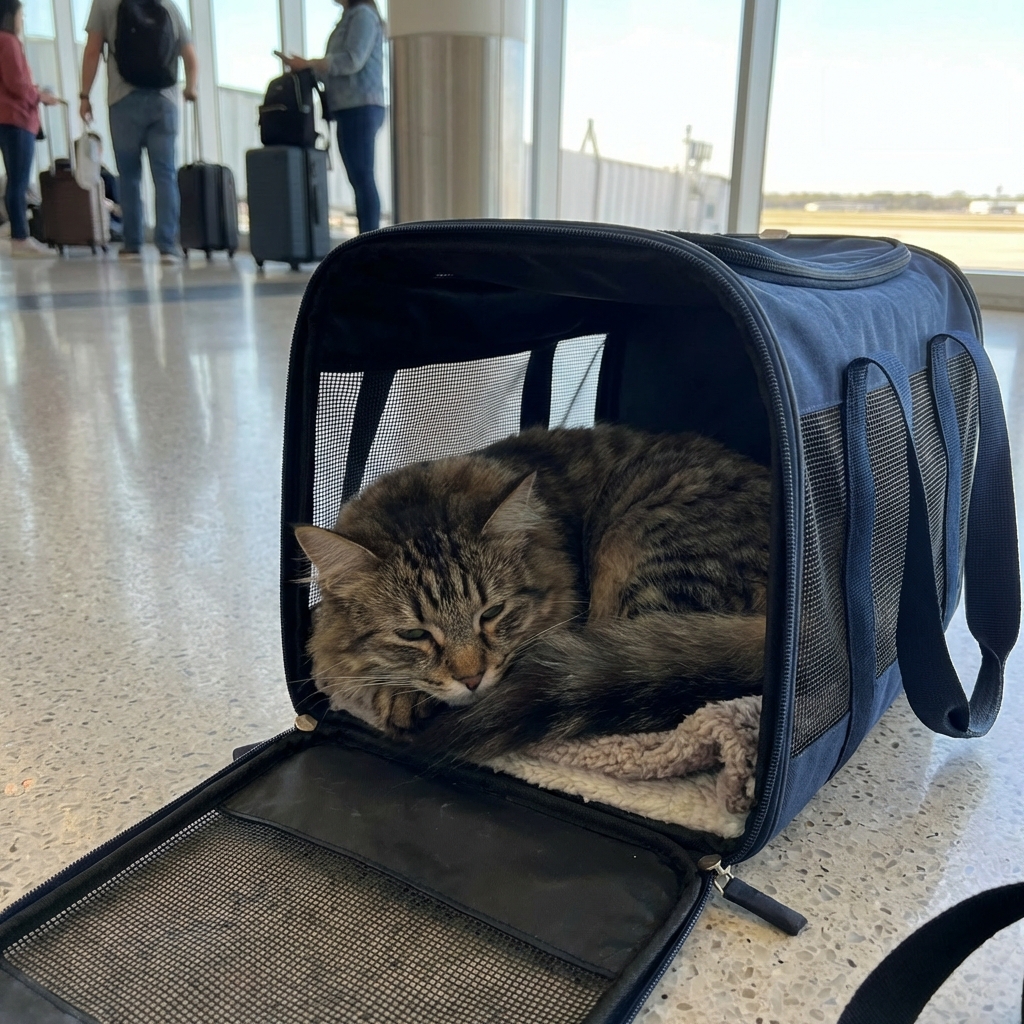
Learn how to help your cat feel safe in the car with carrier setup, gradual training, calming scent tips, hydration and litter planning, and vet-backed optio...
Article
•
Designer Mixes
Traveling With a Cat in the Car

Shari Shidate
Designer Mixes contributor
If you have ever heard your cat cry, yowl, or pant the second the car starts moving, you are not alone. As a veterinary assistant in Frisco, Texas, I can tell you this is one of the most common concerns I hear from cat parents. The good news is that car stress is usually fixable with the right setup, a little practice, and a plan for nausea, anxiety, and safety.
Quick note: This guide is educational and not a substitute for veterinary advice. If your cat has breathing trouble, repeated vomiting, or severe panic, call your veterinarian.
If you only do 3 things: Use a secure (ideally crash-tested) carrier, practice short calm sessions before travel day, and ask your vet about nausea or anxiety support if your cat is getting sick or panicking.
In this in-depth guide, we will cover what your cat is experiencing, why it happens, and practical solutions you can start using today.
Why car rides stress cats out
Cats are home-body animals by design. Their sense of safety is tightly connected to familiar scents and predictable routines. A car ride disrupts all of that at once, and your cat has no way to understand why it is happening.
Common reasons cats struggle in the car
- Motion and balance changes: Some cats experience motion sickness, just like people.
- Noise and vibration: Engine sounds, road vibration, and traffic noise can feel intense to sensitive ears.
- Unfamiliar smells: Gas, cleaning products, and outside air can be overwhelming.
- Association with the vet: If the car only leads to exams, vaccines, or scary experiences, the carrier becomes a warning sign.
- Lack of secure footing: Being loose in a car can make cats feel like they are sliding, falling, or trapped.
One key point: vocalizing does not always mean pain. It can be frustration, fear, or nausea. Also, drooling can be either stress or nausea, so it helps to look at the full picture and the timing.
Safety first
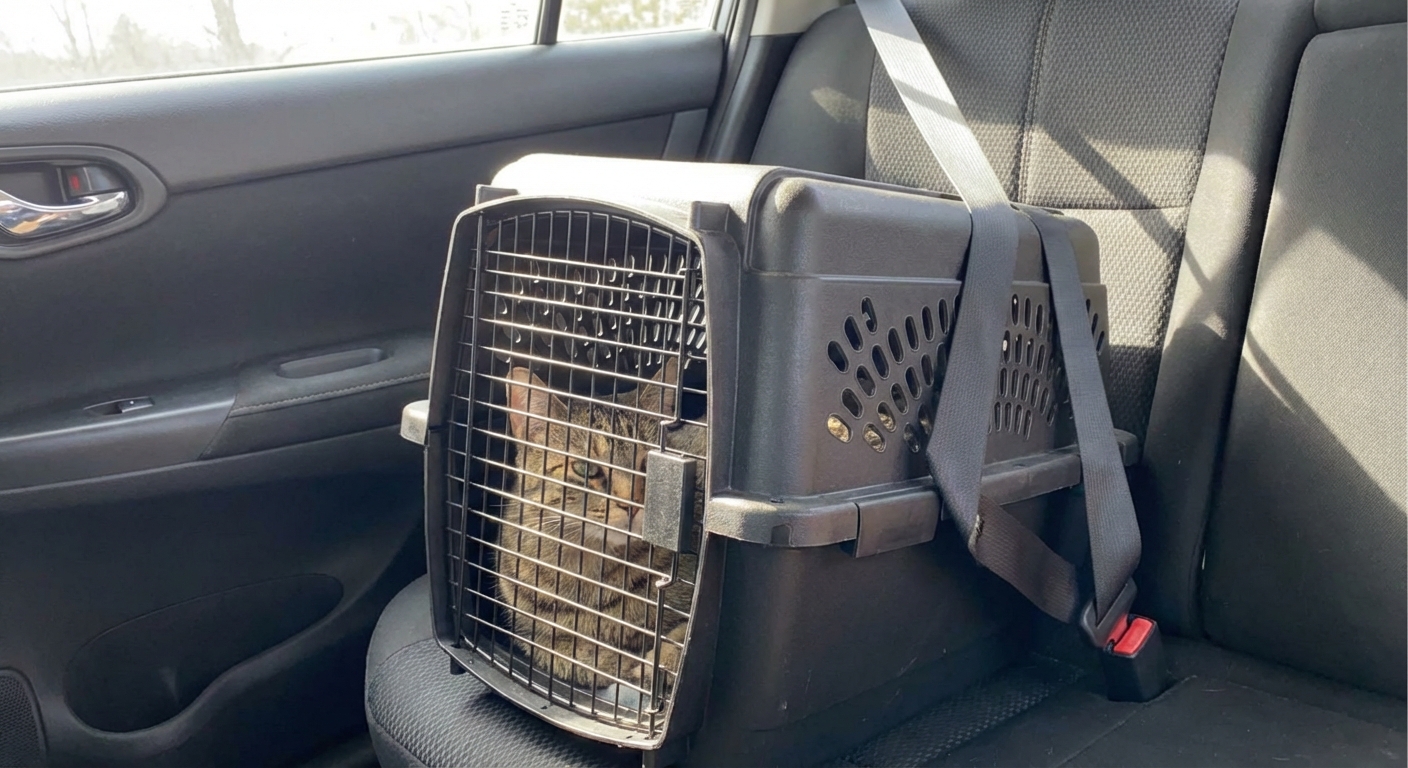
The safest cat in the car is a cat in a sturdy, well-ventilated carrier that is secured. This protects your cat in a sudden stop and protects you from a panicked cat climbing under pedals. For frequent travelers, consider a crash-tested carrier or kennel when possible.
Carrier basics that make a big difference
- Choose a hard-sided or reinforced soft-sided carrier that does not collapse when lifted.
- Size matters: Your cat should be able to stand, turn around, and lie down, but not have so much space that they get tossed around.
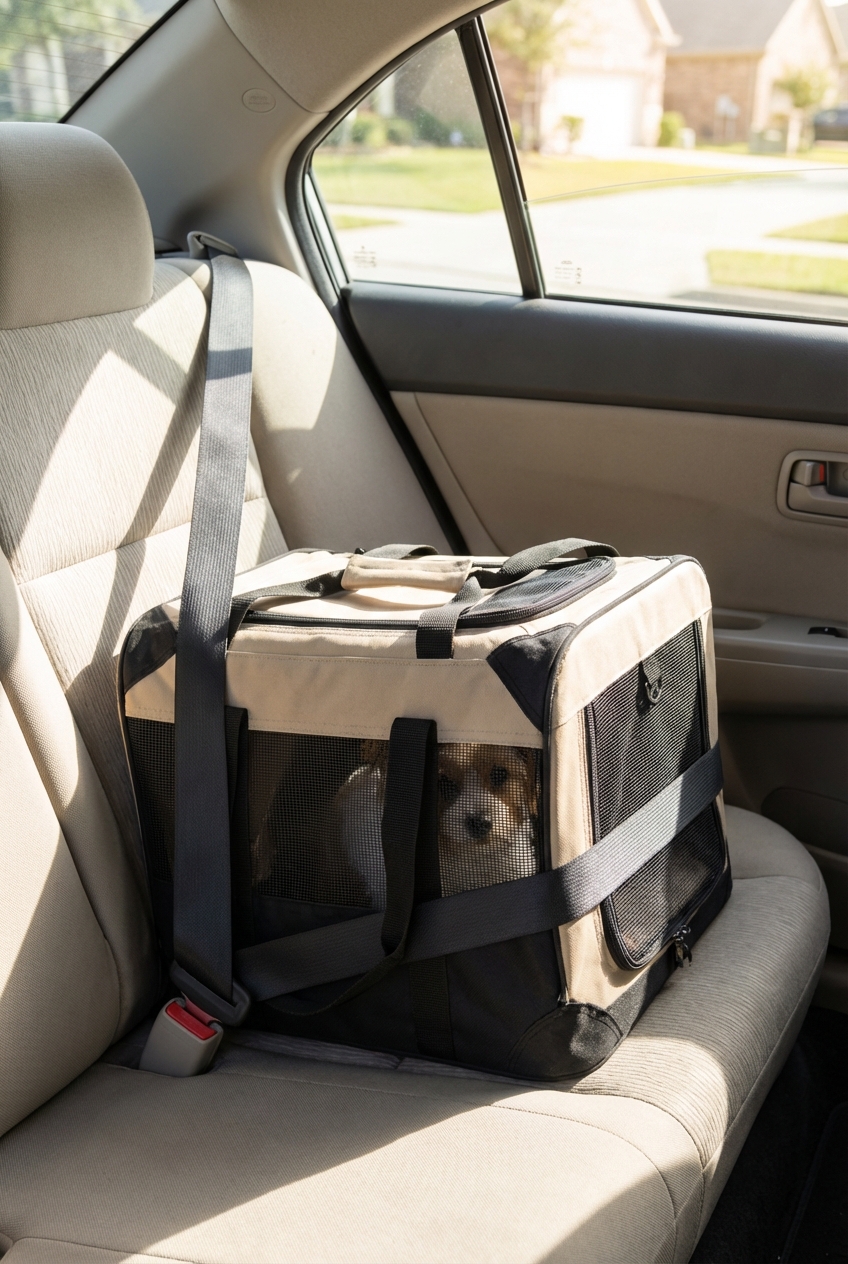
- Secure it correctly: Place the carrier on the back seat and route the seat belt through the carrier belt path if it has one. If it does not, route the belt around the carrier body so it cannot tip. Avoid relying on the handle unless the manufacturer specifically says it is designed for seat belt routing.
- Stable base: A folded towel under the carrier can reduce vibration.
- Skip front-seat travel: Airbags can be dangerous in an accident.
Never let a cat roam free in the car, even for a short drive. It is risky for everyone and can turn a minor scare into a life-threatening emergency.
Also important: Never leave your cat in a parked car. Temperatures can change fast, even on mild days.
What the signs mean
Different problems can look similar. These clues can help you decide what to focus on first.
Signs that suggest anxiety or fear
- Meowing or yowling that starts when the carrier comes out
- Drooling without vomiting
- Wide pupils, ears pinned back
- Panting that improves when the car stops and the cat calms down
- Trying to claw out of the carrier
Signs that suggest motion sickness
- Drooling and lip licking after the car starts moving
- Vomiting during or shortly after travel
- Restlessness that progresses to lethargy
- Repeated swallowing or gagging motions
Panting and breathing issues (urgent)
- Persistent open-mouth breathing or panting that does not improve quickly
- Bright red gums, extreme drooling, weakness
- Rapid breathing at rest
Cats can pant briefly with stress, heat, or exertion, but panting is uncommon and should be treated as a warning sign, especially if it is persistent or your cat seems weak or distressed. If you see signs of overheating or breathing trouble, stop the car, move to a cooler area, improve ventilation, and contact a veterinarian right away.
Carrier and car training
For most cats, the fastest way to improve car behavior is to change the meaning of the carrier and the meaning of the car. Think of this as building a new association: carrier equals calm, car equals no big deal.
Step 1: make the carrier part of daily life
- Leave the carrier out in a common area with the door open.
- Add soft bedding that smells like home.
- Toss treats inside or feed a few meals near the carrier.
- Use a pheromone spray in the carrier 15 to 30 minutes before practice sessions, if your vet recommends it.
Step 2: short carrier sessions indoors
- Let your cat walk in and out on their own.
- Practice closing the door for 5 to 30 seconds, then reward.
- Gradually increase time with the door closed while offering a high-value treat.
Step 3: practice in a parked car
- Place the secured carrier in the back seat.
- Sit with your cat for 1 to 3 minutes without starting the engine.
- Reward calm behavior, then go back inside.
Step 4: add the engine, then movement
- Start the car for 30 to 60 seconds, then turn it off.
- Build up to a slow trip around the block.
- Keep sessions short and end on a calm moment whenever possible.
If your cat escalates to panic, you went too fast. That is not failure. It just means you found your cat’s threshold and you can work just below it.
Low-stress loading
One of the biggest stress triggers is the moment you try to get your cat into the carrier. The goal is calm and predictable, not a chase scene.
Tips that help in real homes
- Avoid chasing: Herding a scared cat increases fear and makes the carrier feel like a trap.
- Use treats and lures: Toss high-value treats in the carrier and give your cat time.
- Try a top-loading carrier: Many cats load more easily from above than through a front door.
- Towel wrap option: For cats that panic or scratch, ask your veterinary team to show you a safe towel wrap technique for quick, gentle loading.
- Practice when you are not leaving: Do short “in and out” sessions on normal days so the carrier does not always predict a car ride.
Comfort setup
Covering the carrier
Many cats do better when the carrier is partially covered with a light towel to reduce visual stimulation. Make sure airflow remains excellent and the towel cannot slip into the door.
Temperature and airflow
- Pre-cool or pre-warm the car before loading your cat.
- Avoid direct sun on the carrier.
- Use steady, mild airflow rather than blasting vents straight into the carrier.
Sound
Keep music low. Sudden bass or loud talk radio can ramp up stress quickly. Calm, consistent noise is best.
Scent and familiarity
Place a T-shirt or small blanket that smells like you in the carrier. Familiar scent can be grounding for cats.
Feeding and timing
If your cat vomits in the car, you are dealing with motion sickness, anxiety-induced nausea, or both. The practical fix often starts with timing.
Smart feeding strategy for travel days
- For short trips: Avoid a large meal 2 to 4 hours before leaving.
- Offer small sips of water if your cat will take them, but do not force it.
- Bring cleanup supplies: paper towels, pet-safe wipes, a spare towel, and a trash bag.
Do not withhold food all day without veterinary guidance. Some cats, especially overweight cats or cats that already are not eating well, can get into trouble if they go too long without calories (for example, hepatic lipidosis). If your cat is skipping meals around travel, talk to your veterinarian.
Medication and calming aids
Some cats truly need medical support to travel safely. This is especially true for long trips, cats with a history of vomiting, or cats that panic to the point of self-injury.
Options your veterinarian may discuss
- Prescription anti-nausea medication: Often very effective for motion sickness. A common example is maropitant (Cerenia), but your veterinarian will choose what fits your cat.
- Prescription anti-anxiety medication: Can reduce fear and prevent escalation. Your veterinarian may recommend a situational medication based on your cat’s health and history.
- Pheromones: A low-risk tool that helps some cats feel more secure.
Avoid giving over-the-counter human medications unless your veterinarian specifically directs you. Cats metabolize drugs differently than people, and the wrong product or dose can be dangerous.
Tip from the clinic: If you are testing a new medication, do a trial dose on a calm day at home first (with your veterinarian’s guidance). That way you know how your cat responds before travel day.
Long trips
Long trips are absolutely doable with cats, but they go better when you prepare like you would for a small kid: predictable, contained, and clean.
What to pack
- Carrier plus a backup towel or bedding
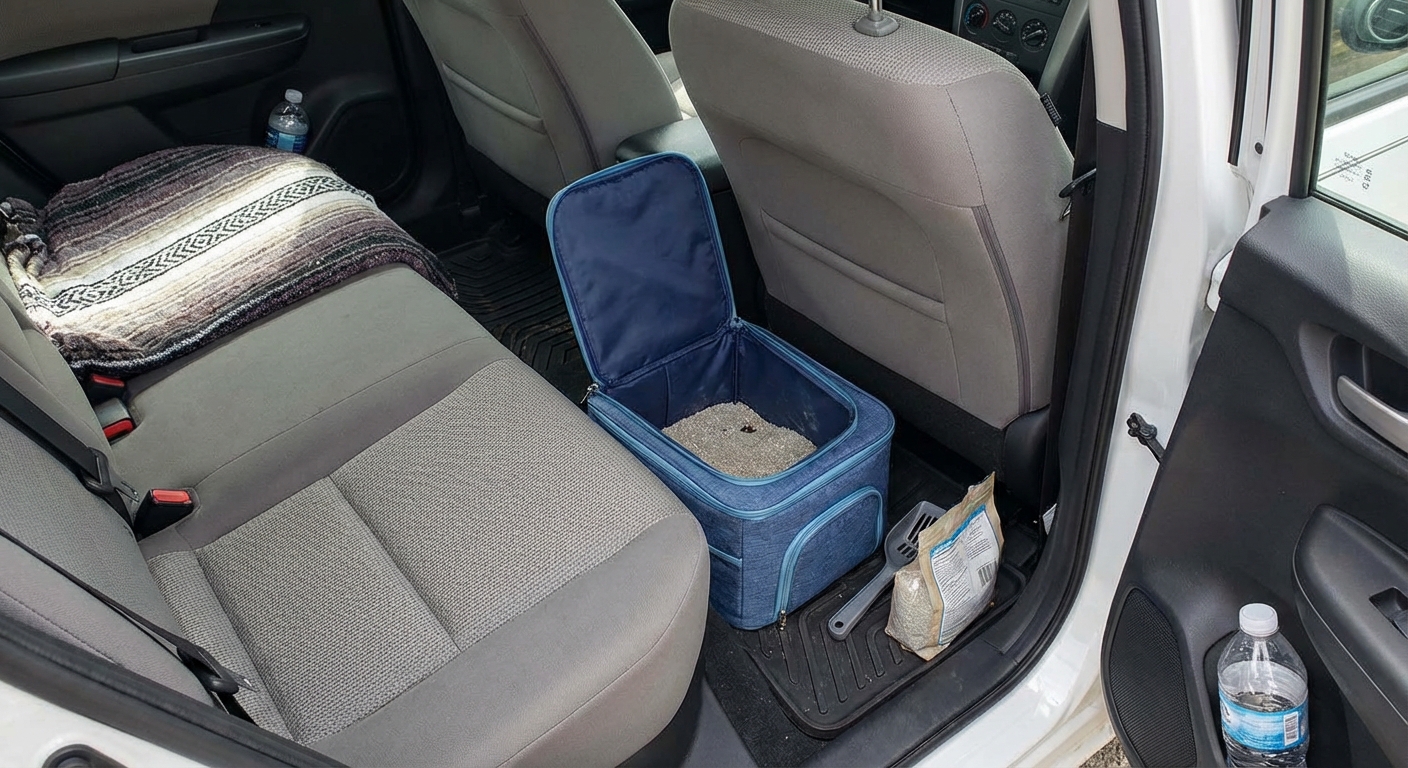
- Small litter box or disposable litter tray, litter, and scoop
- Food, treats, and bottled water
- Any medications with written instructions
- Harness and leash (for emergencies only, not for casual “walks” at rest stops)
- Copies of medical records and proof of rabies vaccination
- ID safety: microchip registration up to date, a recent photo on your phone, and a breakaway collar with ID if your veterinarian says it is appropriate for your cat
Breaks, water, and litter
Many cats will not eat, drink, or use a litter box in a moving car. For long drives, you can offer water and a litter box during a quiet stop inside the vehicle with doors closed. If your cat is a flight risk, do not open the carrier outdoors or in an unsecured area. When in doubt, keep the carrier closed and focus on getting to your destination safely.
Multi-cat travel
If you have multiple cats, transport them in separate carriers. Stress can cause redirected aggression, even between cats that normally get along, and separate carriers reduce the chance of a fight or injury.
Hotels and arrivals
The most dangerous moment for many traveling cats is arrival. New place, new smells, lots of doors opening. This is when cats can bolt.
Safer arrival routine
- Before opening the carrier, confirm all exterior doors and windows are closed.
- Set up a safe room first: litter box, water, food, and a hiding spot.
- Open the carrier and let your cat come out on their schedule.
- Keep the carrier accessible so they can retreat into it.
If you are staying with family or friends, ask them to keep doors closed and to announce before anyone goes in or out.
When to call your vet
Car stress is common, but you should loop in your vet if you notice any of the following:
- Vomiting on most car rides
- Open-mouth breathing or repeated panting episodes
- Extreme drooling plus lethargy
- Inability to settle even after training steps
- Signs of pain, such as crying when lifted or hunched posture
Sometimes the car problem is actually an underlying medical issue, such as nausea from gastrointestinal disease, inner ear problems, or pain that gets worse with motion.
Quick checklist
- Use a secure, ideally crash-tested carrier and seat belt it in the back seat using a belt path or around the carrier body.
- Practice carrier comfort at home, then short car sessions.
- Keep the car cool, quiet, and steady. Never leave your cat in a parked car.
- Feed lightly 2 to 4 hours before travel if motion sickness is suspected.
- Ask your veterinarian about nausea or anxiety support for longer trips.
- Plan rest stops and arrivals to prevent escapes. Keep ID and microchip info current.
Your cat does not need to love the car to travel safely. The goal is calm enough, comfortable enough, and predictable enough that your cat can get from point A to point point B without fear or sickness. Start small, stay consistent, and celebrate the tiny wins. They add up quickly.