Learn how to help your cat feel safe in the car with carrier setup, gradual training, calming scent tips, hydration and litter planning, and vet-backed optio...
Article
•
Designer Mixes
Traveling by Car With a Cat

Shari Shidate
Designer Mixes contributor
Car travel can feel like no big deal to us, but for many cats it is a perfect storm of unfamiliar sounds, motion, and scents. The good news is that most cats can learn to travel more comfortably with a little preparation and the right setup. As a veterinary assistant, I have seen anxious travelers turn into calm passengers once their routine is predictable and their carrier feels safe.
Before You Go: Set Your Cat Up for Success
Pick the right carrier
A sturdy, well-secured carrier is one of the most important safety tools for car travel. A cat in a lap or roaming the vehicle can be seriously injured in a sudden stop, and can also distract the driver.
- Size: Your cat should be able to stand, turn around, and lie down comfortably.
- Structure: Hard-sided carriers are durable and easy to clean. Soft-sided carriers can be cozy for short trips, but choose one with strong zippers and firm sides.
- Access: Top-loading carriers can be much easier for cats who dislike being pushed inside.
- Ventilation: Make sure there is good airflow on multiple sides.
If you can, choose a crash-tested carrier or restraint that is appropriate for your cat’s size. It is an extra layer of protection, especially for frequent travelers.
Carrier training (even a few days helps)
Try not to make the carrier a bad news box that only appears for vet visits. Leave it out at home with the door open and add comfort and reward.
- Place a familiar blanket or towel inside.
- Toss in high-value treats or catnip if your cat enjoys it.
- Feed a few meals near the carrier, then just inside the doorway, then fully inside.
- Practice short carrier time sessions, then calmly release your cat.
ID and escape prevention
In clinic, one of the most heartbreaking scenarios we see is a cat that slips out during a stressful moment. Before you travel, make sure your cat has a microchip and that the registration is up to date. If your cat wears a collar, use a breakaway style with an updated tag.
Plan meals and potty needs
For many cats, a full meal right before a drive can increase nausea. For routine trips, consider a smaller meal a few hours before departure and offer water normally. If your cat has medical needs, stick with your vet’s instructions.
Talk to your veterinarian if your cat gets very stressed
If your cat pants, drools heavily, vomits frequently, or has intense fear in the car, ask your veterinarian about evidence-based options. Some cats benefit from pheromone products and others may need prescription anti-anxiety or anti-nausea medication. Avoid giving any human medications unless your veterinarian specifically prescribes them. Also, do not sedate your cat without veterinary guidance, as some drugs can increase risk during travel.
What to Pack
A calm trip is easier when you are not improvising at a gas station. Here is a practical packing list.
- Carrier plus an extra towel or puppy pad to line it
- Seat belt strap or travel carrier straps to secure the carrier (use the belt path or attachment points if your carrier has them)
- Feline pheromone spray (optional): use per label directions (commonly 15 to 30 minutes before loading your cat)
- Water and a small bowl or bottle-style dispenser
- Small amount of food and treats
- Litter, a small disposable tray, and waste bags for longer trips
- Paper towels and pet-safe cleaner for accidents
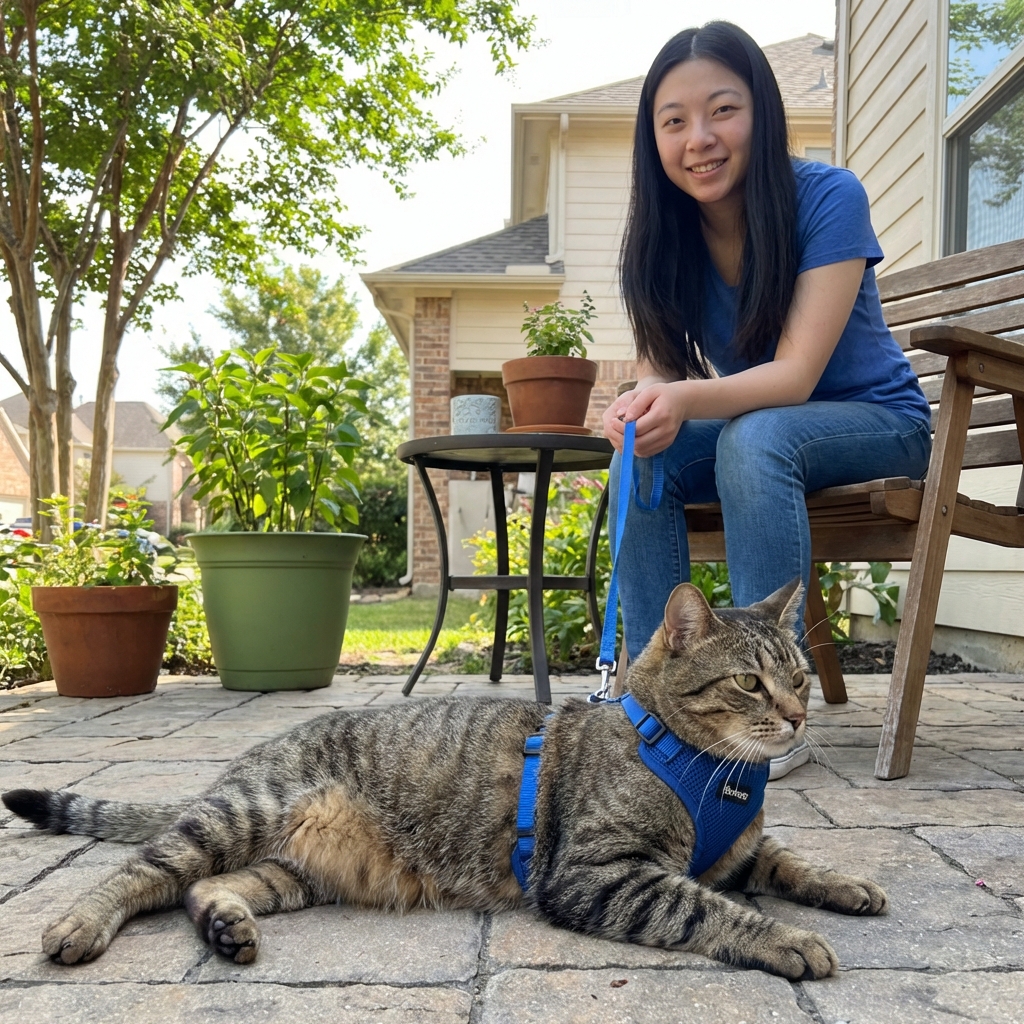
- Leash and harness if your cat is harness trained (do not rely on a collar alone)
- Medications and copies of medical records if traveling far
- Recent photos of your cat, just in case of an escape
How to Set Up the Car Safely
Always use the carrier
The safest place for your cat is inside a secured carrier. It also prevents escape when you open doors at rest stops.
Best placement for the carrier
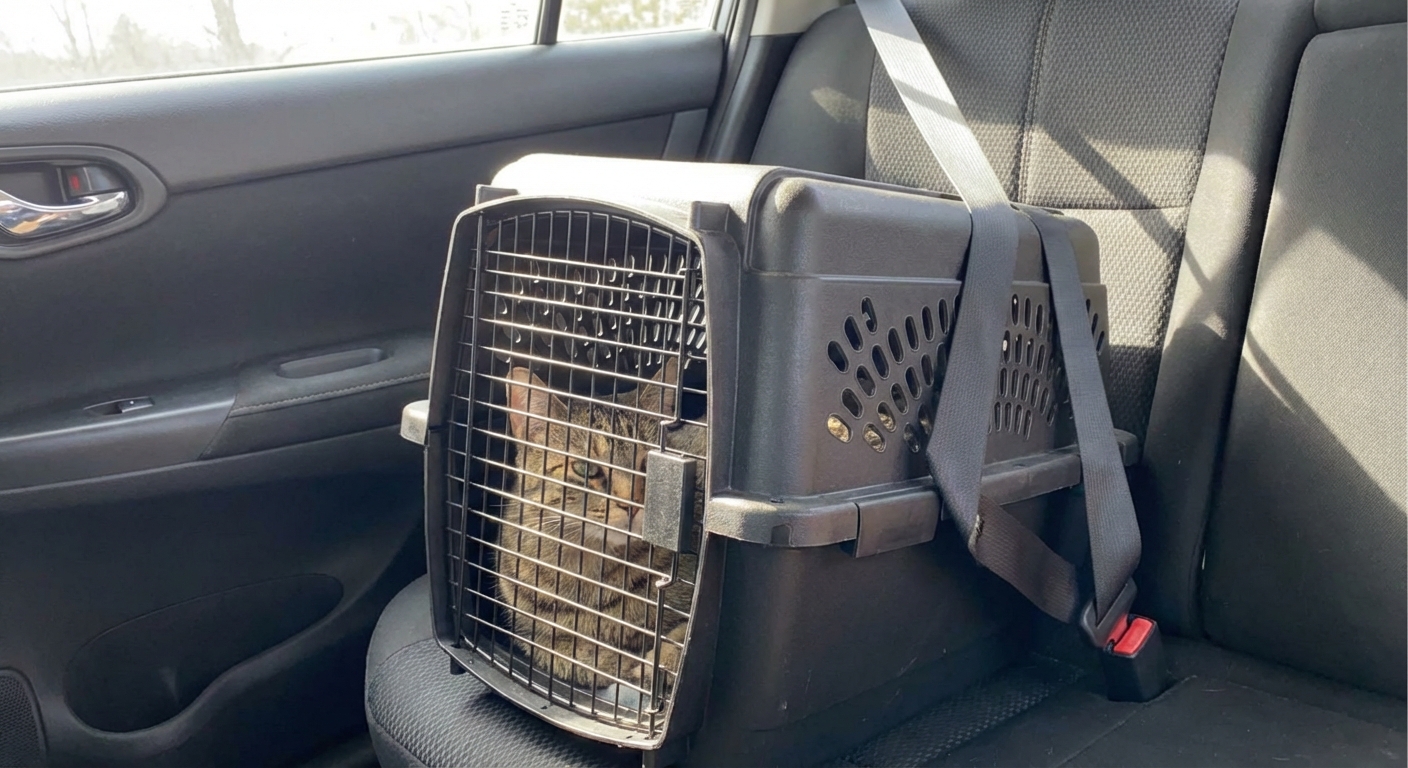
- Away from active airbags: In most cars, the back seat is a good choice. Avoid front seats because airbags can injure a pet during deployment.
- Secure it properly: Route the seat belt through a designed belt path when available, or use manufacturer straps. A belt threaded only through a handle may not prevent tipping in a sudden stop.
- Keep it level: The carrier should sit flat and not slide.
Control temperature and noise
Cats can overheat quickly in a warm car. Keep the car comfortably cool, and never leave your cat unattended in a parked car. For sound sensitivity, keep music low and drive smoothly. Some cats do better with a light towel draped over part of the carrier to reduce visual stimulation, as long as airflow stays excellent.
Loading Your Cat Without the Drama
Many escapes happen in the driveway. A few small habits can prevent a stressful chase.
- Prep first: Load bags, set GPS, and adjust the carrier position before bringing your cat out.
- Control doors: Keep the home door closed, and open the car door only when you are ready to load.
- Use a calm approach: Avoid rushing, loud voices, or chasing.
- Top-load when possible: If your carrier opens from the top, lower your cat gently in and close securely.
- Double-check latches and zippers: This sounds obvious, but it is one of the most common mistakes.
During the Drive: Keeping Your Cat Calm
Once you are rolling, your job is to keep things steady, quiet, and predictable.
Do not let your cat roam the car
Even if your cat seems calm, roaming is risky for both safety and escape prevention. Keep your cat in the carrier for the entire drive.
Watch for motion sickness and stress
Some cats drool, vocalize, or vomit from nausea or anxiety. If this happens, mention it to your veterinarian. There are safe, effective options that can make future trips much easier.
Rest stops for longer trips
- Keep your cat inside the carrier when opening any car door.
- If your cat uses a harness reliably, you can offer a careful harness-and-leash break inside the closed car, but many cats are safest staying crated.
- Offer small sips of water at stops. Many cats will not drink while traveling, and that can be normal for short trips.
If You Are Traveling More Than a Few Hours
Litter plan
Some cats will not use a litter tray on the road, but it is still smart to have the option. A small disposable tray with a familiar litter can help. Line the carrier with a puppy pad under a towel in case of accidents.
Food and water
Expect appetite and thirst to be a little off during travel, especially for nervous cats. Offer water at each stop and a small meal once you arrive. If your cat refuses water for a prolonged period, seems lethargic, or vomits repeatedly, contact a veterinarian.
Multi-cat travel
Most cats travel best in separate carriers, even if they live together. If you have a truly bonded pair that routinely sleeps and relaxes together, a shared carrier can work, but only if it is large enough and neither cat becomes tense or territorial.
Hotel and destination safety
Before you open the carrier, confirm the room is secure: windows closed, doors shut, and no gaps behind appliances. Cats often hide in unfamiliar places when stressed.
Common Mistakes to Avoid
- Skipping the carrier or holding your cat in your lap
- Leaving your cat in a parked car even for just a minute
- Opening the car door at a stop before confirming the carrier is latched
- Trying a new harness on travel day without training first
- Using strong air fresheners that may irritate sensitive feline airways
- Giving unapproved medications or sedating without veterinary guidance
A Simple Pre-Trip Checklist
- Carrier out and comfy at home
- Carrier secured away from airbags, using the belt path or straps
- Puppy pad and towel in carrier
- Water, treats, litter supplies packed
- Vet-approved calming plan if needed
- ID updated: microchip registered and current, tag on breakaway collar if used
The goal is not perfection. It is progress. Start with short, calm practice rides, and most cats become noticeably easier travelers over time.