Make car rides easier for your cat with a secure carrier, simple training, stress-reducing setup, and a practical packing checklist. Includes safety and esca...
Article
•
Designer Mixes
Traveling by Car With a Cat

Shari Shidate
Designer Mixes contributor
Yes, you really can love car travel with a cat
Many cats can learn to tolerate, and sometimes even enjoy, car rides. The secret is to make the car feel predictable, safe, and low-stress. As a veterinary assistant, I see the difference it makes when families practice short, positive trips before a long drive. The goal is not perfection. It is comfort and safety, one calm mile at a time.
Below are practical tips that align with common veterinary and cat behavior guidance, whether you are running errands in Frisco (or anywhere you drive) or planning a road trip.
Start with safety first
Use a real carrier, every time
A cat should never ride loose in a moving car. In a sudden stop, a frightened cat can become a projectile, wedge under the pedals, or bolt out a door when you open it.
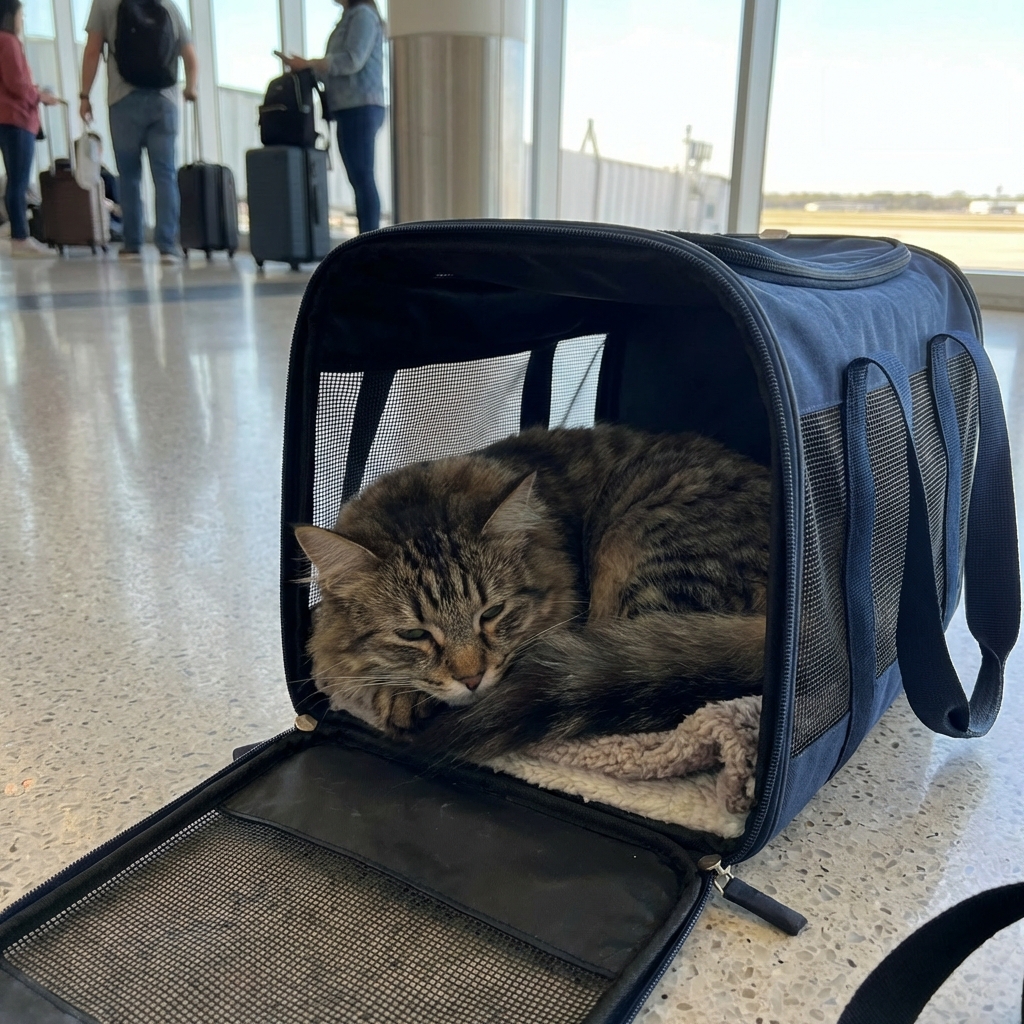
- Choose a sturdy, well-ventilated carrier with a secure latch. Hard-sided carriers are easy to clean, while soft-sided carriers can be more comfortable for some cats.
- Consider crash-tested options if you travel often or drive long distances. Many standard carriers are not crash-tested.
- Size matters: your cat should be able to stand, turn around, and lie down comfortably.
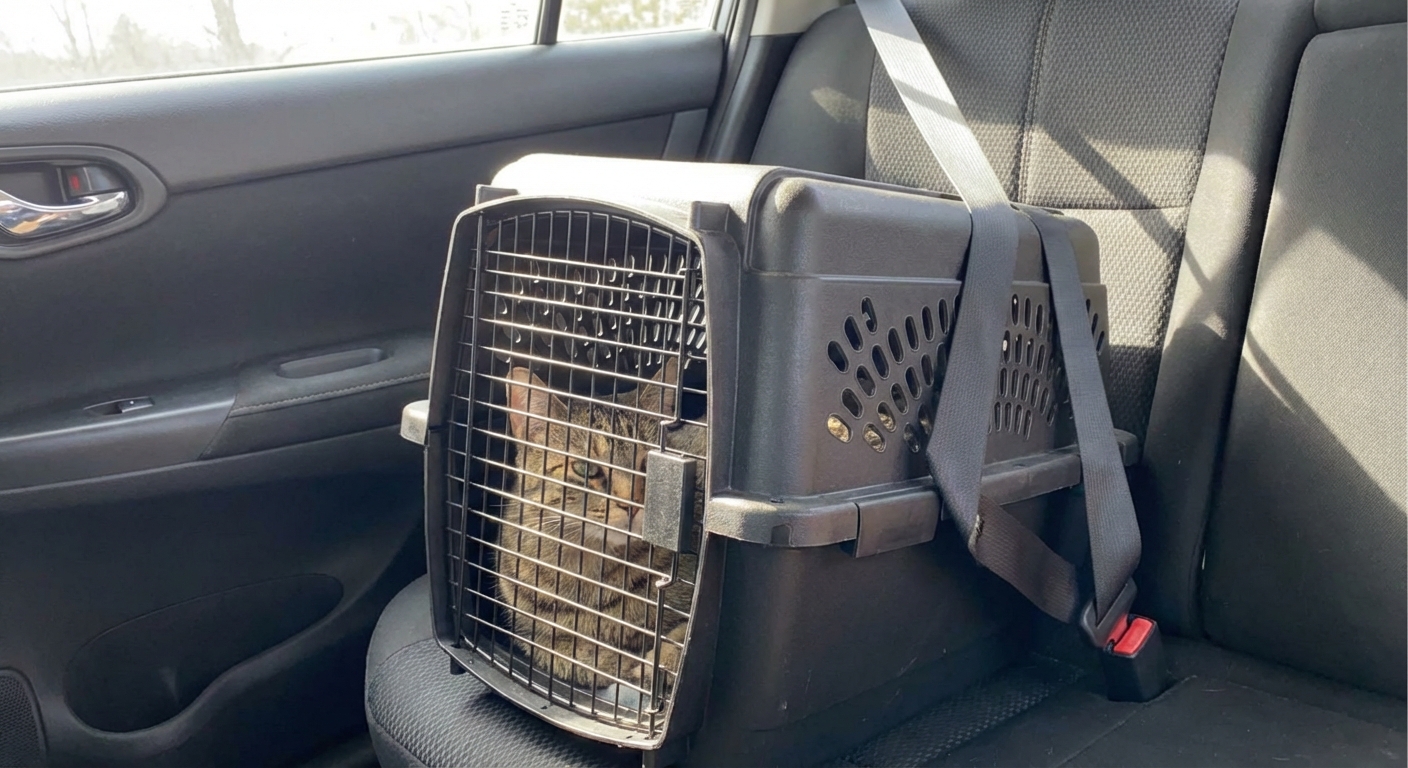
- Secure it: place the carrier on the back seat and use the seatbelt through designated belt paths if your carrier has them. If it does not, loop the seatbelt around the carrier body to reduce tipping and sliding. Avoid relying on a plastic handle as a restraint point.
Never leave a cat in a parked car
Even on mild days, temperatures in a parked car can rise quickly. Cracking windows is not enough. If you have to stop, bring your cat inside in their closed carrier.
Microchip and ID are non-negotiable
Even indoor-only cats can slip out during travel. Before you drive, confirm:
- Your cat is microchipped, and the registry has your current phone number.
- Your cat wears a breakaway collar with an ID tag (if your cat tolerates it).
- You have a recent photo of your cat on your phone.
Harness and leash are a backup, not the plan
A well-fitted harness can help during transfers (car to hotel, hotel to car), but many cats can back out if they panic. The carrier is still your primary safety tool.
Prep your cat before the trip
Carrier training is the easiest win
If the carrier only appears right before the vet, your cat learns to fear it. Instead, make it part of normal life.
- Leave the carrier out in a quiet room with the door open.
- Add a soft blanket that smells like home.
- Toss treats inside, feed meals near it, then gradually feed meals inside.
- Practice closing the door for a few seconds, then longer, followed by a treat and calm praise.
Try a no-drive practice first
Once your cat is comfortable being in the carrier, place them inside and sit in the parked car for 1 to 3 minutes. Then go back inside. This builds confidence without the added stress of motion.
Familiar scent helps
Cats rely on scent for security. Use a blanket from their favorite sleeping spot. If your veterinarian recommends it, you can also use a cat pheromone product. Follow the label directions and allow it to dry before your cat enters the carrier (often around 10 to 15 minutes, depending on the product).
When not to travel
If your cat is having trouble breathing, is extremely lethargic, has had recent surgery, is showing signs of illness, or has severe travel anxiety without a plan, pause and call your veterinarian. A little prep can prevent a miserable and unsafe trip.
Set up the car for a calm ride
Keep it cool, quiet, and steady
- Temperature: aim for comfortable and consistent. Heat builds quickly in cars, even on mild days.
- Sound: keep music low. Avoid heavy bass.
- Driving style: slow starts, gentle stops, gradual turns.
Cover the carrier if it helps
Some cats settle faster if they cannot see everything moving outside. A light towel over part of the carrier can reduce visual stress while still allowing airflow. Watch your cat's breathing and behavior to make sure they are comfortable.
Multi-cat travel: usually separate is simpler
Unless your cats are truly bonded and already calm together in a confined space, separate carriers are typically safer and less stressful. It also reduces the risk of a fight if one cat panics.
Food, water, and litter
Before you leave
- Food: for many cats, a smaller meal 3 to 4 hours before departure may help reduce nausea. Some cats do better with a longer fast, so follow your veterinarian's advice for your cat.
- Water: offer normal access beforehand.
- Last call litter box: encourage a litter box visit right before loading.
For longer drives (about 4+ hours)
If you will be traveling for several hours, plan intentional breaks. Many cats will not use a litter box on a noisy roadside, so focus on safety and calm.
- Keep the cat in the closed carrier while doors are open.
- Offer water when you are safely parked using a small bowl or a pet travel water bottle.
- Bring a small disposable litter tray and litter for hotel stops or safe indoor breaks.
Hydration needs vary
Many cats will not drink much while the car is moving, and that is often okay for shorter trips (about 1 to 2 hours). Be more cautious with kittens, seniors, and cats with kidney disease, diabetes, or a history of urinary issues. Hot weather also increases risk. If you are unsure, ask your veterinarian what break schedule and hydration plan fits your cat.
Motion sickness and anxiety
Some cats get nauseous, panicky, or both. If your cat drools, vomits, cries continuously, or arrives wide-eyed and trembling, they may need a more supportive plan.
Common stress signs
- Excessive vocalizing
- Panting or rapid breathing
- Drooling, lip-licking, vomiting
- Urine or stool accidents
- Trying to bite or claw at the carrier
Vet-supported options
Talk with your veterinarian about what fits your cat's health history. Options can include anti-nausea medications, anti-anxiety medications, and behavior plans that combine training with calming tools. Please do not give human medications unless your vet has prescribed them for your cat. Many are dangerous to cats.
Hotel and destination tips
Set up a home base fast
Cats do best when they can control a small, safe space. When you arrive:
- Put the carrier in a quiet corner and open it.
- Offer a small meal and water.
- Set up a litter box immediately.
- Keep your cat in one room at first, away from doors and heavy foot traffic.
Prevent escapes
Before opening the carrier, do a quick scan: check windows, balcony doors, and the main door. In hotels, it helps to hang a reminder on the door for housekeeping that a cat is inside, so no one enters unexpectedly.
A simple checklist
- Secure carrier and familiar blanket
- Microchip checked and ID tag on
- Harness and leash for transfers (optional backup)
- Small towel, paper towels, disposable gloves, and enzyme cleaner
- Spare bedding or puppy pads
- Water and small bowl or pet travel water bottle
- Small bag of litter and a disposable tray for longer trips
- Treats and a favorite toy
- Any medications prescribed by your veterinarian
- Basic records info (vet phone number, vaccine record if boarding, medication list)
The best cat travel plan is the one you practice before you need it. A few calm training sessions can turn "I dread car rides" into "We can handle this."
Bottom line
Traveling by car with a cat gets easier when you focus on three things: safety, predictability, and gentle practice. Start small, reward calm behavior, and ask your veterinarian for help if motion sickness or anxiety is getting in the way. With the right setup, you and your cat can get where you are going with a whole lot less stress.
References
- American Association of Feline Practitioners (AAFP) and International Society of Feline Medicine (ISFM): cat-friendly handling and travel guidance
- American Veterinary Medical Association (AVMA): pet travel and vehicle safety guidance