
Transitioning Your Cat to Homemade Food Safely

If you have been browsing the homemade cat food recipes here on Designer Mixes, you are not alone. Many cat parents want to move away from ultra-processed diets and toward real, minimally processed ingredients. You will also see the term human-grade used online. Just know it has a specific regulatory meaning only when ingredients, handling, storage, and manufacturing meet human food standards. Otherwise, it is more of an aspirational label.
The key is doing it slowly and doing it nutritionally complete. Cats are not small dogs. They are true carnivores with very specific nutrient needs, and they can get digestive upset if we rush the change.
This guide walks you through a gentle 7 to 14 day transition, what mixing ratios to use, what red flags to watch for, and the most common mistakes I see as a veterinary assistant.
Quick note: This article is educational and not a substitute for veterinary advice. Your veterinarian knows your cat’s medical history and can help you choose the safest plan.
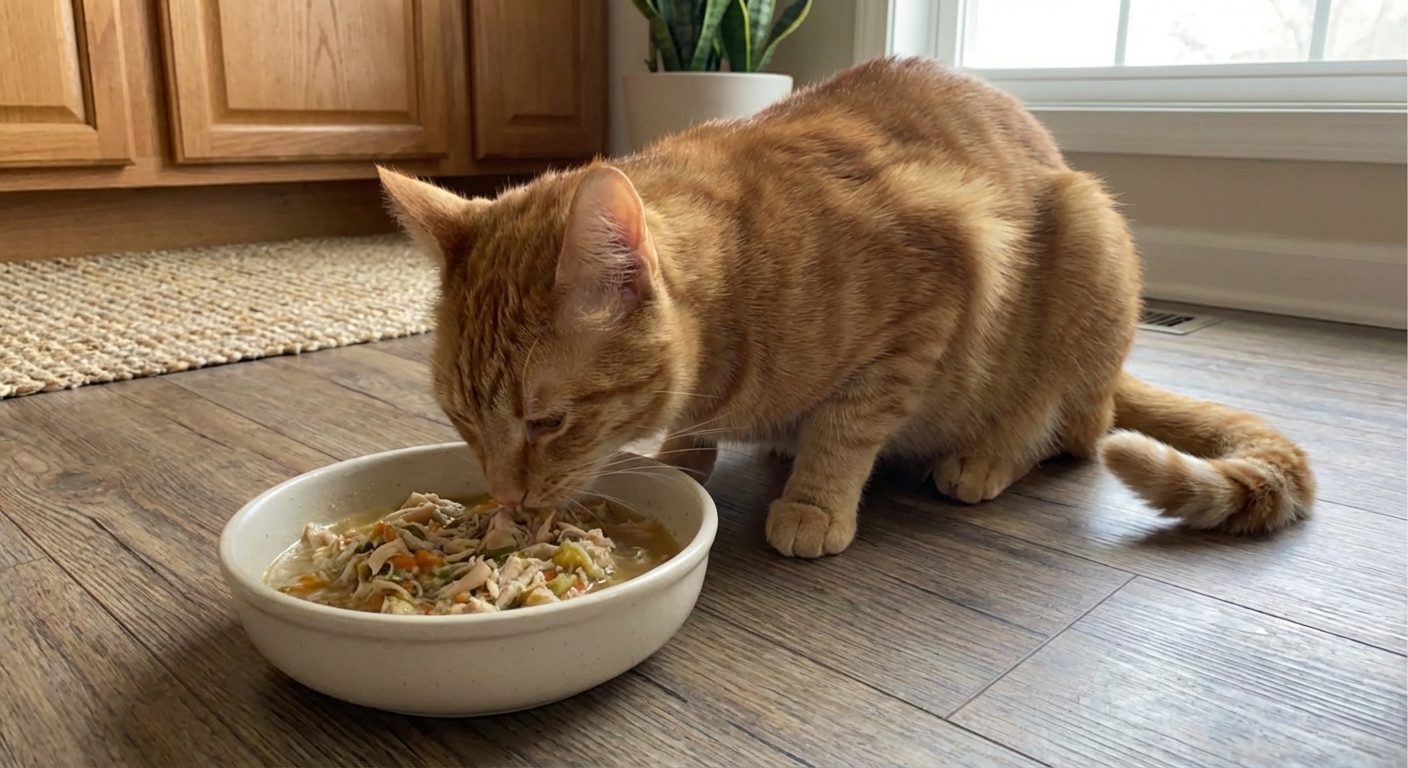
Before you start
Why cats need a slower transition
Most cats imprint on texture, temperature, and smell. If your cat has eaten dry kibble for years, the moisture, aroma, and mouthfeel of homemade food can feel unfamiliar. On top of that, quick diet changes can trigger vomiting or diarrhea (and may affect the balance of gut bacteria).
Homemade must be complete
The biggest risk with homemade cat food is not the transition itself. It is long-term nutrient imbalance.
When I say nutritionally complete, I mean the overall diet is formulated to meet recognized feline nutrient profiles (commonly AAFCO or NRC guidance) for your cat’s life stage (kitten, adult maintenance, growth and reproduction). “Homemade” is a cooking method, not a guarantee of balance.
Cats need specific nutrients in specific amounts, including:
- Taurine (critical for heart and eye health)
- Arachidonic acid (an essential fatty acid cats cannot make well)
- Preformed vitamin A (cats do not efficiently convert beta-carotene)
- Vitamin D (cats do not make meaningful vitamin D through skin exposure the way people do, so it must come from food)
- Calcium to phosphorus balance (especially important if you are using meat without bone)
- Some B vitamins (several are heat and light sensitive, and levels can fall with storage and repeated reheating)
Practically speaking, this means most cats do best with a recipe designed by a veterinary nutritionist or a well-researched recipe that uses a complete supplement premix formulated for cats, unless you are very experienced with formulation.
When to check with your vet first
Please talk with your vet before switching if your cat is:
- A kitten, pregnant, or nursing
- Senior or underweight
- Diabetic, has chronic kidney disease, IBD, pancreatitis, or hyperthyroidism
- On prescription food for urinary crystals or other medical conditions
- Prone to refusing food or has a history of hepatic lipidosis (fatty liver)
Cats should not go without eating. If your cat refuses food for 24 hours (or noticeably eats far less than normal), call your veterinarian. Call sooner for kittens, sick cats, overweight cats, or any cat with a hepatic lipidosis history or risk.
The 7 to 14 day plan
For most healthy adult cats, a 7 to 14 day timeline works well. If your cat has a sensitive stomach or is very picky, use the full 14 days and move forward only when stools are normal and appetite is steady.
Mixing ratios
Best practice: measure the ratios by weight using a kitchen scale, especially when mixing wet and homemade textures.
- Days 1 to 3: 25% homemade, 75% current food
- Days 4 to 6: 50% homemade, 50% current food
- Days 7 to 9: 75% homemade, 25% current food
- Days 10 to 14: 100% homemade
If you hit a bump, do not push through. Go back to the last ratio your cat tolerated for 2 to 3 days, then try moving forward again more slowly.
How to mix
Many cats will eat the familiar pieces and leave the new food behind. Besides stalling acceptance, this makes it hard to know how much your cat is actually eating. Mix thoroughly so each bite has the same smell and texture.
If you are transitioning from dry to wet plus homemade, you may need a two-step process:
- Step 1: Transition from dry to a high-quality wet food (if needed)
- Step 2: Transition from wet to homemade using the ratios above
Some cats can transition directly, but for kibble-only cats, wet-first often works better.
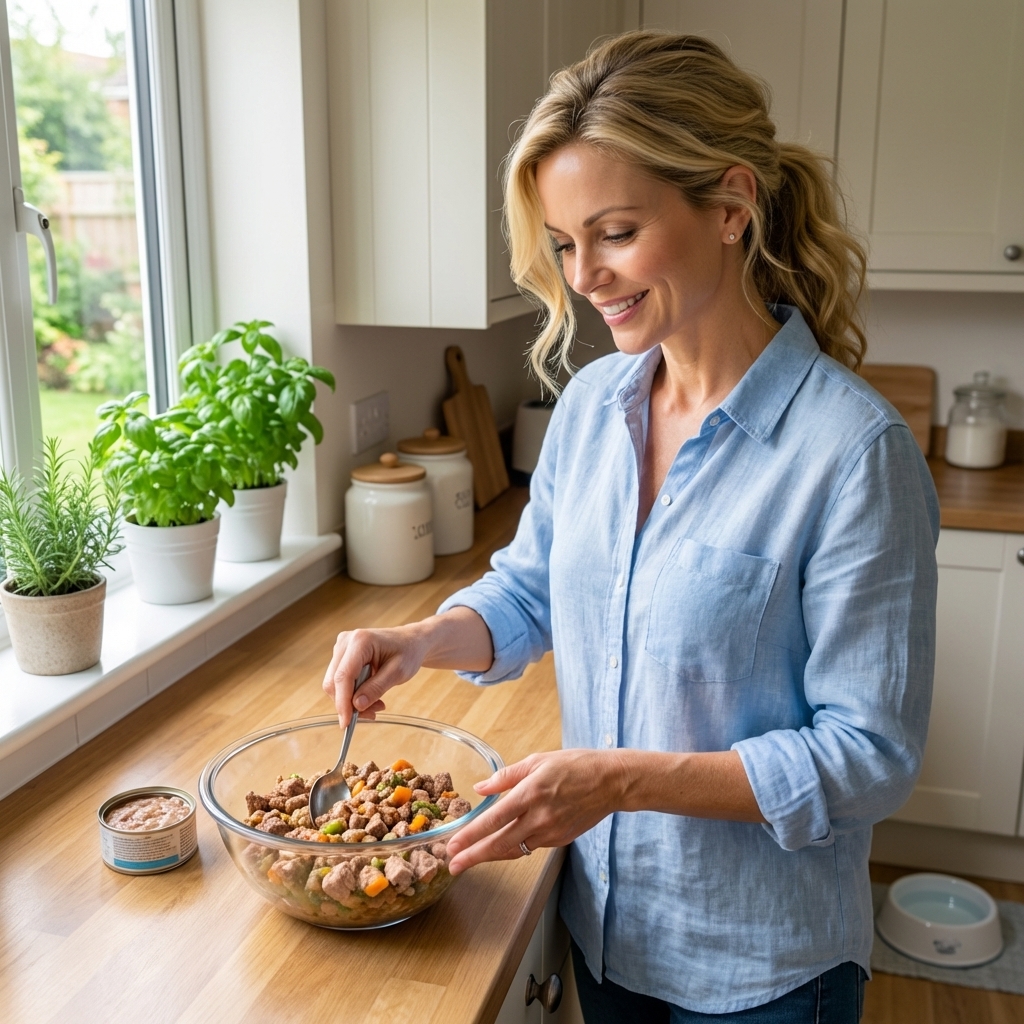
Make it more appealing
Warm it a little
Cold food is less smelly. Warming helps release aroma, which is a big deal for cats. Aim for slightly warm, not hot.
- Warm-water method: Place the container in warm water for a few minutes and stir well.
- Microwave caution: If you microwave, use very short bursts, stir thoroughly, and test the temperature with your finger. Microwaves can create hot spots.
Keep texture consistent
Some cats love a pate texture, others prefer shreds. If your cat resists, try:
- Finely chopping or gently pulsing the meat for a smoother texture
- Adding a small splash of warm water or low-sodium broth (no onion, no garlic) for moisture
- Using the same bowl and feeding location your cat already trusts
Use safe bridges
For stubborn cats, you can top the mixed food with a tiny amount of something very enticing, then reduce the topper over time. Examples include a small spoon of the current wet food, a sprinkle of freeze-dried meat crumbles, or a teaspoon of tuna water from tuna packed in water.
Use these as training wheels, not the main nutrition. Keep tuna water occasional and small due to sodium and the general “too much fish” concern over time.
Hydration and urinary health
One underrated benefit of moving from dry to wet or homemade is higher moisture intake. Better hydration can support urinary health for many cats.
That said, if your cat has a history of urinary crystals, urinary blockage, or is currently on a urinary prescription diet, do not switch diets without your veterinarian’s guidance. Those diets are formulated very specifically for urine pH and mineral balance.
What to watch for
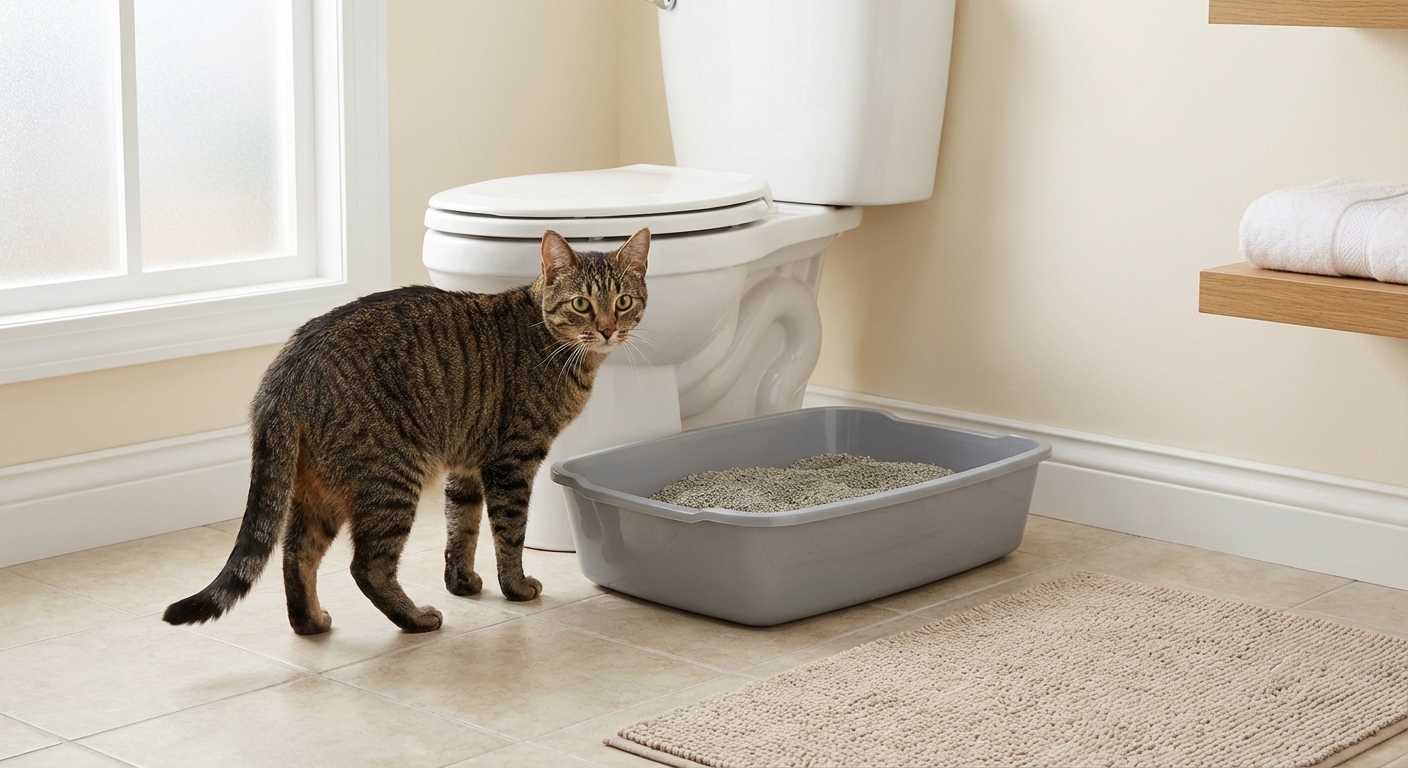
Mild changes can happen during transitions, but your cat should still feel good overall. Keep a simple daily log for the first two weeks: appetite, energy, vomiting, stool quality, and how often they are using the litter box.
Common mild issues
- Slightly softer stool for a day or two
- More interest in water or less interest if the new food is wetter
- Small changes in stool frequency
Red flags
Pause the transition and call your vet if you see:
- Repeated vomiting or vomiting with lethargy
- Diarrhea lasting more than 24 to 48 hours
- Blood or black, tarry stool
- Refusing food or eating dramatically less than normal
- Straining in the litter box, crying, or frequent trips with little output
- Swollen face, hives, intense itching, or breathing changes (possible allergy emergency)
If your cat seems “off,” trust your gut. It is always okay to slow down and ask for help.
Mistakes to avoid
1) Switching too fast
This is the number one reason cats vomit or get diarrhea during a change. Cats do best with consistency. Let their gut adjust gradually.
2) Feeding an incomplete recipe
Many homemade recipes online are missing essentials. A little plain chicken is fine as a short-term “sick day” food if your vet recommends it, but it is not a complete diet.
Long-term imbalances can lead to serious problems, including taurine deficiency (heart disease), metabolic bone disease (from low calcium), and vitamin deficiencies.
3) Getting calcium wrong
Meat is high in phosphorus and low in calcium. Cats need the right calcium to phosphorus balance for bones, teeth, and muscle function. If you are not feeding a properly formulated raw meaty bone recipe, you typically need a reliable calcium source as directed by a balanced recipe or premix.
4) Not tracking calories and weight
Homemade food can be more calorie-dense or less calorie-dense than commercial food. Weigh your cat weekly for the first month. Subtle weight loss in cats matters.
5) Using unsafe ingredients
Avoid ingredients that are toxic or risky for cats, including onions, garlic, chives, grapes, raisins, xylitol, and alcohol. Also be cautious with too much liver. It is nutritious, but excess can contribute to vitamin A toxicity.
Food safety basics
Cats can get sick from foodborne pathogens too, and some cats are higher risk, including seniors and cats with chronic disease.
- Clean: Wash hands, bowls, and prep surfaces thoroughly.
- Separate: Keep raw meat separate from human foods.
- Chill: Refrigerate promptly. Portion and freeze extra servings.
- Thaw safely: Thaw in the refrigerator, not on the counter.
- Time limit: Discard leftover wet or homemade food after 1 to 2 hours at room temperature, sooner in warm rooms.
If you are feeding raw, it is worth having an honest conversation with your veterinarian about your cat’s health status and your household risk factors, especially if there are immunocompromised people in the home.
Make it easier daily
Step 1: Choose one balanced plan
Pick one complete recipe or one reputable supplement premix approach and stick with it during the transition. Too many recipe changes at once can confuse your cat’s digestion and your troubleshooting.
Step 2: Small, steady meals
Many cats do better with smaller meals offered 2 to 4 times a day. This helps reduce vomiting from eating too quickly and makes the new food feel less intimidating.
Step 3: Observe, then adjust
If stools get soft, slow down the transition. If your cat is constipated, talk with your vet about moisture intake and whether the recipe composition needs adjustment.
Multi-cat households
If you have more than one cat, feed separately during the transition. It helps you monitor who is eating what, prevents food swapping, and makes red flags easier to catch early.
Gentle progress beats fast progress. A calm, steady transition protects your cat’s stomach and helps them accept the new food.
Quick checklist
- Choose a complete and balanced homemade plan (AAFCO or NRC aligned for your cat’s life stage)
- Transition over 7 to 14 days using 25/75, 50/50, 75/25 ratios (by weight)
- Warm slightly and keep texture consistent
- Monitor stool, vomiting, appetite, litter box habits, and energy daily
- Weigh weekly for the first month
- Call your vet if your cat refuses food for 24 hours, or sooner for high-risk cats
Homemade feeding can be a wonderful way to support hydration, lean muscle, and overall vitality in cats when it is done carefully. Start slow, stay balanced, and let your cat set the pace.