A practical, reward-based puppy training guide: week-one routine, house and crate training, nipping help, loose-leash basics, socialization, and the 5 cues t...
Article
•
Designer Mixes
Training Puppies: Insights & Help

Shari Shidate
Designer Mixes contributor
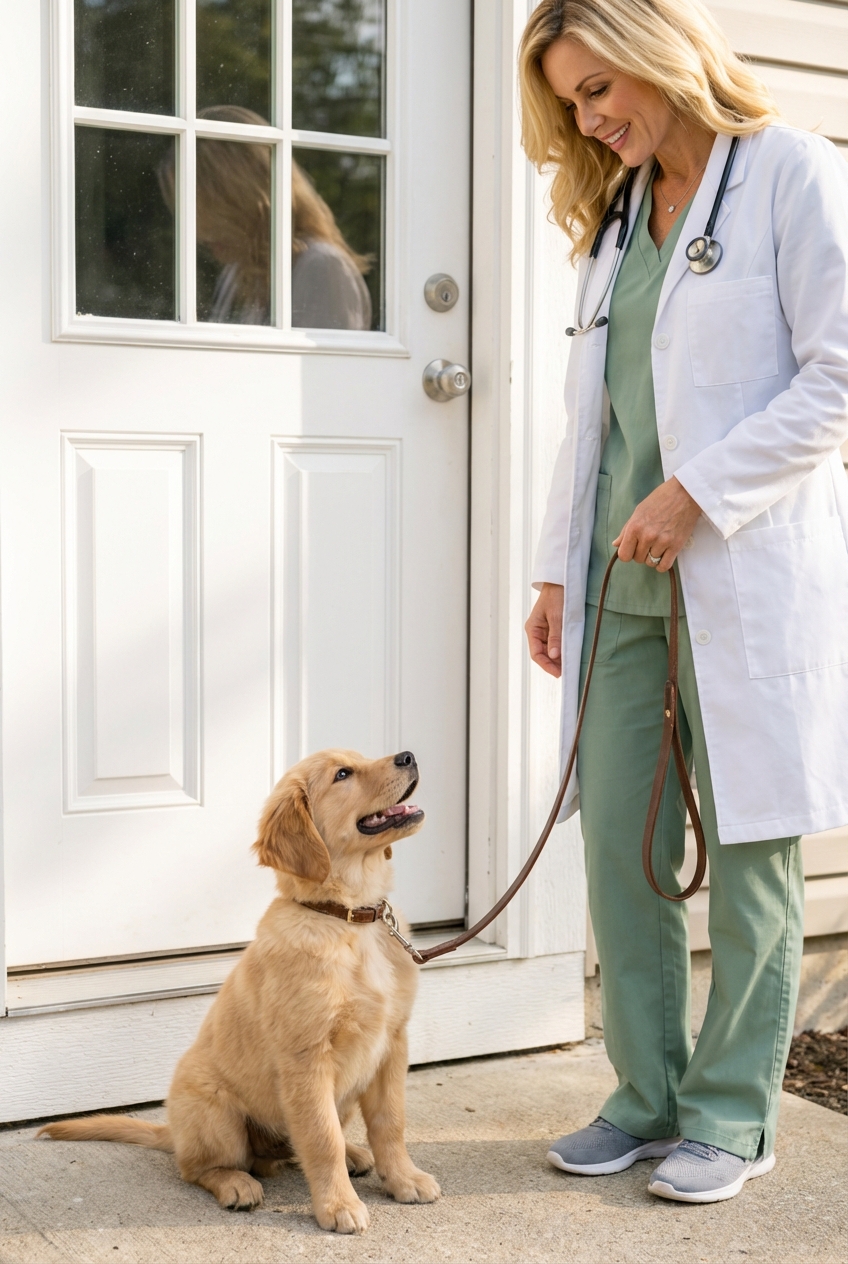
Bringing home a puppy is pure joy, and also a little chaos. As a veterinary assistant in Frisco, Texas, I see the same pattern all the time: the puppies who thrive are not the “perfect” ones. They are the ones with a simple plan, consistent routines, and families who understand what is normal puppy behavior and what needs extra help.
This guide covers the training building blocks that matter most: house training, crate training, bite inhibition, socialization, and basic cues. I will keep it practical and evidence-based, so you can start today and keep your puppy feeling safe while they learn.
Start with the basics
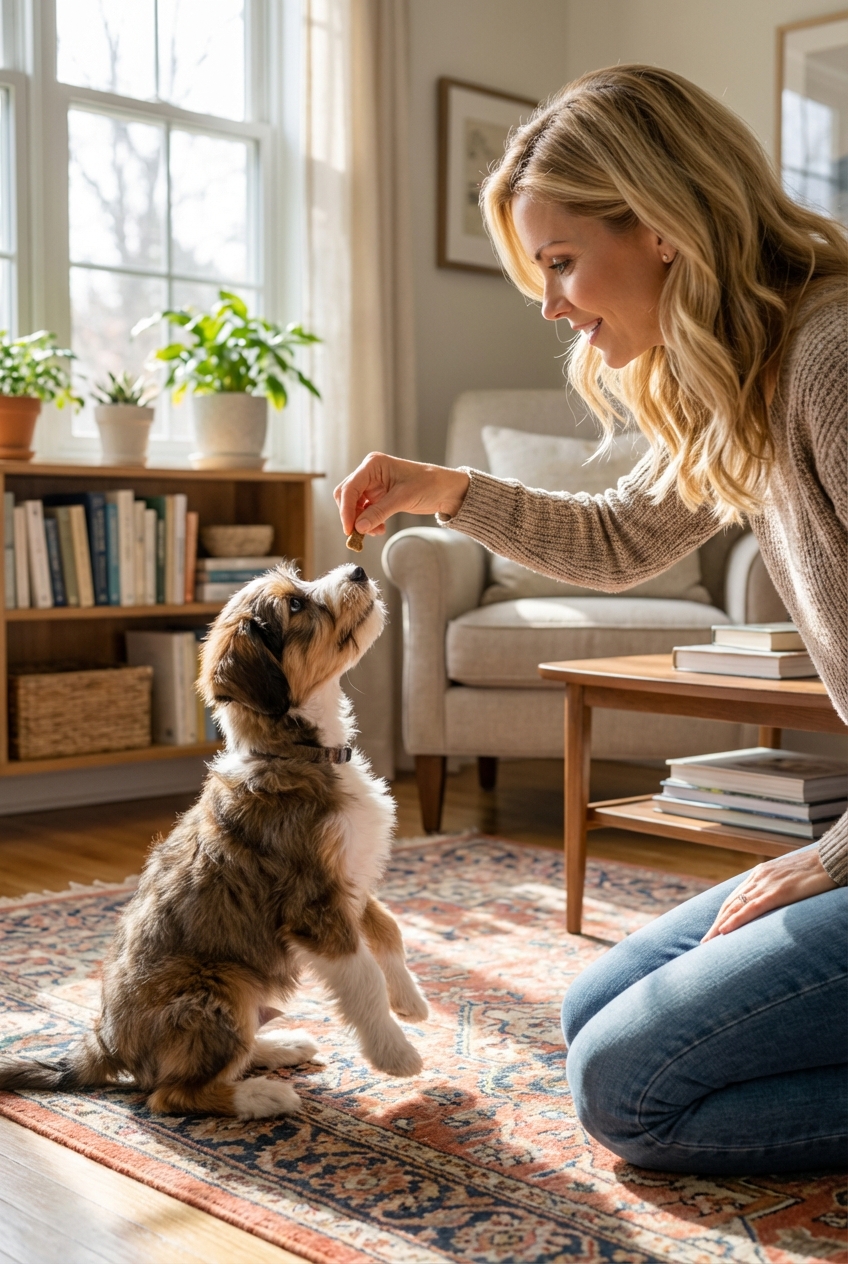
Puppies are babies. They are learning where to go potty, what is safe to chew, and how to live in a human home. Training goes best when you match expectations to their developmental stage.
- Short attention span: Most puppies do best with 1 to 3 minute mini-sessions, several times a day.
- Body and brain are still developing: Impulse control takes time. A “bad” puppy is often just an overstimulated puppy.
- They repeat what works: If jumping, nipping, or barking gets attention, it is likely to continue.
Quick mindset shift: Instead of asking “How do I stop this?” try “What do I want my puppy to do instead?” Then reward that.
Positive reinforcement
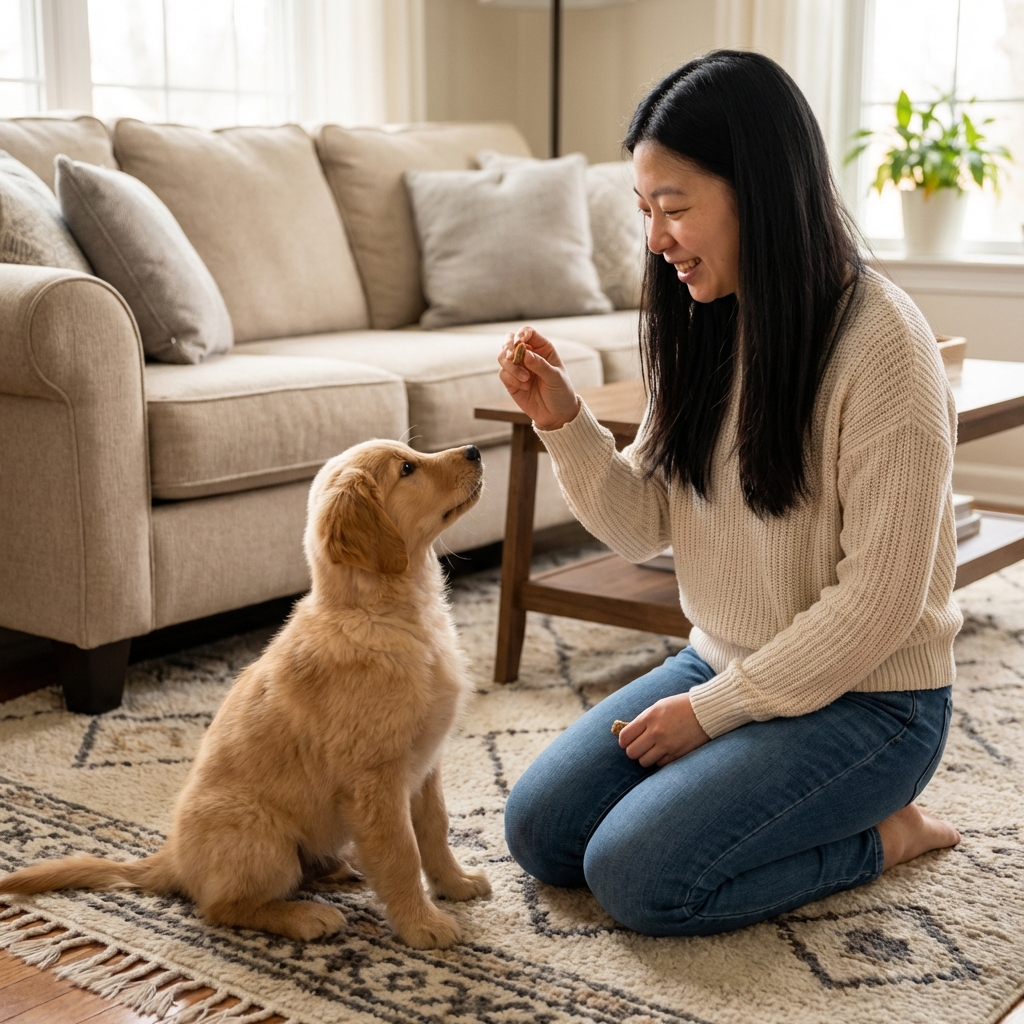
One of the most evidence-supported approaches for teaching behaviors is positive reinforcement, meaning you reward what you want to see more of. This aligns with modern veterinary behavior guidance, including AVSAB position statements on humane training. Rewards can be tiny treats, a favorite toy, praise, or a chance to sniff outside.
Make rewards work
- Use pea-sized treats and keep a portion of your puppy’s daily calories for training.
- Mix “high value” treats (soft, smelly options like chicken or freeze-dried meat) with lower calorie options, and save the high value stuff for harder distractions.
- Pair food with real-life rewards, like opening the door for a potty break after a calm sit.
Tip from the clinic: If treats are not working, it usually means the environment is too distracting or your puppy is too tired or too amped up. Move to a quieter area, lower the difficulty, and try again.
House training that sticks
Most house training problems come down to two things: too much freedom too soon, and not enough predictable potty opportunities. The goal is to prevent accidents while building a habit of going in the right place.
A simple potty schedule
- Take your puppy out after waking, after eating, after playing, and after training.
- For young puppies, plan on potty breaks about every 1 to 2 hours when they are awake. Very young pups and small breeds may need to go even more often.
- Rule of thumb: if your puppy is suddenly sniffing, circling, wandering away, or “disconnecting” mid-play, head out.
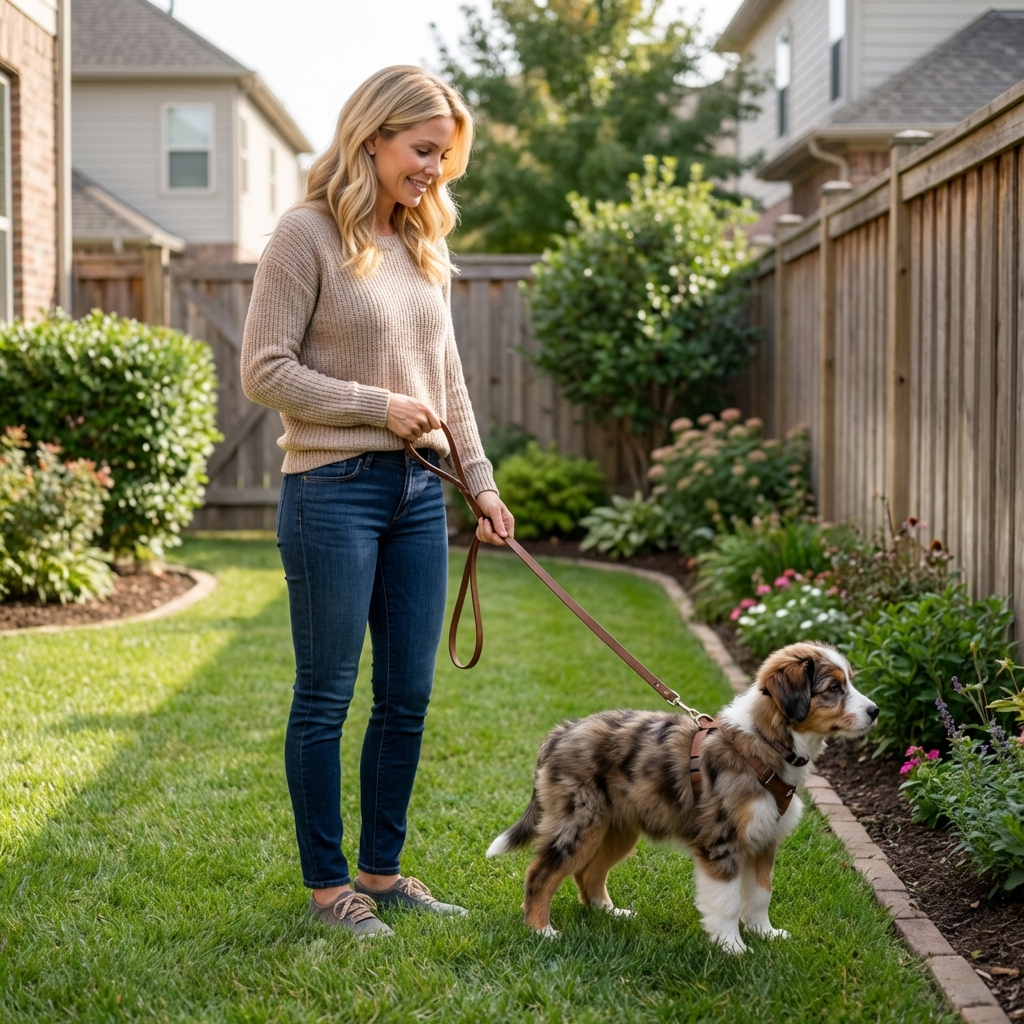
- Always take them to the same spot, stand still, and give a calm cue like “go potty.”
When they go
The moment your puppy finishes, reward with a treat and gentle praise. This is when the learning locks in.
When accidents happen
- If you catch them mid-accident: calmly scoop them up and take them outside to finish, then reward.
- If you find it later: do not punish. Clean with an enzymatic cleaner and adjust your supervision plan.
Punishment can create fear and “sneaky potty” behavior. Prevention and reinforcement are faster and kinder.
Crate training
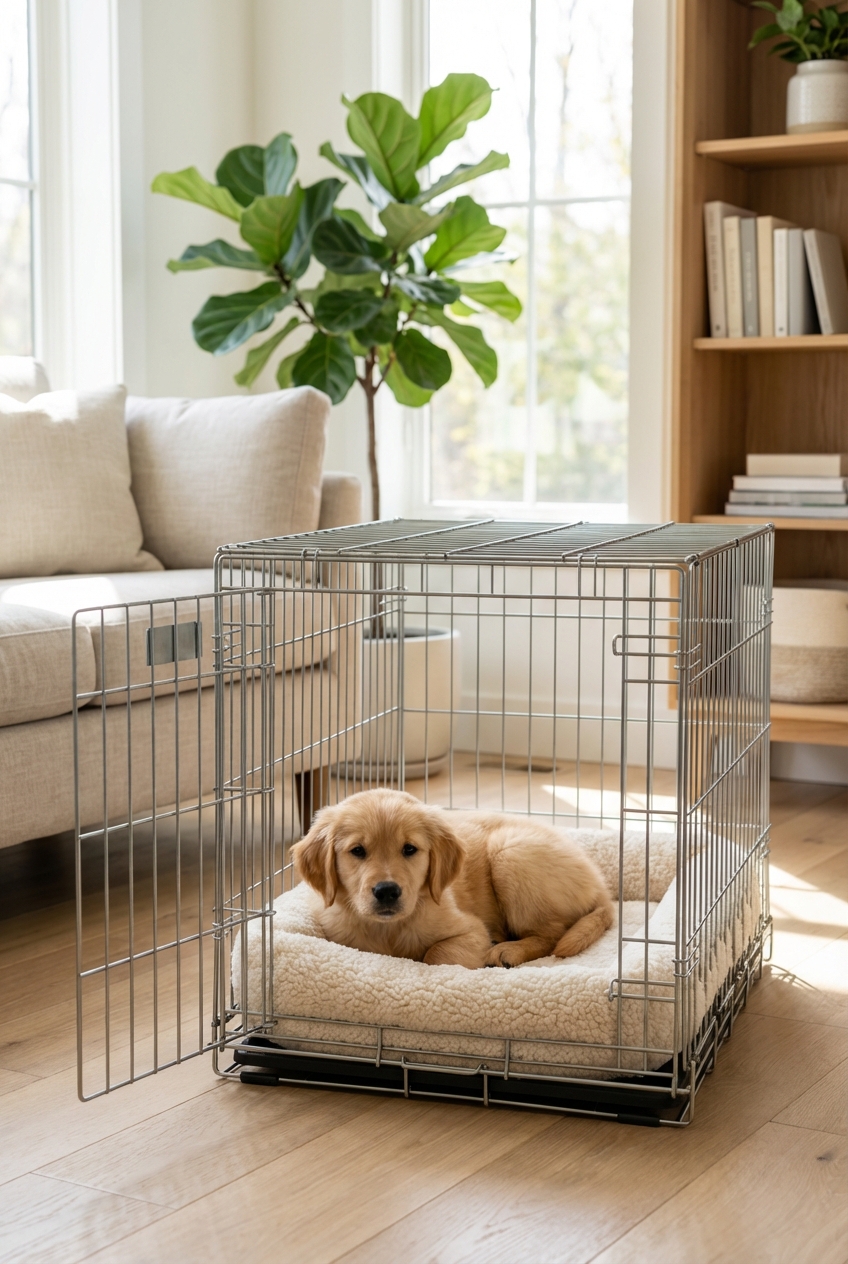
A crate is not a punishment. When introduced correctly, it becomes a safe, cozy “bedroom” that helps with house training, travel, and preventing unsafe chewing.
Crate setup
- Choose a crate big enough for your puppy to stand up, turn around, and lie down comfortably.
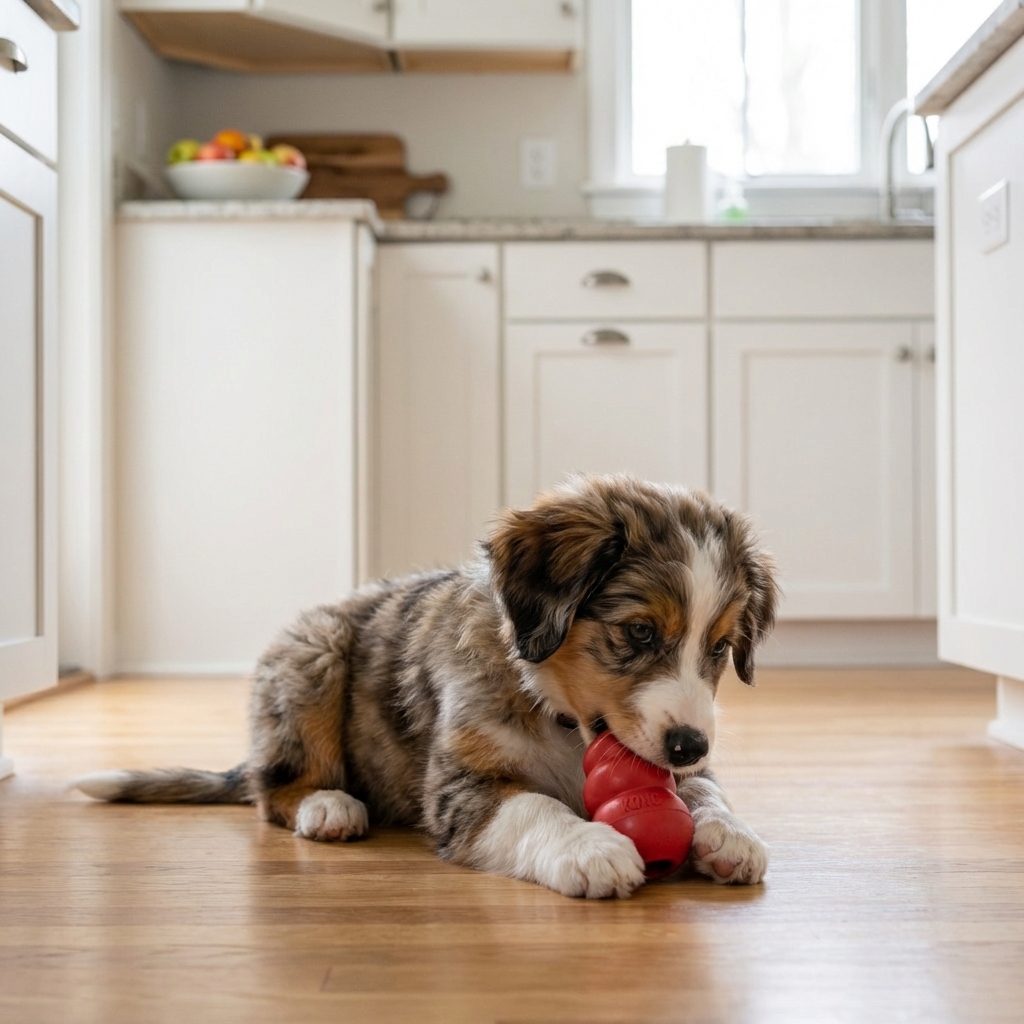
- Add a comfortable mat or towel and a safe chew.
- Place the crate near family activity at first so your puppy does not feel isolated.
Chew safety basics
- Skip cooked bones and brittle chews that can splinter.
- Choose size-appropriate chews and avoid anything small enough to swallow.
- Supervise, especially with new chews, and remove items that are breaking into chunks.
Training steps
- Toss treats in and let your puppy enter and exit freely.
- Feed meals in the crate with the door open.
- Close the door briefly while they chew a treat, then open before they fuss.
- Gradually extend time with short, calm departures.
Important: If your puppy is panicking, drooling heavily, overheating, vomiting, or hurting themselves trying to escape, pause and talk with your veterinarian and a qualified trainer. Some dogs need a slower plan, and sometimes we need to rule out separation-related distress early.
Nipping and biting
Mouthy play is normal puppy behavior. Your job is to teach your puppy that human skin is fragile and that calm play keeps the fun going.
What works best
- Redirect: offer a toy the moment teeth touch skin.
- End the game briefly: if biting continues, stop interaction for 10 to 20 seconds. Consistency matters.
- Reinforce calm: reward your puppy when they choose to chew an appropriate item.
What to avoid
- Rough hand play that teaches your puppy hands are toys.
- Yelling or physical corrections that increase arousal or fear.
Reality check: The most intense teething is often around 4 to 6 months for many puppies. Plan extra chew enrichment and keep sessions short when your puppy is extra mouthy or overaroused.
Socialization
Socialization is not just “meeting other dogs.” It is carefully exposing your puppy to the world in a safe, positive way, so new things feel normal instead of scary.
Timing matters
The socialization window is often most sensitive from about 3 to 14 to 16 weeks. That does not mean socialization ends after that, but it does mean early, positive exposures pay off for life.
What to socialize to
- People of different ages, sizes, and appearances
- Friendly, vaccinated dogs with good manners
- Sounds like vacuums, doorbells, traffic, and thunderstorms (at low volume first)
- Handling: paws, ears, mouth, brushing, nail trim practice
- Surfaces: grass, tile, carpet, gravel, ramps
How to do it safely
Ask your veterinarian about your puppy’s vaccine schedule and local disease risks. In many cases, you can do safer socialization before the final vaccines by choosing lower-risk options and avoiding high-traffic dog areas where you do not know vaccination status.
- Carry your puppy through stores that allow pets, and reward calm watching.
- Set up meet-and-greets with friends who have healthy, vaccinated, puppy-friendly dogs.
- Enroll in a well-run puppy class that requires age-appropriate vaccines and sanitizes properly.
Green flag: loose body, curious sniffing, taking treats. Red flag: freezing, tucked tail, trying to hide. If you see red flags, create distance and lower the intensity.
Teach key cues
Tricks are fun, but life skills keep puppies safe and make daily routines smoother. Start with these cues:
1) Name
Say your puppy’s name once. When they look at you, reward. This becomes your attention button.
2) Sit
Teach sit as a default way to ask for good things: leashes go on, food bowl goes down, the door opens.
3) Come
Make recall wonderful. Call your puppy, reward heavily, then release them back to play. Avoid calling them for things they hate, like nail trims, until recall is strong.
4) Leave it
Start with a treat in a closed fist. Reward when your puppy backs off. This cue is a safety net for dropped pills, unsafe food, and random sidewalk finds.
5) Settle
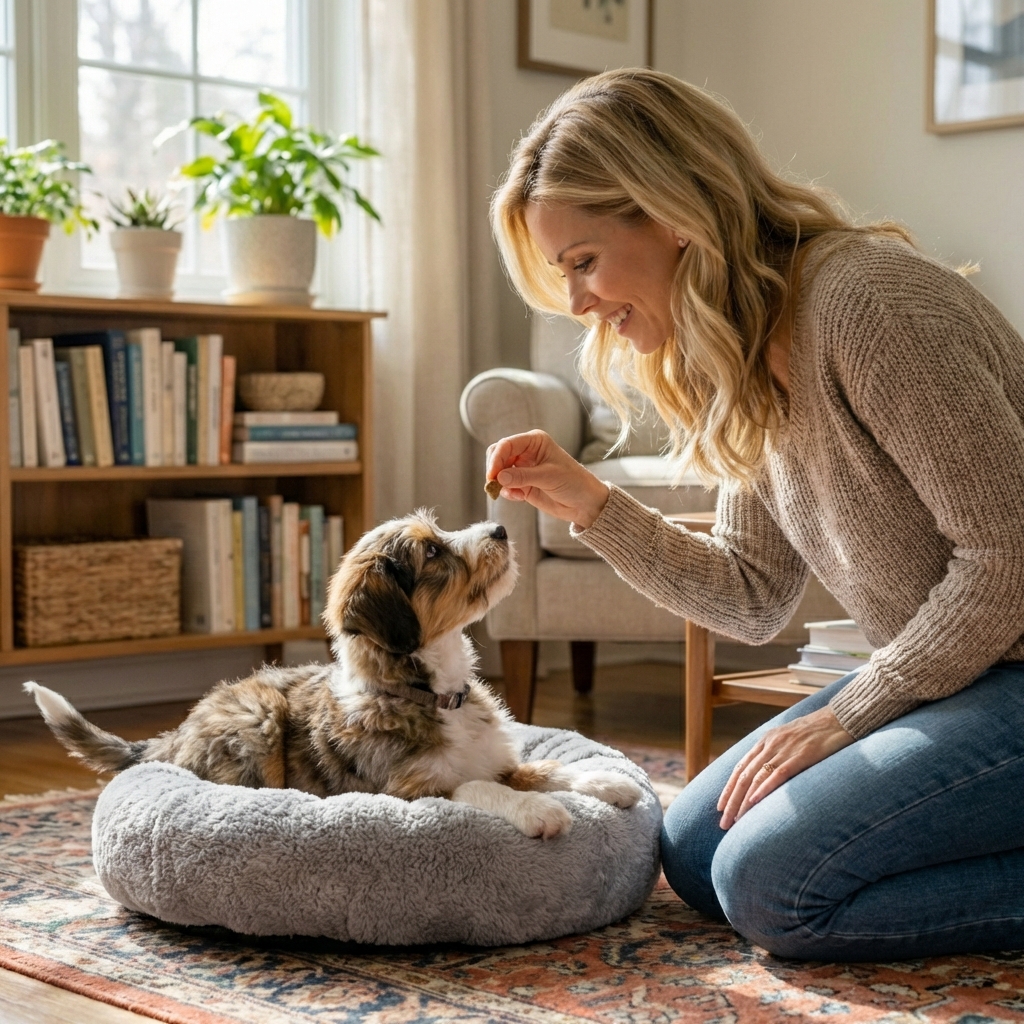
Reward your puppy for lying on a bed or mat. This helps with overexcitement and builds an off switch.
Use smart management
Training is teaching, and management is preventing rehearsal of unwanted behaviors. Puppies need both.
- Use baby gates and playpens to control access and reduce accidents.
- Keep a chew menu of safe options and rotate them to stay interesting.
- Leash indoors if needed for puppies who sprint off to steal socks.
- Supervise or confine: if you cannot watch, use the crate or pen.
This is not “being strict.” It is how you keep your puppy safe while their brain catches up with their curiosity.
Sleep, exercise, enrichment
Many “training issues” improve dramatically when a puppy’s basic needs are met. Overtired puppies bite more, bark more, and listen less.
Healthy routines to aim for
- Sleep: many puppies sleep a lot, often around 16 to 20 hours in a day.
- Exercise: choose age-appropriate play and short walks, not endurance workouts.
- Mental enrichment: food puzzles, sniff walks, short training games, and gentle tug.
Easy enrichment idea: scatter a portion of kibble in the grass and let your puppy sniff it out. Sniffing is calming and tiring in the best way.
Handling and grooming practice
Short, positive handling sessions now can make vet visits, grooming, and home care so much easier later.
- Pair each touch with a treat: lift an ear, treat. Touch a paw, treat.
- Keep it brief and end on a win.
- Go slow: if your puppy stiffens, pulls away, whale-eyes, or stops taking treats, that is information. Pause, back up a step, and make it easier next time.
Common setbacks
Potty training regression
- Tighten supervision for a few days, go back to basics, and increase potty trips.
- Rule out medical causes, especially if accidents are sudden or frequent.
Crate whining vs panic
- Some protesting is normal early on. Keep it boring, return when there is a brief quiet moment, and build duration slowly.
- If you see panic signs (escape attempts, heavy drooling, self-injury, vomiting, intense distress), stop and ask your vet and a credentialed trainer for help.
Jumping for attention
- Reward four paws on the floor.
- Ask for a sit before greetings and have visitors ignore jumping.
When to get extra help
Early support can prevent a small issue from becoming a long-term struggle. Reach out to your veterinarian and a credentialed trainer if you notice:
- Growling or snapping during handling, eating, or when approached on the couch
- Persistent fear, hiding, shutdown behavior, or trembling in normal situations
- Panic in the crate or when left alone
- Repeated diarrhea, vomiting, itching, ear infections, or sudden behavior changes that could signal a medical issue
Behavior and health are connected. If something feels “off,” trust your gut and ask. Individual guidance matters, especially for anxious puppies or complex households.
A simple 7-day plan
If you want a clear starting point, here is a gentle plan you can repeat and build on.
- Day 1: Set up confinement zones, start potty schedule, begin name game.
- Day 2: Crate treats and meals, introduce sit for the food bowl.
- Day 3: Add “come” indoors, start toy redirection for nipping.
- Day 4: Introduce “leave it” with your closed fist.
- Day 5: Practice short, positive handling sessions (paws, ears) with treats.
- Day 6: Start “settle” on a mat for 5 to 10 seconds at a time.
- Day 7: Review and make it easier where your puppy struggled, then celebrate progress.
Progress is not linear. If your puppy has a messy day, it does not mean you failed. It usually means your puppy needs more sleep, a simpler setup, or a clearer reward for the behavior you want.