A practical, reward-based puppy training guide: week-one routine, house and crate training, nipping help, loose-leash basics, socialization, and the 5 cues t...
Article
•
Designer Mixes
Training a Puppy: Overview & Care

Shari Shidate
Designer Mixes contributor
Bringing home a puppy is pure joy, and it is also a big developmental window. The habits you build in the first weeks can shape what life feels like for years to come. As a veterinary assistant in Frisco, Texas, I love reminding new puppy parents of one evidence-based truth: good training is really good care. It supports safety, reduces stress, and helps your puppy feel secure in your home.
Goal: Raise a confident, healthy puppy using kind, consistent training, smart routines, and proactive veterinary care.
Quick note: This guide is general education and does not replace individualized advice from your veterinarian or a qualified trainer who can see your puppy in person.
What to expect in the first 2 weeks
Puppies are learning constantly, even when you are not “training.” In the beginning, focus on three things: predictable routines, gentle socialization, and preventing rehearsal of unwanted behaviors (like chewing shoes or pottying indoors).
A simple daily rhythm
- Potty breaks: first thing in the morning, after eating, after drinking, after play, after naps, and before bed.
- Meals: often 3 meals per day for young puppies (confirm with your veterinarian based on age, breed, and body condition).
- Sleep: 18 to 20 hours a day is common for many puppies, but it varies by age and individual. Overtired puppies bite more and listen less.
- Training: 3 to 6 mini-sessions per day, 1 to 3 minutes each.
- Play and enrichment: short and supervised (often 5 to 10 minutes at a time), and followed by a potty break.
If your puppy seems “wild,” it is often a tired puppy who needs a nap in a safe space.
Positive reinforcement
Modern veterinary and behavior organizations widely support reward-based training because it improves learning and reduces fear-related behavior. In plain language: reward what you like, prevent what you do not like, and teach your puppy what to do instead.
What to reward
- Going potty outside
- Sitting to greet people
- Chewing appropriate toys
- Choosing calm behavior on their own
- Looking at you when you say their name
What rewards look like
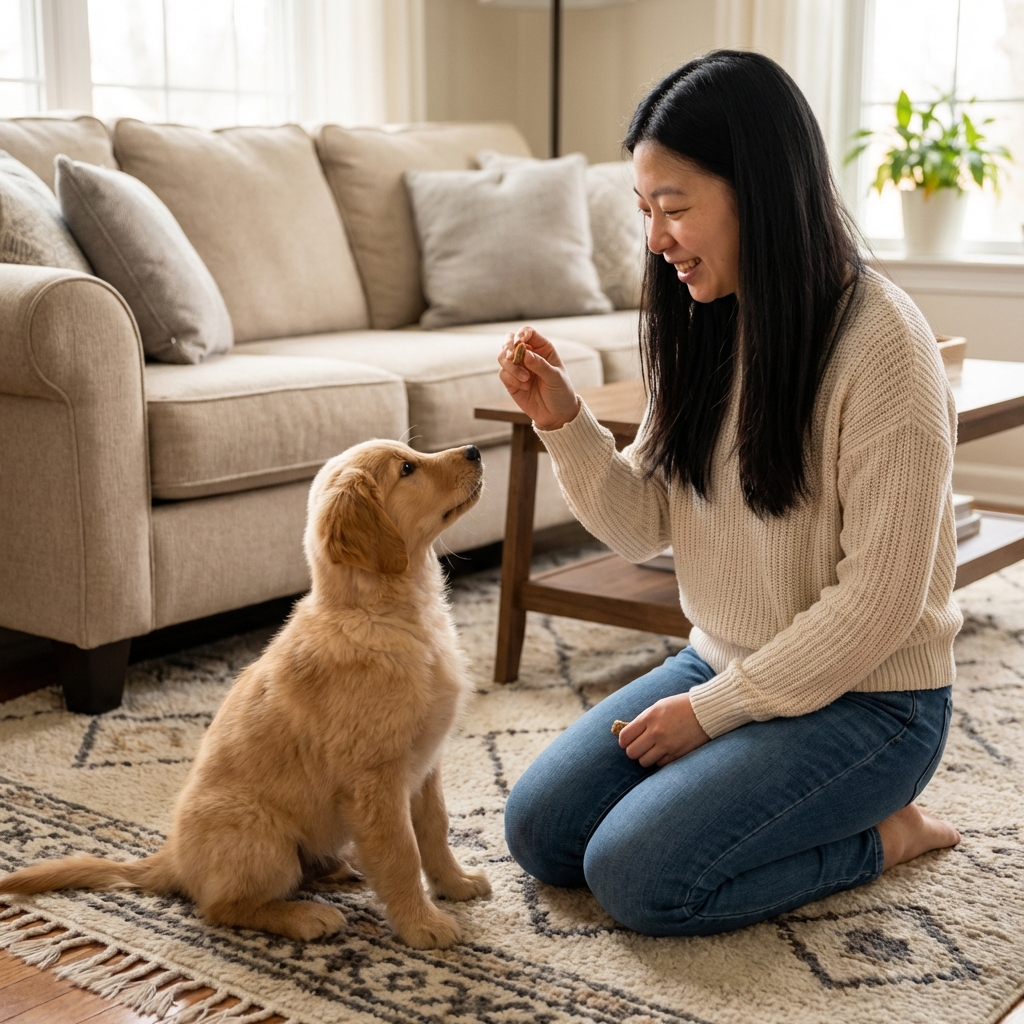
- Treats: tiny, soft, and easy to swallow. Use pea-sized pieces.
- Praise: calm, happy voice.
- Play: a quick tug or toss can be a big reward for some puppies.
- Life rewards: access to the yard, the couch, or greeting a friend after a sit.
Tip: If your puppy is not responding, it is usually not stubbornness. More often it is confusion, distraction, or the reward is not valuable enough for that moment.
House training that works
Potty training is mostly management plus repetition. Your puppy is not trying to be “bad.” They are learning where the bathroom is, and their bladder control is still developing.
Best practices
- Supervision: if you cannot watch, use a crate or playpen.
- Schedule: frequent potty trips prevent accidents and build the habit faster.
- Reward immediately: treat right after they finish outside (within a second or two).
- Clean accidents well: use an enzymatic cleaner so the scent does not invite repeat pottying.
Why accidents keep happening
- Too much freedom too soon
- Potty breaks are not frequent enough
- Reward comes too late (the puppy does not connect it to pottying)
- Medical issues like intestinal parasites, urinary tract infection, or gastrointestinal upset
If potty training suddenly backslides, check in with your veterinarian. As a vet assistant, I have seen “training problems” turn out to be treatable health issues more times than I can count.
Crate training
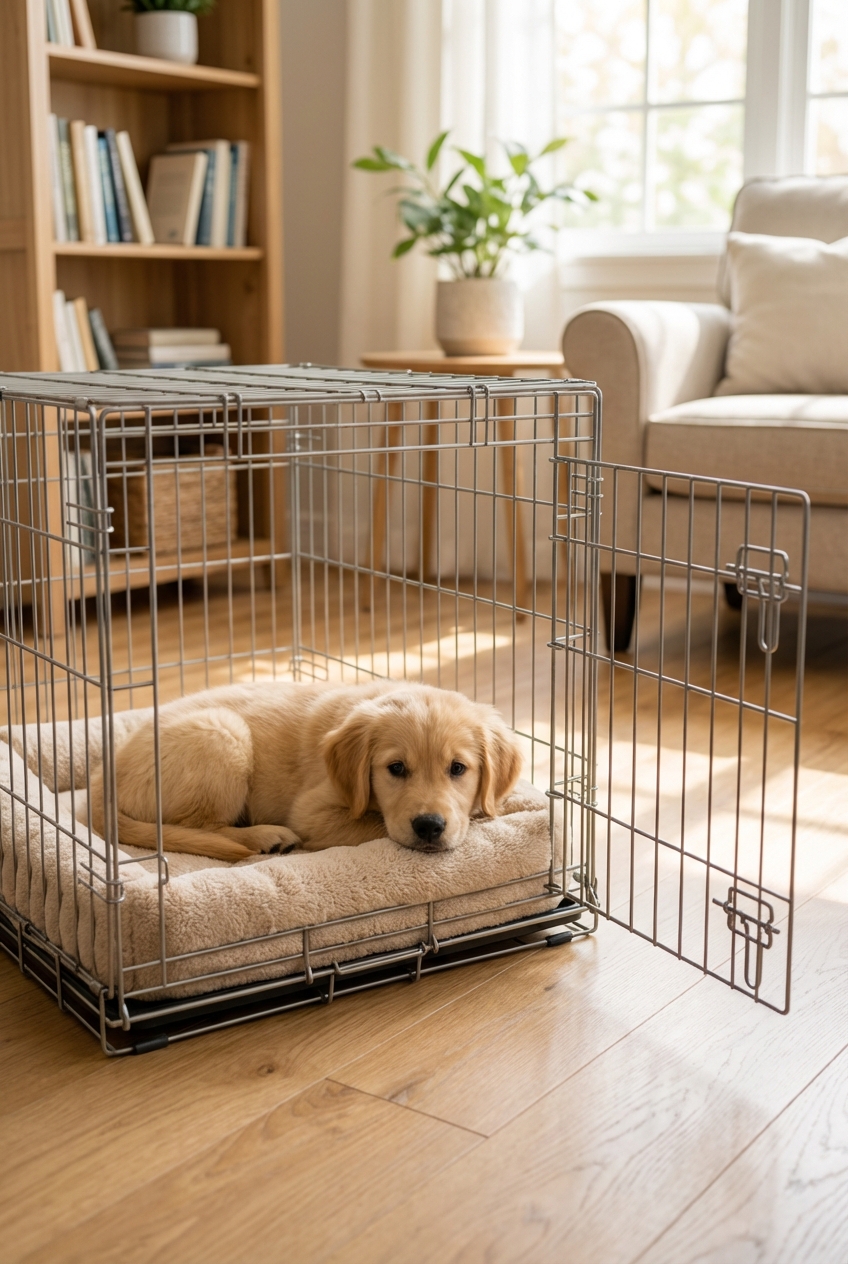
A properly introduced crate becomes your puppy’s bedroom. It helps with house training, prevents dangerous chewing, and provides a calm place to rest.
How to introduce it
- Make it cozy: a comfortable mat or towel, and a safe chew.
- Feed meals in the crate: start with the door open.
- Short sessions: close the door for seconds at first, then gradually increase.
- Calm exits: avoid big “hello” and “goodbye” moments to reduce anxiety.
Safety note: Choose an appropriately sized crate and avoid items that can be shredded and swallowed. If your puppy is an aggressive chewer, skip soft bedding until you know it is safe for them. Many families also remove collars and dangling tags in the crate to reduce snag risk. Ask your veterinarian which chews are safest for your puppy’s age and chewing style.
Biting and chewing
Puppies explore with their mouths, especially during teething. Your job is to teach bite inhibition and provide legal chewing outlets.
What to do when your puppy bites
- Redirect: calmly offer a toy instead of hands or clothing.
- End the game briefly: if biting continues, stand up and pause attention for 10 to 20 seconds.
- Reward gentle: resume play and reward calmer mouths.
Set your home up for success
- Keep shoes and kids’ toys out of reach
- Use baby gates to reduce roaming
- Rotate chew toys so they stay interesting
- Use food-stuffed toys for supervised quiet time
If chewing ramps up suddenly, consider whether your puppy is overtired, stressed, or needs more enrichment. Also remember that young puppies need age-appropriate exercise. Too little can lead to chaos, and too much can create an overtired puppy with a short fuse.
Socialization
The socialization window is time-sensitive. Many experts describe the prime window as roughly 3 to 14 to 16 weeks (it varies by puppy). It is about positive, safe exposure, not forced interactions. Your puppy should learn that the world is predictable and not scary.
What healthy socialization includes
- Different people: hats, uniforms, different ages, and body types
- Household sounds: vacuum, blender, doorbell at low volume
- Surfaces: tile, carpet, grass, gravel, metal grates
- Handling practice: gentle ear, paw, and mouth touches paired with treats
- Friendly dogs that are known to be vaccinated and puppy-appropriate
Keep it gentle and brief, and pair new things with treats. If your puppy hesitates, slow down and let them choose the pace.
Vaccines and safety
Ask your veterinarian where it is safe to take your puppy based on local disease risk and your puppy’s vaccine schedule. Many clinics recommend avoiding high-traffic dog areas (like dog parks) until your veterinarian says your puppy is adequately protected, while still doing controlled exposures in safer settings.

Alone-time training
Most puppies need to learn how to be alone gradually. A simple plan early on can reduce stress for your puppy and your household.
A starter routine
- Start tiny: give a food toy, step away for 5 to 30 seconds, then return before your puppy is upset.
- Build slowly: repeat and extend to 1 to 5 minutes, then 10 minutes, mixing easy and harder reps.
- Keep it boring: calm departures and calm returns help alone time feel normal.
- Practice daily: short reps add up fast.
If your puppy panics, drools heavily, injures themselves trying to escape, or cannot settle at all, ask your veterinarian and a qualified behavior professional for help early.
Puppy-proofing basics
Management is training’s best friend. A safer environment prevents emergencies and prevents your puppy from practicing dangerous habits.
Common hazards to secure
- Electrical cords and chargers
- Medications, vitamins, and nicotine products
- Trash, compost, and food left on counters
- Houseplants (many are toxic)
- Small objects that can be swallowed (socks, kids’ toys, bones, hair ties)
- Doors and gates that do not latch well
Core cues to teach first
Start with skills that improve safety and daily life. Keep sessions short and end on a win.
1) Name
Say your puppy’s name once. When they look at you, reward. This becomes your foundation for focus.
2) Sit
Lure with a treat over the nose and back. Reward the moment their bottom hits the floor. Use it for greetings and before meals.
3) Come
Use a happy voice, reward heavily, and never punish your puppy after they come to you. Practice indoors first, then on a long line outdoors.
4) Leave it
Teaches your puppy to disengage from something tempting. It is one of the most useful safety cues for real life.
5) Loose leash basics
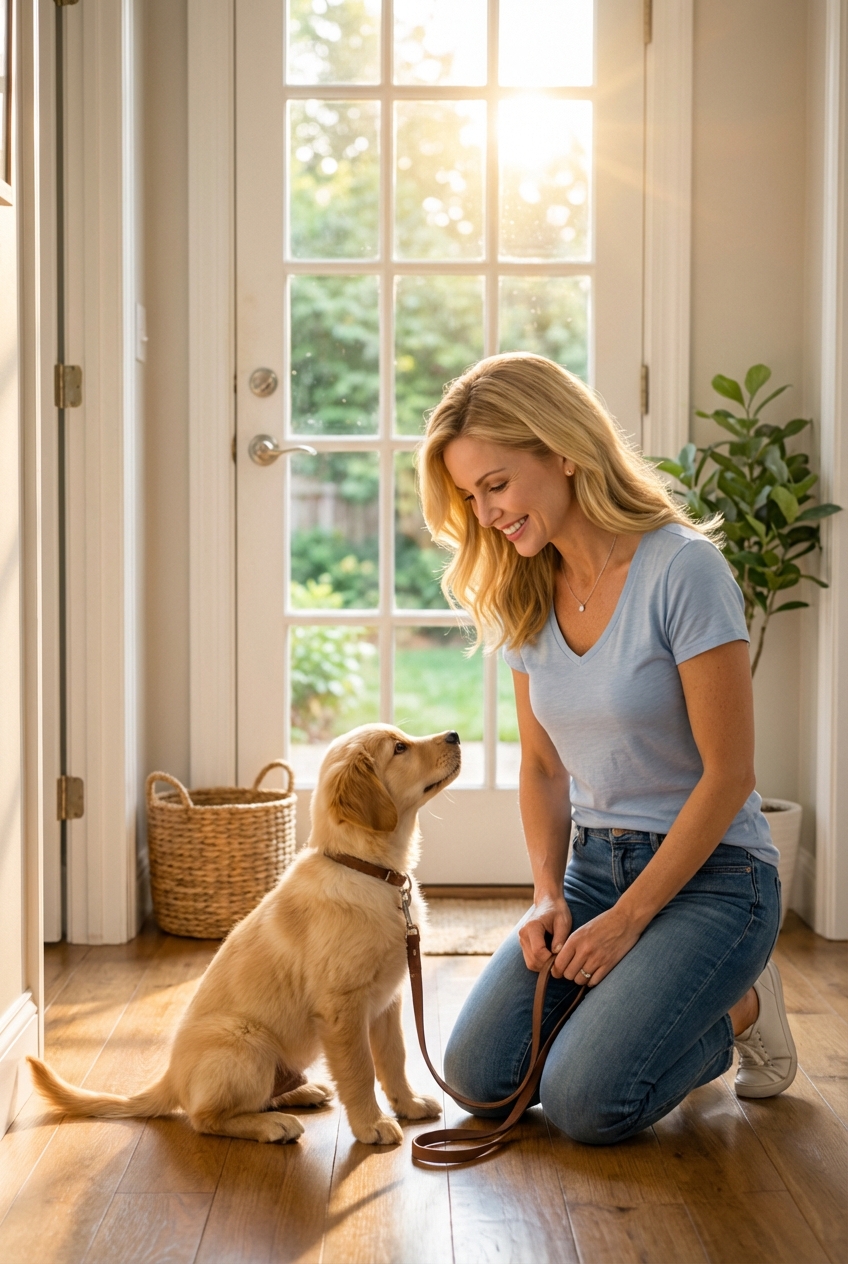
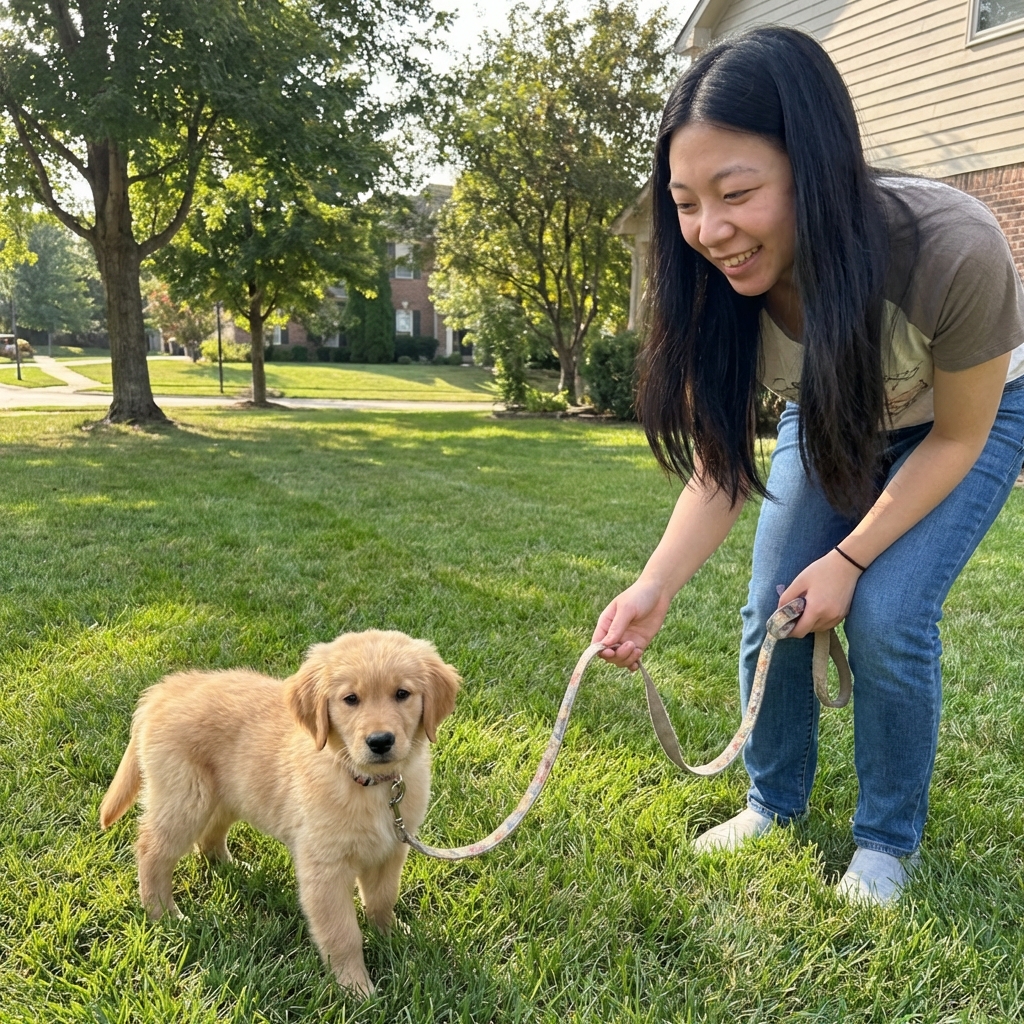
Reward when your puppy is near your leg and the leash is slack. If they pull, pause and wait for slack, then continue. Early training prevents a lifetime of leash battles.
Health basics that support training
Behavior and health are linked. A puppy who feels itchy, nauseated, or painful will have a harder time learning.
Veterinary essentials
- Vaccines: follow your veterinarian’s schedule.
- Parasite prevention: flea, tick, and heartworm prevention as recommended for your region.
- Fecal testing and deworming: intestinal parasites are very common in puppies.
- Microchip: a simple step that can bring your puppy home if they get lost.
Nutrition for a growing body and brain
Choose a complete and balanced puppy diet that meets AAFCO standards for growth. If you want to add fresh foods, do it slowly and keep treats to about 10 percent of daily calories. For homemade feeding, work with your veterinarian or a board-certified veterinary nutritionist to ensure proper calcium and phosphorus balance during growth.
Your puppy’s “fuel” shows up in energy, focus, coat quality, stool consistency, and long-term joint health. If something feels off, it is worth a check-in.
Red flags
Early support prevents problems from getting bigger.
Talk to your veterinarian promptly if you notice
- Vomiting, diarrhea, lethargy, or refusal to eat
- Frequent urination, straining, or accidents despite a solid routine
- Persistent coughing, sneezing, or nasal discharge
- Itching, hair loss, ear odor, or head shaking
Contact a qualified trainer or behavior professional if you notice
- Growling or snapping when touched or approached
- Extreme fear, freezing, or panic around normal sights and sounds
- Guarding food, toys, or resting places
- Inability to settle, even with adequate sleep and enrichment
Look for trainers who use reward-based methods and can explain the “why” behind their plan.
One tiny win at a time
If you are feeling overwhelmed, take a breath. Puppies are not meant to be perfect. Focus on consistency, safety, and kindness. Celebrate small progress, and remember that every positive repetition is building your dog’s future.
Start today: pick one habit (like potty trips on schedule or rewarding calm behavior) and do it consistently for a week. You will be amazed how quickly things start to click.